
Can Cat Eat Carnations
This post contains affiliate links. As an Amazon Associate, we earn from qualifying purchases.
Carnations are not safe for cats to eat as all parts of the flower contain mild toxins that can upset their stomach and lead to other health issues. Symptoms of ingestion include vomiting, diarrhea, and oral irritation. For those interested in a deeper understanding, further explanation and supporting details will follow in this article. If your cat shows signs of distress after exposure to carnations, contact your vet immediately. To ensure your pet’s safety, keep carnations out of reach or opt for pet-safe plants, such as sunflowers or pansies. It’s crucial to be aware of potential risks and symptoms to keep your furry friend safe. Learn more about safe alternatives.
Essential Facts in 30 Seconds
- All parts of carnations are mildly toxic to cats.
- Exposure can cause gastrointestinal irritation.
- Symptoms include vomiting, diarrhea, and decreased appetite.
- Skin reactions like rashes and itching may occur.
- Keep carnations out of reach of cats.
- Consult a veterinarian if symptoms appear after exposure.
Understanding Carnation Toxicity in Cats
Many pet owners love having carnations in their homes. It’s important to know that all parts of this plant can be mildly toxic to cats. Carnations contain triterpenoid saponins. These can irritate a cat’s stomach and skin. If a cat chews on the stems, leaves, or petals, it may have an upset tummy or skin problems.
To keep your cat safe, take these steps:
- Keep carnations out of reach. Better yet, avoid them.
- Choose non-toxic plants that are safe for curious cats.
- Watch your cat closely after they might’ve been near carnations.
Watch for any strange symptoms after your cat may have come into contact with carnations. Signs can include vomiting, diarrhea, or skin irritation. If you see these signs, call a vet right away. Carnation poisoning is usually not deadly, but quick action can help your cat feel better.
Additionally, monitoring cat behavior after exposure to flowers is crucial for their well-being. Stay informed and take care. You can protect your furry friend from harm.
Symptoms of Carnation Poisoning

Carnations can be harmful to cats. Recognizing the signs of poisoning is crucial. Ignoring these symptoms can cause your cat serious discomfort.
| Symptom Category | Common Symptoms |
|---|---|
| Gastrointestinal Issues | Vomiting, diarrhea, and less appetite |
| Oral Irritation | Drooling and mouth swelling |
| Skin Reactions | Rash, redness, and itching |
Watch for changes in your cat’s behavior. Look for signs like tiredness or pawing at their mouth. Cats may feel stomach pain, which causes weakness. Notice excessive drooling or trouble swallowing? Seek help from a vet right away.
Most symptoms go away in a few hours. If your cat appears very distressed, get medical help quickly. Keeping an eye on your cat after they eat a dangerous plant, like carnations, is important for their safety.
Risks of Carnation Exposure
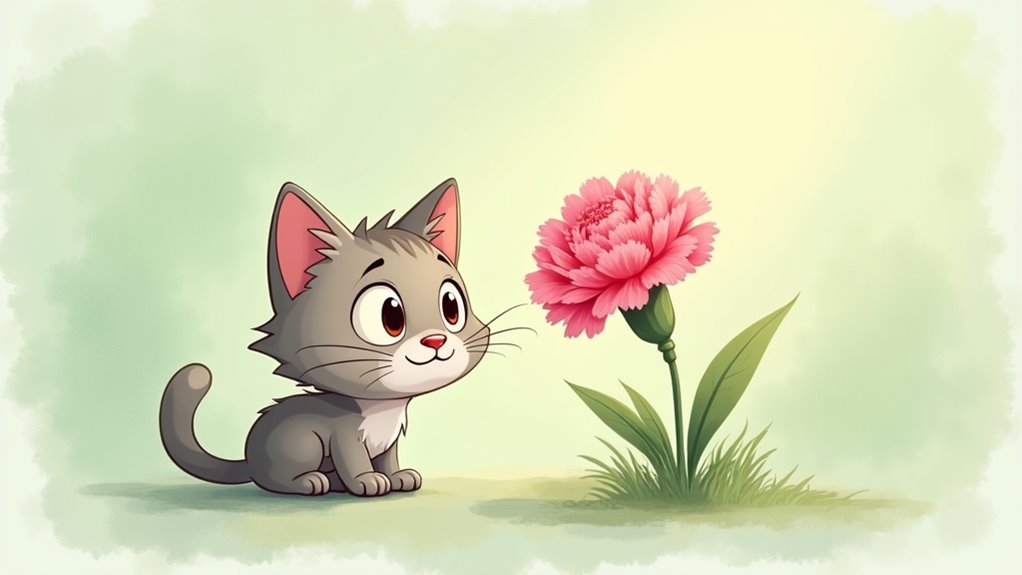
Carnations can be harmful to cats. They may cause symptoms like vomiting and diarrhea.
These can lead to dehydration and weakness, which are serious for your pet.
To keep your cat safe, keep carnations out of reach.
Watch for any signs of illness after exposure. If you notice anything unusual, contact your vet right away.
Protect your furry friend by being aware of these risks.
Symptoms of Poisoning
Cats can show signs of trouble after eating a carnation. Watch for symptoms like vomiting and diarrhea. These can upset their stomach. Drooling might happen too, which shows they’ve irritation in their mouth. Cats may eat less and become very tired.
If the sap touches their skin, it can cause irritation. This leads to redness and swelling, especially on their lips.
Most of the time, symptoms are mild. Yet, eating more can make things worse. It can cause dehydration, which is serious.
Keep a close watch on your cat. If symptoms last, visit the vet. Quick action helps. It ensures your furry friend stays healthy and happy.
Prevention Strategies
Keep your cat safe from carnation exposure by taking simple steps. Proactive measures create a safe space for your furry friend.
| Action | Description |
|---|---|
| Remove Access | Keep carnations in closed rooms. |
| Use Barriers | Store flowers on high shelves. |
| Substitute Plants | Choose cat-safe options like sunflowers. |
Teach your cat to avoid toxic plants. Use deterrent sprays if needed. Always check new plants for safety. Following these steps helps reduce the risk of carnation exposure and keeps your cat healthy.
Effects on Other Pets
Carnations can be pretty flowers, but they can harm pets. These flowers are toxic to many animals, not just cats and dogs. Horses may also suffer, though there isn’t much information about their reactions.
Here are four important points to keep in mind:
- Gastrointestinal Issues: Dogs and possibly horses can vomit and have diarrhea after eating carnations.
- Skin Irritation: The sap from carnations can cause redness or swelling on pets’ skin.
- Watch Your Pets: Keep a close eye on your pets around these flowers.
- Contact a Veterinarian: If a pet eats a carnation, call a vet right away.
Knowing about these toxic plants keeps your pets safe. Always take steps to protect their health.
Safe Alternatives to Carnations
Safe alternatives to carnations for your cat include flowers that are pretty and non-toxic. Pansies, roses, and sunflowers are great choices. They add color to your home without harming your cat.
African violets and orchids are also safe. They bring beauty and elegance to your space.
For herbs, catnip and cat grass are fun for your kitty. Valerian root and chamomile are good too. They’re calming and safe for your cat. Catnip is generally non-toxic for cats and can even aid in their digestive health.
Interactive toys and puzzle feeders keep your cat busy. This helps them stay away from harmful plants.
Always check that plants are out of reach. Wall-mounted planters are a smart idea. They create a beautiful, safe space for your cat to enjoy.
What to Do if Your Cat Ingests Carnations
Act quickly if your cat eats carnations. Here’s what to do:
- Remove all carnations from your home. This stops any more eating.
- Watch for symptoms for at least six hours. Look for drooling, vomiting, or diarrhea.
- Give fresh water and a light meal. Regular cat food or chicken and rice works. Avoid milk; many cats can’t digest it.
- Look for serious symptoms like constant vomiting, weakness, or tiredness. These need immediate vet care.
Keeping your cat safe is key. Stay alert and take action fast.
Frequently Asked Questions
Are All Types of Carnations Toxic to Cats?
All types of carnations are toxic to cats. These flowers can cause health issues if your cat eats them. Signs of poisoning include vomiting, diarrhea, and drooling. It’s important to keep carnations out of reach. Protect your furry friend by avoiding these flowers in your home. Always watch what your cat chews on and make safe choices. Your pet’s health is worth it.
How Long Do Symptoms Last After Ingestion?
Symptoms after ingestion usually last a few hours. Vomiting and diarrhea often stop quickly. Mild skin irritation might last longer. Always watch your cat closely. Individual reactions can be very different. Sensitivity plays a big role in how your cat reacts. Knowing this helps you respond better. Keep your cat safe and healthy.
Can Cats Develop Allergies to Carnations?
Cats can develop allergies to carnations. These flowers contain compounds that can harm your cat. Symptoms may include skin irritation or upset stomach. Always watch for signs of discomfort in your cat. If you notice anything unusual, consult your vet. Keeping your cat safe is important. Avoid having carnations in your home. Provide a safe environment for your furry friend. Remember, not all flowers are safe for pets. Always do your research before bringing new plants into your home.
What Should I Do if My Cat Touches a Carnation?
A cat touching a carnation can be harmful. Act quickly. Remove the flower right away. Look for signs of irritation on your cat’s skin. Wash any affected areas gently with water. Keep an eye on your cat’s behavior. Watch for unusual signs like vomiting or lethargy.
To prevent future problems, keep harmful plants out of reach. Research safe plants for your home. Always prioritize your cat’s safety.
Are Dried Carnations Also Toxic to Cats?
Dried carnations can be a hidden threat to your cat. These flowers are toxic and may cause health problems. Symptoms include vomiting and skin irritation. It’s important to keep dried carnations away from your pet. Protect your furry friend from these dangers. Always check your home for harmful plants. Being careful can keep your cat safe and happy.
Conclusion
Carnations can make your home look lovely, but they can harm your cat. These flowers are toxic. They may cause vomiting and diarrhea in your furry friend. This is why it’s important to keep them away from your cat.
Instead of carnations, consider safe plants for your home. Many plants are cat-friendly and still add beauty. This way, you can enjoy your space without worrying about your pet’s health.
If your cat eats any part of a carnation, act fast. Contact your vet right away. Quick action can help prevent serious problems later. Keeping your cat safe is always the best choice.
