
Can Cat Eat Carrot
This post contains affiliate links. As an Amazon Associate, we earn from qualifying purchases.
Cats can eat carrots, but only in moderation. Carrots provide some nutritional benefits, such as beta-carotene, which aids in vitamin A production. It’s important to cook the carrots first, as raw ones can pose a choking hazard. Cut them into small pieces, no larger than peas, to further minimize risks. Limit carrot servings to 5 grams and keep the total daily intake under 2 ounces. Too many carrots can upset your cat’s stomach, so they should be treated as an occasional snack. For those interested in a deeper understanding, further explanations and tips will follow later in the article.
Essential Facts in 30 Seconds
- Cats can eat carrots in small amounts, but they should not be a staple in their diet.
- Cooked carrots provide fiber and aid digestion when served in tiny pieces.
- Raw carrots can be a choking hazard; always cook them before serving.
- Limit carrot intake to less than 10% of a cat’s diet to avoid obesity and digestive issues.
- Offer carrots as an occasional treat, with portions under 5 grams per serving.
Nutritional Benefits of Carrots for Cats
Carrots can provide some benefits for your cat’s diet, but they shouldn’t be a major part of it. Carrots contain beta-carotene, which the body needs to make vitamin A. Yet, not all cats absorb this nutrient well. Cats primarily need vitamin A from animal sources for their health.
Adding a small amount of carrots can help with your cat’s digestion. The fiber in carrots helps keep their bowel movements regular and can relieve constipation.
Still, carrots should make up less than 10% of your cat’s diet. Too many carrots can cause obesity and digestive problems due to their sugar content. Additionally, it is important to remember that carrots should remain an occasional treat to avoid compromising your cat’s nutritional needs.
Consider giving carrots as a rare treat. Watch how your cat reacts to ensure they enjoy this crunchy snack without any issues.
Always focus on providing a balanced, meat-based diet for your cat’s best health.
Safe Preparation Methods for Carrots
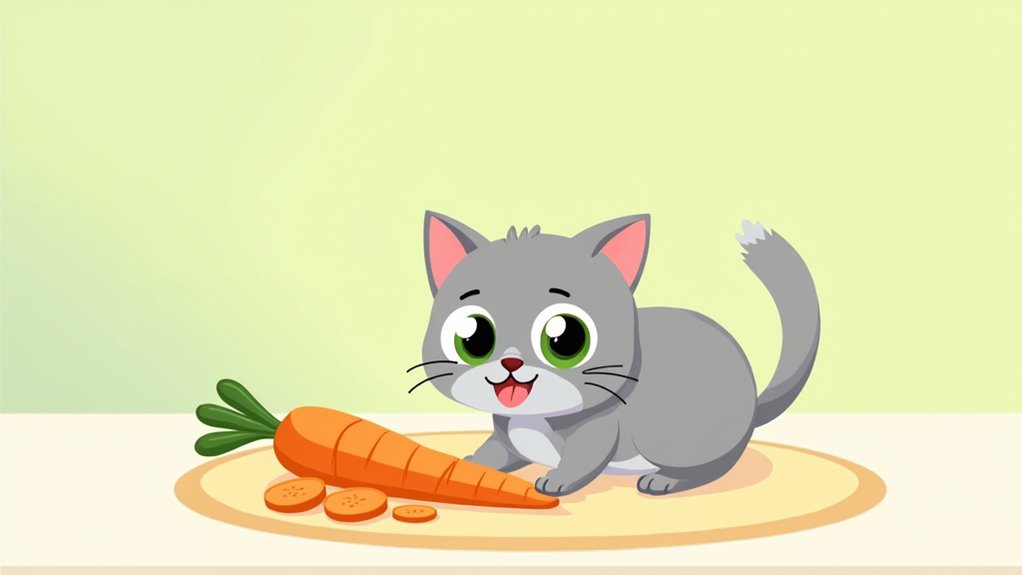
Preparing carrots for your cat is simple and safe. Follow these easy steps to keep your furry friend healthy and happy.
- Wash the carrots well. Rinse them under running water. This removes dirt and pesticides.
- Peel the carrots. Peeling helps cut down on pesticides and keeps them clean.
- Cook the carrots. Boil, steam, or bake them until they’re soft. Soft carrots are easier for your cat to chew and digest.
- Cut into small pieces. Slice the cooked carrots into tiny, bite-sized pieces. This helps prevent choking.
Always keep your kitchen clean. Wash your hands before and after handling food.
Don’t add salt or sugar. Let the cooked carrots cool completely before serving them to your cat.
Following these steps ensures a tasty and safe treat for your pet. Enjoy the smiles!
Risks of Feeding Carrots to Cats
Feeding carrots to cats can be risky. Always prepare them properly. Raw carrots are hard. They can choke on big pieces. This is especially dangerous for kittens and older cats.
Carrots can also upset a cat’s stomach. Cats don’t digest plant food well. Too many carrots can cause vomiting or diarrhea. The fiber in carrots may create digestive problems.
To keep your cat safe, cook the carrots first. Cut them into small pieces. Watch how your cat reacts to them. Don’t add any seasonings. These can harm your cat too.
Keep an eye on your cat’s stool and appetite. If you see any changes, call your vet. Safety and health are important for your furry friend.
Appropriate Serving Sizes and Frequency
Understanding how to serve carrots to your cat is important for their health. Here are some key points to remember:
- Cut carrot pieces to the size of a pea. This helps prevent choking.
- A single serving should weigh no more than 5 grams. This is just a few small pieces.
- Keep total carrot portions under 2 ounces (56 grams) each day. This avoids stomach problems.
- Offer carrots only every few weeks. This helps control sugar intake.
Following these guidelines will keep your cat safe and healthy while enjoying carrots.
Understanding Cats’ Dietary Needs
Cats need a special diet for their health. They’re obligate carnivores, which means they require animal-based nutrients. Aim for a diet with 26-28% protein. Some cats may need up to 55% protein due to health issues. Protein gives essential amino acids like taurine and arginine. These are important for a cat’s heart and eyes.
Cats can digest a little bit of carbohydrates, but only about 2% of their diet should be carbs. Too many carbs can upset their stomach. Focus on high-quality proteins for their meals.
Key Nutritional Needs:
- Protein: 40-50 grams per 1000 kcal.
- Vitamins: Vitamins A and D must come from animal sources.
- Minerals: Keep calcium and phosphorus balanced.
Frequently Asked Questions
Can Cats Be Allergic to Carrots?
Cats can be allergic to carrots, but it’s not common. Some cats may have a reaction. Watch for signs of discomfort or stomach issues after they eat carrots. These signs could mean your cat has a sensitivity. Always talk to your vet for the best advice. They can help you understand your cat’s needs. Remember, not all cats react the same way to new foods. Stay alert and keep your cat healthy.
What Should I Do if My Cat Refuses Carrots?
Cats can be picky eaters. If your cat doesn’t like carrots, try other vegetables. Offer peas or green beans. These might taste better to them. Pay attention to what they enjoy. Mix small bits of these veggies with their favorite food. This can help them accept new flavors. Always make sure their diet stays healthy and balanced. Cats need protein, so keep that in mind too. A variety of foods can keep them happy and satisfied.
Are Baby Carrots Safe for Cats?
Baby carrots are safe for cats in small, cooked pieces. Cook them by boiling or steaming. This makes them softer and easier to chew. It also helps with digestion and reduces choking risks. Always watch your cat after giving new food. Look for any signs of trouble or allergies. Enjoy sharing healthy treats with your furry friend!
Can I Mix Carrots With My Cat’s Food?
Mixing carrots with your cat’s food is a great idea! Carrots add fiber and vitamins to their diet. They can help with digestion and boost nutrition. Start by introducing carrots slowly. Cut them into small pieces or cook them to make them soft. Keep portions small to avoid any tummy issues. Always watch how your cat reacts to new food. With some patience, your cat may enjoy this colorful addition to their meals!
How Do I Know if My Cat Likes Carrots?
To know if your cat enjoys carrots, watch its behavior. Cats that like carrots often sniff, explore, or nibble on them. Look for signs of curiosity and playfulness. If your cat shows interest, it may enjoy this crunchy snack. Always remember to introduce new foods slowly. Some cats may prefer other treats. Keep an eye on their reactions. Enjoy watching your cat’s taste test!
Conclusion
Carrots can be a fun treat for your cat. They add color and crunch to their diet. But remember, they should not be the main food. Always prepare carrots safely. Cut them into small pieces to prevent choking. Serve only a little bit to avoid tummy troubles.
Cats need meat to be healthy. They are carnivores, which means they thrive on animal protein. Treats like carrots should be just that – treats. Consult your vet before adding new foods to your cat’s diet. Keeping your cat healthy and happy is what matters most.
