
Can Cat Eat Celery
This post contains affiliate links. As an Amazon Associate, we earn from qualifying purchases.
Cats can eat celery, but it should be given cautiously. Celery is low in calories and high in water content, making it a hydrating treat for your feline friend. However, it’s important to cut it into small pieces to prevent choking and limit the serving to no more than ¼ cup per week. Keep an eye on your cat’s reaction, as the high fiber content may lead to digestive issues. If you notice any signs of vomiting or diarrhea, stop feeding it immediately. For more detailed information and tips, continue reading the article.
Essential Facts in 30 Seconds
- Cats can eat celery in small amounts; it’s low in calories and hydrating.
- Celery contains fiber, which aids in digestion; cut into small pieces to prevent choking.
- Monitor for gastrointestinal issues like vomiting or diarrhea after introducing celery.
- Remove celery leaves and limit intake to about ¼ cup per week to avoid digestive upset.
- Consult a vet if signs of allergic reactions or discomfort occur after eating celery.
Nutritional Value of Celery for Cats
Celery is a low-calorie snack for cats. It has only about 5.6 kcal in a 40g serving. This makes it a healthy choice for a treat. Celery is also low in fat, with just 0.1g per serving. This matches well with your cat’s diet.
The fiber in celery is helpful. It has around 0.6g of fiber, which aids digestion. Fiber helps keep your cat’s bowel movements regular. But be careful; too much fiber can upset your cat’s stomach.
Celery also offers important nutrients. It has potassium, which helps muscles work well. It contains vitamin K, essential for blood clotting.
Health Benefits of Feeding Celery to Cats
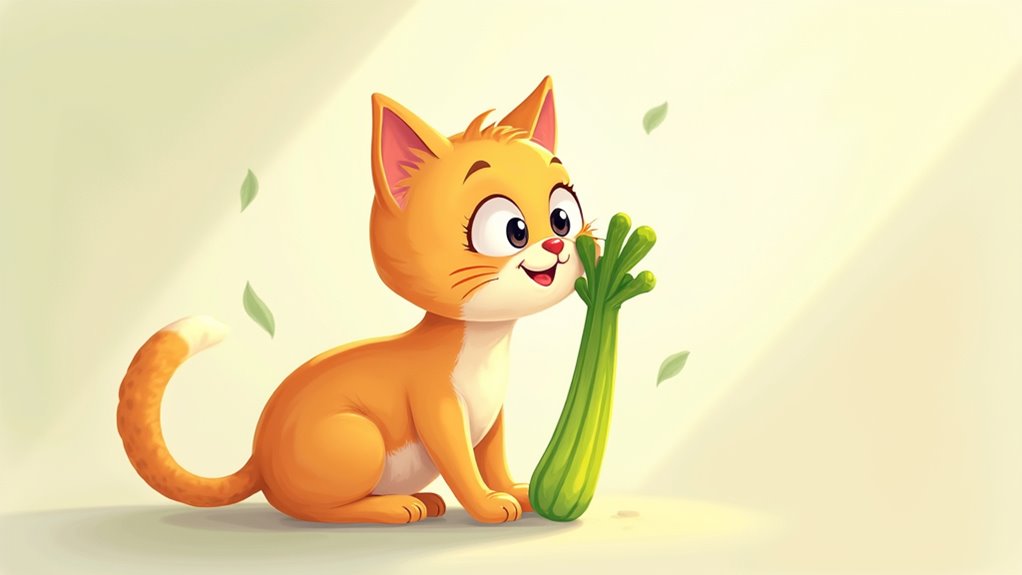
Feeding celery to your cat can bring many health benefits. First, the fiber in celery helps with digestion. It keeps your cat’s tummy happy and prevents constipation.
Celery is 95% water, which helps keep your cat hydrated. Good hydration supports their digestive system. Celery also helps the kidneys. It acts as a natural diuretic, helping to flush out toxins.
The antioxidants in celery protect your cat’s cells. This could lower the risk of diseases.
Celery has minerals like potassium and calcium. These minerals support strong bones and a healthy immune system.
The crunchy texture of celery can help clean your cat’s teeth. This supports oral health.
In moderation, celery makes a fun and nutritious treat. It can improve your cat’s overall well-being.
Potential Risks and Precautions
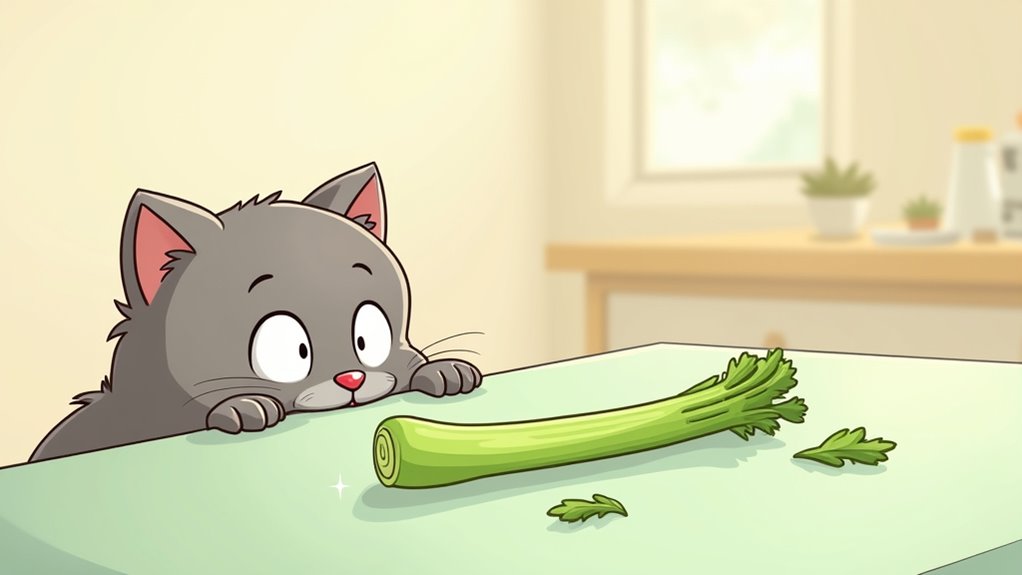
Celery can be healthy for cats, but some risks exist.
| Potential Risks | Precautions |
|---|---|
| Choking Hazards | Cut celery into small pieces. Watch your cat while eating. |
| Gastrointestinal Issues | Give small, rare servings. Look for signs like vomiting or diarrhea. |
| Allergic Reactions | Skip celery if your cat has food sensitivities. Check with a vet for allergy tests. |
Choking is a risk due to celery’s tough strings. Gastrointestinal problems may happen from the high fiber content. Always keep safety first. Offer small amounts of celery. Watch for any signs of allergies. If your cat seems distressed, contact your vet right away. Additionally, ensure that celery is offered as an occasional treat to avoid digestive upset.
How to Safely Feed Celery to Your Cat
Feeding celery to your cat can be safe and fun. Cut the celery into small pieces. This helps prevent choking.
Watch your cat closely after giving them this treat. Some cats may have sensitive stomachs.
Celery is low in calories and has some vitamins. Still, it should only be a treat, not a main food. Limit it to about ¼ cup per week. This keeps your cat healthy and happy.
Always provide fresh water alongside any snacks.
Cut Into Small Pieces
Cutting celery into small pieces is important for your cat’s safety. Large chunks can cause choking. Celery has fibrous strings that can get stuck. Chop the celery into bite-sized pieces, no bigger than 1/2 inch.
Celery Preparation Tips:
- Rinse celery well to get rid of pesticides.
- Cut both the stalks and leaves into small, easy-to-eat pieces.
- Don’t add any seasonings. They can be harmful.
Serving Guidelines:
- Limit celery to a maximum of 1/4 cup per week.
- Start with very small amounts to see how your cat reacts.
Monitor for Reactions
Feeding celery to your cat can be safe, but watch for reactions. Pay attention to signs like itching, licking, or skin redness.
Look closely at your cat’s face, ears, and neck for any swelling. Keep a diary of your cat’s behavior. Notice any changes in their stomach, like vomiting or diarrhea, after eating celery. Symptoms mightn’t show up right away.
If your cat has trouble breathing or swelling, contact a vet immediately. Also, notice your cat’s energy levels. Lethargy or irritability may mean something is wrong.
Limit to Occasional Treats
Include celery in your cat’s diet as a special treat. Limit it to small amounts. Keep the pieces under 40 grams. Too much can upset their stomach.
Serve celery plain. Avoid any seasonings or dips. These can be harmful to cats. Always cut the celery into small, manageable pieces. This helps prevent choking.
Remember to remove any leaves before serving. Treats like this should be occasional to keep your cat healthy.
Understanding Cats’ Dietary Needs
Understanding your cat’s dietary needs is important for their health. Cats are obligate carnivores. They need a diet high in animal protein. Foods like celery don’t provide the nutrients they require.
Cats need essential amino acids and vitamins to stay healthy. A lack of these nutrients can lead to serious health issues. For example, taurine is crucial for heart health and vision. Without enough taurine, cats can develop heart disease.
High-quality cat food usually contains the right balance of protein, fat, and vitamins. Look for food that lists meat as the first ingredient. This ensures your cat gets the protein they need.
Fresh water is also vital. Always ensure your cat has access to clean drinking water. Cats often do not drink enough water, so encouraging hydration is essential for their overall health.
Feeding your cat properly supports a long and happy life. Pay attention to their diet. A healthy cat is a happy cat.
Obligate Carnivores Explained
Cats are obligate carnivores. This means they need meat to survive. Their bodies depend on nutrients found only in animal flesh. Understanding their dietary needs is important. Certain foods can harm them.
Cats require specific nutrients from meat. Here are some key ones:
| Nutrient | Importance | Sources |
|---|---|---|
| Taurine | Good for heart and eyes | Animal tissues |
| Arginine | Helps with protein use | Meat |
| Retinol (Vitamin A) | Supports vision and immune system | Liver |
| Niacin | Gives energy | Poultry, fish |
| Arachidonic Acid | Helps control inflammation | Animal fat |
A plant-based diet can be dangerous for cats. Always choose a high-protein, meat-based diet. This keeps them healthy and happy.
Nutritional Requirements Overview
Cats need a diet that meets their unique nutritional needs. They’re carnivores, which means they thrive on animal-based foods. To stay healthy, cats require important amino acids and protein.
- Amino acids: Cats need 11 key amino acids. Taurine, arginine, and methionine are essential.
- Protein: This helps build muscles, enzymes, and supports the immune system.
- Animal sources: Meat provides complete proteins that cats can easily digest and use.
Without these nutrients, cats can face serious health problems. Heart disease and reproductive issues may arise if their diet lacks essential nutrients.
It’s crucial to ensure your cat eats a balanced diet that supports their carnivorous nature. Avoid low-quality plant-based foods. These may not provide the vital nutrients cats need to thrive.
Role of Vegetables
Many cat owners may not know that vegetables can help their cats. Vegetables add fiber to a cat’s diet. This fiber helps with digestion and regular bowel movements. Pumpkin is a great choice because it has a lot of fiber. Other good options include steamed zucchini and carrots. These vegetables also give important vitamins like A, C, and K. Collard greens are generally non-toxic to cats and can be offered in moderation as an additional source of nutrients. Additionally, while cats primarily need animal-based foods, some plant-based foods can be safe in small amounts.
Cats are meat eaters. Keep vegetables to only about 10% of their food. Start with small amounts, like 1-2 teaspoons. Offer them once or twice a week. Watch how your cat reacts.
Always cook or puree the vegetables. This makes them easier to digest and safer for your pet.
Adding vegetables can be a simple way to boost your cat’s health.
Moderation: Key to Treating With Celery
Moderation is key when giving your cat celery. Too much can upset their stomach. Offer small portions, like one medium stalk (about 40g), as a treat. Always cut the celery into tiny pieces to prevent choking.
Celery shouldn’t replace your cat’s meat-based food; it should be a fun addition.
Keep these tips in mind:
- Treat celery as a special snack, not something to give every day.
- Watch your cat for any signs of tummy troubles, like vomiting or diarrhea.
- Consider other veggies like cooked carrots or peas for variety in treats.
Frequently Asked Questions
Can Celery Help With My Cat’s Weight Management?
Celery can help your cat manage its weight. It has low calories and high fiber. This makes it a great snack. Celery supports digestion too. A small piece can be a tasty treat. Just remember to give it in moderation. Too much can upset your cat’s stomach. Always wash celery before serving. Cut it into small, bite-sized pieces. Your cat might love the crunchy texture. Offering healthy snacks helps keep your cat fit and happy.
Are There Any Alternatives to Celery for Cat Treats?
Imagine your cat munching on crunchy carrot sticks instead of celery. Carrots are tasty and safe for cats. They offer good nutrition and are fun to nibble on.
Pumpkin puree is another great option. Cats love its flavor, and it’s good for digestion.
Sweet potatoes also make a yummy treat. They are packed with vitamins and are easy to prepare.
Try these alternatives. Your feline friend will enjoy them and stay healthy!
How Often Can I Give My Cat Celery?
Cats can enjoy celery as a special treat. Offer about ¼ cup per week. Celery helps with digestion and adds hydration. It also provides fiber, which is good for your cat. Always watch for any reactions after feeding. Not all cats like new foods, so start with a small amount. If your cat enjoys it, you can continue. Keep treats balanced with their regular diet.
What Should I Do if My Cat Refuses Celery?
Your cat might not like celery, and that’s okay. Every cat has its own tastes. Instead of forcing celery, try giving it meat treats. Cats usually love chicken or fish.
You can also offer different vegetables. Catnip is a favorite for many cats. Cat grass can also be a fun snack.
Respect your cat’s choices. There are plenty of other foods to explore. Keep trying new things until you find what it enjoys. Your cat will be happy, and so will you!
Can I Feed My Cat Cooked Celery?
Yes, feeding your cat cooked celery is okay. It can be a healthy treat in small amounts. Cooked celery has fiber and antioxidants, which are good for your cat.
Be careful not to give too much. Too much celery may upset your cat’s stomach. Always introduce new foods slowly. Watch for any changes in behavior or digestion.
As with any food, moderation is key. Your cat will enjoy a little variety in their diet. Always prioritize their health and well-being.
Conclusion
Celery can be a fun snack for your cat. It adds crunch and some fiber. But it should not replace their main food. Cats need a balanced diet with proteins and fats.
Always feed celery in small pieces. Too much can upset their stomach. Watch how your cat reacts. If they seem uncomfortable, stop giving celery.
Keeping your cat healthy means finding the right balance. Treats are nice, but the main meal is what matters most. A happy cat is a healthy cat!
