
Can Cat Eat Chocolate Ice Cream
This post contains affiliate links. As an Amazon Associate, we earn from qualifying purchases.
Cats should not eat chocolate ice cream. It contains chocolate, which is toxic to cats due to the presence of theobromine and caffeine. Even small amounts can lead to vomiting, restlessness, and a fast heartbeat. Additionally, many cats are lactose intolerant, which can cause further stomach issues. If your cat accidentally consumes chocolate ice cream, it’s important to contact a vet immediately for guidance on the best course of action. For those interested, further details on symptoms and preventive measures will follow in this article.
Essential Facts in 30 Seconds
- Chocolate ice cream contains theobromine and caffeine, which are toxic to cats.
- Cats are lactose intolerant, making chocolate ice cream harmful to their digestive system.
- The high sugar and fat content in chocolate ice cream is unsuitable for cats.
- Cats do not crave sweet flavors, rendering chocolate ice cream unnecessary for them.
- If a cat ingests chocolate ice cream, contact a vet immediately for guidance.
Understanding Chocolate Toxicity in Cats
Sharing chocolate with your cat might seem fun, but it’s very dangerous. Chocolate has theobromine and caffeine. These chemicals can harm your cat. Cats can’t break these down well, so even tiny bits can be harmful.
Key Points to Remember:
- Toxic Amounts: An 8-pound cat can be poisoned by just 0.2 oz of baker’s chocolate.
- Symptoms: Look for signs like vomiting, restlessness, or a fast heartbeat.
- Severity: Dark chocolate is more dangerous than milk chocolate.
Why This Matters:
Cats take a long time to clear toxins from their bodies. This makes symptoms worse.
If you think your cat ate chocolate, call your vet right away. Quick action is very important for your cat’s health. Keep all chocolate away from your cat to keep them safe.
The Risks of Chocolate Ice Cream for Felines

Knowing the risks of chocolate ice cream is important for your cat’s health. This treat has high sugar and fat. Cats need protein, not sugary snacks. Many cats are lactose intolerant, which can cause stomach problems. Additionally, cats do not crave sweet flavors, which makes chocolate ice cream an unnecessary temptation.
Chocolate ice cream also contains theobromine and caffeine. These substances can harm your cat’s heart and nervous system. Even a little bit can lead to serious issues like fast heart rate or seizures. Chocolate toxicity in cats is a significant concern, and it’s essential to be aware of the dangers.
Keep your cat safe. Avoid chocolate ice cream. Choose treats made just for cats. Look for tasty options that have protein and no harmful ingredients.
If your cat eats chocolate ice cream, call your vet right away. Always check food labels. Keep dangerous treats out of reach. Prevention is the best way to protect your furry friend.
Symptoms of Chocolate Poisoning in Cats
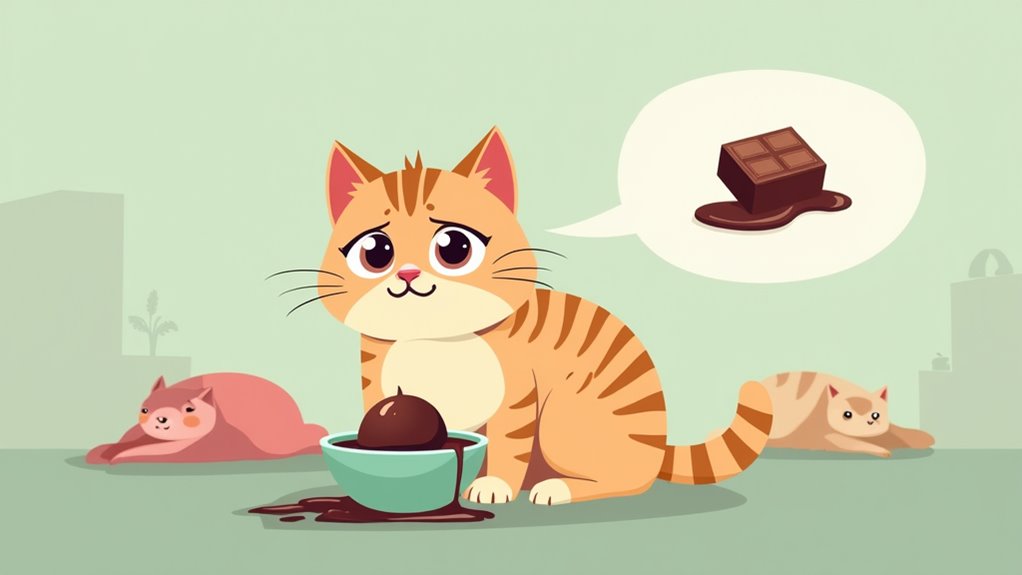
Recognizing the signs of chocolate poisoning in cats is crucial. This is especially important if you think your cat has eaten chocolate. Symptoms can show up within an hour. Early signs include nausea and drooling. Vomiting and diarrhea often follow. These indicate that your cat’s stomach is upset. You may also see excessive thirst and more trips to the litter box. Restlessness and agitation can happen too.
As time goes on, the symptoms can get worse. Muscle tremors and spasms may appear. Your cat could even have seizures. These are serious signs of nervous system issues. Pay close attention to any strange heart rates or changes in breathing.
Act quickly if you notice any of these signs. Take your cat to the vet right away. Fast action can improve the chances of recovery.
Always remember to keep chocolate and chocolate treats far away from your cat. Prevention is the best way to keep your furry friend safe.
Emergency Response for Chocolate Ingestion
Act quickly if your cat eats chocolate. Contact emergency veterinary services right away.
Share important details: type of chocolate, amount eaten, time of ingestion, and your cat’s weight. Mention any symptoms you’ve noticed. This information helps vets respond effectively.
Do not try to treat your cat at home. Only a vet can safely induce vomiting or provide the right care.
If it’s been 1-2 hours since ingestion, the vet may induce vomiting to stop more toxins from being absorbed. They might also give activated charcoal to bind any remaining toxins.
Keep your cat calm during the trip to the clinic. Watch for symptoms like trembling or seizures.
Timely treatment is crucial. Delays can cause serious problems, like heart issues or trouble breathing. Your cat’s health is the top priority. Get help right away!
Preventing Chocolate Exposure in Cats
Keeping cats safe from chocolate is very important. Store chocolate in sealed containers that cats can’t open. Always place chocolate high on shelves or in cabinets with childproof locks. Never leave chocolate on counters or tables. Curious cats can easily jump up.
Educate visitors about the dangers of chocolate for cats. Tell family and friends not to leave chocolate out, especially during parties or holidays. Remind them to throw away wrappers and packaging securely. This prevents accidental eating.
During holiday times, don’t place chocolate gifts where your cat can reach them. Use pet gates to block access if needed.
Check your home regularly for any chocolate items that could be a problem. Following these tips helps keep your furry friend safe from chocolate toxicity.
Frequently Asked Questions
Can Cats Taste Sweetness in Chocolate Ice Cream?
Cats cannot taste sweetness. Their tastebuds are different from ours. Feline taste receptors do not detect sweet flavors. This means your cat won’t enjoy the sweetness of chocolate ice cream.
Even though cats can’t taste sweetness, chocolate ice cream is still not safe for them. Chocolate contains theobromine, which is toxic to cats. Eating chocolate can make them sick. Always keep chocolate and sweets away from your cat.
What Should I Do if My Cat Licks Chocolate Ice Cream?
Your cat licked chocolate ice cream. Act fast. Watch for signs like vomiting or thirst. Chocolate is toxic to cats. It can cause serious health issues. Contact your vet right away. They can give you the best advice. Keep an eye on your cat. Quick action helps ensure their safety. Always be careful with human food around pets.
Are There Safe Ice Cream Alternatives for Cats?
Cat-friendly ice creams are a great treat for your furry friend! You can make them using safe ingredients. Try lactose-free cat milk, plain yogurt, or pureed tuna. These options are tasty and safe. Always check for harmful additives. It’s important to watch your cat when giving new treats. They deserve a special snack too!
How Much Chocolate Ice Cream Is Toxic to Cats?
Chocolate ice cream is dangerous for cats. Even a small lick can make them sick. Cats do not digest chocolate well. It can harm their health. Symptoms of chocolate toxicity include vomiting, diarrhea, and rapid heart rate.
Keep all chocolate products away from your cat. This includes ice cream, candy, and baked goods. Always choose safe treats for your furry friend. It’s better to stick with cat-friendly snacks. Your cat will thank you for it!
Can Chocolate Ice Cream Cause Long-Term Health Issues in Cats?
Chocolate ice cream can harm your cat’s health. It contains theobromine and caffeine, which are toxic to cats. Eating chocolate regularly may lead to serious problems. Your cat could face liver damage or digestive issues. There’s also a risk of neurological problems.
Even small amounts can be dangerous over time. Cats are sensitive to these substances. It’s best to keep chocolate ice cream away from them. Always choose safe treats for your furry friend. Taking care of your cat’s health is important. Avoiding chocolate will help keep them happy and healthy.
Conclusion
Keeping chocolate ice cream away from your cat is very important. Chocolate is harmful to cats. Just a small amount can be dangerous. Only 0.3 ounces of chocolate per pound can cause problems. Cats are sensitive to theobromine, a chemical in chocolate. This can lead to serious health issues. Signs of trouble include vomiting, diarrhea, or hyperactivity.
If your cat eats chocolate, act fast. Contact your vet right away. Your cat’s health relies on your care. Always be careful with treats like chocolate ice cream. Choose safe snacks instead. Your furry friend deserves the best!
