
Can Cat Eat Clementines
This post contains affiliate links. As an Amazon Associate, we earn from qualifying purchases.
Clementines are not safe for cats. Their peels contain toxic compounds, including essential oils, which can lead to serious health issues. If your cat consumes clementines, watch for signs such as vomiting, diarrhea, or lethargy, as citric acid and other ingredients can irritate their stomach. It’s crucial to keep all citrus fruits securely stored to prevent accidental ingestion. If any symptoms arise, contact a vet immediately. There are also safer fruit options available for your furry friend, which will be discussed later in the article for those interested in more information.
Essential Facts in 30 Seconds
- Cats should avoid clementines due to toxic chemicals in peels and fruit.
- Clementine peels contain harmful essential oils affecting a cat’s nervous system.
- Ingesting clementines can cause vomiting, diarrhea, or lethargy in cats.
- The tough texture of clementine peels poses choking hazards or risks of stomach blockage.
- Keep all citrus fruits away from cats and inform others about their dangers.
Understanding Citrus Toxicity in Cats
Toxic Compounds: Citrus fruits can upset a cat’s stomach. They’ve citric acid, which is harmful. Grapefruit is particularly dangerous due to toxic compounds that can lead to serious health issues.
Some oils, like d-limonene and linalool, are in citrus peels. These oils are very toxic to cats. They can cause stomach problems, especially in sensitive cats. Cats don’t handle these substances well. This makes them more likely to get sick. Monitoring for symptoms is crucial if a cat ingests citrus.
To keep your cat safe from citrus, follow these tips:
- Avoid citrus oils: Keep all citrus products away from your cat.
- Watch for exposure: Be careful with cleaners or home remedies with citrus.
- Store wisely: Put citrus fruits where your cat can’t reach them.
Keeping these tips in mind will help protect your furry friend.
Symptoms of Citrus Poisoning
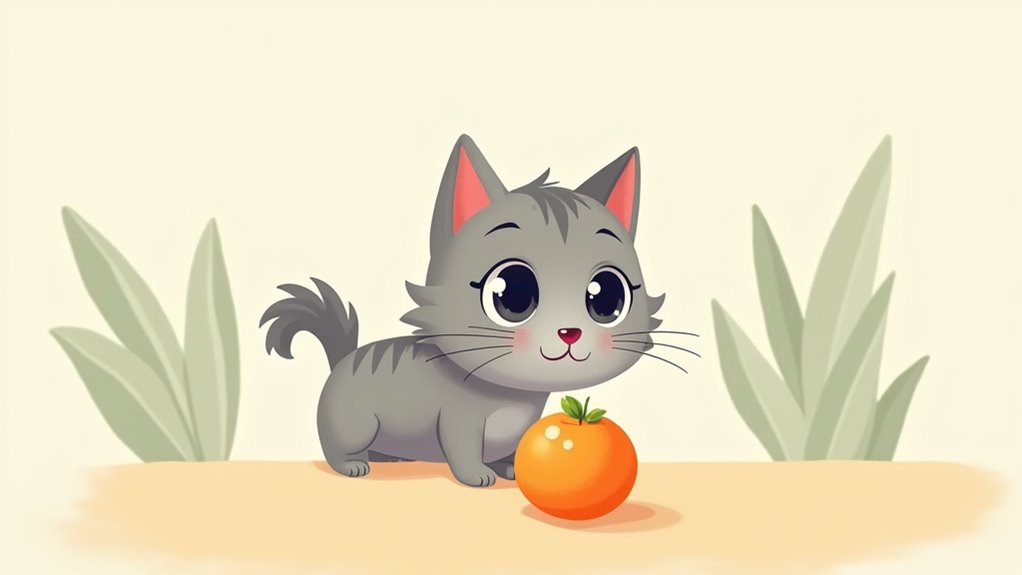
Citrus can be harmful to cats. If your cat eats citrus, watch for these signs. You might see vomiting, diarrhea, or drooling. These are signs of stomach upset. Your cat may also seem tired or weak. Tremors can happen too. In serious cases, seizures may occur. It’s important to note that citric acid and essential oils in citrus fruits can irritate a cat’s stomach.
Here’s a quick table of symptoms to keep an eye on:
| Symptom | Type | Action |
|---|---|---|
| Vomiting | Stomach issue | Call your vet right away |
| Diarrhea | Stomach issue | Check hydration levels |
| Lethargy | Neurological | Keep your cat calm |
| Tremors | Neurological | Get help immediately |
Notice any of these symptoms? Contact your vet. Quick action helps keep your cat safe and healthy.
Nutritional Needs of Cats
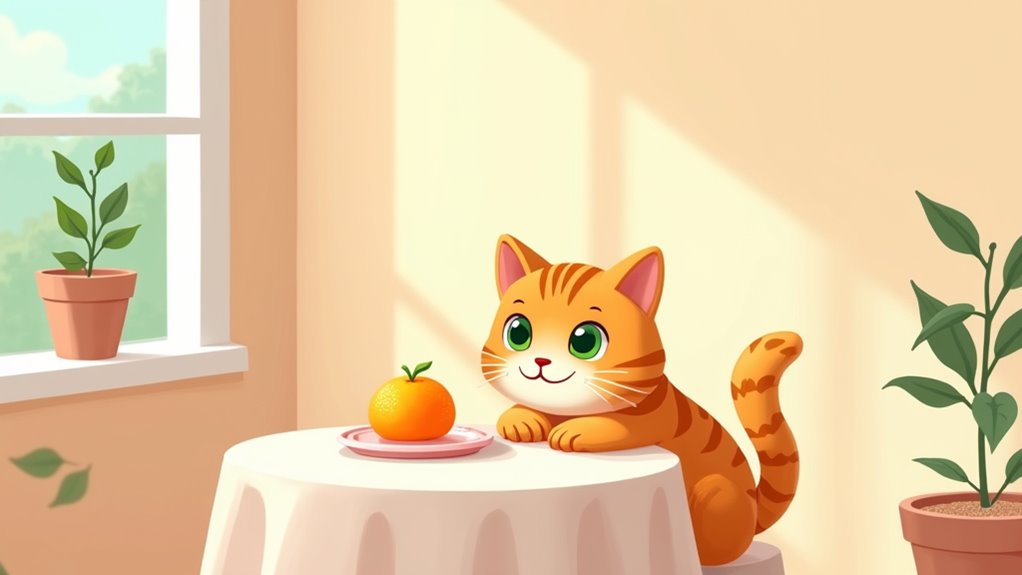
Cats need special food for good health. They’re obligate carnivores. This means their diet must have mostly animal proteins. These proteins provide essential nutrients. Cats need around 41 nutrients. They require 11 amino acids, like taurine and arginine, from their food.
Here’s what every cat needs:
- Protein: Aim for at least 40 grams per 1000 kcal. Animal sources are best.
- Essential Fatty Acids: Arachidonic acid is important for skin and coat health.
- Vitamins and Minerals: Balance is key. Too much can be harmful. Certain fruits should only be an occasional part of their diet.
Cats don’t digest carbohydrates well. High-carb diets can cause problems. Focus on a balanced diet based on your cat’s age and activity. Plant-based foods may lead to digestive upset in cats, so it’s important to prioritize their specific dietary needs.
Fresh water should always be available. Staying hydrated helps their overall health.
Risks Associated With Clementine Peels
Clementine peels are dangerous for your cat. They contain toxic chemicals that can harm your pet’s health. High levels of essential oils, like limonene, can affect your cat’s nervous system. Eating these peels may cause upset stomach, vomiting, diarrhea, or drooling.
Psoralens and furocoumarins in the peels can also lead to skin problems. This can make your cat uncomfortable and may cause serious health issues.
The tough texture of clementine peels can choke your cat or cause blockages in their stomach. Even tiny amounts of pesticides on the peels can make them more toxic.
Keep clementine peels away from your cat. Always watch your pet closely. Protect their health by avoiding these risks.
Recommended Actions for Cat Owners
Immediate Actions After Ingestion
If your cat eats clementines, keep a close eye on them. Watch for vomiting, diarrhea, or strange behavior.
Contact your vet right away if you see any symptoms. Don’t make your cat vomit unless a vet tells you to.
Preventive Measures
Keep all citrus fruits out of your cat’s reach. Store them in closed containers.
Teach everyone in your home about the dangers of citrus for cats.
Safe Alternatives
Offer safe fruits like apples, bananas, or blueberries instead. Always cut these into small pieces. Cats are obligate carnivores and do not require sugar in their diets, making citrus fruits harmful to their health. Treats should make up less than 10% of your cat’s diet. Keeping your feline friend safe is easy with a little care.
Frequently Asked Questions
Can Cats Be Allergic to Clementines or Citrus Fruits?
Cats can be allergic to clementines and other citrus fruits. Citrus fruits can cause allergic reactions in cats. Symptoms may include vomiting, skin irritation, and weakness. It’s important to watch your cat for these signs. If your cat shows any of these symptoms after eating citrus, contact a vet right away. Keeping citrus fruits away from your cat is a good idea. Always prioritize your cat’s health and well-being.
What Should I Do if My Cat Eats Clementines?
Cats and clementines don’t mix well. If your cat eats clementines, keep an eye on them. Watch for signs like drooling, vomiting, or being very tired. These can mean your cat is having a bad reaction.
Clementines contain citric acid and essential oils that can be harmful. Cats may not like the taste, but some might still try to eat them.
Act quickly. Call your vet if you see any bad symptoms. They can help your cat and give the right treatment. Keeping your cat safe is the most important thing.
Are There Safe Fruits for Cats to Eat?
Cats can enjoy some fruits safely. Apples, blueberries, and bananas are good choices. Always remove seeds and peels from apples. Blueberries are tasty and healthy. Bananas are sweet and safe too. Remember, fruits should be a treat, not a meal. Cats need meat for their main diet. Too much fruit can upset their stomachs. Offer small pieces and watch for any reactions. Keeping it simple helps your cat stay healthy!
How Can I Prevent My Cat From Eating Citrus Fruits?
Preventing your cat from eating citrus fruits is important for their health. Start by using physical barriers. Keep citrus fruits out of reach. Store them in closed containers.
Use strong-scented repellents around the area. Cats dislike scents like citrus, vinegar, or certain essential oils. Spraying these can help keep them away.
Provide safer alternatives for your cat. Offer cat-friendly treats or toys. This can distract them from the citrus fruits.
Understanding cat behavior is key. Cats are curious creatures. They might explore new smells and tastes. Keep an eye on them to reduce risks.
With these steps, you can protect your cat from citrus toxicity.
Do All Cats Dislike the Smell of Citrus?
Not all cats dislike the smell of citrus. Some cats may find it too strong, while others don’t mind it at all. Each cat has its own nose and feelings.
Studies show that many cats avoid citrus smells. They often react by backing away or acting nervous. Yet, some cats may be curious. They might sniff or even play with citrus fruits.
Why do cats react this way? Cats have a strong sense of smell. They can smell things much better than humans. This means they can find certain scents too strong or even unpleasant.
Conclusion
Clementines may seem like a fun snack for your cat, but they can be dangerous. Citrus fruits, like clementines, can cause health problems for cats. They may lead to vomiting or lethargy. It’s best to keep clementines away from your furry friend. Stick to snacks made for cats instead. Always pay attention to your cat’s health. If they eat a clementine by mistake, watch for any bad reactions. Prioritize your cat’s safety. Consult your vet if you’re unsure. A happy and healthy cat is the most important thing!
