
Can Cat Eat Collard Greens
This post contains affiliate links. As an Amazon Associate, we earn from qualifying purchases.
Cats can safely eat collard greens in moderation, as these greens provide beneficial vitamins and minerals. However, it’s important to be cautious of their high oxalate levels, which may lead to kidney stones. For optimal digestion, always cook and chop the leaves, avoiding any seasonings. Start with a small amount, such as a teaspoon, and keep an eye on your cat for any signs of an upset stomach. Further details and preparation tips will be provided for those interested in learning more.
Essential Facts in 30 Seconds
- Cats can eat collard greens in moderation for vitamins and minerals.
- Cook the greens without harmful seasonings like garlic or onions.
- Excessive consumption may risk kidney or bladder stones due to high oxalate levels.
- Introduce collard greens gradually, starting with a small portion mixed into regular food.
- Monitor for any adverse reactions, such as digestive upset, after feeding.
Nutritional Benefits of Collard Greens for Cats
Collard greens can be good for your cat. These leafy greens have vitamins A, C, and K. These vitamins help your cat’s vision, immune system, and blood clotting. While cats need animal nutrients, these vitamins can add some variety to their meals.
Collard greens also offer important minerals. They’ve calcium, magnesium, and iron. These minerals are good for strong bones and muscles. They also help with energy. The fiber in collard greens is great for digestion. It can help cats with sensitive stomachs.
These greens have antioxidants. Antioxidants help reduce stress in the body. This can improve your cat’s overall health. Collard greens also have a lot of water. This helps keep your cat hydrated without adding extra calories.
Always prepare collard greens safely. Talk to your vet before changing your cat’s diet.
Safety and Risks of Feeding Collard Greens
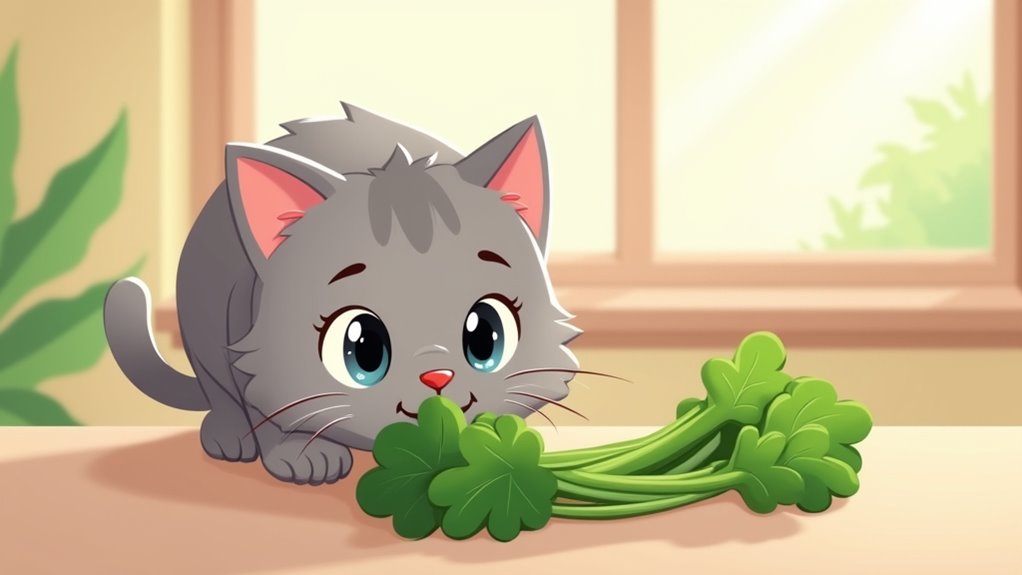
Collard greens can have some benefits for cats, but safety is key.
Oxalate Concerns
These greens have high oxalate levels, about 10 mg per cup. This can cause kidney or bladder stones, especially in cats with urinary problems. Cooking collard greens can lower oxalate levels and make them safer.
Digestive Issues
Too many collard greens can lead to gas, bloating, or diarrhea. Raw greens can be hard to digest. Keep portions small, around a teaspoon, to avoid stomach upset.
Toxicity Risks
Never feed collard greens that have garlic or onions. Always serve them plain and cooked.
Choking Hazard
Raw stems are tough and fibrous. Chop the leaves finely or cook them to make them easier to digest. Always watch your cat after feeding for any signs of trouble. Additionally, it’s important to monitor reactions after introducing new foods to ensure they suit your cat’s digestive health.
Recommended Preparation Methods
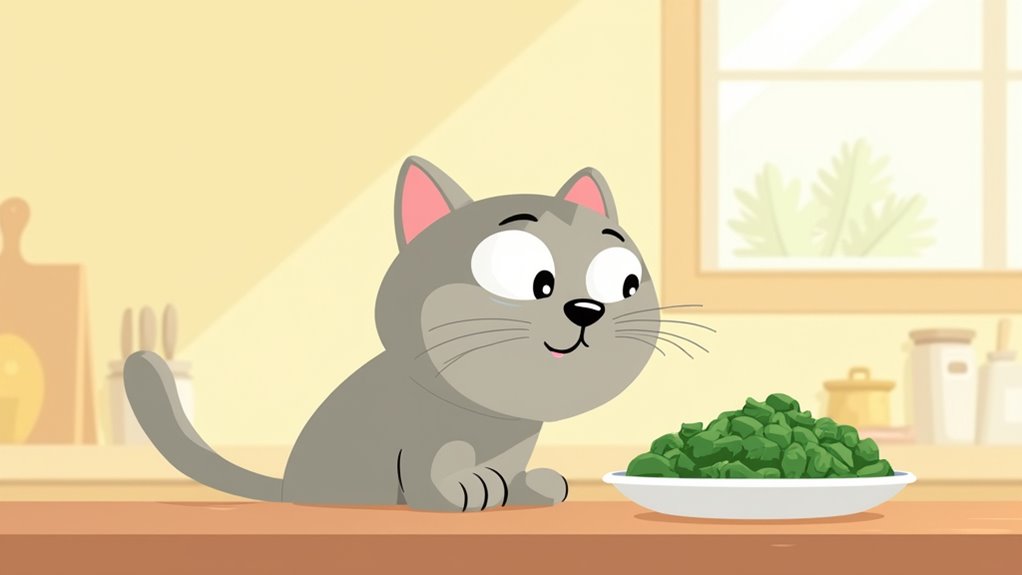
Preparing collard greens for your cat is simple and safe. Start by removing the thick central ribs. This step helps make the greens easier to digest.
Next, stack the leaves and roll them up tightly. Slice them into thin strips. This ensures even cooking. Always wash the greens thoroughly to remove dirt and any pesticides.
Lightly sauté or steam the collard greens until they become tender. Avoid using harmful seasonings. High heat or frying can create dangerous compounds.
Let the greens cool completely before serving them to your cat. Chop them into small pieces to prevent choking. Mixing the greens with your cat’s regular food can help you see how well they tolerate it.
Don’t forget to discard any cooking liquid. It may have unwanted minerals or contaminants. Following these steps lets your cat enjoy a tasty and nutritious treat safely!
How to Introduce Collard Greens to Your Cat
Introducing collard greens to your cat can be fun and safe with the right steps. Start this process when your cat is comfortable with its usual meals.
Offer collard greens as a rare treat, not every day. Begin with a tiny bit, like a teaspoon of cooked and unseasoned greens. Always chop the leaves finely or blend them for easier digestion.
Mix the collard greens with your cat’s regular food. Use one part greens to ten parts food. Serve this mix once or twice a week. This approach helps your cat adjust slowly. Keep an eye on your cat for any signs of upset stomach or discomfort.
Avoid any collard greens that have onion, garlic, or extra salt. Stop feeding greens if your cat has any bad reactions.
Check with your vet if you have any worries, especially if your cat has health issues. Your cat’s health and comfort should always come first.
Monitoring Your Cat’s Reaction to New Foods
Monitoring your cat’s reaction to new foods is very important, especially with collard greens. Watch your cat closely for any signs of problems.
Pay attention to these behaviors:
- Increased scratching or biting at their skin
- Changes in appetite or unusual stool
- Redness, swelling, or lesions on the skin
- Less energy or signs of irritability
These signs could mean your cat has an allergy or sensitivity. Symptoms might show up hours or even days after eating the new food.
Keep a detailed diary of what your cat eats and when. If you see any concerning signs, stop feeding collard greens right away.
Contact your veterinarian if symptoms get worse or new issues appear. Careful observation helps you spot potential allergens quickly. Keeping your cat happy and healthy is the goal.
Frequently Asked Questions
Can Collard Greens Replace My Cat’s Regular Food?
Collard greens cannot replace your cat’s regular food. They have some benefits, like vitamins and fiber. But they do not provide the proteins and fats that cats need. Cats are obligate carnivores. This means they need meat to thrive. A balanced diet is crucial for your cat’s health. Stick to food made for cats. This ensures they get all the nutrients they require. Always prioritize your cat’s needs for a healthy and happy life.
How Often Can I Give My Cat Collard Greens?
Collard greens can be given to your cat occasionally. Keep it to less than 10% of their daily food. This helps your cat enjoy the benefits without upsetting their stomach. Always wash the greens well and cut them into small pieces. Monitor your cat for any signs of discomfort after eating. If they seem fine, you can continue offering them as a treat. Remember, regular cat food should make up most of their diet.
Are There Any Breeds That Shouldn’t Eat Collard Greens?
No specific cat breeds should avoid collard greens. Still, remember that collard greens can upset a cat’s stomach. Sensitive cats may react badly to them. Always think about your cat’s health. If you decide to try new foods, do it carefully. Watch your cat for any signs of discomfort. Prioritize their well-being above all.
Can Kittens Eat Collard Greens Safely?
Kittens can eat collard greens safely in small amounts. These greens offer some nutritional benefits. However, meat should be their main food. Always introduce new foods slowly. Watch for any reactions when feeding collard greens. Keep portions small to ensure their health. Balance is key for a kitten’s diet.
What Should I Do if My Cat Refuses Collard Greens?
Cats can be picky eaters. If your cat refuses collard greens, don’t worry. Mix the greens with their favorite foods. Try adding steamed carrots or peas for variety. Offering different options helps you find what they like. Respecting your cat’s tastes is important. A balanced diet keeps them healthy and happy. Keep experimenting until you find the right mix. Cats love routine, so stick to a schedule. A happy cat means a happy home.
Conclusion
Collard greens can be a healthy snack for cats. They contain vitamins and fiber. But it’s important to be careful. Cats have different digestive systems than humans. Introduce collard greens slowly to avoid stomach issues. Watch your cat for any signs of discomfort after eating.
Always prepare collard greens properly. Cook them without any added salt or spices. Serve small amounts to keep it safe. Moderation is key. This way, your cat can enjoy new tastes without health risks. Keep your furry friend happy and healthy!
