
Can Cat Eat Cooked Shrimp
This post contains affiliate links. As an Amazon Associate, we earn from qualifying purchases.
Cats can safely eat cooked shrimp, provided it’s prepared correctly. It’s important to boil or steam the shrimp thoroughly, remove all shells and veins, and avoid adding salt or spices. Cut the shrimp into small pieces to prevent choking, and offer it as an occasional treat, making sure it constitutes no more than 10% of their daily caloric intake—approximately half a jumbo shrimp weekly. Keep an eye out for any allergies or digestive issues, and consult your vet for guidance on serving sizes. For those interested in more details about the benefits and risks of feeding shrimp to cats, further information will be provided below.
Essential Facts in 30 Seconds
- Cats can safely eat thoroughly cooked shrimp that is boiled or steamed.
- Remove shells, tails, and veins before serving shrimp to cats.
- Shrimp is a good protein source but should be an occasional treat.
- Serve shrimp plain, without salt, spices, or preservatives.
- Watch for allergic reactions or digestive issues after feeding shrimp.
- Consult a veterinarian before adding shrimp to your cat’s diet.
Safety of Cooked Shrimp for Cats
Feeding your cat cooked shrimp can be safe and enjoyable for both of you. Always cook shrimp thoroughly. Boiling or steaming works best. This kills harmful bacteria like Salmonella and E. coli. Raw or undercooked shrimp can make your cat very sick.
Safety Tips:
- Remove all shells, tails, and veins. These parts can choke your cat.
- Serve shrimp plain. No salt or spices, as these can be toxic.
Important Notes:
- Treat shrimp as a special snack. It shouldn’t exceed 10% of your cat’s daily calories. Shrimp can provide essential nutrients that support your cat’s overall health.
- Monitor your cat’s weight and overall health, as moderation is essential to prevent digestive issues.
- Watch your cat closely after giving shrimp. Look for signs like vomiting or diarrhea.
Shrimp can be a fun treat for your feline friend. Just remember to keep it safe!
Nutritional Benefits of Shrimp for Cats
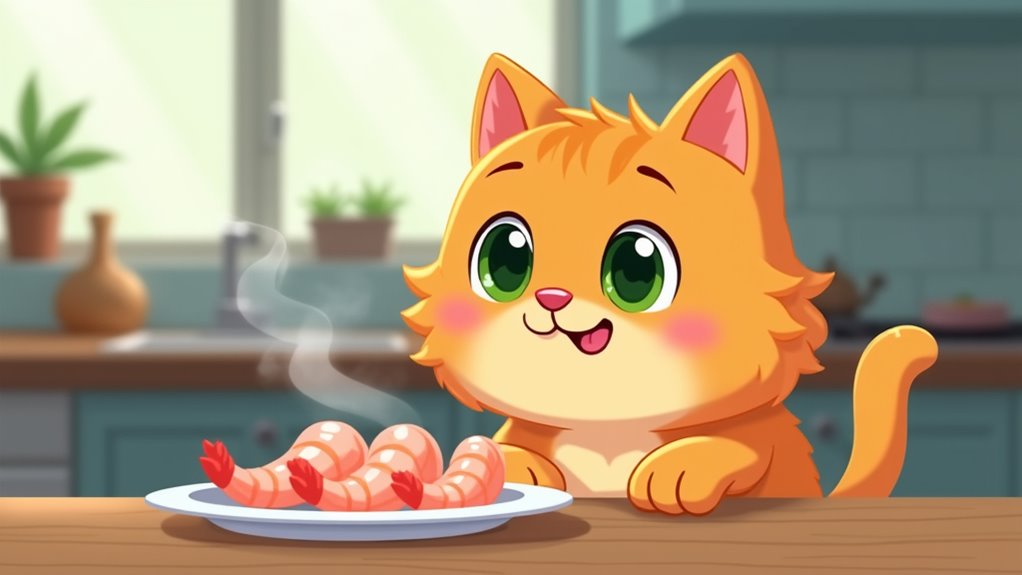
Shrimp is a great choice for your cat. It’s full of high-quality protein. This protein helps build strong muscles.
Shrimp also contains antioxidants. These antioxidants support your cat’s health and immune system.
Omega-3 fatty acids are another benefit. They keep your cat’s coat shiny and skin healthy.
Serving shrimp in moderation adds nutrition to your cat’s diet. Just remember to cook it first and remove the shell.
Enjoy feeding your furry friend this tasty treat!
High Protein Content
Shrimp is a great protein source for your cat. It helps them stay strong and healthy. Cats need protein for muscle growth and overall wellness. Adding shrimp to their diet can be beneficial, but it should be in moderation.
| Nutritional Aspect | Benefits for Cats | Recommended Amount |
|---|---|---|
| Protein Content | Supports muscle growth | Less than 10% of daily intake |
| Amino Acids | Helps with tissue repair | Small, regular treats |
| Low Fat & Calories | Good for weight control | Limit to treats only |
Shrimp is a lean option. Always serve it plain and cooked, without any seasoning. This keeps your cat safe and healthy. Check for allergies before giving new foods!
Beneficial Antioxidants
Shrimp offers great nutritional benefits for your cat. It’s rich in selenium, a powerful antioxidant mineral. Selenium helps neutralize free radicals and boosts the effects of vitamin E. This combination protects against oxidative stress and lowers the risk of heart disease.
Shrimp also provides key vitamins like A, B12, and E. These vitamins add to its antioxidant power. Trace minerals like zinc and copper in shrimp support a healthy immune system and aid in cellular repair.
The carotenoid astaxanthin found in shrimp efficiently fights oxidative damage. Adding shrimp to your cat’s diet can improve their health and well-being. Remember to serve it in moderation!
Rich in Omega-3
Cats enjoy shrimp, and they gain health benefits from omega-3 fatty acids found in it. Omega-3 is important for their overall well-being. Adding shrimp to your cat’s diet can offer many advantages.
Here are some benefits of shrimp as a source of omega-3:
- Healthy skin and shiny coat. It can reduce dryness and dandruff.
- Better joint and brain health. This is especially true for older cats, helping them stay flexible and sharp.
- Stronger immune system. This helps your cat fight off sickness better.
Shrimp may not have as much omega-3 as fatty fish, but it still makes a great treat. Serve it cooked and remember to give it in moderation!
Risks and Considerations
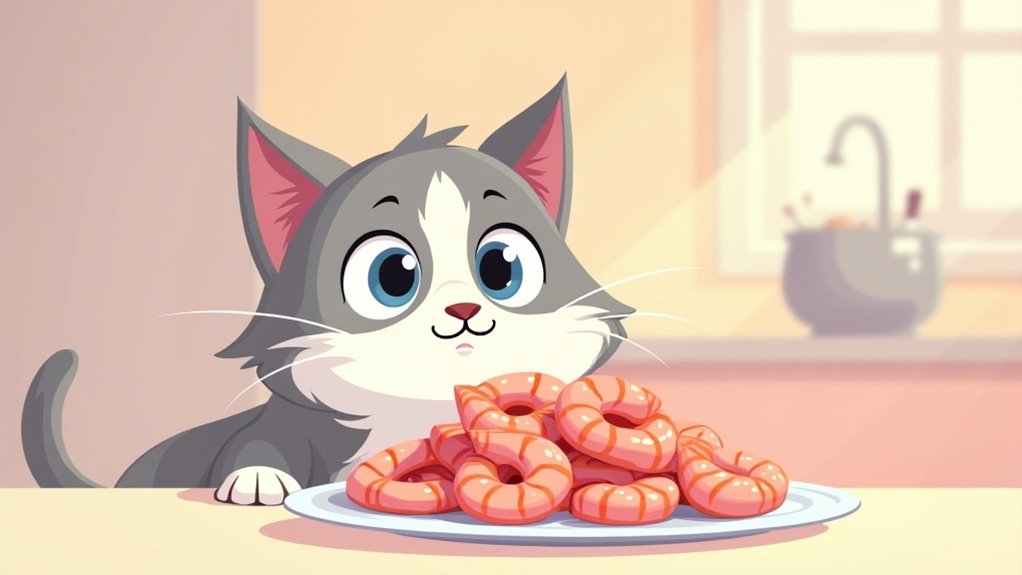
Be careful when giving shrimp to your cat. Some cats can have allergies or sensitivities. This can lead to digestive issues or other health problems.
Shrimp also has high sodium and cholesterol levels. Too much can upset your cat’s diet. Treat shrimp as an occasional snack. Always keep moderation in mind. Additionally, be aware that raw shrimp can carry harmful bacteria, which makes proper preparation essential.
A happy cat is a healthy cat!
Allergies and Sensitivities
Cats can have allergies and sensitivities that affect their health. Cooked shrimp is one food that might cause problems. Some cats react by having:
- Chronic itching and skin inflammation, especially on the face or belly.
- Gastrointestinal issues like vomiting and diarrhea, which show digestive sensitivities.
- Severe reactions like anaphylaxis, needing immediate veterinary care.
It’s important to know about food allergies in cats. Watch for any unusual symptoms after giving shrimp. Consulting a veterinarian is a good idea. They might suggest an elimination diet to find the allergen.
Always keep an eye on your cat when introducing new foods. If your cat shows signs of sensitivity or allergy, it’s best to avoid shrimp altogether. Taking these steps can help keep your cat happy and healthy.
Nutritional Imbalance Risks
Feeding your cat cooked shrimp can be fun, but it comes with risks. Be careful about allergies and sensitivities. Shrimp should only be a treat, making up about 10% of your cat’s daily calories.
Too much shrimp can lead to a lack of important nutrients. This may cause stomach issues and other health problems.
To keep your cat healthy, give a balanced diet with complete cat food. Change up their meals to avoid problems. Feeding shrimp too often can cause thiamine deficiency.
It can also create imbalances in fats, vitamins, and minerals. Always check with your vet if you have questions about your cat’s diet. Watch for any strange signs in their health.
Sodium and Cholesterol Concerns
Cooked shrimp can be a tasty treat for your cat. But check the sodium and cholesterol levels first. High sodium can harm sensitive cats.
Here are some important facts:
- Cooked shrimp may have 100-600 mg of sodium per serving.
- Cholesterol in shrimp is about 129-189 mg for every 3 ounces.
- Processed shrimp usually has extra sodium added.
Cats with heart or kidney problems should eat shrimp in moderation. Too much shrimp can raise sodium levels. This can cause high blood pressure and stress on kidneys.
Keep an eye on your cat’s overall diet to manage cholesterol. Always talk to your vet before adding new foods. Your cat’s health is important.
Proper Preparation Methods
Preparing shrimp for your cat is important for their health. Start with fresh or frozen shrimp. Make sure there are no preservatives or seasonings. Rinse the shrimp well. Remove the dark digestive tract to cut down on germs.
Next, cook the shrimp. Boil or steam them. Don’t add salt, spices, or oils. These can be harmful to cats. Cook the shrimp fully to kill any harmful bacteria, like Salmonella.
After cooking, take off the shells, tails, and heads. This keeps your cat safe from choking. Cut the shrimp into small, easy-to-eat pieces.
Serve the shrimp plain, without any extras. Watch your cat for any signs of illness after they eat shrimp. Talk to your vet if you notice any allergies or health problems. Keeping your cat safe is the top priority.
Feeding Guidelines and Serving Size
To keep your cat healthy while enjoying shrimp, follow these feeding guidelines. Moderation is essential. Here are some important points:
- Serving size should be no more than 10% of your cat’s daily calories. For an average adult cat, this is about half a jumbo shrimp.
- Feeding frequency should be weekly or biweekly. This helps prevent overindulgence and ensures a balanced diet.
- Always remove the shells and tails from shrimp. This prevents choking hazards.
Start with small amounts of shrimp to check for allergic reactions. Adjust the serving size based on your cat’s weight and health. Consult your vet if needed.
This way, you can keep your feline friend healthy while treating them to something tasty! Shrimp can add fun variety to their meals but shouldn’t replace their regular cat food.
Veterinary Recommendations and Monitoring
Your cat’s health is very important. Follow your vet’s advice when adding cooked shrimp to their diet. Talk to your vet first. They’ll help you decide if shrimp is safe and how much to give.
Monitoring Health
- Watch for Symptoms: After feeding shrimp, check for vomiting, diarrhea, or tiredness.
- Allergic Reactions: Look for signs like stomach pain or not eating. Contact your vet right away if you see anything unusual.
Safe Practices
- Start Slow: Give small amounts of shrimp at first to see how your cat reacts.
- Keep a Record: Write down any bad reactions for your vet visits.
Regular check-ups are important, especially if you give shrimp often. Blood tests may help check iodine levels or allergies.
Keep your cat healthy with careful monitoring and help from your vet.
Frequently Asked Questions
Can Kittens Eat Cooked Shrimp Safely?
Kittens can enjoy cooked shrimp as a treat. It’s safe for them, but make sure it’s plain and fully cooked. Remove any shells before serving. Shrimp can be a fun addition to their diet, but it should not be a main meal. Always ask your vet before adding new foods to your kitten’s diet. This helps ensure they get all the nutrients they need. Keep treats like shrimp occasional. Too much can upset their stomach. Remember, a healthy kitten is a happy kitten!
How Often Can I Give My Cat Shrimp?
You can give your cat shrimp once or twice a week. This makes a tasty treat! Just make sure to prepare the shrimp properly. Cook it without any seasoning or spices. Remove the shell and tail. This keeps your cat safe and healthy. Shrimp has protein and nutrients. It can be a fun addition to their diet. Remember, balance is key. Too much shrimp can upset their tummy. Stick to a small amount, and your cat will love it!
Is Frozen Cooked Shrimp Safe for Cats?
Frozen shrimp can be a tasty treat for your cat. Make sure it is plain and free from preservatives. Cooking it well is important. Shrimp can add good nutrition to your cat’s diet. Serve it only as an occasional snack. Too much shrimp can cause health problems. Always watch for any signs of an allergic reaction. Enjoy sharing this special treat with your furry friend!
Can Shrimp Cause Allergies in Cats?
Your cat may enjoy shrimp, but shrimp can cause allergies. Skin irritation is a common sign. Some cats might vomit after eating shrimp. Ear infections can also happen.
Watch for these symptoms. If your cat shows any, stop giving shrimp. Always consult your vet for advice on your cat’s diet. Keeping your furry friend healthy is important. Choose safe foods that won’t upset their tummy.
What Should I Do if My Cat Refuses Shrimp?
Cats can be picky eaters. If your cat won’t eat shrimp, there are plenty of other tasty options. Try cooked chicken or fish instead. Many cats love these meats. Pay close attention to what your cat enjoys.
Introduce new foods slowly. Mix small amounts of the new food with their favorite. This helps them get used to different tastes. Don’t force your cat to eat something they dislike. Keep trying different flavors. With patience, your cat may discover new favorites.
Conclusion
Cooked shrimp can be a tasty treat for your cat. This seafood is safe in moderation. Too much shrimp may upset your cat’s stomach. It can also cause nutritional problems over time. Always serve shrimp properly. Remove the shells and avoid any seasoning. Before sharing, check with your vet. This ensures the shrimp is healthy for your furry friend. Sharing food can be fun, but safety comes first. Enjoy your meal, and keep your cat safe!
