
Can Cat Eat Corn on the Cob
This post contains affiliate links. As an Amazon Associate, we earn from qualifying purchases.
Corn on the cob is unsafe for cats, as it poses a choking hazard and can lead to digestive blockages that may require emergency surgery. Instead, you can safely offer plain, cooked sweetcorn kernels in small amounts—about 1-2 teaspoons monthly. It’s important to avoid fried corn and cornmeal products, which are difficult for cats to digest. Always monitor for any signs of digestive distress after giving treats. For those interested in more details, further explanation about safe options for your feline friend will follow.
Essential Facts in 30 Seconds
- Cats should not eat corn on the cob due to choking hazards.
- Corn cobs can cause gastrointestinal blockages, posing serious health risks.
- The hard texture of corn cobs makes them hard to digest for cats.
- A stuck corn cob may require emergency surgery.
- Offer small amounts of plain, cooked corn kernels as a safer treat.
Safety of Corn for Cats
Corn may seem like a harmless snack for your cat, but it can be dangerous. Corn cobs are hard to digest and can cause choking. If a corn cob gets stuck in your cat’s throat or intestines, it may need emergency surgery. The tough texture can also hurt your cat’s teeth and gums.
Here are some important facts to remember:
- Gastrointestinal Blockage: Corn cobs can block digestion. This can lead to vomiting and tiredness. Choking hazards are a significant concern when cats consume corn cobs.
- Digestive Irritation: Corn husks may upset your cat’s stomach. This can cause diarrhea and pain.
- Corn Allergies: Some cats are allergic to corn. Symptoms can include scratching or vomiting.
Keep corn cobs away from your cat. Watch for signs of distress if they eat any. Always ask your veterinarian for advice about your cat’s diet and health. Additionally, corn should not be a primary food source in a cat’s diet, as they thrive on a diet rich in animal proteins.
Nutritional Value of Corn for Cats
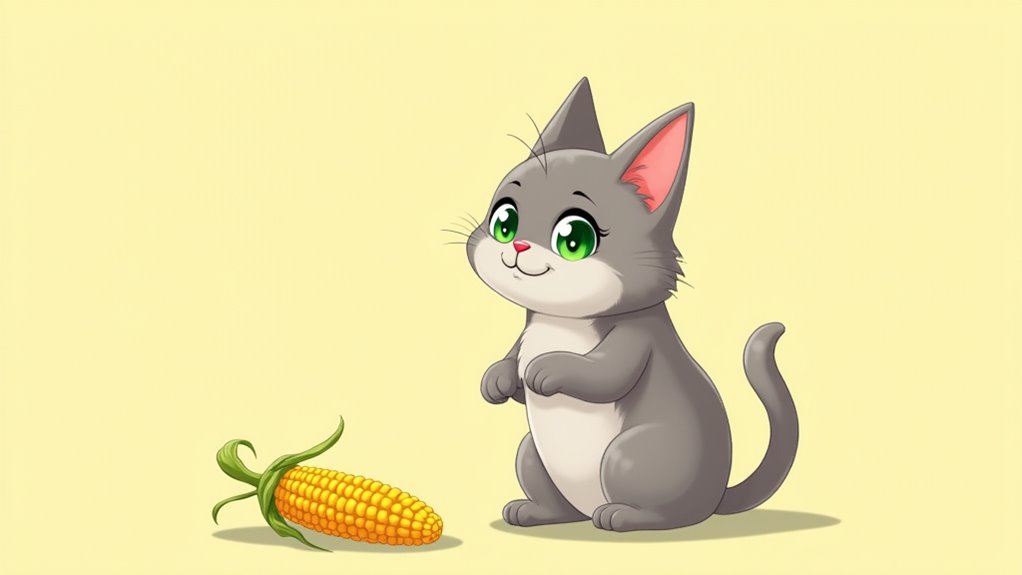
Corn has some nutritional value for cats. It offers protein, carbohydrates, and fiber. These elements can help with digestion and provide energy.
Corn also contains vitamins and minerals.
Cats need meat for certain amino acids. These are important for their health. Relying too much on corn can cause nutritional problems.
Balance is key. Always feed your cat a mix of food. A diet rich in meat is best for their needs.
Nutritional Benefits of Corn
Cats eat mostly meat. They need animal proteins for good health. Still, corn can be helpful in small amounts. Corn has about 3.41 grams of protein per 100 grams. This isn’t enough for cats, but it does have other benefits.
Corn is a good source of fiber. It has about 2.4 grams of fiber per 100 grams. This helps keep your cat’s digestion healthy. Corn also has vitamins A and E. These vitamins boost immunity and help keep your cat’s coat shiny.
Corn has a high amount of carbohydrates. It contains 21 grams per 100 grams. Cats don’t need many carbs. The main benefit of corn is its fatty acids, especially linoleic acid. This fatty acid is important for skin health.
Always serve corn in small amounts. It should be a tiny part of their meat-based diet. This way, your cat can enjoy the benefits without any issues.
Cats’ Dietary Needs
Understanding your cat’s diet is important for their health. Cats are obligate carnivores. This means they get nutrients mainly from meat. Corn might look harmless, but it doesn’t provide essential amino acids. Too much corn can upset their stomach.
Why Corn is Not Ideal for Cats
- Incomplete Protein: Corn doesn’t have all the protein cats need.
- Digestive Issues: Too much fiber and carbs can cause vomiting or diarrhea.
Smart Feeding Tips
- Limit Corn: Keep it to 7-10% of their daily food.
- Treat Sparingly: Use corn as an occasional snack. Avoid corn on the cob to prevent choking.
Focus on meat-based foods for your cat. This ensures they get the right nutrients and stay healthy. Additionally, while corn is not toxic, high salt content in processed snacks can lead to digestive issues for cats.
Risks of Feeding Corn on the Cob to Cats
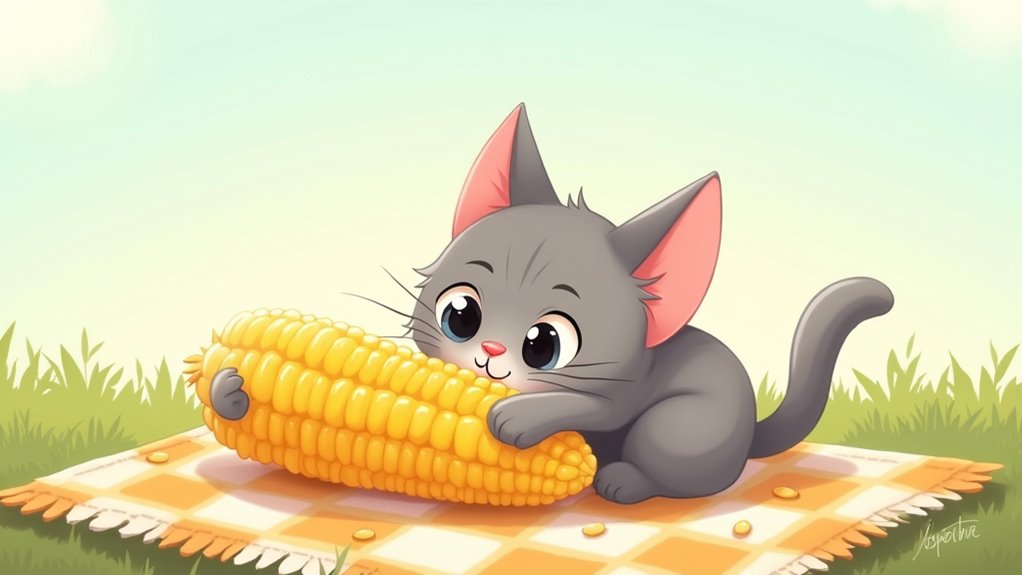
Feeding corn on the cob to your cat can be risky. It can cause serious health issues. Choking hazards and intestinal blockages are the main dangers. Corn cobs are hard and big. They can’t pass through a cat’s digestive system. This may need emergency surgery. Even small pieces of corn can be a choking risk.
| Risk | Details |
|---|---|
| Choking Hazards | Whole kernels can get stuck in the throat. |
| Intestinal Obstruction | Cobs and husks can block the gut badly. |
| Digestive Upset | Corn can cause vomiting or diarrhea in some cats. |
| Long-term Health Issues | Too many carbs can lead to obesity. |
| Emergency Needs | Get immediate vet help if choking happens. |
Always keep an eye on your cat around corn. The risks are serious and can happen fast.
Acceptable Forms and Quantities of Corn for Cats
Not all types of corn are good for your cat. Plain, cooked sweetcorn kernels are safe in small amounts. Offer about 1-2 teaspoons once a month. Always take the kernels off the cob. This helps prevent choking.
Air-popped popcorn is also okay, but skip the butter and salt. If you use canned corn, rinse it well. This removes extra sodium.
Here are safe corn options and serving sizes:
- Sweetcorn kernels: 1-2 teaspoons, once a month
- Air-popped popcorn: a few pieces, sometimes
- Canned corn: 3-5 rinsed kernels, twice a month
Do not give cornmeal products or fried corn. These can be hard for cats to digest.
Physiological Considerations for Cats Eating Corn
Cats often show interest in corn, but they cannot digest it well. Their bodies are not made to handle corn like humans do. Because of this, feeding corn to cats can cause problems. It is important to understand how their bodies work.
| Aspect | Cats’ Ability | Implications |
|---|---|---|
| Salivary Amylase | Very Low | Little breakdown of starch |
| Pancreatic Amylase | Low | Limited digestion of starch |
| Disaccharidases | Low | Poor processing of carbohydrates |
| Resistant Starch | Fermented in Colon | Useful but not fully used |
| Overall Digestibility | Decreases with Corn | Less energy from corn-heavy diets |
These factors show why cats struggle with corn. They need proteins more than anything else for energy. When feeding corn, do so carefully. Always keep their nutritional needs in mind. Understanding these facts helps in making better food choices for your cat.
Recommendations and Precautions
Treat your cat with corn carefully. Always give plain, cooked corn kernels. A teaspoon is enough. This helps prevent stomach problems.
Never let your cat eat corn cobs. They can choke and cause serious health issues.
Keep your furry friend safe while enjoying a treat!
Safe Corn Treats
Corn treats can be a fun snack for your cat. It’s important to be careful. Serve only plain cooked sweetcorn kernels or air-popped popcorn.
Keep the amounts small—1 to 2 teaspoons once a month is best. No seasonings or butter should be added. Always make sure the kernels are fully cooked.
Some cat foods contain corn. These can be alternatives but offer little nutrition.
Watch your cat after giving corn treats. Look for any signs of tummy trouble. Limit how much corn they eat.
Never give corn on the cob, as it can cause choking. Keep your cat safe and happy!
Hazardous Corn Parts
Corn cobs can be very dangerous for your cat. These tough pieces can lead to serious problems. Here are the main hazards of corn cobs:
- Choking Hazard: Cats can choke on corn cobs. Even small bits can block their throat and cause suffocation.
- Intestinal Blockage: Corn cobs are hard to digest. They can get stuck in your cat’s stomach or intestines. This may need emergency surgery to fix.
- Dental Damage: Chewing hard corn cobs can break your cat’s teeth. It can also hurt their gums, causing pain and infection.
To keep your cat safe, don’t give corn cobs as treats. Choose safer snacks instead.
If your cat eats corn cobs, take them to the vet right away. Quick action can prevent serious issues.
Frequently Asked Questions
Can Corn Help With My Cat’s Hairballs?
Corn can offer some fiber. This fiber may help reduce hairballs in cats. But corn is not the best solution. Cats need high-quality protein for better health. Specialized hairball formulas work best. These diets help move hair through the digestive system. Always talk to your vet before changing your cat’s food. Your vet knows what is best for your pet.
Is Popcorn Safe for Cats to Eat?
Popcorn is not safe for cats. It can cause choking and digestive problems. The low calories in popcorn don’t matter. Unpopped kernels can be dangerous. Additives and seasonings can also harm your cat. It’s best to keep popcorn away from your furry friend. Always choose safer treats for your cat’s health.
Can Cats Be Allergic to Corn?
Cats can indeed be allergic to corn. They may show signs like excessive scratching, upset stomach, or skin problems. These symptoms can indicate a sensitivity to corn in their diet. It’s important to pay attention to these signs. Taking your cat to the vet is a smart choice. A veterinarian can help determine if corn is the cause. They can also suggest diet changes to keep your cat healthy. Keep your furry friend happy and comfortable by monitoring their reactions to food.
How Often Can I Give My Cat Corn?
Corn can be a fun treat for your cat, but it should be given in moderation. Offer corn about once every few weeks. Cats do not digest carbohydrates well. Too much corn can cause tummy troubles. A small amount can be safe and enjoyable. Corn has some benefits, but it’s not a main food. Always watch your cat after giving it corn. Make sure they don’t have any bad reactions. Keep treats like corn special and limited. This way, your cat stays happy and healthy!
What Should I Do if My Cat Eats Corn Cob?
A cat eating a corn cob can be serious. Watch for signs like vomiting or being very tired. Corn cobs can cause blockages in their stomachs. This can lead to choking or other problems.
Take action quickly. Call your vet right away. They can give the best advice. Getting help fast can save your cat’s life. Keeping your cat safe means keeping corn cobs out of reach. Always be careful with what your cat eats.
Conclusion
Cats can nibble on corn, but caution is key. About 40% of cats are sensitive to grains. Even small amounts of corn might upset their stomachs. It’s safer to give them small, cooked corn kernels. Never offer the cob. Always watch your cat for any bad reactions. Talk to your vet if you’re unsure. Keeping your furry friend healthy and happy is important.
