
Can Cat Eat Cucumber
This post contains affiliate links. As an Amazon Associate, we earn from qualifying purchases.
Cats can eat cucumber safely when prepared properly. To ensure your cat’s safety, cut cucumbers into small pieces and choose organic varieties to minimize pesticide exposure. Always wash them thoroughly before offering them to your cat. Introduce cucumbers gradually, providing 1-2 small pieces once or twice a week, and keep an eye on your cat for any signs of stomach upset or allergies. It’s important to avoid flavored or pickled cucumbers. For more detailed tips and potential risks, additional information will follow.
Essential Facts in 30 Seconds
- Cats can eat cucumbers in moderation.
- Cucumbers are low-calorie and hydrating treats.
- Cut cucumbers into small pieces to prevent choking.
- Wash cucumbers thoroughly and choose organic to reduce pesticide exposure.
- Introduce cucumbers slowly and watch for digestive issues.
- Avoid flavored or pickled cucumbers due to harmful ingredients.
Safety of Cucumbers for Cats
Cucumbers can be a fun treat for cats, but safety is important. First, cut cucumbers into small pieces. Big chunks can block your cat’s throat. Cats don’t chew food well, so smaller pieces are safer. Some cats may not even like cucumbers, so pay attention to their reaction.
Choose organic cucumbers when possible. Non-organic ones often have pesticides. Wash cucumbers thoroughly before giving them to your cat. Peeling the skin can help reduce pesticide exposure.
Introduce cucumbers slowly. Start with tiny pieces to see how your cat reacts. This helps avoid any tummy troubles like diarrhea.
Watch for allergic reactions too. Signs to look for include itching or vomiting. If you notice these, stop giving cucumbers and talk to your vet.
Always offer fresh, plain cucumbers. Avoid flavored or pickled options as they can be harmful. Following these tips ensures a safe and tasty treat for your furry friend!
Nutritional Content and Benefits
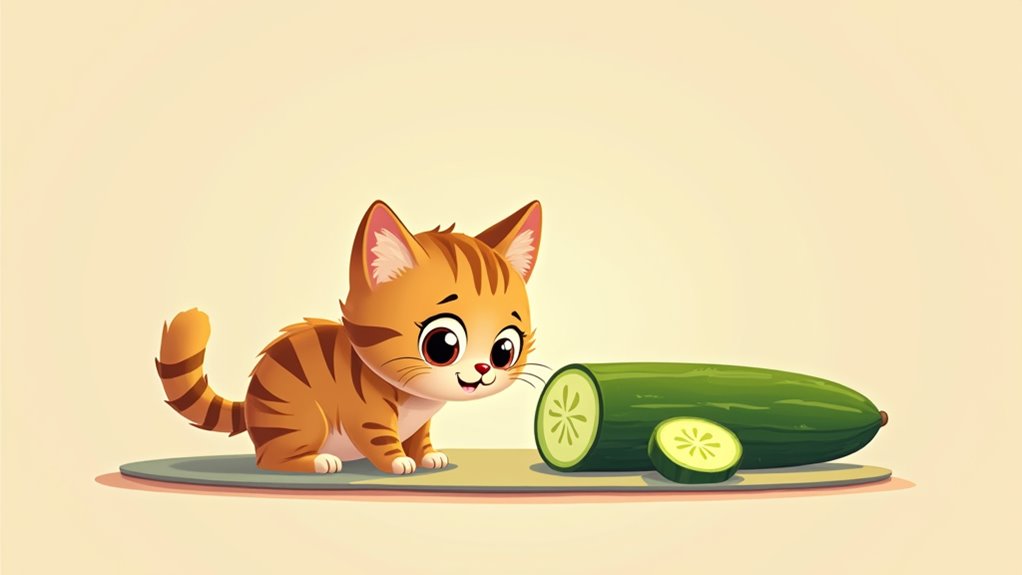
Cucumbers are a refreshing, low-calorie treat for cats. They contain about 95% water, which helps keep your cat hydrated. This is especially important for cats that eat dry food.
Here’s a quick look at what cucumbers provide:
| Nutritional Component | Benefits |
|---|---|
| Vitamin K | Helps blood clotting |
| Potassium | Supports heart health |
| Magnesium | Aids muscle and nerve function |
| Dietary Fiber | Helps with digestion |
| Antioxidants | May protect against aging |
Cucumbers offer some vitamins and minerals. They act as a fun snack but should not be the main food. Too much cucumber can upset your cat’s stomach and cause diarrhea. Start with small pieces to see how your cat reacts. Overall, cucumbers make a nice, hydrating snack. Just remember, they can’t replace the important protein your cat needs.
Feeding Guidelines and Portion Control
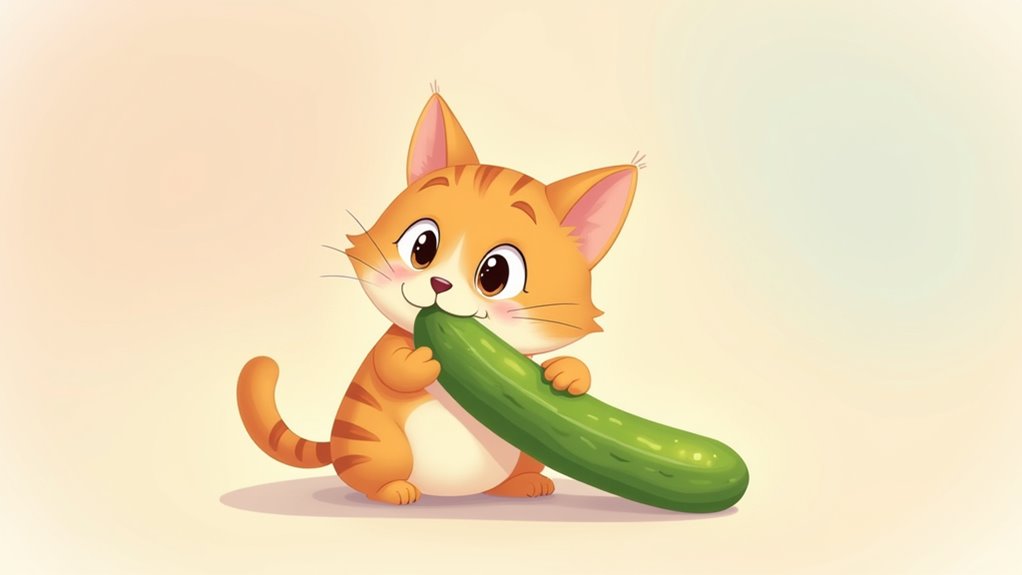
Feeding your cat cucumber is safe, but do it in moderation. Start with a small piece, about a quarter-inch thick. This helps you watch for any bad reactions. Keep cucumber treats to no more than 10% of your cat’s daily calories.
Here are some tips for serving cucumber:
- Frequency: Only give cucumber treats once or twice a week.
- Preparation: Wash cucumbers well. Peel them and remove any seeds.
- Serving Size: Offer 1-2 small pieces at a time to avoid choking.
Watch for signs of upset stomach. Stop giving cucumber right away if that happens.
Always make sure your cat eats a meat-based diet. Cats need meat to stay healthy. Follow these guidelines to safely add cucumber to your cat’s diet while keeping them happy and healthy.
Potential Risks and Side Effects
Introducing cucumber to your cat’s diet can be fun, but know the risks first. Here are some key points to consider:
- Allergic reactions can happen. Cats may itch, swell, or have trouble breathing after eating cucumber.
- Choking hazards exist. Large pieces can block your cat’s throat. Always cut cucumbers into small bits.
- Digestive issues may arise. Too much cucumber can cause diarrhea, vomiting, or gas due to high fiber.
- Pesticide exposure is a concern. Non-organic cucumbers might’ve harmful chemicals. Wash or peel them before giving to your cat.
- Keep it plain. Never add seasonings or sauces. These can be toxic to cats.
Cucumbers can be offered as a refreshing treat in small amounts to ensure your cat’s health and safety.
Always watch your cat when trying new foods. Consult your vet if you see any strange symptoms. Your cat’s safety is very important!
Behavioral and Sensory Considerations
Understanding your cat’s reactions to new foods like cucumber is important for their happiness. Cats often prefer soft, meaty textures. They may not like the crunchiness of cucumber. This unfamiliar texture can make them cautious or startled.
A cucumber appearing suddenly can scare your cat. This is especially true if they’re distracted. Cats have a strong sense of smell. Cucumber has a mild scent that doesn’t attract them like meat does.
To introduce cucumber in a safe way, follow these steps:
- Offer small, manageable pieces with familiar foods.
- Watch your cat’s behavior closely.
If they seem curious, let them explore. If they show fear or want to avoid it, respect their feelings. Always keep your cat’s comfort in mind. Building trust takes time.
Frequently Asked Questions
Can Cucumbers Help With My Cat’s Hydration Needs?
Cucumbers can help keep your cat hydrated. They have a lot of water in them. But cucumbers are not a replacement for fresh water. Cats need clean water every day. Wet cat food also adds moisture to their diet. Always make sure your cat has plenty of water available. This keeps them healthy and happy. Feeding cucumbers as a treat is fine, but don’t overdo it. Balance is key for your cat’s health.
Are Organic Cucumbers Safer for My Cat?
Organic cucumbers are a safer choice for your cat. They have fewer pesticides compared to regular cucumbers. This makes them a healthier option. Always wash and peel the cucumbers before feeding them to your cat. This helps reduce any risks even more. Your cat can enjoy a tasty snack that is good for their health!
How Should I Store Leftover Cucumber?
Store leftover cucumber like a fragile flower. Use airtight containers. Place a paper towel inside to absorb moisture. Keep it in the fridge. This method helps maintain its freshness and crunch for a few extra days.
Cucumbers spoil quickly. They can become slimy or mushy if not stored properly. Always check for signs of spoilage before eating. Enjoy your cucumber while it’s still crisp!
Can I Feed My Cat Cucumber Juice?
Cucumber juice can be given to cats in small amounts. It helps with hydration. Always use fresh juice without any additives. Too much cucumber juice may upset your cat’s stomach. Offer it as an occasional treat only. Watch your cat for any signs of digestive issues. Keeping things simple is best for your furry friend. Remember, moderation is key. Let your cat enjoy this refreshing option without any worries!
What Are Some Alternative Vegetable Treats for Cats?
Cats can enjoy tasty vegetable treats like cooked carrot sticks and green beans. These veggies are safe and healthy for your feline friend. Make sure to cook them well. Serve small amounts to avoid any stomach upset. Other good options include peas and pumpkin. Both are nutritious and can be a fun snack. Always introduce new foods slowly. Watch for any signs of allergies or upset stomach. Your cat will appreciate these tasty treats!
Conclusion
Cucumbers can be a fun treat for your cat. They are crunchy and hydrating. Cats might enjoy the taste, but don’t make it their main food. Always give cucumbers in small pieces. This helps you watch for any bad reactions.
Some cats may not like new foods. Watch for signs of upset stomach or other issues. If your cat seems unwell, call your vet. Your pet’s health is very important. Treats like cucumbers can add variety, but they should stay a small part of their diet. Keep your furry friend happy and safe!
