
Can Cat Eat Dog Treats
This post contains affiliate links. As an Amazon Associate, we earn from qualifying purchases.
Cats should not be fed dog treats, as they lack the specific nutrients cats need, such as taurine and adequate animal protein. Consuming these treats can lead to health issues like digestive upset and anemia. Additionally, harmful ingredients like propylene glycol and garlic may be present in dog treats. Instead, choose treats specifically formulated for cats that prioritize high animal protein content. For those interested in a deeper understanding, further explanations and details will follow. It’s essential to prioritize your cat’s health and make informed choices about their diet.
Essential Facts in 30 Seconds
- Cats have different nutritional needs than dogs, making dog treats unsuitable for them.
- Certain ingredients in dog treats, such as propylene glycol, can harm a cat’s red blood cells and cause anemia.
- Dog treats often have high carbohydrate content, which can upset a cat’s digestive system, leading to vomiting or diarrhea.
- Feeding dog treats regularly may promote poor eating habits and disrupt a cat’s balanced diet.
- It is recommended to use treats specifically designed for cats, prioritizing high animal protein and avoiding harmful additives.
Understanding the Nutritional Needs of Cats
Cats have unique nutritional needs that differ from dogs. They require about 41 essential nutrients, while dogs need only 37. This balance is crucial. Without it, cats can develop serious health problems.
Key nutrients for cats include:
- Taurine: This amino acid helps keep the heart and eyes healthy.
- Vital fatty acids: Linoleic and arachidonic acid support skin and coat health.
- Animal protein: This is necessary for strong muscles and energy. Cats also need high-quality commercial cat food that is specifically formulated to meet their nutritional requirements.
Cats are obligate carnivores. Their diet must be high in animal-based proteins. High carbohydrate content isn’t good for them. It can cause health issues. Additionally, commercial cat treats are formulated to meet specific nutritional needs and often provide essential nutrients that dogs may not require.
To ensure your cat stays healthy, consult a veterinarian. They can help you understand your cat’s needs based on their age, activity level, and health.
A tailored diet can greatly improve your cat’s life.
Risks of Feeding Dog Treats to Cats
Feeding dog treats to cats can harm their health. Cats need special diets. Dog treats often contain harmful ingredients like propylene glycol. This substance can damage a cat’s red blood cells and organs.
Dog treats can also upset a cat’s stomach. Cats may vomit or have diarrhea after eating them. Their digestive systems have trouble with the high carbs and fiber in dog treats.
To keep your cat healthy, avoid giving them dog treats. Choose treats made for cats that meet their needs. If you must give a dog treat, do it very rarely. Always watch for any bad reactions.
A balanced diet is crucial for your cat’s health.
Ingredients to Watch Out For
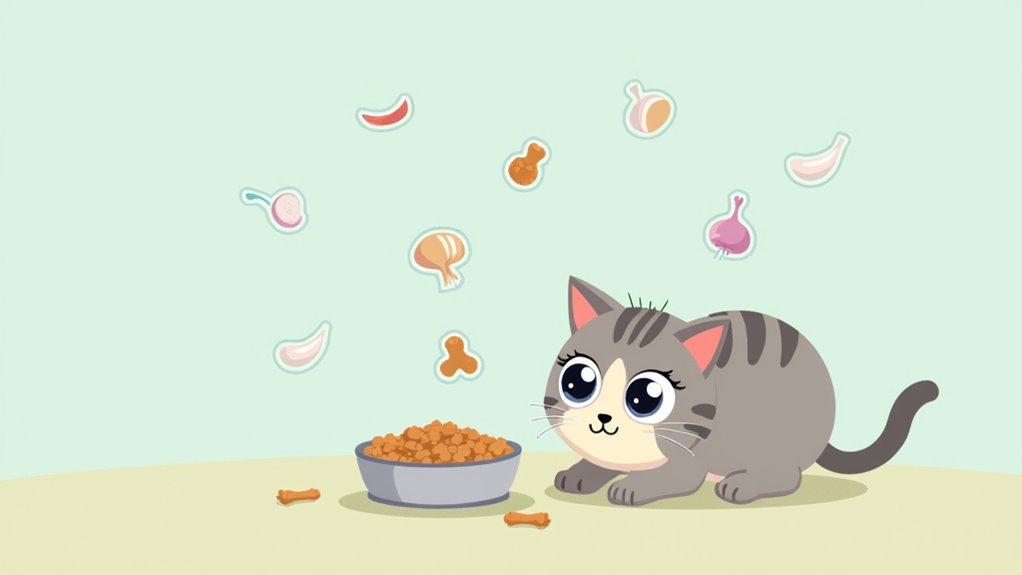
Sharing treats with your cat can be risky. Some dog treats contain ingredients that harm cats. Here are the main ones to avoid:
Toxic Ingredients
- Propylene Glycol: This can lead to serious anemia in cats.
- Garlic and Onion: These can cause oxidative damage and anemia. Sugar intake can further exacerbate health issues in cats.
Harmful Preservatives
- Artificial Preservatives: BHA and BHT may cause allergic reactions in cats.
- Irradiated Treats: These lose important vitamins, leading to nutrition problems.
Other Risks
- High carbohydrates from fillers can cause obesity and upset stomachs.
- Always read labels carefully. Some dangerous ingredients aren’t obvious.
Keep your cat’s health in mind. Choose treats wisely! Additionally, be aware that certain plants can also pose risks to your cat’s health if ingested.
Behavioral Implications of Dog Treat Consumption
Sharing dog treats with your cat might seem fun, but it can cause problems. Cats are curious. They often explore new things, including dog treats. This curiosity can turn into a habit. Soon, your cat may beg or steal treats.
The excitement over dog treats can cause competition between your pets. If you have both cats and dogs, this can lead to stress. Your cat might feel anxious or even aggressive.
Too many dog treats can also make your cat ignore their own food. This can lead to health issues.
To avoid these problems, create separate feeding areas for your pets. Use microchip feeders to keep dog food away from cats. Provide fun toys to keep your cat engaged.
Watch your pets closely. This helps you prevent bad habits and ensures they eat the right food. Healthy pets are happy pets.
Recommendations for Safe Treat Choices
Choosing safe treats for your cat is very important. Always pick treats made just for cats. Dog treats don’t have the right nutrients for felines. Look for treats high in animal protein and taurine. These are key for your cat’s health.
Here are some tips:
- Skip harmful additives: Read the ingredient list. Avoid treats with propylene glycol or other harmful ingredients.
- Pick the right size: Treats should be small and soft. This helps prevent choking and dental issues.
- Limit dog treats: Give dog treats only occasionally. They shouldn’t replace your cat’s regular meals, as high-quality commercial cat food is recommended for their overall health.
Remember to monitor portion sizes to maintain a balanced diet for your cat. Talk to your vet for personalized treat ideas, especially if your cat has health issues. By focusing on safety and nutrition, you keep your furry friend happy and healthy!
Frequently Asked Questions
Can Cats Eat Dog Treats in Moderation?
Cats can eat dog treats, but it’s not the best choice for their health. Dog treats do not provide the nutrients cats need. Cats require specific vitamins and proteins that dog treats lack.
Instead of giving dog treats, look for cat treats made just for them. These treats have the right ingredients. They help keep your cat healthy and happy. Always make sure to give treats in moderation. Too many treats can lead to weight gain or other health issues.
Choose treats that promote good nutrition for your cat. This way, you ensure they stay strong and lively.
What Should I Do if My Cat Eats Dog Treats?
No need to panic if your cat eats dog treats. Keep an eye on them. Look at the ingredients in the treats. Some dog treats may not be harmful, while others could be. Cats need specific nutrients that dog treats lack. Check for any strange behavior in your cat. Changes in eating, drinking, or energy levels can be signs of trouble.
Consider offering healthier treats made for cats. Many tasty options are available that your cat will enjoy. Always talk to a vet if you notice anything unusual. Your cat’s health is the most important thing to focus on.
Are There Dog Treats Safe for Both Cats and Dogs?
Finding dog treats that are safe for both cats and dogs can be tough. Cats and dogs have different nutrition needs. This means not all treats work for both. Always read the ingredients. Some ingredients can be harmful to one pet but safe for the other.
Look for treats made specifically for each pet type. This helps keep your pets healthy. Remember, what’s good for a dog may not be good for a cat. Choose wisely to ensure both pets enjoy their treats safely.
How Often Can Cats Eat Dog Treats Without Harm?
Cats can have dog treats sometimes, but keep it rare. Limit treats to about 10% of their daily calories. Too many dog treats can cause problems. Cats may gain weight or miss important nutrients. Dog treats don’t have what cats need. Always check the ingredients before giving them any treats. It’s best to stick with cat treats for a healthy diet.
Do Cats Like the Taste of Dog Treats?
Cats often show curiosity about dog treats. They might sniff them or even take a nibble. Still, most dog treats do not match a cat’s taste. Cats prefer savory flavors. Dog treats usually have different flavors, often more meaty or sweet. This difference can make dog treats less appealing to cats. So, while a cat might try a dog treat, it probably won’t be their first choice. Cats have unique taste buds that guide their food preferences. It’s best to stick with treats made for cats to keep them happy and satisfied.
Conclusion
Sharing dog treats with cats isn’t a good idea. Many dog treats contain ingredients that are not safe for cats. About 70% of cats are lactose intolerant. This means they can’t digest dairy well, which is often found in dog treats. Feeding these treats to cats can upset their stomachs. It can also lead to nutritional problems.
Instead, choose treats made especially for cats. These treats meet their unique dietary needs. Always check the labels on treats. If you’re unsure about what to give your cat, ask your veterinarian. Keeping your cat healthy is very important!
