
Can Cat Eat Earthworms
This post contains affiliate links. As an Amazon Associate, we earn from qualifying purchases.
Feeding your cat earthworms can be safe if done properly. Ensure the worms are sourced from clean areas to avoid chemicals, and clean them thoroughly to remove dirt and germs. However, be cautious, as earthworms can carry parasites like roundworms, which may lead to vomiting and diarrhea in your cat. It’s important to monitor your pet for any signs of infection, such as weight loss or lethargy. While earthworms offer limited nutrition, they are not essential for your cat’s diet. For those interested in more details about safe practices and potential risks, further explanation will follow.
Essential Facts in 30 Seconds
- Cats can eat earthworms from clean areas, free of pesticides and chemicals.
- Clean earthworms thoroughly to remove dirt and germs before feeding.
- Introduce earthworms in small amounts to check for adverse reactions.
- Earthworms provide moderate protein but lack essential vitamins for cats.
- Watch for signs of worm infections, as earthworms can carry parasites.
Safety of Earthworms for Cats
Feeding your cat earthworms can be safe, but you must be careful. Always choose worms from clean places. Avoid worms that might’ve pesticides or chemicals.
Feeding Tips:
- Clean earthworms well to remove dirt and germs.
- Start with small amounts. This helps your cat adjust.
- Watch for any bad reactions, such as vomiting or diarrhea.
Earthworms don’t have toxic substances. Still, they shouldn’t be the only protein in your cat’s diet. Eating too many can cause stomach issues.
Following these tips ensures a safe treat for your cat. It also helps keep their natural hunting skills sharp. Variety in their food is important for good health.
Risks of Parasites From Worm Ingestion
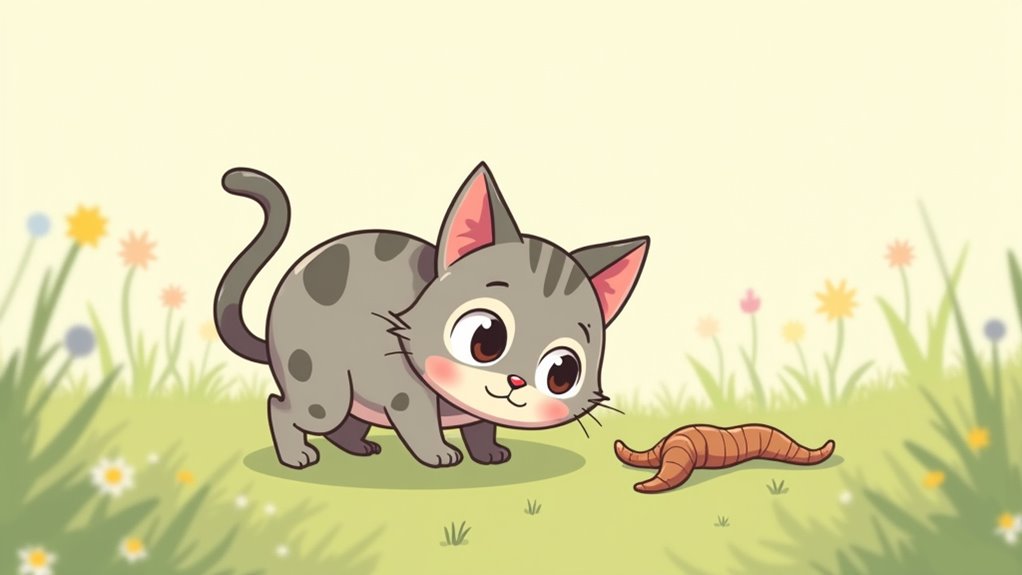
Cats face risks from eating earthworms. These worms can carry harmful parasites. Common parasites include roundworms, hookworms, lungworms, and whipworms. Each can cause serious health problems. Roundworms, for instance, often lead to vomiting and diarrhea, especially in kittens.
Earthworms can pick up infectious eggs from dirty soil. Cats might swallow these eggs by eating the worms. The danger of getting reinfected is high. Parasite eggs can stay in the environment for weeks.
Watch your cat’s behavior and health closely. Signs to look for include coughing, diarrhea, or weakness. If you notice any of these, contact your vet right away.
Regular stool checks can spot infections early. Keeping your cat from hunting and eating earthworms helps prevent these parasites.
Nutritional Value of Earthworms for Cats

Earthworms may seem like an interesting option for your cat’s diet. They offer some nutrients, but they should not replace a complete cat food.
Here’s a look at what earthworms provide:
| Nutrient | Earthworm Contribution |
|---|---|
| Protein | Moderate, not essential for cats |
| Vitamins | Limited, missing important ones like A |
| Minerals | Small amounts of iron, calcium, magnesium |
| Fat | Low, gives little energy |
| Bioavailability | Less than meat from other animals |
Earthworms can add a small amount of protein. Yet, their amino acid balance is not great for cats. Vitamins and minerals from earthworms are not enough. Your cat might enjoy hunting and eating them occasionally. Still, relying on earthworms can cause nutritional gaps.
A well-balanced diet is key for your cat’s health. Always prioritize quality cat food to keep your feline friend strong and healthy.
Signs of Worm Infections in Cats
Worm infections can be dangerous for cats. They show many signs that you shouldn’t ignore. Knowing these signs helps with early detection and treatment.
Watch for vomiting or diarrhea. You might see worms in their stool or vomit. Weight loss can happen even if your cat eats more. A dull or rough coat may mean poor nutrition. Pale gums can indicate anemia.
Different types of worms cause different symptoms. For example, tapeworms leave segments that look like grains of rice around your cat’s backside. Lethargy, a swollen belly, or a frequent cough are also red flags. These signs mean it’s time to see a vet.
Finding worm eggs in feces or worms in vomit confirms an infestation. Regular vet check-ups are important. Don’t wait for serious problems. Acting quickly can protect your cat’s health.
Treatment and Prevention of Worm Infestations
Treating and preventing worm infestations in cats is very important. Early action is key. Use deworming medicines like pyrantel pamoate and praziquantel to fight different types of worms. Regular treatments keep your cat healthy.
Here is a simple table of common worms and their treatments:
| Worm Type | Recommended Dewormer | Frequency of Treatment |
|---|---|---|
| Roundworms | Pyrantel pamoate | Every 3-6 months |
| Tapeworms | Praziquantel | Every 3-6 months |
| Hookworms | Selamectin | Every 1-3 months (for outdoor cats) |
| Whipworms | Prescription meds | Every 3-6 months |
To prevent worm infestations, use effective strategies. Keep fleas under control. Take your cat to the vet regularly. Keep your cat indoors to avoid risks. Do not let your cat near infected feces or contaminated soil. Always follow your vet’s advice. They can create a plan that works for your cat’s needs.
Frequently Asked Questions
Do Cats Enjoy Eating Earthworms?
Cats do not like eating earthworms. They are curious about the texture. The thrill of the hunt excites them. Chasing earthworms is often more fun than eating them. This makes the whole experience playful for cats. They enjoy the action, not the meal. Cats are natural hunters. Their instincts drive them to chase and pounce. Earthworms are just part of their playful adventures.
Can Earthworms Cause Allergies in Cats?
Earthworm allergies in cats are very rare. There are no known cases of cats being sensitive to earthworms. While it’s possible for cats to have reactions to many things, allergies to earthworms haven’t been reported in veterinary studies. Cats may have allergies to pollen, dust, or certain foods, but earthworms are not one of them. If a cat has skin issues or other allergic symptoms, it’s best to consult a veterinarian. They can help figure out the cause and find the right treatment.
How Do I Discourage My Cat From Eating Worms?
Discouraging your cat from eating worms is important for their health. Start by making your home fun and interesting. Use interactive toys. These toys can mimic the movement of worms. They will keep your cat busy and entertained.
Climbing structures are also great. Cats love to climb and explore. This satisfies their natural instincts. Provide scratching posts too. They help your cat stay active and focused.
Spend time playing with your cat. This builds a strong bond and keeps them engaged. Use feather wands or laser pointers. These activities can redirect their attention away from worms.
Finally, keep an eye on your cat outside. Supervise their outdoor time. This way, you can prevent them from eating worms. With these tips, your cat will stay healthy and happy.
Are Earthworms Harmful to Kittens?
Earthworms can be harmful to kittens. They might carry parasites that could affect your pet’s health. Plus, earthworms don’t provide much nutrition for growing kittens. It’s better to give your kitten safe snacks that are healthy and beneficial. Look for treats designed for kittens. These options support their growth and keep them happy. Always prioritize your kitten’s well-being with the right food choices.
Can Earthworms Transmit Diseases to Humans From Cats?
Earthworms do not pass diseases from cats to humans. They might carry some tiny germs, but the real risks come from cat poop or bites. Keeping clean helps prevent illness. Always wash your hands after handling pets or cleaning litter boxes. Focus on good hygiene. This keeps you and your family safe from diseases. Remember, earthworms are not a threat when it comes to cat-related illnesses. Stay safe and enjoy nature!
Conclusion
Cats can be curious about earthworms. But letting them eat these wriggly creatures isn’t a good idea. Earthworms can carry harmful parasites that may make your cat sick. Watch for signs like vomiting or tiredness. If you see these, contact your vet right away. Even seemingly harmless snacks can be risky. Keep your cat safe by feeding them a balanced diet that meets their needs. It’s the best way to ensure they stay happy and healthy.
