
Can Cat Eat Mealworms
This post contains affiliate links. As an Amazon Associate, we earn from qualifying purchases.
Cats can safely eat mealworms, but it’s important to choose the right type. Opt for commercially farm-raised or freeze-dried mealworms to avoid harmful parasites commonly found in wild ones. These options are high in protein, essential amino acids, and healthy fats. However, be mindful of potential allergies or digestive issues, and introduce them in small amounts. Live mealworms should be avoided to prevent choking hazards. For those interested in the benefits and risks of mealworms for cats, further details will be provided later in the article.
Essential Facts in 30 Seconds
- Cats can safely eat mealworms, preferably when they are commercially farmed or freeze-dried.
- Mealworms are rich in protein and essential nutrients for cats’ health.
- Avoid feeding live mealworms to prevent choking and parasite exposure.
- Monitor for any allergies or digestive issues when introducing mealworms.
- Control portion sizes to avoid gastrointestinal upset in cats.
Safety of Mealworms for Cats
Feeding your cat mealworms can be safe if done correctly. Wild mealworms might’ve parasites like nematodes and protozoa. These parasites can harm your cat’s health. To keep your cat safe, choose commercially farm-raised or freeze-dried mealworms. These options are usually safer.
Here are some important tips:
- No Live Mealworms: They can carry parasites and may choke your cat.
- Watch for Allergies: Cats rarely have allergies to mealworms, but monitor for any stomach upset.
- Control Portions: Give small amounts to prevent tummy troubles.
Nutritional Benefits of Mealworms
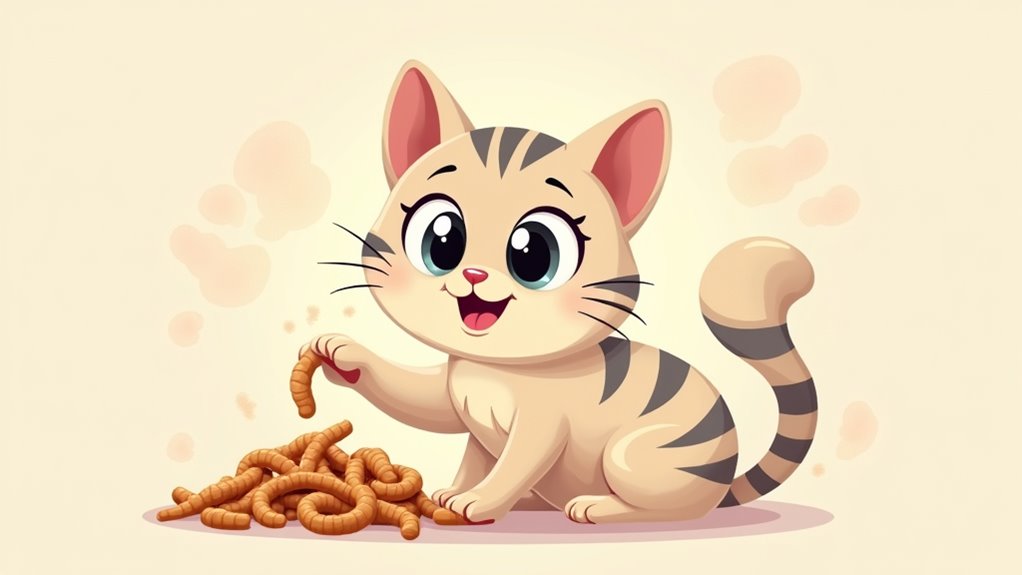
Mealworms offer great nutritional benefits for your cat. They’re high in protein, with about 50 grams of protein in every 100 grams of dried mealworms. This protein helps build and repair muscles. Mealworms also contain important amino acids like arginine.
These snacks have 25-30% fat. The fats include oleic and linoleic acid, which are good for your cat’s skin and energy. These healthy fats don’t upset digestion, but it’s important to use them in moderation to avoid obesity.
Mealworms also provide essential vitamins and minerals. They’re rich in vitamin B12, iron, and zinc. These nutrients are vital for a strong immune system. Additionally, incorporating mealworms can mimic natural hunting behavior, engaging your cat in play.
While mealworms are healthy, they shouldn’t replace your cat’s regular food. Mix them with their usual diet for the best results.
Risks of Feeding Cats Worms and Insects
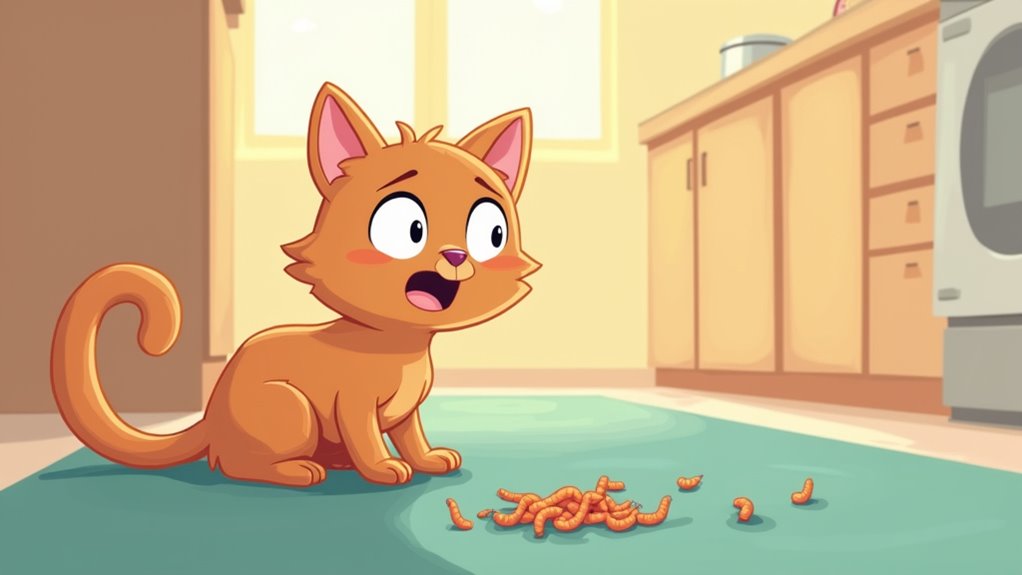
Feeding your cat worms and insects can be risky. Here are some important things to know:
- Parasites: Live worms often carry harmful parasites. This can cause vomiting and diarrhea in cats.
- Choking Risks: Small insects can choke cats, especially kittens or smaller breeds.
- Toxic Insects: Some insects, like fireflies, contain toxins. Eating them can be dangerous.
- Allergies: Cats can develop allergies to insect proteins. This may lead to skin irritation and stomach issues.
To keep your cat safe, choose farm-raised mealworms instead of wild ones.
Watch your cat closely after trying new foods. Consult your vet if you see any strange symptoms.
Balancing protein benefits with these health risks is essential for keeping your cat healthy.
Understanding Cats’ Hunting Behavior
Cats have a strong instinct to hunt. This behavior comes from their wild ancestors. Even if they are well-fed, domestic cats still show these hunting skills. Knowing about these behaviors is key to keeping your cat happy and healthy.
| Hunting Behavior | Description |
|---|---|
| Stalking | Cats silently stalk, showing their skills. |
| Pouncing | Quick moves help them catch prey. |
| Playful Interactions | Cats practice hunting with toys. |
| Environmental Needs | High spots help cats observe better. |
Understanding these natural instincts can stop boredom and frustration. Playing with your cat in ways that mimic hunting is important. This provides mental challenges and keeps them active. By recognizing their hunting behaviors, you can create a happier life for your cat.
Choosing Quality Mealworms and Alternatives
Selecting quality mealworms and alternatives is key for your cat’s health. Here are simple tips for safe sourcing:
- Pet-bred mealworms are best. They lack harmful chemicals and germs.
- Look for defatted or hydrolyzed mealworm protein. This option has more protein and is easier to digest.
- Check for freshness and proper storage. This helps avoid contamination and keeps nutrients intact.
- Freeze-dried options are great as treats. Just remember to add water to their diet.
Make sure to keep your cat happy and healthy with the right food choices!
Frequently Asked Questions
Can Kittens Eat Mealworms Safely?
Kittens can eat mealworms safely. These tasty treats provide protein and nutrients for healthy growth. Mealworms contain essential vitamins that help kittens thrive. Always choose freeze-dried or commercially prepared mealworms. Live or wild worms can harm your kitten’s health. Moderation is key. Offer a few mealworms as a snack, not a main meal. Watch your kitten enjoy this crunchy, nutritious bite!
How Often Can I Feed My Cat Mealworms?
Feed your cat mealworms once or twice a week. This keeps their diet varied and interesting. Mealworms provide extra protein, which is great for your cat. But remember, moderation is key. Too many can upset their stomach. A balanced diet is important for their health. Always follow feeding guidelines to keep your cat happy and healthy.
Are There Any Allergic Reactions to Mealworms in Cats?
Cats can have allergic reactions to mealworms. Even though mealworms are often called hypoallergenic, some cats might still react. Watch for signs like skin irritation or stomach problems. These reactions can happen when you first introduce mealworms into their diet. Mealworms can be a great source of nutrition. Just make sure your cat’s diet stays balanced. Always observe your cat closely when trying new foods. This way, you can keep them healthy and happy.
Can Mealworms Replace Regular Cat Food?
Mealworms cannot take the place of regular cat food. They have some nutrients, but they miss important vitamins and minerals. Cats need a balanced diet for good health. Regular cat food has all the nutrients your cat requires. Always follow feeding guidelines to ensure your cat gets what it needs. A varied diet keeps your cat happy and healthy. Stick with high-quality cat food for the best results. Mealworms can be a treat, but not a meal replacement.
What Are Signs of Mealworm Intolerance in Cats?
Cats may show signs of mealworm intolerance. Scratching can mean something is wrong. Look for digestive problems like vomiting or diarrhea. A loss of appetite is another warning sign. Pay attention to these symptoms. They can help you catch issues early. Keep your cat’s health in check. Regular vet visits are important too. Always monitor your cat’s behavior and eating habits. This way, you can ensure they stay happy and healthy.
Conclusion
Mealworms can be a fun treat for your cat. They are crunchy and tasty. But don’t give them too many. Think of mealworms like a special dessert. Great for an occasional snack, but not for every day. Always choose high-quality mealworms. Watch your cat for any bad reactions after eating them. Not all worms are safe for cats. A balanced diet is important. Mix different foods to keep your cat healthy and happy. Enjoy treating your furry friend!
