
Can Cat Eat Onion
This post contains affiliate links. As an Amazon Associate, we earn from qualifying purchases.
Cats cannot eat onions, as they are highly toxic to them. Even a small amount, such as a teaspoon of cooked onions, can lead to serious health issues, including hemolytic anemia. Symptoms may manifest between 6 to 24 hours after ingestion and can include weakness, vomiting, and pale gums. If your cat is exposed to onions, it is crucial to seek veterinary care immediately. For those interested in a deeper understanding of the dangers and hidden risks associated with onion consumption in cats, further details will be provided later in the article.
Essential Facts in 30 Seconds
- Cats should avoid onions due to toxic compounds.
- Even a teaspoon of cooked onion can be harmful.
- Symptoms of onion poisoning include vomiting, diarrhea, lethargy, and pale gums.
- Ingesting onions can cause hemolytic anemia, requiring veterinary attention.
- Store onions securely and inform others about their toxicity to cats.
Understanding Onion Toxicity in Cats
Onions can be very harmful to cats. They contain dangerous compounds, both raw and cooked. These include sulfoxides and aliphatic sulfides. Cats are especially at risk because of their unique body. Their hemoglobin has eight free sulfhydryl groups. This makes them more prone to oxidative damage. Even a small amount, just 5 g/kg of onion, can cause problems. Cats’ red blood cells depend on glutathione to stay safe. They struggle to cope with the stress from onion toxins. This can lead to hemolytic anemia, which is a serious condition. Onion toxicity can cause symptoms such as weakness and lethargy, making it essential to monitor your cat closely. Additionally, onion powder is toxic and should be avoided in all forms.
To keep your cat safe, don’t feed them onions or any Allium products. Watch for signs of onion exposure. Always seek veterinary help if you suspect your cat has eaten onions.
Signs and Symptoms of Onion Poisoning
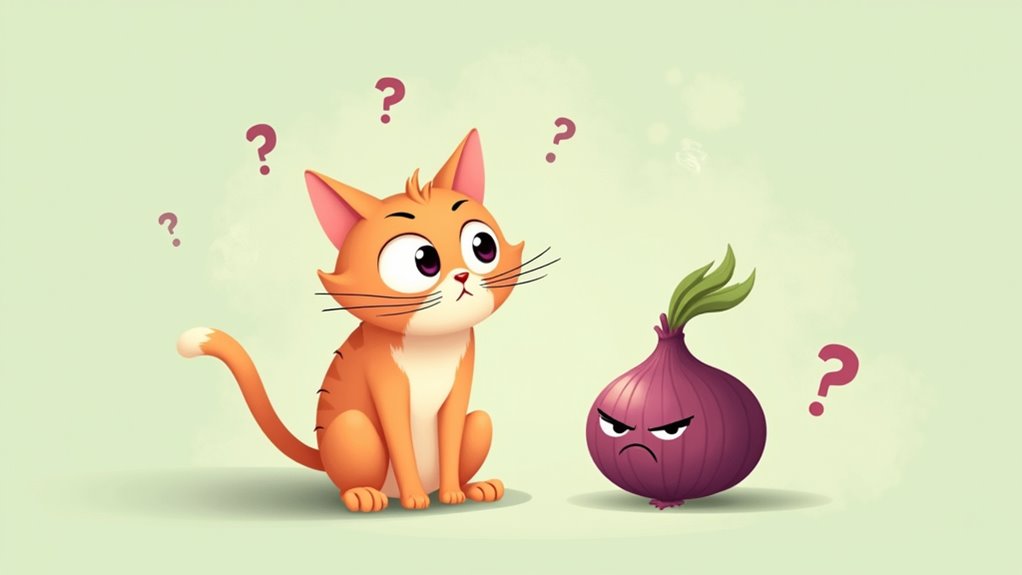
Recognizing the signs of onion poisoning in your cat is very important. Early symptoms include vomiting and diarrhea. These usually appear within 6 to 24 hours after your cat eats onions. You may also see signs of nausea, loss of appetite, or abdominal pain. It’s crucial to remember that even small amounts of onion toxicity can lead to severe health issues for your cat. Additionally, like garlic, onions are part of the Allium family, which is toxic to cats.
Here’s a quick reference table for the symptoms:
| Symptom Type | Signs |
|---|---|
| Early Symptoms | Vomiting, diarrhea, loss of appetite |
| Hemolytic Anemia Signs | Lethargy, pale gums, rapid breathing |
As the poisoning worsens, your cat might develop hemolytic anemia. Watch for weakness, lethargy, or yellowing of the skin and eyes. These signs require immediate veterinary attention. Acting quickly can greatly help your cat’s health.
Toxic Doses and Exposure Risks
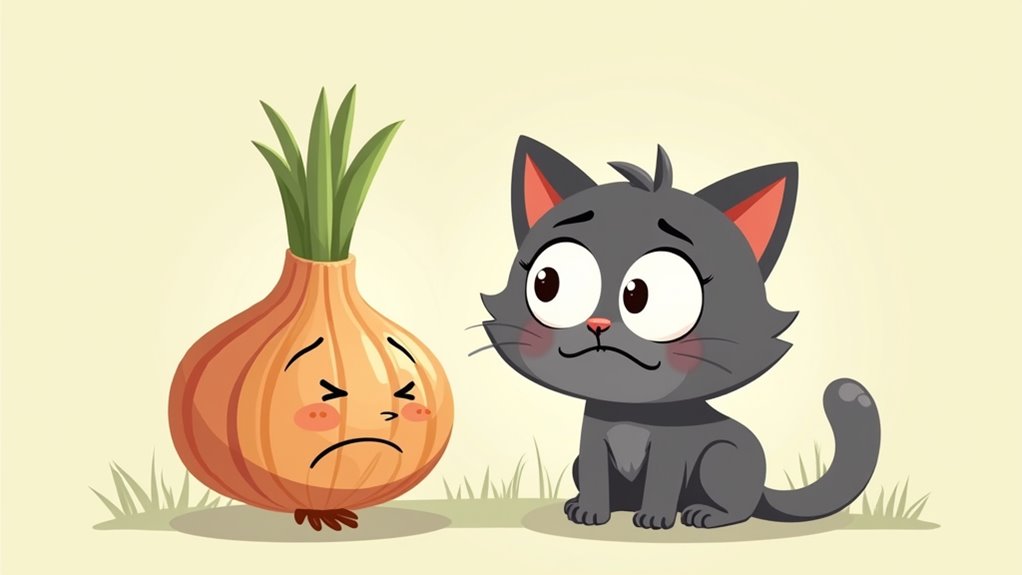
Onion toxicity is a serious issue for cats. The toxic dose is about 5 grams per kilogram of body weight. Even small amounts can be harmful. For example, less than a teaspoon of cooked onions can cause problems. Onion powder is especially dangerous. Just 1/4 teaspoon can be toxic for a 10-pound cat.
Cats can be exposed to onions through fresh, cooked, dehydrated, or powdered forms. All types can lead to health issues. Repeated exposure, even in tiny amounts, can build up toxicity. This can cause hemolytic anemia, a serious condition. Symptoms may show up quickly, within 12 hours, or take up to 5 days to appear. Garlic contains compounds that are also toxic to cats and should be avoided.
To keep your cat safe, avoid all foods with onions or garlic. Be careful with pet or baby foods that may contain these ingredients. Always check your cat’s diet closely to prevent accidental exposure.
Diagnosis and Treatment Options
Act quickly if your cat has eaten onions. Symptoms may show up 2 to 5 days later. Watch for vomiting, lethargy, and loss of appetite. Take your cat to the vet right away.
The vet will likely do tests like a complete blood count (CBC) and urinalysis. These tests confirm onion poisoning. Finding Heinz bodies in red blood cells shows oxidative damage.
For treatment, the vet might suggest gastrointestinal decontamination. This can include inducing vomiting or giving activated charcoal. Only do this under veterinary supervision.
Supportive care is also important. Intravenous fluids help with hydration and support the kidneys. In serious cases, blood transfusions may be needed for anemia. Onion powder is harmful to cats, and quick action is essential for recovery.
Keep a close watch on your cat. Stay in touch with your vet. Quick action can greatly improve the chances of recovery. Don’t hesitate if you see concerning symptoms.
Prevention Strategies for Cat Owners
Preventing onion toxicity in cats is very important for their health. Here are some simple ways to keep your cat safe.
Safe Storage
- Keep onions and Allium vegetables in sealed containers.
- Store them in high cupboards, out of your cat’s reach.
- Use trash bins with secure lids to stop cats from finding onion scraps.
Awareness
- Talk to everyone at home about onion toxicity.
- Share information about hidden onion ingredients in foods and sauces.
- Always supervise kitchen activities. Don’t leave food unattended if it contains onions.
Monitoring
- Watch for early signs of onion poisoning. Look for vomiting or weakness.
- If you think your cat ate onions, call your vet right away.
Waste Management
- Dispose of onion scraps in a safe way. Don’t leave them out for your cat to find.
- Regularly clean garbage areas to get rid of any smells.
Frequently Asked Questions
Can Cats Eat Cooked Onions Safely?
Cats cannot eat cooked onions. They are harmful and can make your cat very sick. All types of onions are toxic to cats, whether raw or cooked. Eating onions can cause serious health problems, like anemia. Symptoms may include weakness and vomiting. Always keep onions away from your cat. It’s better to be safe than sorry! Remember, cats should only eat safe foods. Always check what is safe for your pet.
What if My Cat Licked Onion Residue?
Your cat licked onion residue? Watch for symptoms like vomiting and tiredness. Onions can be very harmful to cats. They can cause serious health issues. Look for signs of trouble. Symptoms might include weakness, not eating, or diarrhea.
Act quickly. Contact your vet right away. They can provide advice and treatment. Early help is important to prevent complications. Keep your cat safe from onions and other dangerous foods. Always check what your pet eats.
Are All Onion Varieties Equally Toxic to Cats?
Not all onion types are equally harmful to cats. All onions have toxic compounds, but garlic is more dangerous. Raw onions can harm cats at 5 grams per kilogram of body weight. Processed onions, like onion powder, can be even more harmful. Always keep onions and garlic away from your pets. It’s best to avoid any food with these ingredients. Keeping your cat safe is the priority. If you suspect your cat ate onions, contact a vet right away.
How Long Does Onion Toxicity Last in Cats?
Onion toxicity in cats can cause symptoms that last several days. With quick treatment, recovery usually takes about 10 to 14 days. It’s important to watch for signs of onion poisoning. Early action can make a big difference in your cat’s recovery. Symptoms may include weakness, vomiting, or trouble breathing. If you notice these signs, seek help right away. Your cat’s health depends on it. Always keep onions and onion products away from your pets. Prevention is key to keeping your furry friend safe.
Can Onion Toxicity Affect Kittens Differently Than Adult Cats?
Onion toxicity hits kittens harder than adult cats. Kittens are more vulnerable. They show quicker and more severe symptoms. Their small size and immature bodies make them less able to handle toxins. Adult cats have more resilience. Therefore, even a small amount of onion can be dangerous for kittens. Symptoms can include vomiting, diarrhea, and weakness. It’s crucial to keep onions away from all cats, especially young ones. Always watch what your kittens eat. Protect them from onion exposure.
Conclusion
Keep onions away from your cat. Even a tiny bit can cause serious health problems. Anemia is one risk. This can be life-threatening.
Act quickly if your cat eats onion. Take them to the vet right away.
Prevent this danger. Always check food ingredients. Tell friends and family about the risks of onions.
Your cat’s health matters. Stay informed and protect your furry friend!
