
Can Cat Eat Orange Peels
This post contains affiliate links. As an Amazon Associate, we earn from qualifying purchases.
Cats should not eat orange peels, as they are toxic and can cause gastrointestinal issues like vomiting and diarrhea. In severe cases, ingestion may even lead to seizures. It is crucial to keep citrus fruits out of your cat’s reach to avoid accidental ingestion. For those interested, more detailed information about the effects of orange peels on cats and how to keep your feline safe from toxins will follow.
Essential Facts in 30 Seconds
- Cats should not eat orange peels due to harmful oils that can cause irritation and upset stomach.
- Ingesting orange peels can lead to vomiting, diarrhea, and severe symptoms like tremors or seizures.
- Cats generally avoid citrus scents, which can be overwhelming and signal danger.
- The tough texture of orange peels can pose a choking hazard and risk of intestinal blockages.
- If a cat ingests orange peels, consult a veterinarian immediately for guidance and care.
Understanding the Toxicity of Orange Peels to Cats
Sharing snacks with your cat can be fun, but orange peels are dangerous.
Orange peels contain harmful oils like d-limonene and linalool. These oils can cause serious health problems for your cat.
Cats can’t break down these oils safely. Eating orange peels or even touching them can lead to irritation or upset stomach. In serious cases, it can cause tremors or seizures. Consultation with a veterinarian is advised if ingestion is suspected.
To keep your cat safe, do these things:
- Never give your cat orange peels.
- Keep citrus fruits out of reach.
- Watch your cat for any signs of distress or irritation.
Signs to look for include drooling or vomiting. If you see these symptoms, call your vet right away.
Keeping your cat healthy and safe is very important!
Health Risks Associated With Ingesting Orange Peels

Ingesting orange peels can be very harmful to your cat. These peels can upset their stomach, causing vomiting and diarrhea. The citric acid in orange peels irritates your cat’s stomach lining, making them uncomfortable.
Even a little bit can lead to serious digestive issues, especially in sensitive cats.
Orange peels also contain toxic chemicals like limonene and psoralens. These substances can harm your cat’s liver. Signs of poisoning include drooling, weakness, and even seizures.
The tough texture of orange peels can cause choking hazards, increasing the risk of blockages in their throat or stomach.
To keep your cat safe, don’t give them orange peels. Watch for any signs of illness if they come into contact with citrus. Always reach out to your vet if you think your cat has eaten orange peels. Quick action is important for their health.
Behavioral Considerations: Why Cats Avoid Citrus
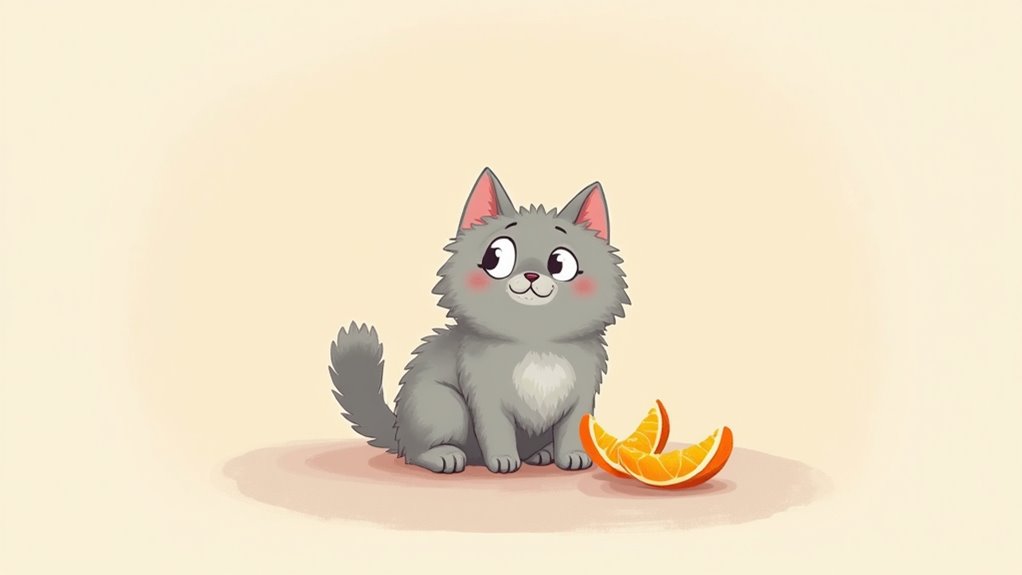
Cats naturally avoid citrus smells. Their noses are much more sensitive than ours. Strong scents from citrus peels, like limonene and linalool, can be overwhelming for them.
Citrus smells trigger an instinctive response. Cats may think these odors signal danger or toxins. This helps them stay safe.
Citrus can also mess with their territory. Cats use scent to mark their space. Strong citrus odors can confuse them, so they stay away.
Not every cat reacts the same way. Some may tolerate citrus better than others. Keep an eye on your cat’s behavior if you use citrus to deter them. This ensures it stays safe and effective.
Emergency Response for Orange Peel Ingestion
Cats may eat orange peels by accident. Acting quickly is very important. Watch for symptoms like vomiting, diarrhea, or being very tired. These signs may show that the peel is causing harm.
Take these steps right away:
- Do NOT make your cat vomit unless a vet says to.
- Call a veterinarian or animal poison control center immediately. The ASPCA Animal Poison Control Center is available at 888-426-4435.
- Be ready to tell them how much orange peel your cat ate and when the symptoms started.
A vet may give fluids or other treatments to help your cat. Early help is key to better outcomes.
Keep your home safe by removing orange peels and teach everyone in the house about this danger.
Safe Dietary Practices for Cats
Caring for your cat means understanding their diet. Cats are obligate carnivores. They need a diet that’s high in animal protein. To feed them safely, choose complete commercial cat foods. These foods provide the right balance of nutrients to keep them healthy.
Key Feeding Guidelines:
- Stay away from high-carb foods. Grains and potatoes aren’t good for cats.
- Check for allergens. Fish, beef, and soy can cause problems for some cats.
- Always provide fresh, clean water. Hydration is very important.
Feeding Frequency:
- Kittens should eat three meals a day.
- Adult cats do well with one or two meals daily.
- Adjust food portions based on your cat’s activity and health. This helps prevent obesity.
Following these guidelines ensures your cat gets the nutrients they need. A balanced diet keeps your cat happy and healthy!
Frequently Asked Questions
Can Cats Eat Other Citrus Fruits Besides Oranges?
Cats should not eat citrus fruits, including oranges. All types of citrus can be harmful to them. These fruits can cause citrus toxicity in cats. Symptoms may include vomiting, diarrhea, and skin irritation.
Instead of citrus fruits, try safer options. Blueberries and watermelon are both good choices. These fruits are healthy and tasty for your cat. Always check with your vet before introducing new foods. Keeping your feline friend safe is the top priority.
What Are the Symptoms of Citrus Poisoning in Cats?
Citrus fruits can be harmful to cats. After eating citrus, watch for signs of poisoning. Common symptoms include vomiting, diarrhea, and lethargy. Skin irritation can also occur. These symptoms can affect your cat’s health seriously. Keep a close eye on your pet. If you notice any of these signs, contact a vet right away. Quick action can help keep your feline friend safe!
Are Orange Seeds Toxic to Cats?
Orange seeds are toxic to cats. They contain compounds called psoralens. These compounds can cause health problems for your cat. All parts of the orange, including the seeds, can be harmful. It’s best to keep oranges away from your cat. This helps prevent any potential risks to their health. Always be cautious about what your cat eats. Keeping them safe is the priority.
How Can I Prevent My Cat From Eating Orange Peels?
Prevent your cat from eating orange peels by using simple strategies. First, store citrus fruits in a secure place. Keep them out of your cat’s reach. Use lemon peels as a natural repellent. Cats dislike the smell of citrus.
Keep your home clean. Remove any orange peels immediately. Offer fun distractions, like toys or treats. This keeps your cat busy and away from food scraps.
What Should I Do if My Cat Eats Orange Peel?
Your cat eating orange peel is not good. First, remove any leftover peel. Watch your cat closely for signs of citrus toxicity. Symptoms might include vomiting, diarrhea, or lethargy. These signs can show that your cat is not feeling well. Act quickly if you notice any of these symptoms. Contact a vet right away. Quick action can help prevent serious health problems. Always keep citrus fruits away from your pets. It’s better to be safe than sorry.
Conclusion
Orange peels are not safe for cats. These peels can cause stomach problems. The strong citrus smell also usually keeps cats away. If your cat eats an orange peel by accident, watch for any strange signs. It’s best to give your cat treats made just for them. This keeps them happy and healthy. Your furry friend will appreciate it!
