
Can Cat Eat Peanuts
This post contains affiliate links. As an Amazon Associate, we earn from qualifying purchases.
Cats can eat peanuts, but they should be given with caution. While peanuts aren’t toxic to cats, they can cause digestive issues and allergic reactions. Their high fat content—around 49g per 100g—might lead to vomiting or diarrhea. If you choose to give your cat peanuts, stick to raw, unsalted, unflavored ones, crush them, and limit servings to one or two small pieces. Additionally, watch for any signs of allergies, such as facial swelling. For those interested in a deeper understanding of the topic, more insights on keeping your feline friend safe will follow.
Essential Facts in 30 Seconds
- Peanuts are non-toxic to cats but may cause stomach upset due to high fat content.
- Whole peanuts can be a choking hazard for small or older cats.
- Cats can develop peanut allergies; watch for swelling or breathing difficulties.
- Peanuts lack essential nutrients for cats; prioritize high-quality cat food.
- Limit peanut servings to one or two small pieces to prevent digestive issues.
Understanding Peanut Toxicity for Cats
Peanuts aren’t toxic to cats, but they can cause problems. They may upset your cat’s stomach. High fat in peanuts can lead to vomiting, diarrhea, or cramps.
Watch for signs like tiredness or not wanting to eat. If you see these, take your cat to the vet.
Peanut allergies are also a risk. Some cats can have severe reactions. Look for facial swelling, itching, or trouble breathing. These signs need immediate vet care.
To keep your cat safe, don’t give whole peanuts or peanut butter. If you want to offer peanuts, use plain, unsalted ones and only in small amounts.
Always watch your cat while they eat. Keeping your furry friend safe is important.
Nutritional Value of Peanuts for Feline Health
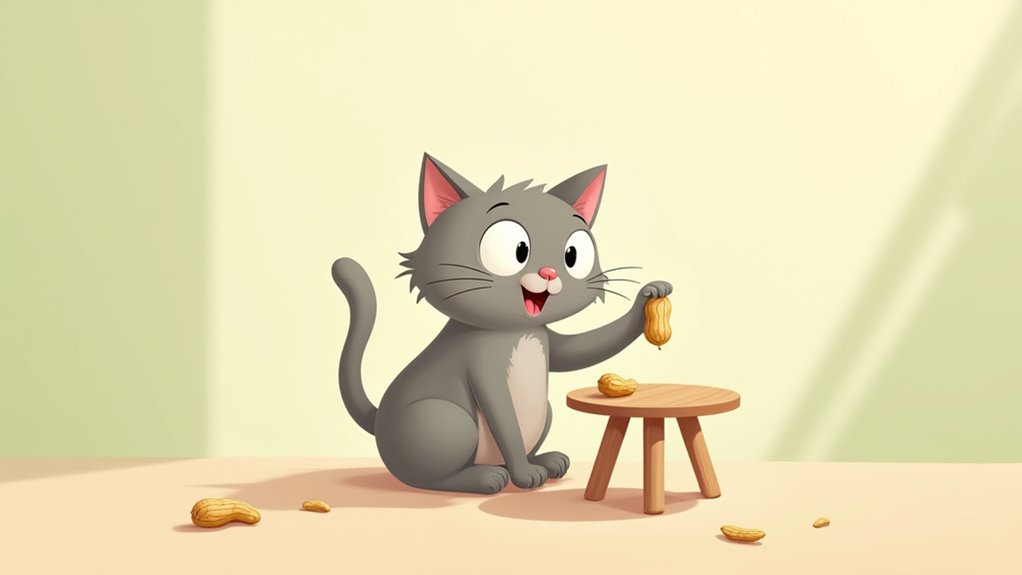
Peanuts may seem like a fun treat for your cat, but they aren’t good for feline health. Peanuts have about 26g of protein, but it’s mostly plant-based. Cats need high-quality animal protein for their muscles and health. Peanuts don’t provide the right kind of protein.
Peanuts also contain around 49g of fat per 100g. Too much fat can cause weight gain and obesity in cats. While some unsaturated fats are okay, they shouldn’t replace animal fats.
Cats don’t need carbohydrates like humans do. Peanuts have fiber that can upset your cat’s stomach.
Even though peanuts have some vitamins and minerals, they don’t meet the nutritional needs of your cat. Stick to cat food that offers the right nutrients for your furry friend.
Risks Associated With Feeding Peanuts to Cats
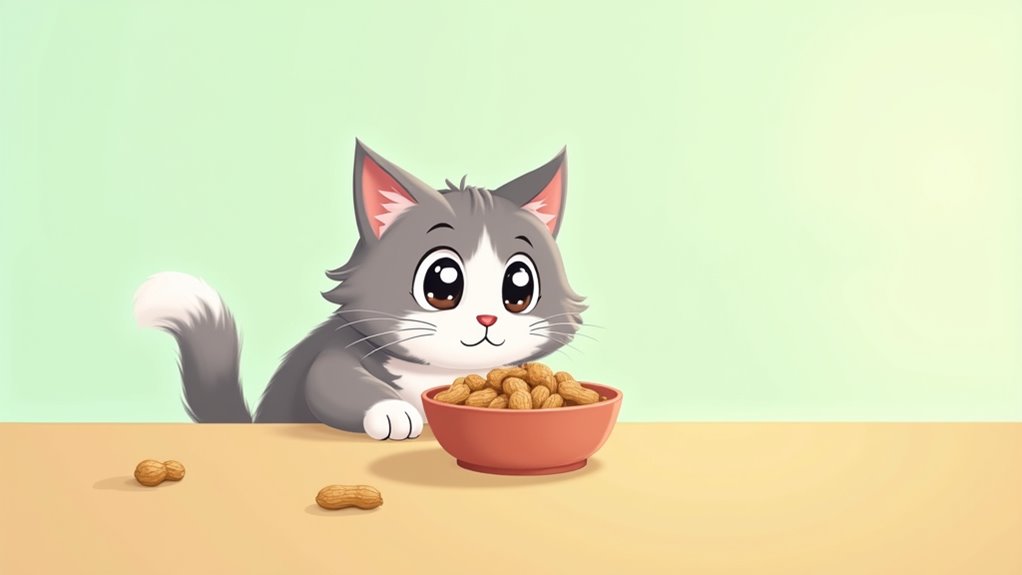
Sharing peanuts with your cat can be risky. Peanuts may cause allergies. Cats can show symptoms like itching, vomiting, or trouble breathing. If you see these signs, get veterinary help right away.
Whole peanuts can also be a choking hazard. Kittens and older cats with bad teeth are especially at risk. Peanuts that aren’t chewed well can block the intestines. This can lead to emergency vet visits.
Cats struggle to digest plant fats. Eating peanuts can cause vomiting or diarrhea. Watch for any tummy troubles after your cat eats peanuts.
Peanuts are high in calories. This can lead to obesity and other health issues, like diabetes. For your cat’s safety, skip the peanuts. Choose safer treats instead. Additionally, since cats are obligate carnivores, their diet should primarily consist of meat-based foods.
Safe Ways to Offer Peanuts to Your Cat
To offer peanuts safely to your cat, follow these guidelines. These steps help make sure your furry friend enjoys a tasty treat without any risks.
Peanut Preparation:
- Use raw, unsalted, and unflavored peanuts. Skip any with chocolate or seasonings.
- Always take off the shells. Shells can choke your cat and may have harmful molds.
- Crush or chop the peanuts into small pieces. This helps your cat chew them easily.
Serving Suggestions:
- Give only one or two small pieces. This should be less than 10% of your cat’s daily food.
- Treat your cat with peanuts no more than once a week. This keeps their tummy happy.
- Watch for signs of allergies. Look out for vomiting or skin problems.
Always keep an eye on your cat while they eat peanuts. This helps prevent choking.
Stop feeding peanuts right away if you see any bad reactions. Contact your vet for help if needed.
Following these tips ensures a safe and enjoyable treat for your cat.
Comparing Peanuts and Peanut Butter for Cats
Peanuts and peanut butter can be tempting for cats, but they come with risks. Both can cause peanut allergies and upset stomachs.
Here’s a simple comparison:
| Aspect | Peanuts | Peanut Butter |
|---|---|---|
| Nutritional Value | High in fat, hard to digest | High in calories, often unhealthy |
| Choking Hazard | Larger and harder, risk of choking | Sticky, can block throat |
| Additives | May contain aflatoxin | Can have xylitol, sugar, and salt |
Both options can upset your cat’s tummy. This includes vomiting and diarrhea. High fat can lead to long-term health problems. If you decide to share, choose plain, unsalted types. A balanced diet is best for your cat’s health!
Frequently Asked Questions
Can Kittens Eat Peanuts Safely?
Kittens can eat peanuts, but only in small amounts. Peanuts are not the best choice for their diet. They do not provide the nutrients kittens need to grow strong and healthy. Instead, give your kitten safe snacks made for them. These treats have the right vitamins and minerals. Always prioritize their health with proper food. Keep them happy and well-fed with kitten-friendly options. Avoid any risks by choosing the right snacks.
What Symptoms Indicate a Peanut Allergy in Cats?
Watch for signs of peanut allergy in cats. Look for red, irritated skin. Scratching a lot? That could be a sign too. Check for tummy troubles like vomiting or diarrhea. These symptoms suggest your cat might have a food allergy. Keep an eye on their behavior and health. Early detection is important for your cat’s well-being. Always consult a vet if you notice any of these issues. Your cat deserves the best care.
Are There Any Benefits to Feeding Peanuts to Cats?
Peanuts have some protein and healthy fats. But they can also cause problems for cats. Digestive issues may arise. Obesity is a real risk too. Because of these concerns, it’s better to stick to animal-based foods for your cat. These foods meet their nutritional needs better. Always prioritize your cat’s health and well-being.
How Can I Tell if My Cat Likes Peanuts?
Your cat shows its favorite foods through behavior. Watch for signs that it likes peanuts. Does your cat sniff the peanuts? Does it nibble on them? These are good signs!
Pay attention to purring sounds. Is your cat playful around the peanuts? Those actions mean your cat enjoys them. Cats often show their excitement with fun antics. Keep an eye out for these behaviors. They reveal your cat’s feelings about peanuts!
Can I Mix Peanuts With My Cat’s Regular Food?
Mixing peanuts with your cat’s regular food is not a good idea. Peanuts can be toxic to cats. They may cause digestive problems too. Cats do not digest peanuts well.
There are risks involved. Choking can happen, especially with whole peanuts. Digestive upset is also a concern. Health complications can arise from feeding peanuts.
Cats need a balanced diet. Stick to cat food made for them. It’s safer and healthier. Always keep your cat’s well-being in mind.
Conclusion
Cats can eat peanuts, but do so with care. Some pet owners give their cats foods that can harm them. Peanuts are not toxic, but they may upset a cat’s stomach. They can also cause allergies in some cats.
If you want to share peanuts, only give a small, unsalted piece. Treat it as a rare snack. Always watch your cat after they eat. Look for any signs of trouble. It’s best to ask your vet for advice about your cat’s diet. Keep your furry friend safe and healthy!
