
Can Cat Eat Peas and Carrots
This post contains affiliate links. As an Amazon Associate, we earn from qualifying purchases.
Cats can eat peas and carrots, but only in moderation. Peas provide vitamins and plant-based protein, while carrots should be cooked to prevent choking hazards. It’s best to start with small portions, like a teaspoon of peas or a tiny piece of carrot every few weeks. Avoid raw and seasoned vegetables, as they can lead to digestive problems. Always keep an eye on your cat for any adverse reactions, as balancing their diet is crucial. For those interested in more detailed information about serving sizes and health impacts, further explanation will follow.
Essential Facts in 30 Seconds
- Cats can eat peas in moderation; they are a source of vitamins and plant-based protein.
- Peas should not replace meat in a cat’s diet.
- Cooked peas are easier to digest; avoid seasonings and serve in small portions.
- Carrots can be offered occasionally, but must be cooked to prevent choking and aid digestion.
- Limit carrot servings to about 5 grams every few weeks to prevent digestive issues.
- Monitor your cat for any adverse reactions when introducing new foods.
Nutritional Benefits of Peas for Cats
Cats can benefit from peas in their diet. Peas are packed with vitamins A, B1, B6, C, and K. These vitamins help keep your cat’s eyes, muscles, and immune system healthy. Additionally, peas should complement a meat-based diet, ensuring that your cat receives all essential nutrients.
Peas also provide plant-based protein. One cup of peas contains about 8 grams of protein. This helps meet your cat’s protein needs, though it shouldn’t be their only source.
Peas are high in fiber. This fiber aids digestion and helps prevent constipation. It can also make stools softer for cats with digestive problems.
Be careful, though. Too many peas can upset their stomach. Moderation is essential when introducing new foods to ensure your cat stays healthy.
Adding peas to your cat’s meals can boost their nutrition. It can make their diet more varied and interesting.
Just remember, moderation is important. Too much of anything can cause problems. Keep your cat healthy by giving peas in small amounts.
Safety of Feeding Carrots to Cats
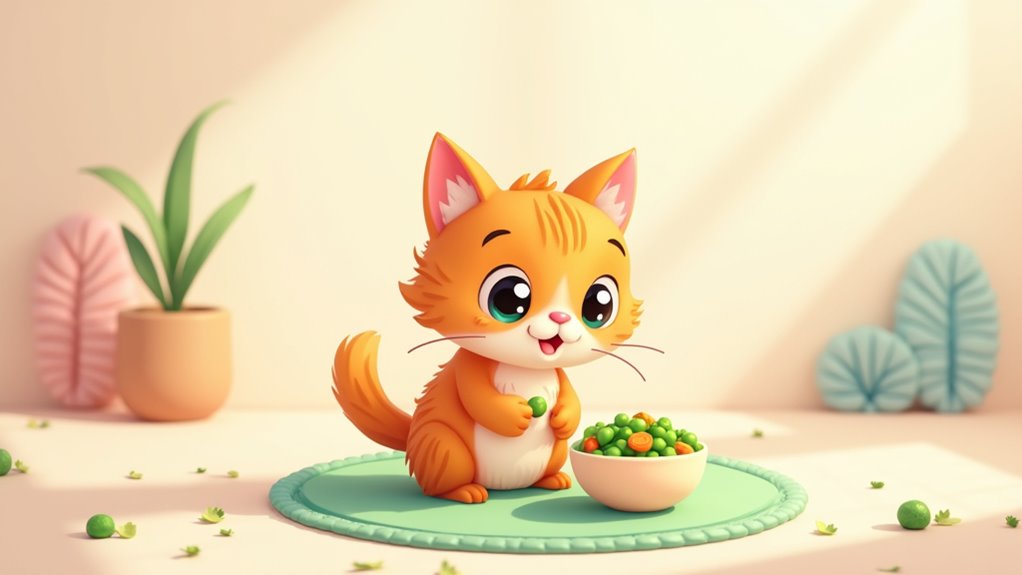
Feeding carrots to cats can be safe with some care. Always cook carrots to help with digestion and avoid choking. Start by washing and peeling the carrots. Cook them in plain water until they’re soft. Once cooled, cut them into small pieces.
Limit carrot servings to about 5 grams every few weeks. Carrots have some vitamins, but they can’t replace meat in a cat’s diet. Too many carrots can cause digestive problems like diarrhea or vomiting. Cats don’t have the enzymes needed to digest large amounts of vegetables. Additionally, moderation is crucial when introducing any new food to ensure the cat’s health.
Avoid giving raw carrots or those with any seasonings. These can be bad for your cat.
Always watch your cat after giving them carrots. Look for any signs of upset stomach. Talk to your vet if you’re unsure about adding new foods to your cat’s diet. Additionally, monitor for any adverse reactions after introducing carrots to ensure your cat’s health is not compromised.
Considerations and Risks When Feeding Vegetables
Here are some key points to keep in mind:
- Digestive Issues: Cats don’t have the right enzymes to digest plant fibers. This can lead to bloating or diarrhea, especially if they consume excessive fiber from vegetables.
- Nutritional Needs: Cats require animal protein for essential nutrients. Too many vegetables can create nutrient gaps that may affect their overall health and well-being.
- Toxic Foods: Some vegetables, like onions and garlic, are harmful to cats. They can cause serious health problems and should always be avoided.
To reduce risks, always cook vegetables to make them easier to digest. Serve only small amounts as occasional treats. It’s important to monitor cats for any signs of digestive issues after introducing new foods.
Watch your cat for any bad reactions. Always talk to your vet before adding new foods to your cat’s diet. Your cat’s health is the most important thing!
Guidelines for Introducing Peas and Carrots
Introducing peas and carrots to your cat’s diet can be a good idea. Start slowly. Offer just a few pieces to see how your cat reacts.
For peas, serve them cooked or slightly softened from frozen. No seasonings, please. For carrots, boil or steam them. Cut into small pieces to avoid choking. Green beans can also be a great vegetable option for cats when introduced properly.
Serving Suggestions:
- Peas: Cooked or slightly softened from frozen, with no additives.
- Carrots: Cooked and sliced into small, easy-to-eat pieces.
Keep these treats under 3% of your cat’s daily food. Watch for any signs of allergies after the first time you serve them. Additionally, both peas and carrots offer essential vitamins that can contribute to your cat’s overall health.
Always consult your vet before adding new foods, especially if your cat has health concerns. These veggies shouldn’t replace meat in their diet. Enjoy trying new flavors, but stay watchful!
Conclusion on Feeding Cats Peas and Carrots
Adding peas and carrots to your cat’s diet can be fun and healthy. These veggies offer vitamins and fiber. Yet, they can’t replace the meat that cats need.
Here are some important points to keep in mind:
- Cats need protein. They’re obligate carnivores.
- Too many vegetables can upset your cat’s stomach and cause weight gain.
- Serve cooked peas and carrots in small amounts. High-quality cat food should remain the main component of a cat’s diet.
Treat these veggies as occasional snacks, not regular food. A ½ teaspoon of peas or 1 to 3 baby carrots per day is a good amount. Additionally, peas are commonly found in cat food, which indicates their safety and nutritional value.
Always watch how your cat reacts. Mixing these veggies with high-quality cat food helps keep their diet balanced.
Before trying new foods, talk to your vet. Remember your cat’s tastes and needs to keep them healthy while exploring safe food options.
Frequently Asked Questions
Can Cats Eat Frozen Peas and Carrots?
Cats can enjoy frozen peas and carrots in moderation. These veggies have good nutrients. Always thaw and cook them before serving. This helps your cat’s tummy stay happy and healthy. Fresh vegetables can add variety to your cat’s diet. Just remember, treat them as a snack, not a full meal. Always watch for any signs of upset stomach after trying new foods. Keep your furry friend safe and healthy!
How Often Can I Feed My Cat Peas or Carrots?
You can treat your cat with veggies like peas or carrots. Aim for once or twice a week. This will help keep their diet balanced. You want your cat to enjoy the benefits of these vegetables without overfeeding them. Remember, moderation is key. Always cut veggies into small pieces. This makes it easier for your cat to eat. Keep an eye on how your cat reacts to new foods. Some cats may not like veggies at all. Always consult your vet for the best advice.
Are Canned Peas and Carrots Safe for Cats?
Canned peas and carrots can be safe for cats. Serve them in small amounts. Always choose low-sodium options. Avoid any added ingredients. Watch for any bad reactions when you first give them. Cats have special dietary needs. Keep their main food focused on meat. Treats like peas and carrots can be fun. Just make sure they stay healthy.
What Are the Signs of Vegetable Intolerance in Cats?
Cats can show signs of vegetable intolerance. Watch for digestive problems like vomiting or diarrhea. Flatulence can also be a sign. Skin issues like rashes or itching may occur too. Persistent scratching often points to intolerance. Ear infections can happen as well. These signs can affect your cat’s health and behavior. Always keep an eye on your pet. If you notice these issues, consult a vet for advice.
Can I Mix Peas and Carrots in My Cat’s Food?
You can mix peas and carrots in your cat’s food. Cats need a meat-based diet. Vegetables can be a small part of their meals. Keep portions small to maintain balance. Too many veggies can upset their stomach. Focus on protein for strong muscles. Always check with your vet before changing your cat’s diet. A healthy cat is a happy cat!
Conclusion
Peas and carrots can be good for your cat’s diet. These veggies have vitamins and minerals. They can add some variety to your cat’s meals. Remember, moderation is important. Treat peas and carrots like special snacks for your cat.
Always chop the veggies into small pieces. This helps prevent choking. Watch your cat after they eat these foods. Look for any signs of upset stomach. If your cat has a bad reaction, talk to your vet.
With care, you can safely share these colorful bites. Your cat may enjoy this new addition to their diet. Happy feeding!
