
Can Cat Eat Peppers
This post contains affiliate links. As an Amazon Associate, we earn from qualifying purchases.
Feeding bell peppers to your cat can be safe in small amounts, but it’s important to be cautious due to potential risks. While bell peppers aren’t toxic, the stems and leaves can contain solanine, which may lead to vomiting or lethargy in some cases. Always cut the peppers into small pieces, remove the seeds, and serve them cooked or raw without any seasonings. Start with tiny portions to monitor for any signs of discomfort, and remember to limit this treat to under 10% of their daily calorie intake. For those interested in a deeper understanding, further explanation and supporting details will follow later in the article.
Essential Facts in 30 Seconds
- Bell peppers are safe for cats but avoid the stems and leaves due to solanine.
- Introduce bell peppers gradually and watch for allergies or digestive issues.
- Serve in small, bite-sized pieces, removing seeds and skin to prevent choking.
- Cats may not be interested in vegetables; limit bell peppers to under 10% of their daily calories.
- Cooked, plain bell peppers are safer than raw; do not add seasoning or additives.
Safety of Feeding Bell Peppers to Cats
Feeding your cat bell peppers can be safe, but caution is important. Bell peppers aren’t toxic, but the stems and leaves can be harmful. They contain solanine, which is bad for cats. Symptoms of solanine poisoning include vomiting and lethargy. If you notice these signs, get your cat to the vet right away.
To feed bell peppers safely, follow these tips:
- Cut the peppers into small, bite-sized pieces.
- Remove the seeds and skin to prevent choking.
- Keep the plant parts, like stems and leaves, out of reach.
- Introduce bell peppers slowly and watch for any bad reactions.
- Remember that capsaicin in hot peppers can cause discomfort, so stick to bell peppers only.
With care and attention, your cat can enjoy bell peppers as a treat!
Nutritional Content of Bell Peppers Relevant to Cats
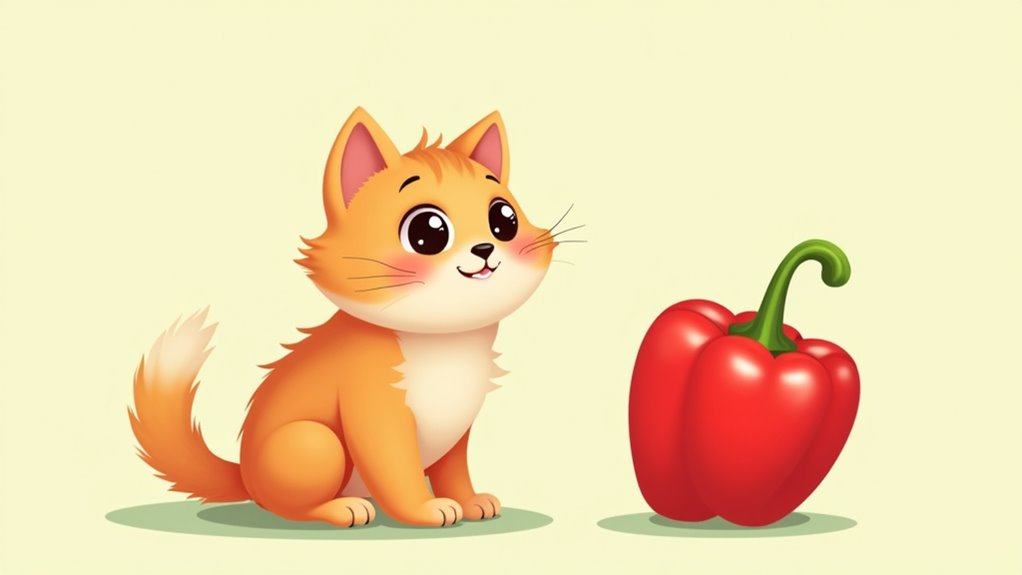
Understanding bell peppers’ nutritional content is important for your cat’s diet. These vegetables are low in calories, with only 17 calories in 80 grams. They’ve very little protein and fat, just 0.6 grams of protein and 0.2 grams of fat. This means they don’t provide essential fat-soluble vitamins.
Vitamin Content:
Bell peppers offer vitamin C. They also have a bit of B vitamins. Cats don’t need these from food. They lack vitamin B12, which is crucial for your cat’s health.
Mineral Benefits:
Potassium helps with heart function, with 173 mg per 80 grams. Magnesium supports your cat’s nervous system. Low sodium is good for kidney health.
Bell peppers can add some hydration and fiber. Still, their overall nutritional value is limited. Always talk to your vet before giving new foods to your cat.
Benefits and Risks of Feeding Bell Peppers to Cats
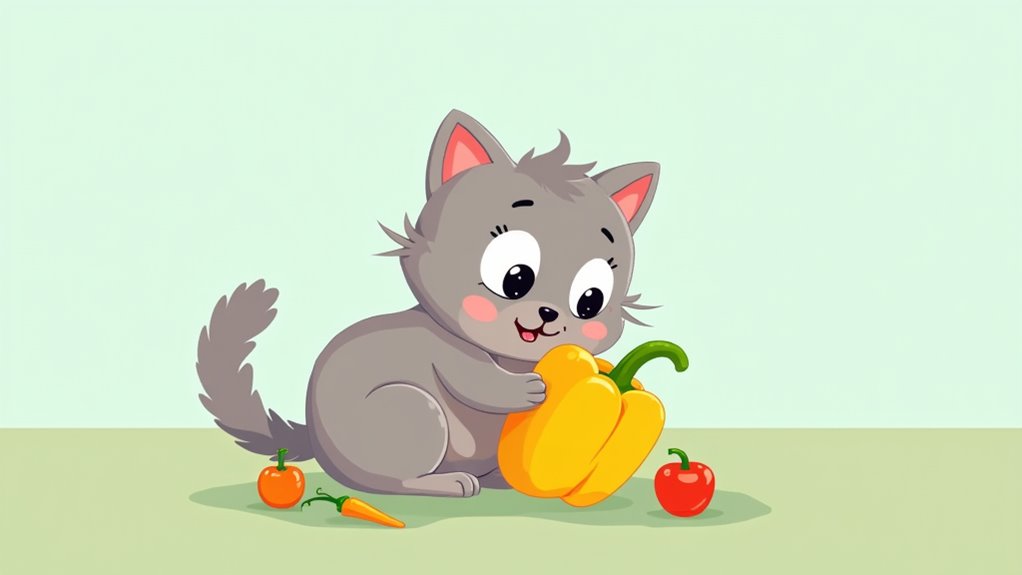
Feeding bell peppers to cats has both benefits and risks. Bell peppers are safe in small amounts. Too much can upset your cat’s stomach. This may cause vomiting or diarrhea. Watch for signs like irritation around the mouth or gagging. Choking can happen if the peppers aren’t cut properly.
Risks to Keep in Mind:
- Toxicity: Eating too many bell peppers can lead to bloating or pain in the belly.
- Allergies: Some cats may have allergic reactions. Look for sneezing or skin hives. Serious signs include facial swelling or trouble breathing. These need immediate veterinary help.
To keep your cat safe, serve plain, cooked bell peppers without seeds. Always watch your cat after giving new food. If any problems arise, call your vet right away. Additionally, it’s important to note that cats do not require vegetables in their diet, so bell peppers should be considered an occasional treat.
Cat Preferences and Feeding Recommendations
Cats usually don’t care much for bell peppers or other vegetables. They’re obligate carnivores, which means they need meat to thrive. You might notice your cat ignoring peppers completely. If you want to give peppers as a rare treat, do it carefully.
Feeding Recommendations:
- Occasional Treats: Keep peppers to less than 10% of your cat’s daily calories.
- Preparation: Serve them raw, chopped into small pieces, or cooked plain. Boiled or steamed peppers work best.
- Watch for Reactions: Introduce peppers slowly. Look for signs like vomiting or diarrhea.
Important Tips:
- Wash peppers well to remove dirt and chemicals.
- Don’t give stems, seeds, or core parts. These can be choking hazards.
- Peppers should never take the place of a healthy meat-based diet.
Keep your cat happy and healthy by sticking to their natural eating habits!
Digestive and Health Considerations
Bell peppers can be safe for cats, but they may cause digestive problems if eaten too much. Some cats might vomit or have diarrhea. Others could feel irritation in their mouths.
Key Points:
- Raw or seasoned peppers can upset a cat’s stomach more than steamed ones. Always serve small, plain pieces.
- Watch for allergic reactions. Signs include skin hives, facial swelling, or trouble breathing.
- Contact your vet if your cat shows any signs of discomfort.
Feeding Tips:
- Start with tiny amounts of bell peppers. Watch for any bad reactions.
- Stop giving them to cats that have allergies or sensitivities.
Keep your furry friend healthy and happy by being cautious with new foods!
Frequently Asked Questions
Can Bell Peppers Cause Allergic Reactions in Cats?
Bell peppers can cause allergic reactions in cats. Some cats react to certain types of bell peppers. Watch for signs of allergies. These signs include sneezing, itching, and upset stomach. If your cat shows these symptoms, talk to your vet. It’s important to keep an eye on your pet’s health. Not all cats will react, but it’s better to be safe. Always introduce new foods slowly. This helps you spot any problems early. Your vet can give the best advice for your cat’s diet.
What Are Signs of Bell Pepper Intolerance in Cats?
Cats can have trouble with bell peppers. Signs of bell pepper intolerance include vomiting, diarrhea, and excessive drooling. Your cat may also lose its appetite. These symptoms can mean bell pepper toxicity. This can upset your cat’s stomach. Quick action is important. Take your cat to the vet if you see these signs. They can help your furry friend feel better. Always be careful about what your cat eats. Bell peppers are not a good choice for them. Keep your cat safe and healthy.
Are All Bell Pepper Colors Safe for Cats?
All types of bell peppers are safe for cats in small amounts. Red, yellow, and green peppers all offer benefits. Your cat might like the sweeter red ones best. Each color has vitamins that can help your pet. Just keep an eye on how much they eat. Too much of anything can upset their stomach. Always introduce new foods slowly. Bell peppers can be a fun treat for your furry friend!
How Should I Prepare Bell Peppers for My Cat?
Preparing bell peppers for your cat is simple and fun. Start by washing the peppers well. Remove the stems and seeds. Cut the peppers into small, bite-sized pieces. You can serve them raw or lightly steam them.
Keep the portions small. Treats should be just a nibble, not a meal. Bell peppers are low in calories and can be a healthy snack. Cats may enjoy the taste and crunch. Always watch your cat after introducing new foods. This way, you can ensure they handle it well. Enjoy preparing this colorful treat for your furry friend!
Can Bell Peppers Replace a Cat’s Regular Meals?
Bell peppers cannot replace your cat’s regular meals. They do not have the nutrients cats need. Cats are obligate carnivores. This means they require meat to stay healthy. A balanced diet for cats should focus on meat-based foods. You can give bell peppers as an occasional treat. Just do not make them a main part of your cat’s diet. Stick to feeding guidelines. This helps keep your cat healthy and happy. Always prioritize their nutritional needs.
Conclusion
Bell peppers can be safe for cats in small amounts. They add some vitamins to their diet. Only give your cat a few small pieces. Always watch how your cat reacts to new foods. Some cats might not like peppers at all. It’s important to keep treats small and not too often. If you notice any bad reactions, stop giving peppers right away. Always talk to your vet if you’re unsure about your cat’s food. Their health comes first.
