
Can Cat Eat Pineapple
This post contains affiliate links. As an Amazon Associate, we earn from qualifying purchases.
Yes, cats can eat pineapple, but it should be done with caution. Fresh, ripe pineapple is safe in very small amounts—limit to 1-2 small pieces, once or twice a week. It’s important to avoid unripe pineapple and all plant parts, as these can upset your cat’s stomach. Remember, cats thrive on meat; fruits shouldn’t replace their diet. Keep an eye out for any digestive issues like bloating or diarrhea. For those interested in exploring other fruits suitable for your feline friend, further information will be provided later in the article.
Essential Facts in 30 Seconds
- Cats can eat small amounts of ripe fresh pineapple safely.
- Limit serving size to 1–2 small pieces once or twice a week.
- Monitor for digestive issues due to pineapple’s high sugar content.
- Avoid unripe pineapple and plant parts, which can upset a cat’s stomach.
- Consult a vet before introducing pineapple or any new food to a cat’s diet.
Nutritional Value of Pineapple for Cats
Pineapple can be a tasty snack for humans, but it has limited benefits for cats. It contains manganese, which helps with protein digestion. Yet, cats get most of their manganese from meat.
Pineapple also has small amounts of folate and copper. These nutrients support red blood cell production and help with DNA and iron. Cats usually get enough of these from their normal diet.
Vitamin B6 is another nutrient in pineapple. It helps with amino acid metabolism. Still, cats mainly get this vitamin from animal proteins.
Pineapple has some fiber, which may support digestion. But too much can upset your cat’s stomach.
Safety Considerations When Feeding Pineapple
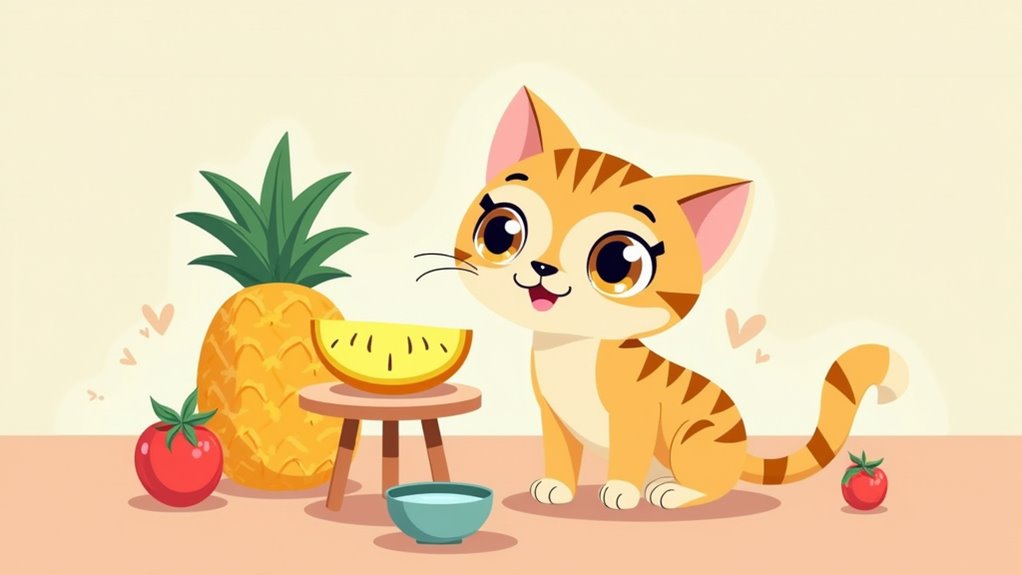
Feeding your cat pineapple can be safe, but caution is key. Ripe fresh pineapple is safe in small amounts. Unripe pineapple and plant parts can upset your cat’s stomach. Always follow feeding guidelines. Watch for any reactions after giving this fruit. If your cat shows signs of distress, stop feeding pineapple immediately. Keep your pet’s health a priority. Enjoy introducing new foods, but do so safely. Additionally, it’s important to remember that cats are obligate carnivores, which means their diet should primarily consist of meat.
Toxicity Risks Overview
Pineapple flesh is generally safe for cats, but caution is key. The fruit’s high sugar content can cause digestive problems.
Too much pineapple may lead to bloating, gas, or diarrhea. This is especially true for cats not used to sweet foods.
Sugar can also make diabetes or obesity worse. Allergic reactions to pineapple are rare, but they can happen, so keep an eye on your cat.
Always watch your cat after giving them pineapple. Stop feeding it if you see any signs of stomach upset.
Avoid pineapple leaves, as they can cause irritation or blockages.
Before adding any new food to your cat’s diet, talk to your vet, especially if your cat has health issues.
Proper Feeding Guidelines
Feeding your cat pineapple can be fun. Follow these simple guidelines for safety. Limit pineapple to 1–2 small pieces per serving. Each piece should be about the size of cat kibble. Offer it once or twice a week. This helps control sugar intake.
Pineapple should be less than 10% of your cat’s daily calories. This prevents obesity and diabetes. Always choose fresh, ripe pineapple. Avoid canned or processed pineapple. Peel it carefully and cut it into tiny pieces. This prevents choking.
Watch your cat after giving this treat. Look for signs of allergies or stomach issues. If you notice anything unusual, contact your vet for advice.
Keep your cat healthy and happy!
Potential Health Benefits of Pineapple

Pineapple can be a tasty treat for your cat. It offers some health benefits, even though it shouldn’t be a main part of their diet.
Here are some advantages of pineapple for cats:
- Manganese helps with protein digestion.
- Folate and copper support healthy red blood cells.
- Vitamin B6 assists in absorbing nutrients.
- Dietary fiber aids digestion and helps prevent constipation.
- Potassium supports overall cell function.
Giving your cat pineapple occasionally can be good for their health. The fiber helps with stool and the moisture can keep them hydrated, especially if they eat dry food.
Always remember to treat pineapple as a special snack, not a daily food. Too much can upset their stomach. Balance is key for your cat’s well-being.
Risks of Feeding Pineapple to Cats
Feeding pineapple to your cat can be risky. Pineapple may upset their stomach. Cats can vomit or have diarrhea after eating it. The fruit has high fiber, which can cause gas and bloating. Pineapple skin and leaves can block their intestines. Unripe pineapple is toxic, so make sure it’s ripe before considering it.
Pineapple also has natural sugars. Cats don’t usually eat sugar. Too much sugar can lead to obesity, diabetes, and dental problems.
| Risk Category | Description |
|---|---|
| Digestive Issues | Vomiting, diarrhea, gas, and potential blockages |
| Sugar Concerns | Obesity, diabetes, dental problems |
| Physical Hazards | Thorn-like spines in skin and leaves can cause injuries |
To keep your cat healthy, avoid giving them pineapple. Always talk to your vet before adding new foods to their diet.
Proper Serving Practices for Pineapple
Serving pineapple to your cat can be safe if done right. Follow these steps for a good experience:
- Pick ripe, fresh pineapple. Canned pineapple can have added sugars.
- Peel the fruit and wash it well. Remove any tough parts.
- Cut the pineapple into tiny, bite-sized pieces. Aim for sizes like cat kibble.
- Serve only 1-2 small pieces. Limit this to once or twice a week.
- Watch your cat for any signs of upset stomach or allergies.
- Offer pineapple in moderation, as cats are obligate carnivores and primarily need meat in their diet.
This way, you can enjoy offering a tasty treat without worry.
Comparison of Pineapple to Other Fruits for Cats
Pineapple offers unique benefits for cats, but it’s important to compare it with other fruits. It contains manganese and bromelain, which help with digestion and reduce inflammation. Fruits can provide hydration and essential nutrients that cats may benefit from in moderation.
Yet, pineapple has high sugar levels. This can lead to obesity and diabetes, much like mangoes and bananas.
On the other hand, some fruits are safer for cats. Blueberries and cantaloupe are low in sugar and have good antioxidant levels. They can be healthier treats.
Here’s a quick comparison:
- Pineapple: High in sugar, safe for cats, contains bromelain.
- Berries: Lower sugar, safe in small amounts, full of antioxidants.
- Apples: Good source of fiber, but remove seeds and skin first.
Fruits can be fun snacks for your cat. Remember, they shouldn’t replace meat in their diet. Always ask your vet before adding new foods. Additionally, consulting a veterinarian can help ensure that any fruit treats align with your cat’s overall health needs.
Frequently Asked Questions
Can Kittens Eat Pineapple Safely?
Kittens can safely eat pineapple in small amounts. This fruit has some vitamins that can be good for them. Always introduce pineapple slowly. Watch for any signs of stomach upset. Fresh pineapple is best. Avoid canned pineapple with added sugar. Treat pineapple like a snack, not a meal. Prioritize your kitten’s health above all.
How Often Can I Feed My Cat Pineapple?
Pineapple is a tasty treat for your cat. You can share it with them once or twice a week. Just give a few small pieces. This way, your cat can enjoy the sweet flavor without eating too much. Pineapple has vitamins and minerals that can be good for them. Always watch for any signs of upset stomach. Each cat is different, so start with a little and see how they react. Keep it special!
Are There Any Signs of Pineapple Intolerance in Cats?
Cats can show signs of pineapple intolerance. Watch for vomiting, diarrhea, or drooling after they eat it. These reactions may mean the fruit doesn’t agree with them. Keep an eye on their digestion. Pineapple has some benefits, but it may cause stomach issues for your cat. Always prioritize their health and comfort. If you notice any bad reactions, it’s best to avoid giving them pineapple again.
Can Pineapple Help With My Cat’s Hairballs?
Pineapple is not a good choice for preventing hairballs in cats. While it has some digestive benefits, they are very small. Instead, focus on feeding your cat a fiber-rich diet. Foods high in fiber can help reduce hairball issues. They also support better digestion for your furry friend. Look for cat food that lists fiber as an important ingredient. Regular grooming can also help. Brushing your cat often reduces loose fur and helps with hairballs. Always make sure your cat has plenty of fresh water to drink. Keeping your kitty healthy is the best way to prevent hairballs.
Is Dried Pineapple Safe for Cats?
Dried pineapple is not safe for cats. It has too much sugar. This can lead to obesity and diabetes. Cats are obligate carnivores. They need protein, not sugary snacks.
Eating dried pineapple can cause stomach problems. Your cat might choke on it too. It’s best to avoid giving them fruits like this. Stick to a diet rich in meat and fish. Your cat will be healthier and happier that way.
Conclusion
Sharing a small piece of pineapple with your cat can be fun! Just make sure the pineapple is fresh. Cut it into small, easy-to-eat pieces. Always watch your cat for any bad reactions after eating. Too much pineapple can upset their tummy. Moderation is important. It’s best to check with your vet if you have any doubts. Following these tips helps keep your furry friend safe while enjoying a taste of the tropics!
