
Can Cat Eat Raw Oysters
This post contains affiliate links. As an Amazon Associate, we earn from qualifying purchases.
Feeding your cat raw oysters is not safe. They can harbor harmful bacteria that may lead to severe gastrointestinal issues, and they also contain thiaminase, which can cause thiamine deficiency and negatively affect your cat’s brain health. For those who want to know more, cooked oysters can be a safer option when prepared correctly—cooked to at least 145°F (63°C) and served plain, without seasonings. Always consult your veterinarian for personalized advice on your cat’s diet. Keep reading for more insights on safe feeding practices for your feline friend!
Essential Facts in 30 Seconds
- Raw oysters can harbor harmful bacteria that may lead to infections and gastrointestinal issues in cats.
- They contain thiaminase, which can cause thiamine deficiency and severe neurological symptoms.
- Cooked oysters are safer, as cooking eliminates harmful bacteria while retaining nutrients.
- Offer only small, pea-sized portions of cooked oysters occasionally, without seasonings or shell fragments.
- Always consult a veterinarian before introducing oysters to your cat’s diet to ensure safety and monitor for any reactions.
Health Risks of Raw Oysters for Cats
Feeding your cat raw oysters can be risky. Raw oysters often carry harmful bacteria. These bacteria, like Vibrio vulnificus and Norovirus, can make your cat very sick. Your cat might experience vomiting and diarrhea. In some cases, these infections can be deadly.
Raw oysters also contain thiaminase. This enzyme breaks down thiamine, which is important for your cat’s brain health. A lack of thiamine can cause confusion, tiredness, and even seizures. Additionally, raw oysters should be avoided due to the significant risk of harmful bacteria and parasites that can lead to serious health issues.
To keep your cat safe, don’t feed them raw oysters. Make sure their diet includes safe foods approved by your vet. A balanced diet helps your cat stay healthy and happy.
Cooked Oysters: A Safer Option

Feeding your cat cooked oysters is a safer choice.
Cooking kills harmful bacteria that can make your cat sick. It also keeps important nutrients like protein and omega-3 fatty acids.
Serve only small portions, about the size of a pea. Don’t add any seasoning. This keeps it safe and healthy for your furry friend.
Enjoy sharing this tasty treat with your cat!
Cooking Benefits for Cats
Cooking oysters for your cat has many benefits. It destroys thiaminase, which helps prevent vitamin B1 deficiency.
Cooked oysters keep important nutrients like omega-3 fatty acids, protein, and taurine. These nutrients support your cat’s overall health.
Ensure oysters are cooked to an internal temperature of at least 145°F (63°C).
Don’t add seasonings. Some seasonings, like garlic and onions, are toxic to cats.
Serving Size Guidelines
Serving cooked oysters to your cat can be a fun treat. Just remember to follow some important rules for safety.
Offer only pea-sized portions. This helps prevent overfeeding. Keep it special by serving oysters only once a month.
Make sure there are no shell fragments. This keeps your cat from choking.
Treats should be less than 5-10% of your cat’s daily calories.
Following these guidelines can help keep your cat healthy and happy. Enjoy treating your furry friend!
Ingredient Safety Considerations
Cooking oysters for your cat is a safer option. It helps reduce health risks. Always choose plain, fully cooked oysters. Avoid any with salt, garlic, or onions. These ingredients can harm your cat.
Key Guidelines:
- Make sure oysters are fully cooked. This kills harmful bacteria and thiaminase.
- Serve only small, pea-sized portions. This helps prevent stomach upset.
- Stay away from canned or preserved oysters. They often have high sodium and harmful preservatives.
Watch your cat for any bad reactions after giving oysters. Signs like vomiting or diarrhea could mean trouble.
Always talk to your veterinarian before making oysters a special treat. This helps keep your cat healthy.
Nutritional Benefits of Oysters
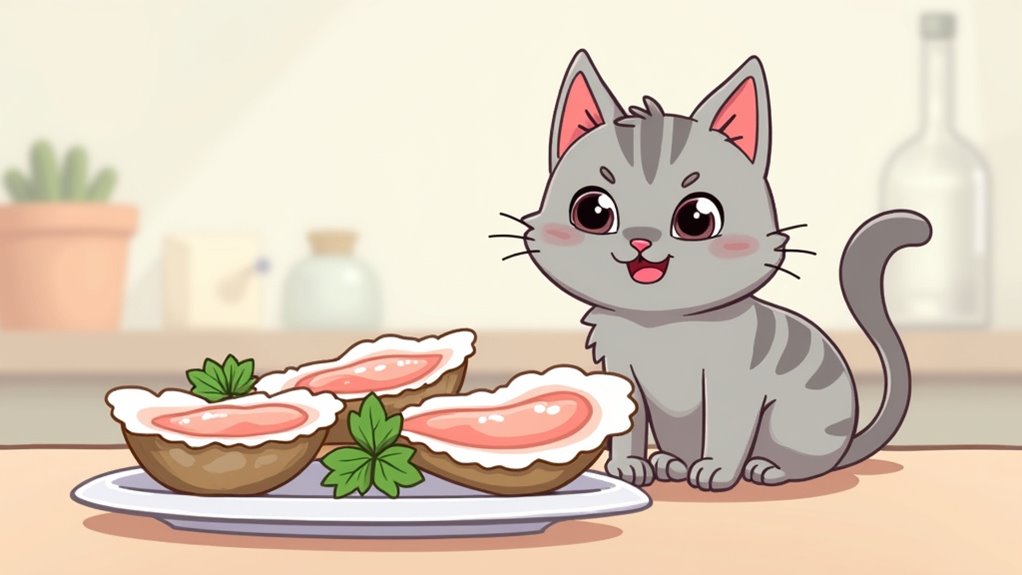
Oysters are a nutritional treasure. They’re full of important nutrients that can boost your health. Here are some highlights about oysters:
- Protein Power: Oysters offer about 9 grams of protein in every 100 grams. This protein has all the amino acids your body needs.
- Low Calories: They’ve only 79 calories per serving. This makes them a smart choice for healthy eating.
- Vitamin B12: Oysters provide over 500% of your daily vitamin B12. This vitamin helps with nerve function and making red blood cells.
- Mineral Rich: Oysters are loaded with zinc, copper, and selenium. These minerals help keep your immune system strong and support good health.
Adding oysters to your meals boosts your nutrient intake.
Always consider where you get them and how you prepare them to ensure they’re safe to eat.
Enjoy the health benefits oysters can provide!
Risks From Commercial Oyster Products
Be careful with commercial oyster products for your cat.
Many oysters contain high levels of sodium. Too much sodium can harm your pet’s health. Some products may have harmful additives. Allergens may also be present.
Always read the labels before giving these to your cat. Make sure the ingredients are safe. Your cat’s health is important. Choose wisely for their well-being.
High Sodium Content
High sodium content in commercial oyster products can harm your cat’s health. Oysters may taste good, but their sodium levels can affect feline wellness.
Here are some important facts:
- Raw oysters have 90-180 mg of sodium in a 3-ounce serving.
- East Coast oysters usually contain about 140 mg of sodium.
- Eating too many can lead to high sodium intake.
- This can cause high blood pressure in cats.
- Pairing oysters with other salty foods can make this worse.
Feeding your cat oysters needs caution.
Watch their total sodium intake to prevent health problems. Oysters do have some nutrients, but their sodium level needs careful thought for your cat’s health.
Harmful Additives Present
Many people are unaware of the risks in commercial oyster products. It’s not just high sodium levels. Harmful additives can impact both you and your pets. Heavy metals and persistent organic pollutants (POPs) often hide in oysters. These pose serious health threats.
Here’s a breakdown of these harmful substances:
| Contaminant Type | Risks | Sources |
|---|---|---|
| Heavy Metals | Can cause neurological damage | Industrial runoff, pollution |
| PFAS | Linked to reproductive issues | Contaminated water |
| Phthalate Esters | May harm the immune system | Food packaging, cosmetics |
| Veterinary Pharmaceuticals | Can lead to antibiotic resistance | Wastewater discharge |
| Marine Biotoxins | Risk of poisoning | Harmful algal blooms |
Think twice before giving your cat raw oysters. Safety should always come first!
Risk of Allergens
Allergens are a serious risk with commercial oyster products. They can be dangerous for people with sensitivities. Allergic reactions to oysters can be severe and may show various symptoms.
Oysters have strong IgE-reactive allergens. People allergic to clams or scallops may also react to oysters. Symptoms can start within 2 hours after eating oysters. Many commercial oyster products don’t clearly label allergens.
For those with sensitivities, eating oysters can lead to life-threatening reactions, like anaphylaxis. Always consult a healthcare provider before adding oysters to your diet. This helps ensure safety against allergens and cross-reactivity risks.
Stay safe and informed!
Allergies and Sensitivities in Cats
Food allergies can affect cats just like they do in people. About 1% of cats have food allergies. But, if your cat has skin or ear problems, that number goes up to 10%. Common signs include itching, small bumps on the skin, and stomach issues like vomiting.
Here are some key points:
- Common Allergens: Beef, fish, and chicken often trigger allergies.
- Environmental Sensitivities: Cats can also be allergic to pollen or fleas. It’s important to tell the difference between these and food allergies.
To diagnose food allergies, vets often recommend an elimination diet. You remove certain foods and see if your cat gets better. If they do, it may confirm a food allergy.
Talk to your vet if you think your cat has allergies. Knowing what your cat is sensitive to helps you manage their diet and health. This way, your cat can feel more comfortable and happy.
Veterinary Recommendations for Feeding Oysters
Feeding your cat oysters can be risky. It’s important to follow safe guidelines. Raw oysters can carry harmful bacteria. They may also cause thiamine deficiency.
Here are some tips for safe oyster preparation:
- Only give plain, fully cooked oysters.
- Don’t add any seasonings or garlic.
- Serve tiny portions, like pea-sized pieces.
- Always remove shells and shell fragments to avoid choking.
- Talk to your vet before adding oysters or new seafood to your cat’s diet.
Oysters can provide some nutrients, but there are safer seafood options.
Monitor your cat for any reactions. If you notice any symptoms, contact your vet right away. Following these steps helps keep your cat healthy and happy while trying new flavors.
Frequently Asked Questions
Can Kittens Eat Raw Oysters Safely?
Kittens should not eat raw oysters. Raw oysters can contain harmful bacteria that may hurt your kitten. They also have thiaminase, which can disrupt your kitten’s health. This enzyme affects vitamin B1, important for your kitten’s growth. Always choose safer food options for your furry friend. Stick to kitten food that is made just for them. This keeps them healthy and happy.
How Should I Store Cooked Oysters for My Cat?
To keep cooked oysters fresh for your cat, follow these simple storage tips. First, refrigerate them quickly. Make sure they are below 40°F. Use airtight containers to prevent any odors. Consume the oysters within 1-2 days for the best quality. Always check that they are safe for your cat as a special treat!
What Signs Indicate My Cat Is Allergic to Oysters?
Persistent itching, skin irritation, vomiting, or digestive issues can mean your cat is allergic to oysters. Watch for signs like coughing, sneezing, or trouble breathing. Sudden swelling around the face or paws is serious. These symptoms might mean your cat has food allergies. Always consult a vet for proper advice and care. Keep an eye on your cat’s behavior after eating new foods. Observing changes can help you catch allergies early.
Are There Any Other Seafood Options for Cats?
You can give your cat some tasty seafood options. Cooked fish like salmon or tuna is safe for them. Small amounts of cooked shrimp can also be a nice treat. Always cook these foods well. This helps keep your cat healthy. Avoid raw seafood to prevent harmful bacteria. Check for any additives in the food. Keeping your cat’s diet safe is very important. Remember, moderation is key. Too much seafood can upset their stomach. Stick to small portions to keep your furry friend happy.
Can I Feed My Cat Oyster Shells for Calcium?
Feeding your cat oyster shells for calcium is not a good idea. While oyster shells have some benefits, they also come with safety risks. Cats need special calcium sources made just for them. These products ensure your cat gets the right nutrition without any dangers. There are plenty of cat-friendly options available. It’s always best to choose what’s safe and healthy for your furry friend. Stick to calcium sources designed for cats to keep them happy and healthy.
Conclusion
Oysters may seem like a fun snack for your cat, but they can be dangerous. Raw oysters carry risks like bacteria and parasites. Feeding raw oysters to your cat is like sending them on a risky adventure. Instead, choose cooked oysters. They are safer for your pet. Always share in moderation. Talk to your vet before giving your cat any seafood. Keeping your feline friend healthy is the most important thing.
