
Can Cat Eat Soybeans
This post contains affiliate links. As an Amazon Associate, we earn from qualifying purchases.
Cats can eat soybeans, but it should be done with caution due to potential health risks. While soy provides protein and essential amino acids, it also contains low methionine and phytoestrogens that may disrupt hormone balance. Raw soybeans can lead to serious digestive issues, such as vomiting or diarrhea. If you choose to introduce soy, ensure it is fully cooked and start with small amounts, monitoring your cat for any adverse reactions. It’s advisable to consult a vet for guidance. For those interested in a deeper understanding of soy and its effects on cats, further explanation will follow.
Essential Facts in 30 Seconds
- Cats can eat cooked soybeans in small amounts, but caution is needed.
- Soybeans contain protein and essential amino acids; however, cats’ diets should mainly consist of meat.
- Raw soybeans can lead to serious digestive issues; always cook them before feeding.
- Long-term consumption of soy may disrupt hormone balance and harm vital organs; limit intake.
- Consult a veterinarian before adding soy to your cat’s diet for safety and health.
Nutritional Value of Soy for Cats
Soy can be a helpful part of your cat’s diet. It has many benefits but also some downsides. Whole soybeans have about 38% protein. Soy protein concentrate can have as much as 65% protein. This is similar to meat by-products.
Soy provides all nine essential amino acids. These include lysine and arginine, which are key for your cat’s health.
One thing to note is that soy has a low amount of methionine. You might need to add this amino acid to your cat’s diet. Properly cooked soy is easy for cats to digest. It can have digestibility rates of 85-90%.
Make sure any soy in your cat’s food is well-cooked. Raw soybeans can cause digestion problems. Always talk to your vet about your cat’s diet. They can help ensure your cat gets the right nutrition.
Potential Health Risks of Soy Consumption
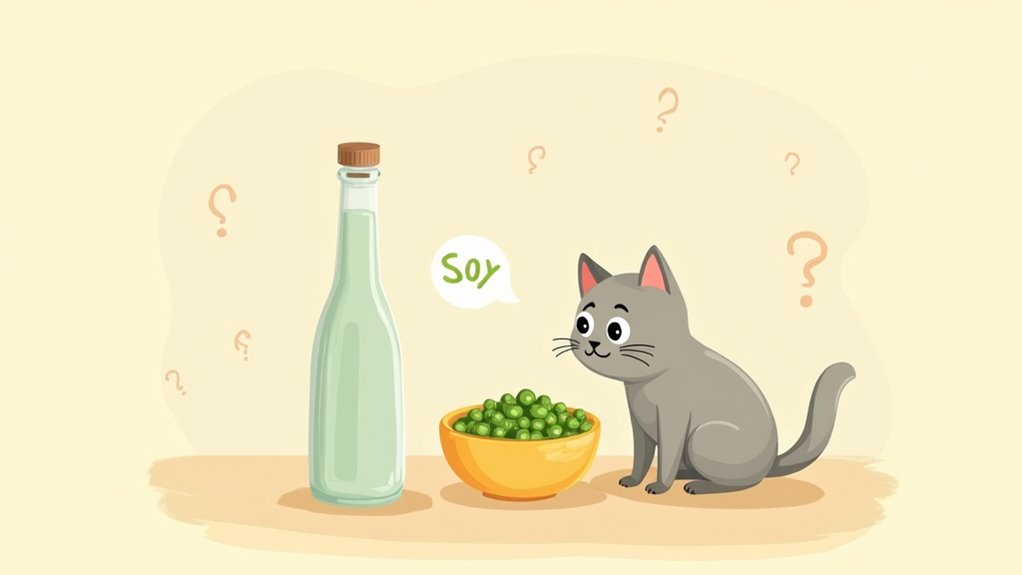
Soy can be harmful to cats. One big worry is soy sauce. It has about 900 mg of sodium in just one tablespoon. This is much more than a cat should have in a day. Too much sodium can cause poisoning. Signs of poisoning include vomiting, thirst, and seizures. If your cat eats soy sauce, call a vet right away.
Soy also has phytoestrogens. These can mess with your cat’s hormones. They may even lead to thyroid issues. Long-term soy consumption can hurt vital organs like the kidneys and liver.
To protect your cat, avoid all soy products. Be careful of hidden soy ingredients in food. The dangers of soy far outweigh any benefits. Keeping soy out of your cat’s diet is the best way to ensure their health.
Soy and Digestive Issues in Felines
Soy can cause serious digestive problems in cats. Pet owners need to pay attention to this. Feeding soy to your cat may lead to issues like vomiting, diarrhea, and gas.
Cats have trouble digesting the complex carbohydrates and fibers in soybeans.
To keep your cat’s stomach healthy, follow these tips:
- Limit soy intake. High-soy diets can cause bloating and loose stools.
- Watch for symptoms. Stop feeding soy if your cat shows discomfort.
- Choose alternatives. Select protein sources that fit a cat’s meat-based diet.
Taking care of your cat’s digestion is important. Always prioritize their health and well-being.
The Impact of Soy on Hormone Balance
Soy can affect hormone balance in cats. It has phytoestrogens, which can act like estrogen. This can lead to hormonal problems. These issues can impact your cat’s health.
Here are some important points to consider:
- Phytoestrogen effects: Long-term soy can disrupt hormone regulation. This may affect your cat’s reproductive cycles.
- Thyroid function: Research shows that soy can raise thyroxine (T4) levels. This may increase the risk of hyperthyroidism in cats.
- Metabolism differences: Cats process soy isoflavones differently. This could extend the effects of these compounds.
Because of these risks, watch your cat’s soy intake. Always talk to your veterinarian before adding new foods. This is especially important if your cat has health problems.
Being aware of these effects helps keep your cat healthy and balanced.
Recommendations for Cat Diets Including Soy
Introducing soy into your cat’s diet requires caution. Start slowly and use small amounts. A teaspoon of cooked soybean sprouts is a good start. This lets you see how your cat reacts.
Always prepare soy correctly. Steaming or boiling helps remove harmful bacteria. Avoid adding seasonings like garlic or onions. These can be toxic for cats.
Watch your cat closely after feeding soy. Signs of digestive upset include vomiting or diarrhea. If you see these signs, stop feeding soy right away. Plain soybeans are safer for feline consumption compared to other soy products.
Contact your veterinarian for advice. Keeping your cat healthy is the top priority.
Frequently Asked Questions
Can Kittens Eat Soybeans Safely?
Kittens can eat soybeans safely, but only in small amounts. Too much soy can upset their stomachs. Kittens need animal proteins for strong growth. Soybeans do not provide these essential nutrients. Always prioritize a balanced diet rich in meat. This keeps your kitten healthy and happy. If you choose to give soybeans, do so sparingly. Watch for any signs of discomfort. A happy kitten means a happy home!
Are There Any Benefits of Soy for Cats?
Soy can provide some nutrition for cats. It has plant proteins, important amino acids, fiber, and minerals. These elements can help support your cat’s health. Still, soy should not replace animal protein in their diet. Cats need animal protein for their energy and overall well-being. Too much soy can cause metabolic problems. Always focus on a balanced diet that includes meat. This keeps your cat healthy and happy.
What Are Common Signs of Soy Allergies in Cats?
Your cat may show signs of a soy allergy. Look for constant scratching or red patches on the skin. These are clear symptoms. You might also see vomiting or diarrhea. Changes in appetite can happen too. These signs indicate food allergies that need quick attention. Always consult a vet if you notice these symptoms. Early diagnosis helps keep your cat healthy. Keep an eye on your cat’s food. Sometimes, soy hides in ingredients. Be aware of what you feed your furry friend. Taking action early can make a big difference.
Can Soybeans Cause Long-Term Health Issues in Cats?
Soybeans can lead to long-term health issues in cats. These beans can hurt a cat’s digestion. This may cause stomach problems and diarrhea. Cats may also face nutrient deficiencies. When they do not get enough nutrients, their health suffers.
Hormonal imbalances can happen too. This can affect a cat’s mood and behavior. A cat that eats soybeans regularly may become sick over time. It’s important to keep soybeans out of their diet. Always choose cat food that is safe and healthy. Your cat’s well-being depends on it.
How Should I Introduce New Foods to My Cat’s Diet?
Introducing new foods to your cat requires patience. Start slowly. Mix 25% of the new food with 75% of the old food. This helps your cat adjust without stress. Watch how your cat reacts. If they seem happy, you can gradually increase the new food.
Always pay attention to your cat’s health. Look for any signs of upset stomach or allergies. If your cat is not interested, try a different food. Cats can be picky eaters.
Keep the process calm and positive. Reward your cat with praise or treats. This makes the experience enjoyable for them. A smooth transition to new food can lead to better nutrition and overall health.
Conclusion
Soybeans may seem safe for cats, but they can cause problems. Feeding soybeans to your cat can lead to digestive issues. They might also create hormonal imbalances. These issues can harm your cat’s health. Always talk to your vet before changing your cat’s diet. A balanced diet rich in protein is crucial. This helps keep your cat happy and healthy. Stick to foods made for cats to ensure their well-being.
