
Can Cat Eat Succulents
This post contains affiliate links. As an Amazon Associate, we earn from qualifying purchases.
Not all succulents are safe for cats. Some varieties, such as aloe vera and jade plants, can lead to symptoms like vomiting, diarrhea, and coordination issues if ingested. It’s important to monitor your cat for any signs of distress and consult your vet if you suspect they’ve eaten a toxic plant. To keep your furry friend safe, ensure that succulents are placed out of reach or in cat-proof areas. For those interested in a deeper understanding, further details about safe and toxic succulents will be provided later.
Essential Facts in 30 Seconds
- Many succulents, like aloe vera and jade plants, are toxic to cats.
- Toxic succulents can cause vomiting, diarrhea, lethargy, and excessive drooling in cats.
- Safe succulent options for cats include Echeveria, Haworthia, Sempervivum, Sedum, and Lithops.
- Contact a veterinarian immediately if a cat ingests a toxic succulent.
- Keep harmful plants out of reach and monitor cat interactions with new plants.
Understanding Succulent Toxicity in Cats
Bringing succulents into your home can be exciting. But some of these plants mightn’t be safe for your cats. Many succulents have harmful chemicals, like glycosides and alkaloids. These can make your cat sick.
For instance, plants from the Euphorbia family have a white sap. This sap can irritate your cat’s skin and mouth. Aloe vera can upset your cat’s stomach. This may lead to vomiting or diarrhea.
Here are some signs that your cat might be in trouble:
- Gastrointestinal issues: Look for vomiting, diarrhea, or lack of appetite.
- Neurological signs: Less common, but watch for tremors or seizures.
Keep an eye on your cat’s behavior. Signs like drooling, pawing at the mouth, or being very tired mean you should see a vet right away.
Consider safe plant choices too. Catnip or oat grass can keep your cat from eating harmful plants.
Being aware and acting quickly can keep your feline friends safe and healthy in a home filled with succulents.
Common Toxic Succulents to Avoid
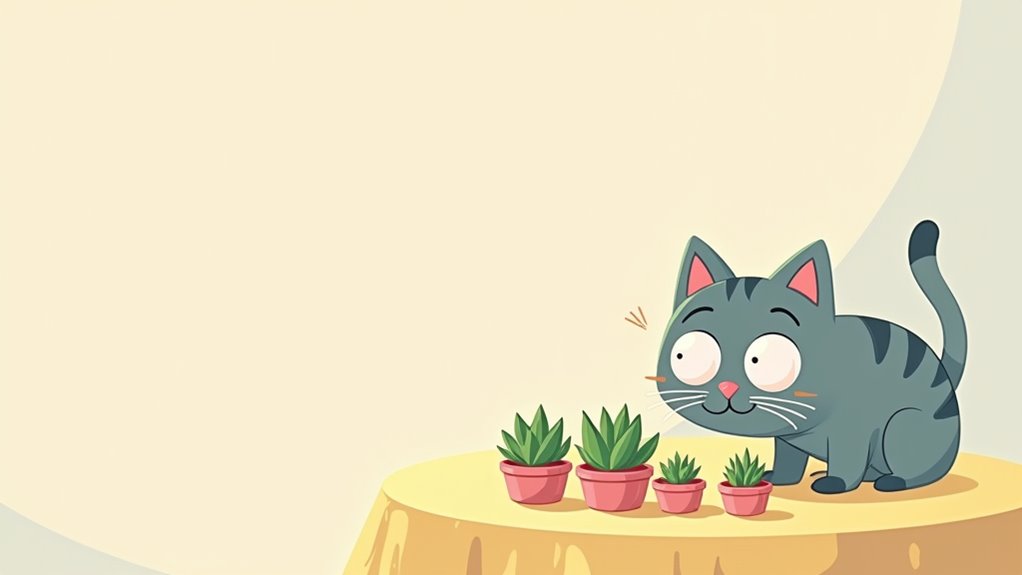
Not all succulents are safe for cats. Aloe vera can make your cat sick. It may cause vomiting and tiredness.
Jade plants can upset their stomach and cause trouble walking. Euphorbia plants, like the pencil cactus, can hurt your cat’s mouth and stomach.
Keep these plants away from your pets. Always check before bringing a new plant home. Your cat’s health is important.
Choose safe plants to keep them happy and healthy.
Aloe Vera Risks
Aloe Vera is known for its healing properties, but it can be dangerous for cats. This plant can cause serious stomach issues. Cats may vomit or have diarrhea after eating Aloe Vera. Symptoms like tiredness or unusual mood changes can show up within hours.
To keep your cat safe:
- Keep Aloe Vera away from your cat.
- Use things like vinegar sprays to stop them from being curious.
If you think your cat has eaten Aloe Vera, get to a vet right away. Waiting can make things worse and lead to dehydration. Aloe poisoning is rarely deadly, but quick help can make a big difference.
Watch your furry friend closely to keep them safe!
Jade Plant Dangers
Jade plants, or Crassula ovata, are popular houseplants. They can be dangerous for cats. These plants have toxic compounds that can harm your feline friends. All parts of the jade plant are poisonous. This includes the leaves and stems. If your cat eats any part of the jade plant, it can lead to serious problems.
Symptoms of jade plant poisoning include severe vomiting and lethargy. Your cat may show weakness or uncoordinated movement. Excessive drooling can also occur. These signs can appear within 1 to 4 hours after eating the plant.
Take precautions to keep your cat safe. Place jade plants out of reach or remove them from your home. Learn about other toxic succulents to protect your pet.
If you think your cat has eaten a jade plant, act fast. Contact a veterinarian right away for help. Quick action can make a big difference in your cat’s health.
Euphorbia Irritation Effects
Euphorbia plants are beautiful but dangerous for cats. Their white latex sap can cause serious problems. Cats can get skin irritation, rashes, and even eye damage from this sap.
Here are some important details:
Symptoms of Sap Irritation:
- Skin rashes and drooling
- Swelling in the mouth and stomach issues
Prevention Tips:
- Remove Euphorbia plants from your home.
- Keep them high up or in hanging baskets.
Always watch your cat for signs of irritation.
Contact your vet right away if you suspect your cat got into the sap. Keeping your furry friend safe is the top priority!
Symptoms of Succulent Poisoning in Cats
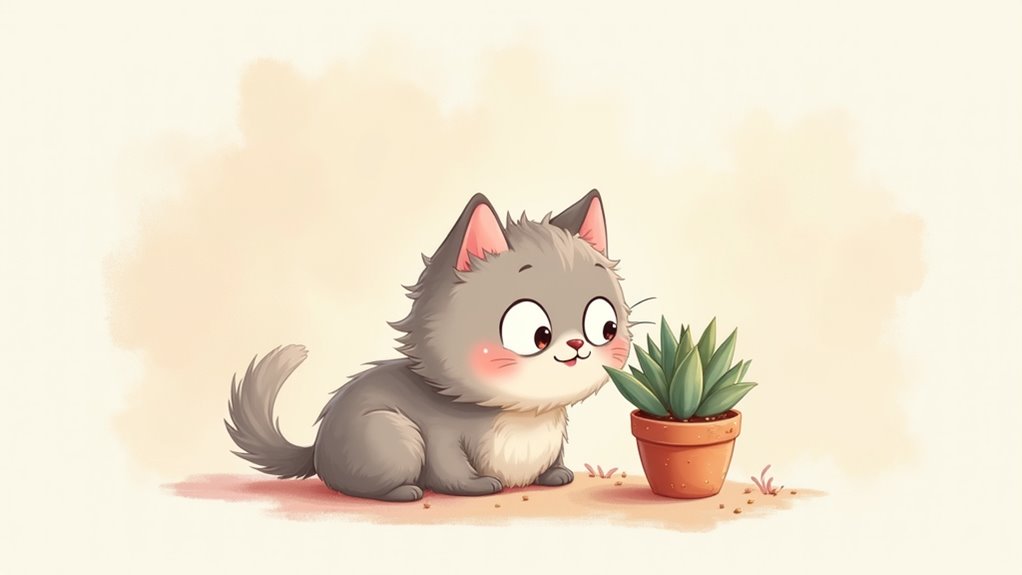
Recognizing the signs of succulent poisoning in cats is vital for their health. Watch for these symptoms:
- Vomiting: This often happens soon after your cat eats the plant.
- Diarrhea: Severe diarrhea can signal a stomach upset.
- Excessive drooling: This might show irritation in the mouth.
- Lethargy: Low energy levels indicate the effects of toxins.
- Loss of appetite: Cats may not want to eat after exposure.
Severe symptoms like tremors, incoordination, or collapse require urgent care. These signs can mean serious poisoning, especially with plants like Kalanchoe. Such plants can disrupt heart rhythms.
Quickly recognizing these symptoms helps prevent more serious issues. Keep a close eye on your cat.
If mild symptoms last more than a few hours, reach out to your veterinarian. Acting fast can improve your pet’s chances and keep them safe.
Safe Succulent Options for Cat Owners
Make your home safe for your cat while enjoying succulents. Select the right plants to keep your furry friend healthy. Here are some cat-friendly succulents to consider:
- Echeveria: This lovely rosette succulent is safe for cats.
- Haworthia: It grows well in low light. Species like Haworthiopsis fasciata are non-toxic.
- Sempervivum (Hens and Chicks): These plants are tough and adapt easily.
- Sedum varieties: They’re simple to care for and usually safe, like Burro’s Tail.
- Lithops (Living Stones): These unique plants look like rocks and are safe for pets.
Avoid toxic plants like Aloe vera and Jade Plant. Always check updated lists from trusted sources like the ASPCA.
You can build a safe space for your cat while enjoying your succulent collection!
What to Do if Your Cat Ingests a Toxic Succulent
Cats are curious animals. They love to explore their surroundings. Sometimes, this can lead to them eating toxic succulents. If a cat eats a toxic plant, quick action matters.
Immediate Steps to Take
| Action | Description |
|---|---|
| Contact a Vet | Call your vet right away for help. |
| Do Not Induce Vomiting | Never make your cat vomit unless a vet says to. |
| Remove Plant Material | Carefully take any plant pieces from their mouth. |
| Document the Plant | Take a photo or keep a piece of the succulent for identification. |
Watch your cat closely. Look for signs like vomiting or being very tired. These symptoms can show up quickly or even a few hours later. Early help can make a big difference. Always seek emergency vet care if needed.
Preventing Accidental Ingestion of Toxic Plants
Keep your cat safe from toxic plants. Choose safe plants like catnip or spider plants.
Place harmful succulents on high shelves. Hanging baskets also work well.
Teach everyone in your home about toxic plants. This knowledge helps create a safe space for your furry friend.
Regular checks on plants can prevent accidents. Always be aware of new plants being brought into your home.
Stay informed about what plants are safe and which are not. Cats are not built to handle aloe vera like humans, so it’s crucial to avoid having it in your home for their safety.
Safe Plant Selection
Choosing plants for your home requires careful thought, especially with curious cats around.
Some plants can be harmful if your cat eats them. Toxic plants include aloe vera, sago palms, and true lilies. These can lead to serious health problems and may require immediate veterinary attention.
Safe plant options exist. Consider these non-toxic choices:
- Spider plants
- Boston ferns
- Cat grass
Avoid these toxic plants:
- Aloe vera can cause vomiting and diarrhea.
- Sago palms may lead to liver failure.
- True lilies can cause kidney failure.
Research plant safety before adding new greenery. Understanding plant toxicity levels is essential to keeping your feline friend healthy.
Use resources like the ASPCA’s list for checking non-toxic options. This helps prevent any accidental eating.
Keep your cat safe while enjoying your beautiful indoor garden.
Cat-proofing Your Home
A safe home for your cat is important. Houseplants can be tempting for curious cats. To keep them safe, place plants on high shelves or in hanging baskets. This keeps them out of reach.
Consider creating cat-proof rooms for your plants. Use mesh guards to block access to these areas.
Watch your cat closely. Notice how they interact with new plants. Supervise them during playtime near plants that may be harmful.
Use gentle training to teach them not to explore these areas. Offer safe alternatives, like cat grass, to keep them satisfied.
Always have your vet’s contact information ready. This way, you’re prepared for any emergencies.
Educating Household Members
Keep your cat safe from toxic plants at home. Focus on awareness and education. This can stop accidental plant eating. Here are some steps to teach everyone in your home:
- Share facts about toxic plants, like lilies. They can be deadly in small amounts.
- Make a simple guide showing toxic and non-toxic plants.
- Choose one family member to watch plants and the cat together.
- Explain to kids the risks of touching or chewing on plants.
- List emergency contacts, like the ASPCA Poison Control hotline, for quick help.
Frequently Asked Questions
Are All Succulents Toxic to Cats?
Many succulents are safe for cats. Echeveria and Haworthia are good examples. They won’t harm your furry friends. Always check if a plant is safe before you buy it. It’s important to keep your home safe for your pets. Research is key. Not all plants are friendly for cats. Some can be harmful. Take time to learn about plants before bringing them home. A little effort can keep your cat happy and healthy. Enjoy your plants without worry!
Can Cats Be Allergic to Succulents?
Cats can be allergic to succulents. Some common ones, like Aloe and Jade, may cause problems. Allergies can show up as itching, redness, or breathing issues. It’s important to watch your cat for any signs of discomfort. Keep an eye on their behavior and health. If you notice any unusual symptoms, consult a vet. Your cat’s safety is the top priority. Always choose cat-friendly plants to avoid risks.
What Should I Do With My Toxic Plants?
Toxic plants can be a serious risk for pets. Act quickly. First, find out which plants are toxic. Remove these plants from your home. Replace them with safe options for pets.
Some common toxic plants include lilies, sago palms, and philodendrons. These plants can cause vomiting, diarrhea, or worse. Keeping your pet safe is important. Always choose pet-friendly plants.
Look for alternatives like spider plants or Boston ferns. These plants are non-toxic and safe for your furry friends. Your pet’s health is worth the effort. Be proactive to keep your home safe!
How to Train My Cat to Avoid Plants?
Train your cat to stay away from plants. First, redirect their behavior. When your cat approaches a plant, gently move them away. Use deterrents like citrus sprays or double-sided tape. Cats dislike these scents and textures.
Offer cat-friendly alternatives. Provide toys, scratching posts, or safe plants like cat grass. This gives your cat something to enjoy instead of your houseplants.
Understanding your cat’s behavior is key. Cats are curious and playful. Watch for signs of interest in your plants. Intervene quickly to prevent them from nibbling or digging.
Stay consistent with your training. Repeat these actions daily. Over time, your cat will learn to avoid the plants. Keeping your plants safe and your cat happy is possible with patience and care.
Can I Use Succulent Soil for My Cat’s Plant?
Succulent soil is a comfy choice for your cat-safe plants. It helps plants grow strong and healthy. Make sure the soil has no harmful chemicals. Check the ingredients carefully. This keeps your curious cat safe. Always read labels. Your furry friend should be happy and secure around plants. Enjoy gardening with your pet!
Conclusion
Keeping your cat safe from succulents is important. Some plants can be dangerous for pets. For example, jade plants can make cats sick. Symptoms include vomiting and diarrhea. Always check if a plant is toxic before bringing it home.
Look out for signs of illness in your cat. If you think your cat ate something harmful, call your vet right away. Stay informed about plant safety. This way, you can enjoy your plants without risking your cat’s health.
