
Can Cat Eat Vinegar
This post contains affiliate links. As an Amazon Associate, we earn from qualifying purchases.
Cats should not eat vinegar, as it can irritate their mouth and stomach, leading to drooling, vomiting, or diarrhea. Even diluted vinegar, while safer, is often unappealing to cats. If your cat exhibits any signs of discomfort, such as changes in eating habits or behavior, it’s important to contact your vet right away. Additionally, ensure good ventilation when using vinegar at home and keep an eye on your cat for any unusual reactions. For those interested in a deeper understanding of how vinegar can affect your feline friend’s health, further details will follow.
Essential Facts in 30 Seconds
- Cats should not consume vinegar due to potential irritation.
- Undiluted vinegar can lead to drooling, vomiting, and diarrhea.
- Diluted vinegar (equal parts vinegar and water) is safer but still unappealing to cats.
- Cats with kidney issues may suffer worsened health from vinegar ingestion.
- Always consult a veterinarian for dietary guidance and safety concerns.
Understanding Vinegar and Its Effects on Cats
Vinegar is common in many homes. It might seem harmless, but it can affect your cat. The acidity in types like distilled white and apple cider can irritate your cat’s nose and throat. Cats often avoid vinegar because of its strong smell.
Here are some important facts:
- Diluted Vinegar: Usually safe, but cats still dislike it.
- Undiluted Vinegar: Can cause drooling and discomfort. It may even lead to vomiting.
- Gastrointestinal Upset: If a cat ingests vinegar, it might experience nausea or diarrhea.
Keep vinegar away from your cat’s food and water. Don’t leave out vinegar-brined foods, as they can be harmful.
Always check with your vet before adding vinegar to your cat’s environment or care. Your cat’s health is the top priority!
Risks of Undiluted Vinegar Ingestion
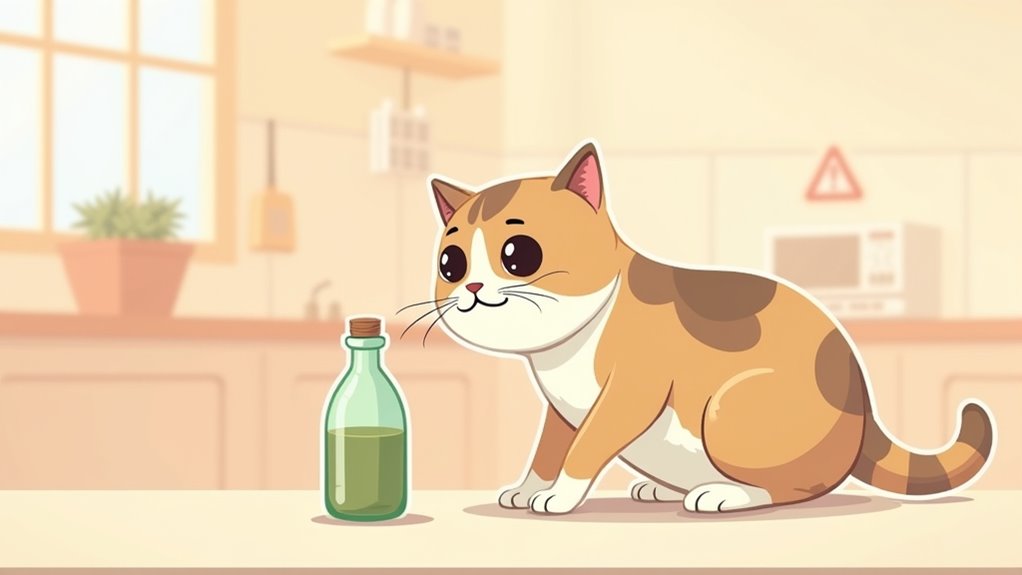
Undiluted vinegar can pose serious risks to your cat. It can irritate their mouth, causing pain and discomfort.
Cats may also experience gastrointestinal issues, such as vomiting and diarrhea. For cats with kidney problems, the acidity in vinegar can make their health worse.
It’s best to keep vinegar away from them. Always prioritize your cat’s safety and well-being.
Mouth Irritation Symptoms
Mouth irritation from undiluted vinegar can cause serious discomfort for your cat. Signs of mouth sensitivity include redness, soreness, and possible ulcers. You may notice excessive drooling or your cat vocalizing while eating. These indicate oral pain.
Look for these symptoms:
- Red patches or blisters inside the mouth
- Bad smells from inflammation
- Trouble eating or grooming
Act quickly if you see these signs. Rinse your cat’s mouth with lukewarm water to lessen acid contact.
Reach out to your veterinarian for more help if symptoms don’t go away. Untreated irritation can lead to painful ulcers and infections. Caring for your cat’s mouth is important for their health.
Gastrointestinal Upset Risks
Gastrointestinal upset is a major risk for cats that drink undiluted vinegar. Its strong acidity can irritate their stomach and intestines. Even a little bit can cause vomiting and diarrhea. This happens as the cat’s body tries to get rid of the vinegar.
Cats sensitive to acid may feel worse. They can have stomach pain and inflammation. This discomfort can lead to less eating and changes in behavior.
Keep vinegar away from your cat to prevent these issues. Watch for signs of trouble like vomiting or tiredness. Contact your veterinarian right away if you see these symptoms. Taking these steps helps keep your cat healthy and happy.
Kidney Health Concerns
Kidney health is crucial for your cat, especially with renal issues. Undiluted vinegar can be harmful due to its high acidity. The acetic acid in vinegar can upset your cat’s diet and strain weak kidneys.
Risks of Undiluted Vinegar:
- It can irritate internal organs, especially the kidneys.
- It raises acid levels, making kidney function worse.
- It changes urinary pH, increasing the risk of infections.
Solutions:
- Keep vinegar away from cats with kidney disease.
- Talk to a vet about safe foods and supplements for kidney support.
Regularly check your cat’s kidney function and urine pH. Always choose a balanced, kidney-friendly diet for your cat’s health.
Safe Use of Diluted Vinegar Around Cats
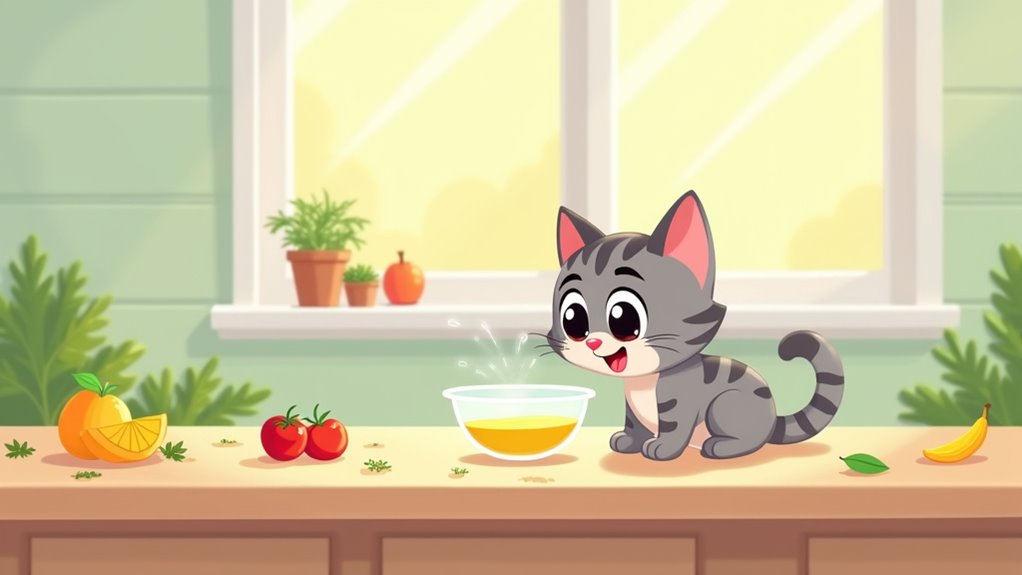
Using diluted vinegar around your cat can be safe. Follow these simple guidelines to keep your furry friend safe and happy.
- Dilute Properly: Mix equal parts vinegar and water. This helps reduce strong smells and irritation.
- Ventilate: Ensure good airflow when using vinegar. This keeps the air fresh and reduces stress for your cat.
- Clean Surfaces: Use diluted vinegar to clean cat bowls and litter areas. It’s safe and leaves no harmful residues.
- Monitor Reactions: Watch your cat after cleaning. Look for any strange behavior, especially if they touch cleaned areas.
Taking these steps helps create a safe environment for your cat while using vinegar.
Enjoy a clean home without worry!
Vinegar as a Household Cleaner
Vinegar is a safe and effective cleaning solution. It removes odors easily. Its strong scent can keep cats away from certain areas.
Use vinegar carefully, though. Its acidity may damage some surfaces. Always test a small area first.
Vinegar works well on glass, countertops, and floors. It’s a natural choice for a clean home.
Keep it in mind for your cleaning tasks. Enjoy a fresher, cleaner space with vinegar!
Safe Cleaning Solution
Using vinegar as a cleaner is smart and eco-friendly. Here are some easy tips for safe cleaning with vinegar:
- Pick the Right Type: Use white vinegar (5% acetic acid) for everyday cleaning. For tougher jobs, try cleaning vinegar (6%).
- Dilute Stronger Vinegar: Always mix stronger vinegar (like 30%) with water. This helps protect your surfaces.
- Avoid Certain Surfaces: Don’t use vinegar on hardwood floors, natural stone, or oleophobic coatings. It can cause damage.
- Try Other Cleaners: Consider baking soda or hydrogen peroxide. They’re effective and safe.
Follow these tips to use vinegar safely and clean your home effectively. Enjoy a clean and fresh space!
Odor Removal Benefits
Vinegar is great for getting rid of odors in your home. Place a bowl of vinegar near the smell. It starts working right away. The acetic acid in vinegar breaks down odor molecules. This process can last up to 24 hours. You may need to change the vinegar often.
For better results:
- Use several bowls in bigger rooms.
- Try stronger vinegar with 10% or 30% acetic acid for tough smells.
Vinegar has its own smell, but it fades within 15 minutes to 2 hours. It works well for light odors.
For strong smells, like smoke, use other methods too. Mixing different techniques gives the best results.
Cat Deterrent Properties
Many people want to keep cats away from certain places. Vinegar is a simple and natural solution. Cats have very sensitive noses. They dislike the strong smell of vinegar, so it works well.
Here’s how to use vinegar to deter cats:
- Mix: Combine equal parts white vinegar and water in a spray bottle.
- Spray: Apply it on surfaces where cats like to hang out or areas they mark.
- Hang: Place vinegar-soaked cloths in your garden. This gives a long-lasting effect.
- Reapply: Spray every few days or after it rains to keep it strong.
Using vinegar is an easy way to keep cats away. It’s safe, effective, and good for the environment. Try it out and enjoy your cat-free space!
Vinegar’s Role in Pest Control and Topical Applications
Vinegar is a great tool for pest control. Its acetic acid helps kill bugs effectively. A 20% vinegar solution works better than a 5% solution.
Yet, be careful. Strong vinegar can irritate skin, eyes, and pets.
To use vinegar as an insect spray:
- Mix one part vinegar with one part water. Herbicidal vinegar works best.
- Spray directly on pests. Focus on their hiding spots.
- Reapply every few days. Vinegar doesn’t last long.
Use vinegar wisely to keep your home pest-free!
Dietary Considerations for Cats and Vinegar-Containing Foods
Understanding vinegar and its effects on cats is very important. Vinegar can be found in many foods, but it may not be safe for your cat. Here are some important points to remember:
- Vinegar’s acidity can hurt your cat’s mouth and stomach.
- Snacks with vinegar, like salt and vinegar chips, aren’t safe. They’ve too much salt and unhealthy fats.
- Cats with sensitive stomachs can easily get sick. They might vomit or have diarrhea after eating acidic foods.
- Safe options include plain water or special cat treats without vinegar.
Cats usually avoid the strong smell of vinegar. This instinct helps protect them.
Always choose safe foods for your cat to keep their tummy happy. If you want to add something new to their diet, talk to your vet first. This way, your furry friend stays healthy and joyful.
Frequently Asked Questions
Can Vinegar Help With Cat Odor Removal?
A vinegar solution works well for cat odor removal. Mix equal parts of vinegar and water. Spray this mixture on the affected areas. After spraying, blot the area with a cloth. This method helps eliminate stubborn smells. Your home will smell fresher and more inviting. Vinegar also has natural antibacterial properties. It can help keep your space clean. This simple solution is safe for pets and easy to make. Enjoy a cleaner home without harsh chemicals!
Is Apple Cider Vinegar Safe for Cats?
Apple cider vinegar can be tricky for cats. It may help with skin issues. But, it can also cause problems. Undiluted vinegar can upset your cat’s stomach. Symptoms include vomiting or diarrhea. Always talk to your vet before using it. They can guide you on safe use. Keep your cat’s health a priority.
What if My Cat Accidentally Drinks Vinegar?
Your cat may drink vinegar by mistake. Keep a close eye on them. Look for signs of discomfort or irritation. Vinegar is not toxic, but its acidity can upset their stomach. Watch for symptoms like drooling, vomiting, or trouble breathing. If you notice any of these signs, call your vet right away. They can give you the best advice for your cat’s health. Keep vinegar out of reach to prevent this from happening again. Always prioritize your pet’s safety and well-being.
How Does Vinegar Affect a Cat’s Behavior?
Vinegar has a strong smell that cats dislike. This powerful scent can send them running away quickly. Cats often avoid places that smell like vinegar. They find it uncomfortable and unpleasant.
Vinegar is not harmful to cats, but it can upset them. The aroma disrupts their senses. Cats are sensitive to strong smells. They prefer fresh and mild scents.
Using vinegar as a cleaning agent? Be careful. It may keep your cat away from certain areas. If you want to deter your cat, vinegar can be effective. Just remember, it’s the smell that bothers them, not the liquid itself.
Can Vinegar Be Used as a Cat Food Preservative?
Vinegar has some antimicrobial properties. It may help keep cat food fresh for a short time. Still, it is not a proven or safe preservative. Always consult your vet before adding vinegar to your cat’s food. Some cats may have sensitivities or allergies. It’s best to follow expert advice to keep your cat healthy.
Conclusion
Cats can handle small amounts of diluted vinegar. But be careful. About 30% of cats are sensitive to strong smells. Even mild vinegar can upset their noses or stomachs. Never give your cat undiluted vinegar. It can cause stomach problems.
If you use vinegar for cleaning or pest control, keep your cat away. Wait until it’s safe for them. Always put your cat’s health and comfort first!
