
What Herbs Can Cat Eat
This post contains affiliate links. As an Amazon Associate, we earn from qualifying purchases.
Safe herbs for cats include catnip, cat grass, basil, and dandelion, which can aid digestion and provide enjoyment. It’s important to avoid harmful herbs like garlic and onions, as they can lead to serious health issues. Always introduce new herbs gradually to watch for any negative reactions; if your cat shows signs of irritation, remove the herb immediately. For more information on how to offer herbs to your cat and which ones to avoid, continue reading.
Essential Facts in 30 Seconds
- Catnip and cat grass are safe and enjoyable for cats, aiding relaxation and digestion.
- Basil, sage, and rosemary can be given in small amounts without harming cats.
- Echinacea enhances immune response, while dandelion supports digestion and kidney function.
- Introduce new herbs gradually to observe for any adverse reactions.
- Avoid toxic herbs like garlic, onions, and chamomile to prevent serious health issues.
Safe Herbs for Cats
Adding herbs to your cat’s diet can be fun and healthy.
It’s important to know which herbs are safe. Some herbs can be harmful, so proper identification is key.
Basil, sage, and rosemary are safe in small amounts. Parsley is also safe but should be given in moderation to avoid tummy troubles. Additionally, small amounts of catnip can be safely consumed by cats, making it a popular herb among felines.
Cats have their favorites. Many love catnip, though not every cat reacts to it. Cat thyme and valerian are also popular with felines.
Here’s a quick guide for safe herbs:
- Safe Herbs: Basil, Sage, Rosemary, Cilantro
- Cat Favorites: Catnip, Cat Thyme, Valerian
Start with tiny amounts. Introduce new herbs slowly to see how your cat reacts. Monitoring cat’s reactions to new herbs is essential.
Always avoid toxic herbs like garlic and onion. These can cause serious health problems.
Your cat’s safety is the most important thing!
Nutritional Benefits of Cat-Safe Herbs
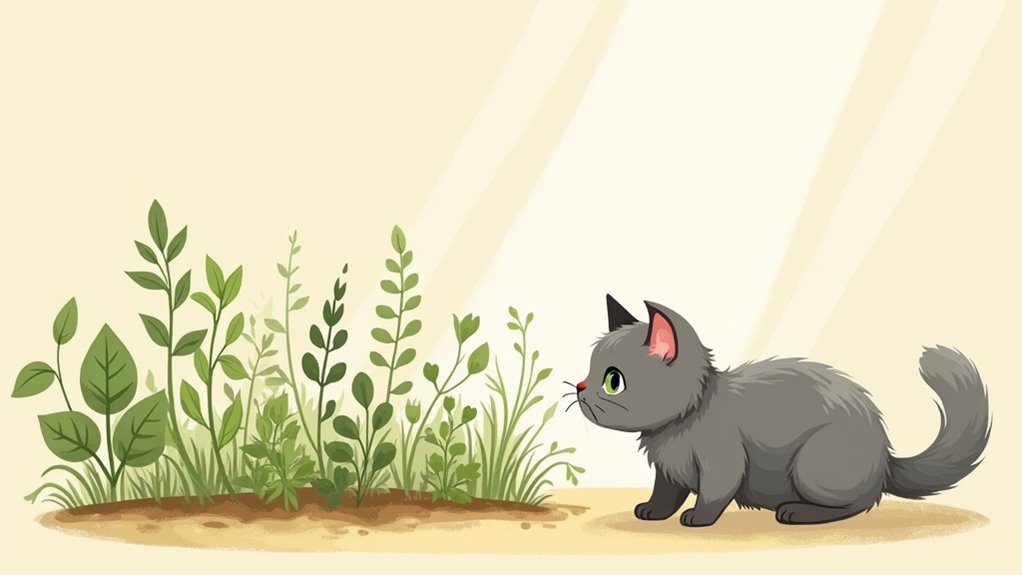
Cat-safe herbs can make your feline’s meals tastier. They also provide important health benefits. Adding these herbs to your cat’s diet helps boost their immune system. They can improve digestion and support emotional well-being. Coriander, for instance, is generally non-toxic and can offer potential health benefits when given in moderation.
Here’s a look at some great herbs for cats:
| Herb | Nutritional Profile | Cat Herb Benefits |
|---|---|---|
| Echinacea | Boosts the immune response | Fights infections |
| Parsley | Full of antioxidants and vitamins | Supports liver and kidney health |
| Licorice Root | Has natural anti-inflammatory properties | Calms allergies and skin issues |
| Dandelion | Contains vitamins A, C, and K | Aids digestion and kidney function |
Using these herbs can lead to better health for your cat. Always talk to your vet before adding new herbs. This ensures they are safe and right for your pet. You can enjoy the benefits while keeping your cat healthy.
Herbs to Avoid for Cats
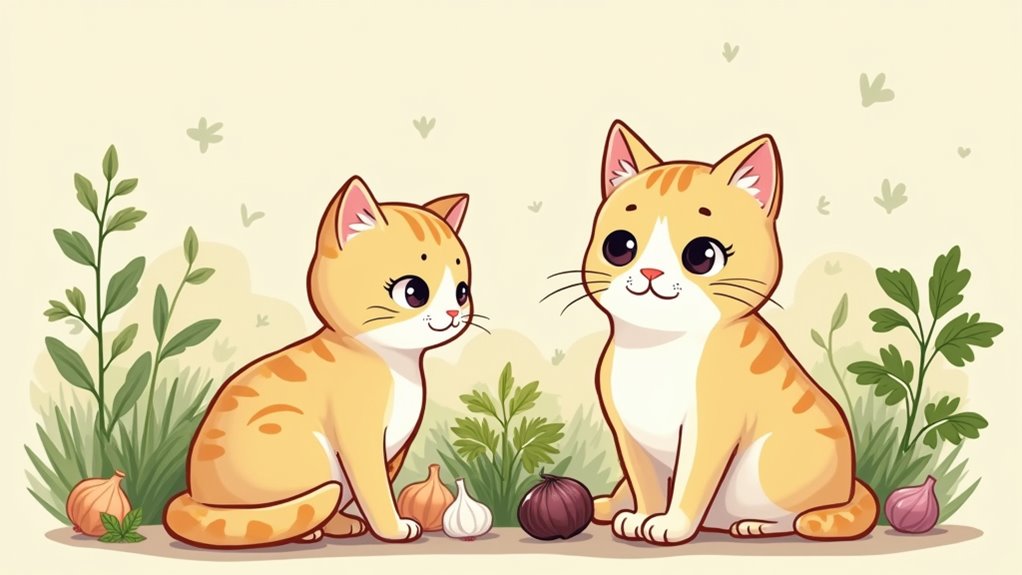
Knowing which herbs are dangerous for your cat is very important. Some common herbs can cause serious health problems.
Garlic and onion are two of the worst. They can lead to hemolytic anemia. This condition affects the blood and can be life-threatening. Garlic powder contains thiosulfates that are harmful to cats. Even small amounts of garlic can lead to serious health issues for your feline friend.
Watch for signs like vomiting, weakness, or lethargy. These symptoms can indicate your cat has eaten something harmful.
Keep these toxic herbs out of your cat’s reach. Always check food and plants to ensure they’re safe.
Your cat’s safety is your responsibility. Stay informed and protect your furry friend.
Toxic Herb Examples
Toxic herbs can be dangerous for cats. Knowing which ones to avoid is essential for their safety. Here are some common toxic herbs:
- Garlic, Onions, and Chives: Even small amounts can harm red blood cells. This can lead to anemia. Onions are toxic to cats, regardless of preparation.
- St John’s Wort: This plant can cause skin reactions and other problems, especially in outdoor cats.
- Foxglove: Contains toxins that can severely affect the heart. It can be deadly.
- Marijuana: Eating it can cause severe nervous system problems. Quick veterinary care is needed.
- Chamomile: Some types can cause allergic reactions. Be careful with this herb.
Additionally, it’s important to remember that onions contain thiosulfates which are toxic to cats. Identifying plants is very important. Many toxic herbs may be in your kitchen or garden.
Always keep your cat’s safety as a top priority!
Symptoms of Toxicity
Cats can show signs of herb poisoning. Watch for symptoms like excessive drooling or vomiting. These indicate oral irritation and upset stomach.
Abdominal pain can cause your cat to paw at its mouth or act restless. Changes in behavior are common too. You might see a loss of appetite or lethargy. Increased thirst and urination can signal kidney stress.
Serious symptoms include tremors or disorientation. Difficulty breathing or pale gums means it’s time for immediate veterinary care. Always stay alert.
Consult your vet if you think your cat ate a toxic herb. Quick action can save your furry friend!
Methods of Offering Herbs to Cats
Offering herbs to your cat can be a fun and healthy way to enhance their diet. Understanding your cat’s likes and using the right methods can make it enjoyable for both of you.
Here are some simple ways to offer herbs:
- Fresh Herbs: Give small sprigs of safe herbs like basil or catnip. Cats love to nibble on these.
- Dried Herbs: Fill small fabric bags with dried herbs like valerian. These make great toys for your cat.
- Herbs in Food: Chop herbs like rosemary and mix them into your cat’s food. This adds flavor and nutrition.
Always introduce one herb at a time. Start with small amounts to see how your cat reacts.
Growing an indoor herb garden can ensure you have fresh herbs available. Remember, every cat has different tastes. Pay attention to what your cat enjoys!
Precautions When Feeding Cats Herbs
Introducing herbs to your cat’s diet can be fun and beneficial. Safety must come first.
Avoid Toxic Herbs
Stay away from allium herbs like garlic and onions. These can harm your cat’s red blood cells.
Marijuana, pennyroyal mint, and some types of chamomile are also dangerous.
Use Moderation and Monitor
Start with small amounts of herbs. This helps prevent stomach upset.
Watch for any signs of vomiting or lethargy. Limit herb use to a few times a week to avoid bad reactions.
Ensure Quality and Safety
Choose organic, pesticide-free herbs from trusted sources. Additionally, research specific plants to ensure their safety for your cat.
Growing your own herbs ensures quality. Always talk to a vet before adding new herbs, especially if your cat has health issues.
Common Misconceptions About Cats and Herbs
Not all herbs are safe for cats. Many people think herbs that are safe for humans are safe for pets. This isn’t true. Some herbs can even be toxic to cats. Knowing which herbs are harmful is important for your cat’s health. For example, herbs like garlic and onion are dangerous. They can cause serious health issues in cats. Additionally, certain plants like carnations can also pose risks to your feline friends.
Cats are particularly sensitive to toxic substances, making it essential to be cautious with any plants or herbs introduced to their environment. On the other hand, catnip is safe and often enjoyed by many cats.
Always check before giving your cat any herbs. It’s best to research or ask your vet. Keeping your cat safe is the top priority. Understanding herbs helps keep your furry friend happy and healthy.
Safe vs. Toxic Herbs
Knowing which herbs are safe or toxic for your cat is very important.
Using the wrong herbs can cause serious health problems. Here are some tips for identifying herbs:
- Safe Herbs: Catnip, cat grass, basil, rosemary, and parsley in small amounts.
- Toxic Herbs: Onions, garlic, chives, oregano, tarragon, and pennyroyal mint.
- Common Misunderstandings: Just because herbs are used in cooking doesn’t mean they’re safe for cats.
Introduce new herbs slowly to see how your cat reacts.
Always check with your vet before adding any herbs to your cat’s diet.
Remember, not all natural options are safe.
Stay informed to keep your cat healthy and safe.
Herbal Remedies Misunderstandings
Many people think all herbs are safe for cats. This is not true. Cats metabolize substances differently than humans. Some herbs can be harmful to them, even if they seem safe for us.
Here are common misunderstandings about herbal remedies for cats:
| Misunderstanding | Explanation | Risk to Cats |
|---|---|---|
| All herbs are safe | Not every herb is safe for cats | They can be toxic |
| Natural means safe | Natural doesn’t always mean safe | It can harm their health |
| DIY remedies are easy | Homemade mixes can have wrong dosages | They might cause harm |
Always talk to your vet before using any herbal remedies. Relying on what others say can lead to mistakes. Protect your cat’s health by making informed choices.
Frequently Asked Questions
Can Cats Eat Herbs Every Day?
Cats can safely eat some herbs every day. Safe herbs include catnip, parsley, and basil. These herbs can offer health benefits for your cat. Catnip can help with relaxation and playfulness. Parsley can support digestion and freshen breath. Basil has antioxidants that may help keep your cat healthy.
Always watch how your cat reacts to new herbs. Some cats may love them, while others may not. It’s important to give herbs in small amounts. Too much can upset their tummy. Always check with your vet before adding new foods to your cat’s diet. This keeps your furry friend safe and healthy.
How Much Herb Is Safe for a Cat?
To keep your cat safe with herbs, start with a tiny amount, like a pinch. Watch your cat closely for any bad reactions. Some herbs can be good for cats, but not all are safe. Always ask your vet about the right amounts for your cat. They can give you the best advice. Remember, your cat’s safety is the most important thing.
Are Dried Herbs as Safe as Fresh Ones?
Dried herbs can be safe for your cat, but caution is key. They are stronger than fresh herbs. Start with small amounts to see how your cat reacts. Watch for any bad reactions while enjoying the health benefits. Always choose high-quality dried herbs. Store them properly to keep them fresh. Remember, safety first!
Can Kittens Consume the Same Herbs as Adult Cats?
Kittens can eat some herbs that adult cats enjoy. But be careful. Kittens have sensitive bodies. They may react differently to herbs. Always watch how your kitten responds. Some safe herbs for kittens include catnip and parsley. Never give them anything without checking with your vet first. Your vet can guide you on safe options. Keep your kitten’s health a priority. Treat them well with safe and tasty herbs.
Do Herbs Have Any Side Effects for Cats?
Cats can show signs of herb toxicity. These signs include vomiting and lethargy. About 25% of pets may be affected by this. Some herbs are safe for cats, but caution is needed. Always watch how your cat reacts to new herbs. It’s smart to talk to a vet before adding herbs to their diet. Your cat’s health is important, so stay informed!
Conclusion
Many herbs can benefit your cat. It’s important to know which ones are safe. For example, catnip is a favorite. Whiskers, a playful cat, felt happier after her owner sprinkled catnip on her toys. This made her play more and feel less anxious.
Always talk to your vet before adding herbs to your cat’s diet. Watch your cat for any reactions. Start with a small amount. Remember, moderation is key. Some safe herbs for cats include basil, parsley, and mint. These can add taste and health benefits to their meals.
With careful planning, you can safely improve your cat’s diet. Happy pet, happy life!
