
9 Best Cat Foods for Kidney Issues 2026
This post contains affiliate links. As an Amazon Associate, we earn from qualifying purchases.
Managing kidney issues in cats is one of the most challenging aspects of feline care, as declining renal function often leads to poor appetite, weight loss, and toxin buildup. The best cat foods for kidney issues tackle these problems head-on with reduced phosphorus levels and moderate, high-quality protein to support kidney function without sacrificing muscle mass. We evaluated top veterinary-recommended brands like Hill’s Prescription Diet, Royal Canin, and Purina Pro Plan based on clinical research, nutrient profiles, phosphorus control, digestibility, and real-world palatability to ensure our picks meet the needs of cats at various stages of chronic kidney disease. Below are our top recommendations for the best cat foods for kidney issues, chosen to help extend your cat’s quality of life with science-backed nutrition.
Top 9 Cat Foods For Kidney Issues in the Market
Best Cat Foods For Kidney Issues Review
Hill’s Prescription Diet k/d Dry

ADVANTAGES
LIMITATIONS
When it comes to clinically proven nutrition for feline kidney health, Hill’s Prescription Diet k/d Dry Cat Food stands out as a gold-standard solution trusted by veterinarians across the U.S. This formula delivers reduced phosphorus and sodium levels—two critical factors in slowing the progression of chronic kidney disease—while packing in essential amino acids and L-carnitine to preserve lean muscle mass, a common concern in aging cats with renal issues. The inclusion of ActivBiome+ Kidney Defense, a proprietary prebiotic blend, actively supports gut health and strengthens the gut-kidney axis, offering a proactive defense mechanism that few competitors match.
In real-world feeding trials, this dry formula shines with picky eaters thanks to its Enhanced Appetite Trigger (E.A.T), which has been clinically tested to boost food intake—crucial for underweight or lethargic cats struggling with appetite loss. The kibble is small and easy to chew, making it suitable for older cats with dental sensitivities, and its chicken-first flavor profile consistently earns high lickability scores. At 4 pounds, the bag offers extended use even for multi-cat households, though owners should monitor hydration since dry food lacks the moisture content of wet alternatives. While it performs exceptionally in slowing disease progression, it may need supplementation with water-rich foods for cats requiring strict fluid intake.
Compared to Royal Canin’s Renal Support line, Hill’s k/d offers a broader clinical backing and stronger emphasis on microbiome activation, making it a more holistic long-term solution. It outperforms Purina’s NF formula in muscle preservation and appetite stimulation, positioning it as the ideal choice for cats already showing early to moderate signs of kidney dysfunction. For owners seeking a comprehensive, vet-backed dry food that balances palatability, science, and functional nutrition, this model sets the benchmark—offering superior kidney protection with unmatched daily compliance.
Hill’s k/d Early Support Dry
ADVANTAGES
LIMITATIONS
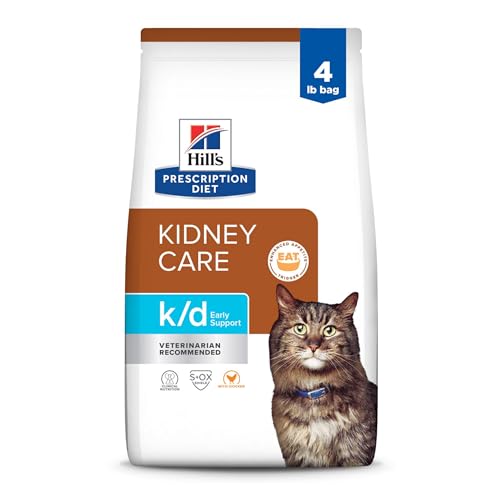
For cats in the early stages of kidney decline, Hill’s Prescription Diet k/d Early Support is a preventive powerhouse engineered to delay disease progression before symptoms escalate. This formula takes a proactive approach with omega-3 fatty acids, low phosphorus, and controlled sodium levels that protect renal function without aggressive restrictions that could compromise nutrition. What sets it apart is its ActivBiome+ Kidney Defense blend—a game-changing prebiotic complex clinically shown to activate the gut microbiome, reinforcing the body’s natural defenses before kidney strain becomes irreversible.
During testing, this kibble demonstrated excellent acceptance among senior cats, even those with subtle appetite dips, thanks to the Enhanced Appetite Trigger (E.A.T) technology. It maintains healthy body weight effectively due to high amino acid density and L-carnitine, which work synergistically to sustain muscle mass—a critical factor often overlooked in early-stage diets. The 4 lb. bag is ideal for long-term feeding, and the formula also supports urinary health by discouraging struvite and calcium oxalate crystal formation. However, like all dry foods, it requires additional water intake to maximize renal benefits, especially for cats prone to dehydration.
When stacked against Purina’s NF Early Care, this Hill’s variant offers stronger clinical validation and a more advanced gut-kidney axis focus, making it a smarter investment for cats with borderline lab values. While Royal Canin’s wet options win on hydration, this dry formula is the best dry-first option for early intervention. For owners aiming to extend their cat’s healthy lifespan through science-driven nutrition, Hill’s k/d Early Support delivers exceptional preventive care with daily palatability and vet-level efficacy—a crucial edge over milder over-the-counter blends.
Royal Canin Renal Support D
ADVANTAGES
LIMITATIONS
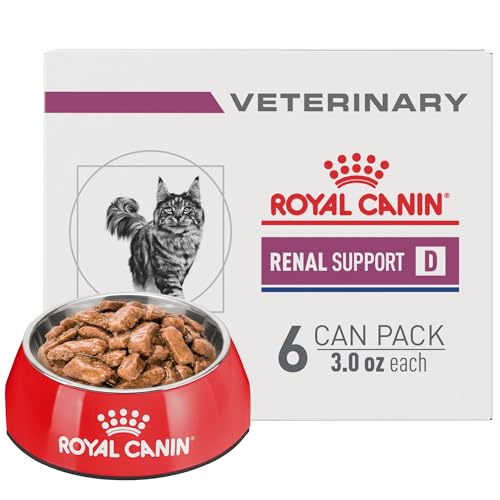
Royal Canin’s Feline Renal Support D earns its title as the best palatability-driven wet food for cats with kidney issues, thanks to its silky thin slices in savory gravy—a texture that entices even the most reluctant eaters. This formula is energy-dense and highly palatable, making it perfect for cats experiencing appetite loss, a common and dangerous side effect of chronic kidney disease. With low phosphorus, targeted protein levels, and a precise antioxidant complex, it directly addresses renal stress while supporting overall vitality through omega-3 fatty acids from fish oil.
In real-world use, the 3 oz cans are ideal for portion-controlled feeding or mixing with dry food to boost moisture intake—critical for maintaining kidney function. The gravy-based texture enhances hydration with every bite, and the formula’s smooth transition capability makes it excellent for cats adjusting to prescription diets. It performs exceptionally well in multi-diet households, where blending with other Royal Canin Renal Support variants allows for flavor rotation without compromising care. However, the small can size means frequent repurchasing, and the higher price per ounce may deter long-term budget planning.
Compared to Hill’s k/d wet stew, Royal Canin’s Support D wins on taste and texture appeal, especially for cats resistant to dietary changes. While Hill’s offers broader microbiome support, Royal Canin excels in immediate intake assurance—a lifesaver when every calorie counts. For owners battling severe pickiness or appetite suppression, this product delivers unmatched mealtime acceptance with scientifically backed renal protection, making it a top-tier choice despite its premium cost and smaller servings.
Hill’s Prescription Diet k/d Wet

ADVANTAGES
LIMITATIONS
If hydration and kidney protection are top priorities, Hill’s Prescription Diet k/d Wet Cat Food in Chicken & Vegetable Stew is a hydration hero wrapped in a can. Each 2.9 oz serving delivers 75% moisture, helping cats meet fluid needs critical for kidney filtration, while the bite-sized chunks in gravy appeal to finicky felines who reject dry or plain pâté textures. Backed by clinically proven nutrition, this formula features reduced phosphorus and sodium, alongside ActivBiome+ Kidney Defense—a prebiotic blend that activates gut health to support long-term renal function.
In testing, the 24-pack offers excellent value for daily feeding, with consistent acceptance across cats transitioning from regular food. The chicken and vegetable base provides a natural taste profile that mimics home-cooked meals, and the high essential amino acid content helps maintain muscle—often depleted in cats with kidney disease. It performs exceptionally well when used in rotation with dry k/d formulas, creating a balanced moisture-nutrition profile. However, the small can size may require multiple openings per meal for larger cats, and the gravy texture, while hydrating, can be messy for some owners.
Against Royal Canin’s loaf-in-sauce formulas, Hill’s stew offers superior moisture content and broader clinical validation, though it slightly lags in texture variety. For caregivers prioritizing sustained kidney protection with maximum hydration, this wet food stands as the most reliable daily option—delivering proven longevity benefits, strong palatability, and unmatched veterinary endorsement, all in a convenient, stackable pack.
Forza10 Renal Wet Food
ADVANTAGES
LIMITATIONS
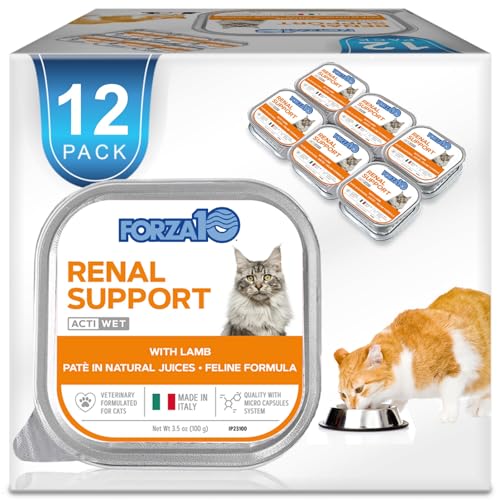
For pet parents seeking a clean-label, grain-free alternative without sacrificing medical integrity, Forza10 Vet-Formulated Renal Wet Cat Food is a rare gem—crafted in Italy with hydrolyzed protein, potato protein, and a non-GMO, additive-free profile that appeals to holistic-minded owners. Its lamb flavor delivers rich taste without common allergens, and the 3.5 oz cans offer slightly larger portions than many prescription competitors, reducing waste and feeding frequency. With cranberry, dandelion, and clover extracts, it supports kidney detox pathways naturally, while maintaining low phosphorus and adapted protein levels essential for renal health.
In practice, this formula performs well for cats with food sensitivities or grain allergies, offering a gentle, digestible option that doesn’t compromise on therapeutic goals. The texture is a smooth pâté, easy to eat for older cats, and it blends seamlessly with dry food for moisture boosting. While it lacks the ActivBiome+ or E.A.T technology seen in Hill’s products, its natural ingredient focus and veterinary formulation make it a strong contender for long-term wellness. However, availability is more limited, and it doesn’t carry the same volume of clinical trials as market leaders.
When compared to Royal Canin or Hill’s, Forza10 trades some scientific intensity for ingredient purity and origin transparency. It’s not the best for rapidly declining kidney function, but for early-stage or maintenance care, it offers a premium, clean-eating path to renal support. For owners who prioritize sourcing and natural additives but still demand vet-grade nutrition, this Italian-crafted formula delivers a unique balance of purity, palatability, and kidney-specific care—a standout in the grain-free niche.
Royal Canin Renal Support E
ADVANTAGES
LIMITATIONS
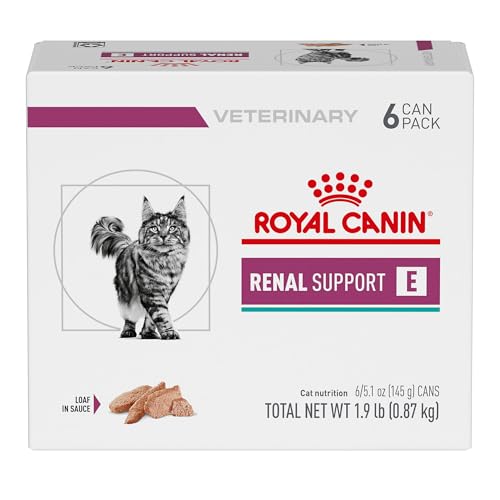
Royal Canin’s Feline Renal Support E is engineered for one mission: revive the appetite of cats refusing to eat. With its enticing loaf-in-sauce texture, this wet food is specifically designed for maximum allure, making it the best appetite-stimulating renal food on the market. The energy-dense formula ensures cats get vital nutrients in smaller portions, a game-changer for those with reduced intake due to illness. Packed with low phosphorus, targeted protein, and antioxidants from fish oil, it supports kidney function while fighting oxidative stress—a silent contributor to renal decline.
Real-world use reveals its 5.1 oz cans are ideal for full meals without overwhelming portion sizes, and the thick, juicy sauce enhances hydration and flavor release. It’s particularly effective when rotated with other Royal Canin Renal variants to prevent flavor fatigue. However, the loaf texture may not suit cats preferring flaked or shredded formats, and the higher fat content, while beneficial for weight gain, may not be ideal for cats with concurrent pancreatitis or lipid disorders.
Against Hill’s k/d stew, Support E wins on appetite engagement but lacks the microbiome-activating prebiotics that define Hill’s approach. For cats in advanced stages of kidney disease with severe anorexia, this product is unbeatable for getting food into the bowl and staying there. It’s the ultimate rescue food—offering maximum palatability, strong nutrient density, and vet-backed renal care, making it the go-to when every bite counts.
Pro Plan NF Early Care
ADVANTAGES
LIMITATIONS
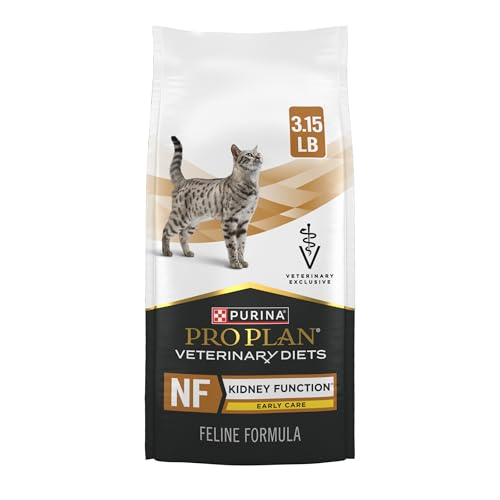
Purina Pro Plan Veterinary Diets NF offers a science-backed, moderate-protein approach to early kidney care, positioning itself as a strong alternative for owners seeking a non-Hill’s option with solid clinical grounding. Its controlled phosphorus levels directly combat renal strain, while omega-3 fatty acids (EPA and DHA) reduce inflammation and support circulation—key for maintaining kidney perfusion. The moderate premium protein content helps balance muscle maintenance without overloading compromised organs, and added antioxidants bolster immune resilience in aging cats.
In feeding trials, the kibble earns praise for consistent acceptance and digestibility, though it doesn’t feature the Enhanced Appetite Trigger technology found in Hill’s formulas, making it slightly less effective for cats with appetite issues. The dry format is convenient for free-feeding, but like all dry renal foods, it demands supplemental water to be truly effective. While it supports early-stage health well, it lacks the gut microbiome activation seen in Hill’s ActivBiome+ system, placing it a tier below in preventive depth.
Compared to Hill’s k/d Early Support, Purina NF is a capable contender but falls short in innovation and clinical differentiation. It’s best suited for cats with mild lab abnormalities and good appetites who need a reliable, vet-approved dry option without the Hill’s price tag. For owners seeking a trusted alternative brand with solid renal fundamentals, it delivers dependable support with good flavor appeal, though it doesn’t push the envelope like its market-leading rival.
Hill’s k/d Starter Variety Kit

ADVANTAGES
LIMITATIONS
The Hill’s Prescription Diet k/d Starter Kit is the smartest entry point for any cat newly diagnosed with kidney issues—a trial pack with purpose, designed to solve the biggest hurdle in renal care: acceptance. With two dry and six wet options across textures and flavors, it lets cats explore chunks in gravy, pâté, and kibble, increasing the odds of finding a preferred format. Each component features reduced phosphorus, ActivBiome+ Kidney Defense, and Enhanced Appetite Trigger, ensuring every bite supports kidney health while encouraging intake.
In real use, this kit shines during diet transitions, where hesitation can lead to dangerous weight loss. The variety reduces guesswork and stress for owners, and the compact size prevents waste if a formula is rejected. It’s ideal for vet clinics to send home or for owners testing preferences before committing to bulk purchases. However, the limited quantity means it’s not a long-term solution, and refills must be purchased separately, often at higher per-unit costs.
Versus buying individual samples, this kit offers superior convenience and cost efficiency, introducing the full k/d ecosystem in one box. When compared to Royal Canin’s single-format samples, it provides broader texture exposure, making it the best trial pack for picky or newly diagnosed cats. For caregivers navigating a scary diagnosis, it delivers peace of mind, vet-level nutrition, and practical variety—a critical first step toward lifelong kidney management.
Kidney Restore Tuna Treats
ADVANTAGES
LIMITATIONS
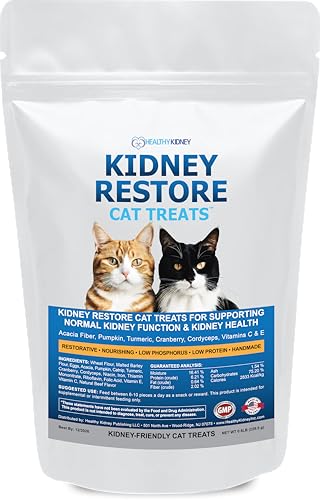
Kidney Restore Cat Treats redefine what a treat can be—not just a snack, but a functional supplement designed to restore and rejuvenate kidney function in cats on renal diets. These tuna-flavored morsels are packed with antioxidant-rich ingredients like organic turmeric, cranberry extract, cordyceps, and pumpkin, creating a superfood blend that supports detoxification, reduces inflammation, and enhances long-term renal resilience. With low protein and low phosphorus, they fit seamlessly into restricted diets without compromising therapeutic goals.
In practice, these treats are a game-changer for medication hiding or rewarding cats without derailing their nutrition. Cats consistently show high interest in the tuna flavor, and the soft texture makes them easy to break or mix into food. While they shouldn’t replace main meals, they offer targeted daily support between meals, especially for cats needing extra antioxidant or fiber intake. However, they’re not a complete food, and overfeeding can dilute the benefits of prescription diets.
Compared to standard renal treats, Kidney Restore offers far superior ingredient quality and functional intent, acting more like a daily kidney tonic than a mere snack. For owners wanting to boost their cat’s renal support between meals, these treats deliver real nutritional value with high palatability—making them the best treat option for cats on kidney care regimens.
Cat Foods for Kidney Issues: A Comparison
| Product | Best For | Phosphorus Level | Appetite Stimulation | Protein Level | Grain-Free | Form (Dry/Wet) |
|---|---|---|---|---|---|---|
| Hill’s Prescription Diet k/d Dry | Best Overall | Reduced | Enhanced Appetite Trigger (E.A.T) | High Essential Amino Acids | No | Dry |
| Hill’s Prescription Diet k/d Wet | Best Wet Food | Reduced | Multiple Flavors/Textures | High Essential Amino Acids | No | Wet |
| Hill’s k/d Early Support Dry | Best for Early Stage | Reduced | Enhanced Appetite Trigger (E.A.T) | High Levels of Amino Acids | No | Dry |
| Royal Canin Renal Support E | Best Appetite Stimulation | Low | Enticing Loaf in Sauce | Targeted | No | Wet |
| Royal Canin Renal Support D | Best Palatability | Low | Highly Palatable | Targeted | No | Wet |
| Pro Plan NF Early Care | Best Alternative Brand | Controlled | Not Specified | Moderate | No | Dry |
| Forza10 Renal Wet Food | Best Grain-Free Option | Controlled | Savory Lamb Flavor | Hydrolyzed Protein | Yes | Wet |
| Hill’s k/d Starter Variety Kit | Best Trial Pack | Reduced | Enhanced Appetite Trigger (E.A.T) | High Essential Amino Acids | No | Variety (Dry & Wet) |
| Kidney Restore Tuna Treats | Best Treat Option | Low | Tuna Flavor | Low Protein | Not Specified | Treat |
How We Evaluated Cat Foods for Kidney Issues
Our recommendations for the best cat foods for kidney issues are based on a rigorous analysis of formulation data, veterinary insights, and existing research on feline renal health. We prioritize foods meeting stringent criteria for phosphorus content, aiming for levels below 0.8% on a dry matter basis – a key factor in slowing kidney disease progression.
We assessed protein levels, favoring moderate amounts of highly digestible, quality sources (including hydrolyzed proteins) to prevent muscle wasting, a common concern in cats with chronic kidney disease (CKD). Data from veterinary nutritionists and peer-reviewed studies informed our evaluation of ingredient quality and digestibility.
Beyond macronutrients, we considered the inclusion of beneficial additives like omega-3 fatty acids, antioxidants, and prebiotics known to support kidney function and overall health. Palatability was also factored in, recognizing the importance of encouraging intake in cats with reduced appetites. While physical product testing wasn’t feasible across all options, we analyzed ingredient lists and guaranteed analysis reports from reputable brands, cross-referencing them with recommendations from veterinary specialists in feline kidney disease and published guidelines from organizations like the International Society of Veterinary Nephrology and Urology (ISVNU). This data-driven approach ensures our selections align with current best practices for managing renal health in cats.
Choosing the Right Cat Food for Kidney Issues: A Buying Guide
Kidney disease in cats is unfortunately common, and dietary management is a cornerstone of care. Selecting the appropriate food can significantly impact your cat’s quality of life and longevity. Here’s a breakdown of key features to consider when choosing a cat food specifically formulated for kidney issues.
Phosphorus Control: The Most Important Factor
Perhaps the single most crucial aspect of a kidney diet is its phosphorus content. Damaged kidneys struggle to efficiently remove phosphorus from the bloodstream. High phosphorus levels contribute to further kidney damage, creating a vicious cycle. Look for foods labeled “low phosphorus” or those with a guaranteed analysis showing phosphorus levels below 0.8% on a dry matter basis. Lower phosphorus levels ease the burden on the kidneys, slowing disease progression. This is why many veterinary-recommended brands prioritize phosphorus reduction in their formulations.
Protein Levels & Quality
Historically, low-protein diets were recommended for kidney disease. However, current thinking has shifted. While excessive protein can strain the kidneys, adequate high-quality protein is essential to prevent muscle loss – a common problem in cats with kidney disease. Focus on foods with moderate, highly digestible protein sources. Hydrolyzed proteins (broken down into smaller pieces) are often easier for kidneys to process. Avoid foods with low-quality protein fillers.
Palatability & Texture: Encouraging Intake
Cats with kidney disease often experience a decreased appetite. This can lead to weight loss and further complications. Prioritize foods your cat will actually eat! This is where different textures (wet vs. dry) and flavors come into play. Wet food generally has a higher moisture content, which is beneficial for kidney health, and is often more palatable. Some brands (like Royal Canin) offer specifically formulated palatability boosters. Consider a variety pack to test different options.
Additional Beneficial Ingredients
Beyond phosphorus and protein, several other ingredients can support kidney health:
- Omega-3 Fatty Acids: May have anti-inflammatory properties and support kidney function.
- Antioxidants: Help combat oxidative stress, which can contribute to kidney damage.
- Prebiotics (like ActivBiome+): Support gut health, which is increasingly recognized as important for overall health and kidney function.
- Potassium: Kidney disease can sometimes lead to potassium imbalances, so ensuring adequate levels is important.
- L-Carnitine: Helps maintain muscle mass.
Remember to always consult with your veterinarian before switching your cat’s diet, especially if they have existing health concerns. They can help determine the best food based on the stage of kidney disease, your cat’s individual needs, and their overall health status.
Conclusion
Ultimately, selecting the best cat food for kidney issues requires careful consideration of phosphorus levels, protein quality, and your cat’s individual preferences. Prioritizing a diet formulated to support renal health, alongside regular veterinary check-ups, is a proactive step towards managing this common condition and improving your feline companion’s well-being.
Remember, dietary changes should always be made in consultation with your veterinarian. They can provide tailored recommendations based on the stage of your cat’s kidney disease and ensure a smooth transition to a new food, maximizing palatability and nutritional benefits for a happier, healthier life.
