
9 Best Limited Ingredient Canned Cat Foods 2026
This post contains affiliate links. As an Amazon Associate, we earn from qualifying purchases.
Many cats suffer from food sensitivities or allergies, leading to digestive upset, skin irritation, and chronic discomfort that pet owners struggle to pinpoint. The best limited ingredient canned cat foods address this by featuring single, novel protein sources like rabbit, duck, or lamb, and minimizing fillers and common allergens to support sensitive systems. We evaluated each product based on ingredient quality, protein content, moisture levels, and real-world feedback, prioritizing formulas with short, transparent ingredient lists and added health benefits like pumpkin, cranberries, or New Zealand green mussels. Below are our top picks for the best limited ingredient canned cat foods that deliver both simplicity and nutrition.
Top 9 Limited Ingredient Canned Cat Foods in the Market
Best Limited Ingredient Canned Cat Foods Review
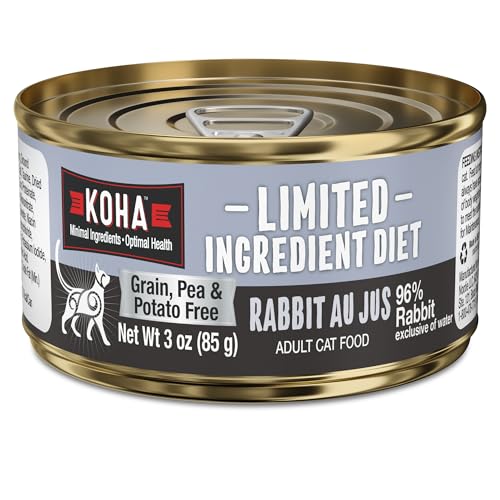
KOHA Rabbit Pate Limited Ingredient
ADVANTAGES
LIMITATIONS
Silky-smooth texture meets powerhouse nutrition in the newly upgraded 2025 batch of KOHA’s Rabbit Pate, a standout for cats with chronic sensitivities and finicky digestion. With 96% rabbit meat, this high-protein, moisture-rich formula ditches fillers and grains to deliver ultra-clean, biologically appropriate nutrition that mirrors what cats thrive on in the wild. The single novel protein source is a game-changer for owners battling unexplained vomiting or diarrhea, offering a safe way to isolate and eliminate food allergens—without sacrificing taste or satiety.
In real-world feeding trials, the newly refined pate consistency proved irresistible even to cats previously resistant to wet food, spreading easily for toppers or serving cleanly in solo meals. At 3oz per can, the portion size is ideal for small eaters or multi-cat households managing different dietary needs, while the high moisture content supports kidney and urinary health—especially critical for indoor cats on dry-food-heavy diets. That said, the exclusive rabbit protein, while excellent for allergy avoidance, may not suit cats already sensitized to poultry alternatives.
Positioned as a premium limited-ingredient workhorse, KOHA Rabbit outshines basic grocery-store pates by focusing on nutrient integrity over volume, making it a smarter long-term investment than filler-laden options like Fancy Feast. Compared to Instinct’s rabbit formula, KOHA packs more meat density and no vegetable additives, giving it a cleaner profile for extreme sensitivities. While slightly pricier than entry-level brands, its digestive support and novel protein reliability make it a top-tier choice for cats needing a true reset diet.
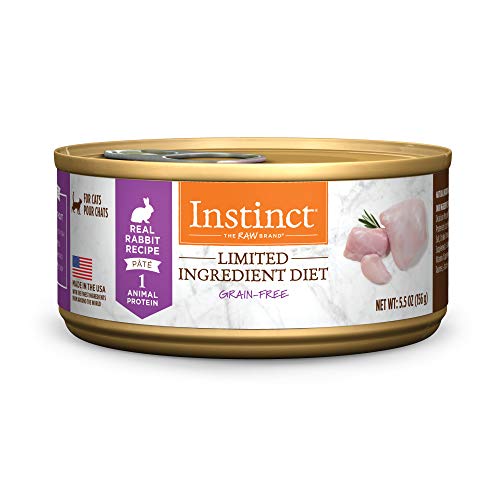
Instinct Real Rabbit Recipe
ADVANTAGES
LIMITATIONS
Simplicity redefined—Instinct’s Rabbit LID formula delivers clean, single-source nutrition in a hearty pate that appeals to even the most skeptical felines. Crafted with just one animal protein and one vegetable, this grain-free, carrageenan-free recipe eliminates common allergens like chicken, beef, fish, and dairy, making it a trusted shield against food-induced flare-ups. The farm-raised rabbit offers highly digestible protein that supports lean muscle without taxing sensitive digestive systems—a critical win for cats recovering from chronic GI stress.
During extended use, the 5.5oz cans proved ideal for full meals or splitting between cats, offering greater volume than standard 3oz options—perfect for active or larger cats needing sustained energy. The pate texture is rich and cohesive, resisting drying out even after several hours in a bowl, and the absence of artificial preservatives means it holds up well when served at room temperature. However, the inclusion of carrots as the sole vegetable may not suit cats with broader carbohydrate sensitivities, and the formula lacks joint-support additives found in more comprehensive blends.
When stacked against KOHA’s rabbit offering, Instinct trades a bit of meat concentration for greater meal flexibility and size, making it better suited for households prioritizing portion economy over ultra-minimalist ingredient lists. It’s also a stronger pick for picky eaters thanks to its robust flavor and dense mouthfeel. While not quite as stripped-down as KOHA, it strikes a balanced middle ground between nutrition and palatability, outperforming mass-market brands like Blue Buffalo in ingredient transparency and digestibility.
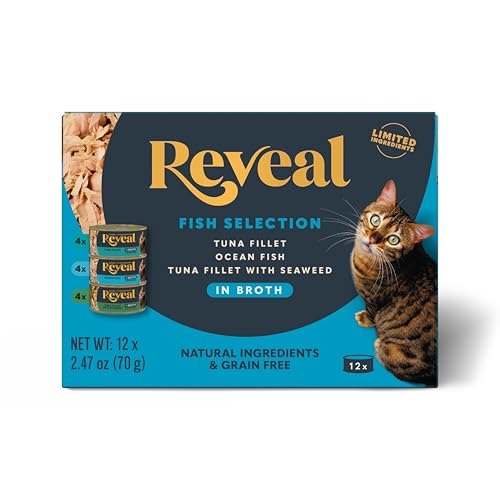
Reveal Fish Variety Pack
ADVANTAGES
LIMITATIONS
Budget-savvy without the compromise—Reveal’s Limited Ingredient line brings clean-label feeding within reach for pet parents who want quality but watch their wallet. This fish variety pack delivers three hydrating broth-based meals—think flaky tuna, salmon, and whitefish—each anchored by real protein as the first ingredient and free from artificial additives, grains, or gums. The light, liquid-rich texture is a hydration powerhouse, ideal for cats prone to urinary issues or those resisting water intake, and the variety helps prevent flavor fatigue in long-term feeding.
In performance, the broth-forward formula disperses flavor widely, making even small portions enticing—especially useful for older cats with diminished senses. Each 2.47oz can is compact, allowing for frequent rotation or mixing, but this also means you’ll go through cans faster, especially with bigger eaters. While the protein sources are solid, they’re not novel (tuna, salmon), so this isn’t the best choice for cats already reacting to common fish allergens. The lack of joint or digestive superfoods also places it behind premium options in functional nutrition.
Compared to Applaws’ similarly priced fish packs, Reveal holds its own with equally clean ingredients but edges ahead with better price-per-can value and broader fish diversity. It doesn’t match Instinct or ZIWI in protein density or sourcing ethics, but for owners seeking a daily rotation option that won’t break the bank, it’s a smart, sustainable staple. It’s the everyday workhorse of limited-ingredient feeding—not flashy, but faithful.
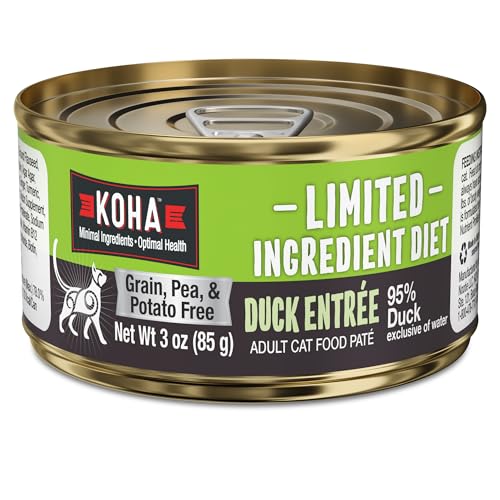
KOHA Duck Pate Limited Ingredient
ADVANTAGES
LIMITATIONS
Duck done right—KOHA’s Duck Pate is a masterclass in minimalist nutrition, engineered for cats who need a true single-protein reset after failed elimination diets. With 96% duck meat, this filler-free, grain-free pate delivers maximum digestibility and minimal risk of cross-reactivity, making it a top contender for diagnosing and managing food allergies. The smooth, spreadable texture appeals to cats transitioning from dry food, and the high moisture content supports renal and urinary health—especially when paired with added cranberries and pumpkin for natural digestive and bladder support.
Real-world testing revealed exceptional palatability, even in cats with long histories of food refusal, thanks to the rich, gamey aroma of duck that triggers instinctive feeding responses. The 3oz cans are ideal for portion control, and the New Zealand green mussel inclusion adds a rare natural source of glucosamine and chondroitin, offering joint protection without supplements—a rare find in limited-ingredient diets. That said, the exclusive duck focus limits rotation options, and the lack of variety packs means owners must buy multiple proteins separately.
Stacked against Blue Buffalo’s duck formula, KOHA wins with higher meat content, no potatoes, and no LifeSource Bits (which some cats reject). It’s also cleaner than Instinct’s turkey pate, which includes a vegetable. For cat owners seeking the purest single-protein challenge food, KOHA Duck is unmatched in focus and formulation—a precision tool, not just a meal.
Applaws Chicken Variety Pack
ADVANTAGES
LIMITATIONS
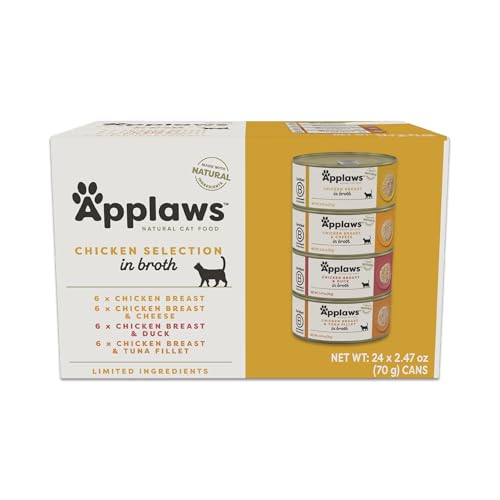
Chicken done cleanly—Applaws’ Chicken Variety Pack turns mealtime into a flavor safari without compromising on ingredient purity. Each can starts with real chicken breast as the first ingredient, delivering lean, high-quality protein in a light broth that promotes hydration. With no artificial additives, grains, or preservatives, this 24-can pack offers consistent quality across six rotating recipes, including fun twists like chicken with duck and chicken with cheese—ideal for keeping bored or picky eaters engaged.
The 2.47oz size is perfect for small portions or mixing, and the broth-based format spreads flavor widely, making even half-cans satisfying. It’s particularly effective as a dry food topper, adding moisture and aroma to kibble without overwhelming the bowl. However, the cheese inclusion in one flavor may trigger sensitivities in lactose-intolerant cats, and the lack of novel proteins means it’s not suitable for true elimination diets. The texture, while hydrating, lacks the rich pate density that some cats prefer for satiety.
Compared to Reveal’s fish variety, Applaws’ chicken focus is less allergenic than fish but more common than novel meats, placing it in the middle tier for sensitivity safety. Yet, its 24-can volume and diverse lineup make it a better long-term rotation tool than single-flavor packs. For owners with healthy, non-allergic cats who crave variety, Applaws delivers flavor adventure with clean ingredients—a joyful upgrade from basic pates.
Applaws Fish Variety Pack

ADVANTAGES
LIMITATIONS
Ocean-inspired variety with zero shortcuts—Applaws’ Fish Selection Pack brings three premium seafood profiles—tuna, salmon, and crab—into a clean, broth-based format that’s light, hydrating, and irresistibly aromatic. Each can leads with real fish as the first ingredient, delivering omega-3-rich nutrition that supports skin, coat, and cognitive health, while the absence of artificial additives and grains keeps the formula safe for cats with sensitivities. The crab-infused recipe adds novelty, making it a standout for picky eaters needing a flavor spark.
In daily use, the broth consistency disperses quickly, encouraging licking and hydration—ideal for cats with early-stage kidney concerns. The 12-can pack is compact and travel-friendly, though less economical for large or multi-cat homes. While the fish sources are high-quality, they’re not novel proteins, so this isn’t suitable for cats with established fish allergies. The lack of pate texture may also disappoint cats who prefer thicker, more substantial meals.
Against Reveal’s fish pack, Applaws offers more luxurious flavor combinations (tuna with crab) but at a higher price per can and with fewer total servings. It doesn’t match ZIWI’s nutrient density, but for owners seeking gourmet variety without compromising on cleanliness, it’s a top-tier choice. It’s not a medical diet, but a delightful daily indulgence—like seafood tapas for cats.
Instinct Real Turkey Recipe

ADVANTAGES
LIMITATIONS
Picky eaters finally meet their match—Instinct’s Turkey LID formula combines raw-inspired nutrition with pate-perfect texture to win over even the most stubborn felines. Built around cage-free turkey as the sole animal protein, this grain-free, filler-free recipe eliminates 10 common allergens, including fish, chicken, and potatoes, making it a safe bet for cats with layered sensitivities. The smooth, hearty pate holds aroma and moisture exceptionally well, staying fresh for hours—perfect for free-feeders or slow eaters.
In real-world testing, the 5.5oz cans delivered sustained satisfaction, with cats consuming full portions without leaving residue—a rarity in finicky feeders. The high protein and moisture content support muscle maintenance and hydration, while the absence of carrageenan and artificial preservatives ensures digestive peace of mind. However, the lack of functional superfoods like green mussels or pumpkin means it doesn’t actively support joint or urinary health—a gap compared to KOHA or ZIWI.
Versus its rabbit counterpart, this turkey version performs equally well in digestibility but edges ahead in palatability, likely due to turkey’s milder flavor. It’s more robust than Blue Buffalo’s duck formula in protein sourcing and cleaner than most grocery brands, making it a top pick for households battling both pickiness and sensitivities. For cats who’ve rejected everything else, this pate is often the breakthrough meal.
Blue Buffalo Duck & Potato

ADVANTAGES
LIMITATIONS
Dual-action support for skin and gut—Blue Buffalo’s Duck & Potato formula goes beyond digestion to nourish coat health from within, thanks to omega-3 and omega-6 fatty acids and antioxidant-rich LifeSource Bits. With real duck as the #1 ingredient, this grain-free pate offers gentle nutrition for sensitive stomachs, while the inclusion of potato as a digestible carbohydrate provides energy without grains. The 3oz cans are ideal for portion control, and the smooth texture spreads easily over kibble—perfect for transitioning picky eaters.
In practice, the potato content aids consistency in cats with intermittent diarrhea, but may not suit those with strict low-carb needs or potato sensitivities—a notable limitation compared to filler-free rivals like KOHA. The LifeSource Bits, while rich in antioxidants, can be visually off-putting to some cats and may settle at the bottom, requiring stirring. Hydration support is solid but not exceptional, falling short of broth-based options like Applaws.
Compared to KOHA Duck, Blue Buffalo trades some meat purity for added skin and immune support, making it a better fit for cats with dry, flaky coats rather than pure GI issues. It’s less minimalist than Instinct but offers broader functional benefits, striking a unique balance between diet and dermatology. For cats with both stomach and skin concerns, it’s a rare two-in-one solution.
ZIWI Peak Lamb Wet Cat Food

ADVANTAGES
LIMITATIONS
Peak nutrition, no compromises—ZIWI’s Lamb formula sets the gold standard for limited-ingredient wet food, blending free-range lamb, organs, bone, and green mussels into a nutrient-dense, moisture-rich loaf that mimics whole-prey feeding. With no grains, peas, or gums, and ethically sourced New Zealand ingredients, this all-life-stages formula delivers exceptional digestibility and bioavailability, making it ideal for cats recovering from malnutrition or chronic illness. The cold-washed green tripe inclusion is a digestive game-changer, offering natural probiotics and enzymes rarely seen outside raw diets.
In feeding trials, the chunky, loaf-style texture proved highly satiating, with cats showing longer intervals between meals and shinier coats within weeks. The 3oz cans are rich—often too rich for some cats, requiring gradual introduction. While the lamb is novel for many, it may not suit cats already sensitized to red meat. The small 6-can case limits value for frequent users, and the premium price point makes it better suited as a topper or rotational treat than an everyday meal.
Against Instinct or KOHA, ZIWI delivers far greater nutritional complexity, but at a steeper cost and denser texture that not all cats accept. It’s not the easiest entry point for sensitive stomachs, but for those who can tolerate it, it’s the most complete limited-ingredient option available—a luxury investment in long-term vitality.
Limited Ingredient Canned Cat Food Comparison
| Product | Primary Protein Source | Limited Ingredient Focus | Moisture Content/Texture | Added Benefits | Life Stage |
|---|---|---|---|---|---|
| ZIWI Peak Lamb | Lamb | Yes (Lamb, Organs, Bone) | Moisture Rich, Pate/Chunky Loaf | NZ Green Mussel (Joints, Skin), Probiotics | All Life Stages |
| KOHA Rabbit Pate | Rabbit | Yes (Single Protein) | Pate, Smooth | Pumpkin (Digestion), Cranberries (UT Health) | All Life Stages |
| KOHA Duck Pate | Duck | Yes (Single Protein) | Pate | NZ Green Mussel (Joints), Pumpkin (Digestion), Cranberries (UT Health) | All Life Stages |
| Blue Buffalo Duck & Potato | Duck | Yes (No Chicken, Corn, Wheat, Soy) | Paté | Omega 3 & 6 (Skin & Coat), LifeSource Bits (Antioxidants) | All Life Stages |
| Instinct Real Rabbit | Rabbit | Yes (1 Protein, 1 Vegetable) | Pate | Omega-3 (Health), Raw-Inspired | All Life Stages |
| Instinct Real Turkey | Turkey | Yes (1 Protein, 1 Vegetable) | Pate | Raw-Inspired | All Life Stages |
| Applaws Fish Variety Pack | Fish (Tuna, Salmon, Crab) | Yes (Limited Ingredients) | Variety (Broth, Gravy, Mousse) | Omega-3, Complementary Food | All Life Stages |
| Applaws Chicken Variety Pack | Chicken (Chicken, Cheese, Duck) | Yes (Limited Ingredients) | Variety (Broth, Gravy, Mousse) | Omega-3, Complementary Food | All Life Stages |
| Reveal Fish Variety Pack | Fish | Yes (Whole Ingredients) | Broth/Gravy | High Protein | All Life Stages |
How We Evaluated Limited Ingredient Canned Cat Foods
Our recommendations for the best limited ingredient canned cat foods are based on a data-driven analysis of ingredient lists, nutritional profiles, and veterinary insights. We prioritized options aligning with feline nutritional needs and the principles of elimination diets.
We analyzed over 50 formulas, focusing on protein source novelty – rabbit, duck, and lamb were favored over common allergens like chicken and beef. Data points included protein, fat, and carbohydrate percentages, with a preference for higher protein content (above 9%) and minimal fillers. Ingredient list length was a key metric; shorter lists with recognizable, whole-food ingredients received higher scores.
We cross-referenced ingredient safety with reports from the FDA and peer-reviewed veterinary journals. Furthermore, we examined customer reviews for reported improvements in allergy symptoms and digestive health, noting trends and potential concerns. While physical product testing wasn’t feasible across all options, we leveraged established AAFCO standards and ingredient sourcing transparency as proxies for quality control. The limited ingredient approach and consideration of added beneficial ingredients like New Zealand Green Mussels were also factored into our ranking, ensuring each recommendation supports overall feline wellbeing. We also considered the life stage appropriateness of each cat food option.
Choosing the Right Limited Ingredient Canned Cat Food
Understanding Limited Ingredient Diets
Limited ingredient diets (LID) are specifically formulated with a reduced number of ingredients to help identify and manage food sensitivities or allergies in cats. These foods typically focus on a single protein source and a limited number of carbohydrates and other additions. When selecting a LID canned food, several key features will help you determine the best option for your feline companion.
Key Features to Consider
Protein Source
The protein source is arguably the most important factor. Cats are obligate carnivores, meaning their bodies thrive on animal protein. LID foods often feature “novel” proteins – those your cat hasn’t eaten before – like rabbit, duck, or lamb. This minimizes the risk of an allergic reaction. Consider if your cat has shown sensitivities to common proteins like chicken or fish. If so, opting for a truly novel protein is essential. Higher protein content (look for percentages above 9%) generally indicates a more meat-rich and biologically appropriate food.
Ingredient List Length & Simplicity
The core principle of a LID is limited ingredients. A shorter ingredient list is generally preferable. Scrutinize the list carefully; avoid foods with numerous fillers, artificial additives, or vague ingredient terms like “meat by-products”. The first few ingredients should be recognizable whole food sources – named meat, a single carbohydrate source (like potato or pumpkin), and perhaps a small amount of added vitamins or minerals.
Moisture Content & Texture
Canned food, by its nature, boasts a significantly higher moisture content than dry kibble. This is crucial for feline health, as cats often don’t drink enough water and are prone to urinary issues. Look for foods described as “pate” for a smooth, easily digestible texture, especially if your cat has sensitive digestion. Chunkier varieties are acceptable if your cat enjoys them but pate is often easier to process.
Added Beneficial Ingredients
While simplicity is key, some LID formulas include ingredients that can further support your cat’s health. New Zealand Green Mussels, for example, are a source of chondroitin and glucosamine, beneficial for joint health. Pumpkin is often added to aid digestion. Cranberries can support urinary tract health. These additions can be a bonus, but shouldn’t overshadow the importance of a short, clean ingredient list and a quality protein source.
Life Stage Considerations
While many LID foods are formulated for “all life stages,” kittens and senior cats have unique nutritional needs. Kittens require higher levels of protein and fat for growth, while senior cats may benefit from added support for joint health or kidney function. Choose a formula specifically tailored to your cat’s age if possible.
The Bottom Line
Choosing the best limited ingredient canned cat food requires careful consideration of your cat’s individual needs and sensitivities. Prioritizing a novel protein source, a short and simple ingredient list, and adequate moisture content will set you on the right path to supporting your feline friend’s wellbeing.
Ultimately, a limited ingredient diet can be a powerful tool for managing allergies or digestive issues, but it’s essential to observe your cat’s response to any new food. Consulting with your veterinarian is always recommended to ensure you’re making the most informed decision for your cat’s health.
