
Can Cat Eat Tuna Fish
This post contains affiliate links. As an Amazon Associate, we earn from qualifying purchases.
Cats can eat tuna fish, but it should only be given in moderation. Limit their intake to 1-2 tablespoons of plain, cooked tuna once or twice a week to prevent mercury toxicity and nutritional imbalances. For those interested in a deeper understanding, further details about safe tuna options and feeding guidelines will follow. Always consult your vet to ensure your cat maintains a balanced diet for optimal health.
Essential Facts in 30 Seconds
- Cats can eat tuna fish in moderation, ideally once or twice a week.
- Only offer cooked tuna packed in water, avoiding oils and spices.
- High mercury levels in tuna can be harmful; limit intake to prevent toxicity.
- Tuna should not replace regular cat food due to nutritional imbalances.
- Consult a veterinarian before adding tuna to your cat’s diet, especially if there are health concerns.
Nutritional Content of Tuna for Cats
Tuna offers great nutrition for cats. It’s a top source of protein, with about 42 grams in a can. This helps your cat build muscles and stay healthy.
Different types of tuna have different nutrition. Light tuna is usually lower in fat and mercury. Additionally, excessive tuna consumption can lead to mercury poisoning, which is a significant risk for cats if they eat too much. Regularly consuming plain, unseasoned tuna ensures that your cat avoids harmful additives.
Tuna is rich in omega-3 fatty acids. These are good for your cat’s skin and coat. They can also help reduce inflammation.
Tuna has low carbs, but it lacks vitamin E. Eating too much tuna can be harmful due to mercury.
Limit tuna to 10% of your cat’s daily calories. It’s important to mix in other protein sources, too.
Always talk to your vet before changing your cat’s diet. This keeps your furry friend safe and healthy.
Safe Practices for Feeding Tuna
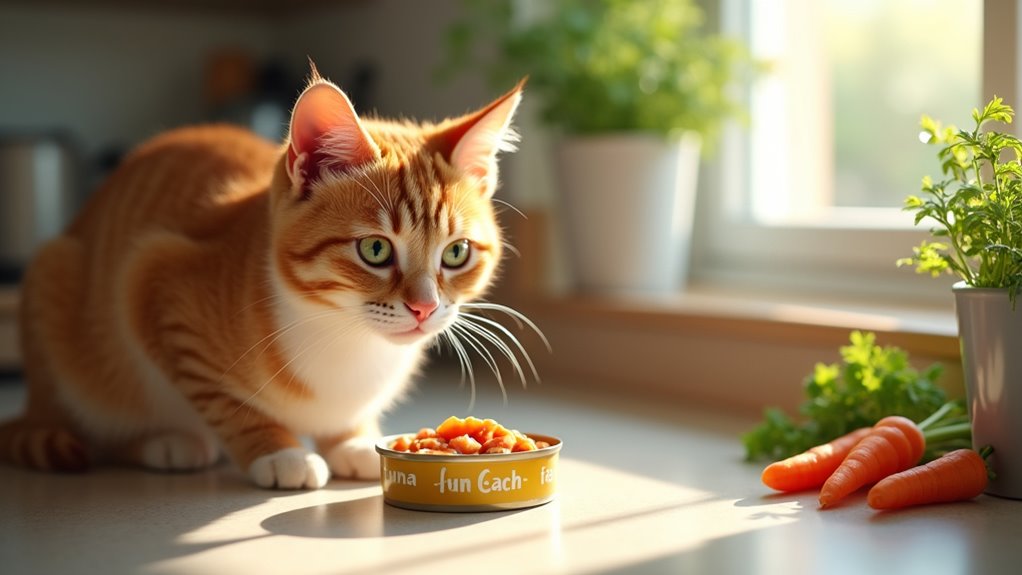
Feeding your cat tuna can be a fun treat. It’s important to do this safely. Limit tuna to small amounts. A good rule is one tablespoon of plain, cooked tuna once or twice a week. Kittens shouldn’t eat tuna until they’re at least one year old. This helps keep their diet balanced. Tuna should not be a staple in their diet to ensure they receive all necessary nutrients.
Always use cooked tuna. Raw fish can carry bacteria that harm cats. Choose tuna packed in water. Avoid tuna with spices or unhealthy extras. Skipjack or canned light tuna is best. These types have lower mercury levels. Eating tuna in moderation is crucial to prevent potential health risks.
Be aware of signs that your cat loves tuna too much. If your cat prefers tuna over other foods, slowly add different proteins to their diet. Too much tuna can cause mercury poisoning and other health problems.
Keep an eye on your cat’s health. Talk to your vet if you have any worries.
Health Risks Associated With Tuna Consumption
Tuna may taste good, but it can be risky for your cat. It has high mercury levels. Mercury can cause serious health issues, including muscle weakness and seizures. These symptoms can harm your cat’s nervous system over time. Feeding your cat tuna instead of balanced cat food raises this risk. Additionally, tuna should not overshadow regular cat food as it may lead to nutritional imbalances.
Tuna also lacks important vitamins. This can lead to health problems, like:
- Vitamin K deficiency, which can cause bleeding.
- Thiamine deficiency, leading to poor coordination and less appetite.
- Pansteatitis from an imbalance of fats and vitamins.
- Allergic reactions to fish proteins, causing itchiness.
- Urinary tract issues due to high phosphorus levels. Tuna should only be an occasional treat(1-4 word phrase) to prevent potential health issues.
Keep a close eye on your cat’s diet. Too much tuna can be dangerous. Always talk to your vet before adding new foods.
Benefits of Tuna in Moderation
Tuna can be a great treat for your cat, but only in small amounts. It’s rich in protein. This protein helps build strong muscles and keeps your cat healthy.
Tuna also contains omega-3 fatty acids. These healthy fats support your cat’s skin and coat. They can help reduce inflammation and may ease arthritis pain too.
Offering tuna as a treat can make mealtime more exciting. Picky eaters often love the taste of tuna. Mixing a little with their regular food can boost their appetite. This is especially useful if your cat feels sick or stressed.
Keep in mind, tuna shouldn’t be a regular meal. It doesn’t have all the nutrients your cat needs. Too much tuna can lead to health problems. Additionally, frequent consumption of tuna may lead to nutrient deficiencies.
Use tuna wisely. This way, it can be a tasty addition to your cat’s balanced diet. Enjoy the benefits without the risks!
Choosing the Right Type of Tuna for Your Cat
Choosing the right tuna for your cat is important for their health. Safety and nutrition should come first. Here are some helpful tips:
- Select canned tuna in plain water. Avoid oils and spices.
- Pick smaller tuna types like skipjack. They’ve less mercury.
- Limit tuna to 1-2 teaspoons each week. This helps prevent toxicity.
- Stay away from raw tuna. It can carry harmful parasites.
- Read labels carefully. Avoid any tuna with garlic, onions, or preservatives.
- Consider the type of tuna you select, as some varieties may have higher levels of mercury than others.
Following these guidelines ensures your cat enjoys tuna safely. Keep their health in mind while treating them!
Frequently Asked Questions
Can Cats Eat Tuna Every Day?
Q: Can I feed my cat tuna every day?
A: No, you should not feed your cat tuna every day.
Q: What are the risks of daily tuna feeding?
A: Daily feeding can lead to tuna toxicity, nutritional imbalances, and health issues.
Q: How often can I give my cat tuna?
A: Offer tuna occasionally as a treat for variety in their diet.
Q: What should I consider when feeding my cat tuna?
A: Always ensure that tuna is given in moderation and as part of a balanced diet.
What Are Signs of Tuna Allergies in Cats?
What are the signs of a tuna allergy in cats?
Common signs include matted fur, excessive scratching, redness or swelling of the skin, and vomiting.
What should I do if my cat shows signs of a tuna allergy?
If your cat exhibits these symptoms, contact your veterinarian for advice and possible treatment.
Can tuna toxicity occur in cats?
Yes, tuna can cause toxicity in cats, especially if fed in large amounts or as a regular diet.
How can I prevent tuna allergies in my cat?
Limit or avoid feeding your cat tuna and monitor for any allergic reactions if you introduce new foods.
Are certain breeds more likely to have tuna allergies?
All cats can potentially develop allergies, but there is no specific breed known to be more prone to tuna allergies.
What are the long-term effects of tuna allergies in cats?
Long-term exposure can lead to chronic skin conditions or gastrointestinal issues. It’s best to avoid feeding tuna if your cat is allergic.
Is Tuna Safe for Kittens?
Is tuna safe for kittens?
No, tuna is not safe for kittens.
Why is tuna not safe for kittens?
Tuna can lead to tuna toxicity and lacks essential nutrients needed for kitten growth.
What are the risks of feeding tuna to kittens?
Feeding tuna to kittens can result in serious health issues due to nutrient deficiency.
What should I feed my kitten instead of tuna?
Stick to balanced kitten food that provides the necessary nutrients for their growth and development.
Can I Mix Tuna With Cat Food?
Can I mix tuna with cat food?
Yes, you can mix tuna with cat food.
Is it safe to give my cat tuna?
In moderation, tuna is safe for cats. However, it should not be the main part of their diet.
What are the benefits of mixing tuna with cat food?
Mixing tuna can make cat food more appealing and encourage picky eaters to eat.
How much tuna can I give my cat?
Limit tuna to a small amount, such as a few teaspoons, a couple of times a week to avoid health issues.
Can too much tuna harm my cat?
Yes, too much tuna can lead to mercury poisoning and nutritional imbalances.
Should I use canned tuna in water or oil?
Canned tuna in water is preferable because it contains fewer calories and less fat compared to tuna in oil.
Is tuna a complete food for cats?
No, tuna does not provide all the nutrients that cats need. It should be mixed with a balanced cat food.
Are There Alternatives to Tuna for Cats?
Question: What are some alternatives to tuna for my cat?
Answer: You can use fish like salmon, cod, or haddock as alternatives to tuna for your cat.
Question: Are these fish alternatives safe for my cat?
Answer: Yes, as long as they are cooked and unseasoned, these fish are safe for your cat.
Question: Do these alternatives provide the same nutrients as tuna?
Answer: Yes, salmon, cod, and haddock offer vital nutrients similar to those found in tuna.
Question: Can I feed my cat these fish regularly?
Answer: It’s best to vary your cat’s diet and not rely solely on any one type of fish, including alternatives to tuna.
Question: What should I avoid when preparing fish for my cat?
Answer: Avoid seasoning and make sure the fish is fully cooked to ensure it’s safe for your cat.
Conclusion
Sharing tuna with your cat can be fun, but do it carefully. Too much tuna can lead to mercury poisoning. About 15% of cats might have this problem. It’s better to give tuna only as a special treat. Always choose low-sodium tuna to keep your cat healthy. Balance is important. Watch your cat’s health and enjoy these special moments together. Stay safe and keep your furry friend happy!
