
Can Cat Eat White Rice
This post contains affiliate links. As an Amazon Associate, we earn from qualifying purchases.
Yes, cats can eat white rice in small amounts. It’s safe to offer them a teaspoon of fully cooked rice once a week, ensuring there are no added salt or spices, as these can be toxic. However, rice should not replace their primary meat diet due to its low protein content. Monitoring for any unusual reactions will help keep your cat healthy. For those interested, further details and explanations will follow.
Essential Facts in 30 Seconds
- White rice is safe for cats in small amounts; a teaspoon of cooked rice is acceptable occasionally.
- Uncooked rice should be avoided as it can cause vomiting and diarrhea in cats.
- Rice should not replace regular cat food due to its low nutritional value.
- Limit rice intake to less than one tablespoon per week to prevent obesity and digestive problems.
- Monitor your cat for adverse reactions after feeding rice and consult a vet if necessary.
Safety and Toxicity of White Rice for Cats
White rice can be a safe treat for cats in small amounts. A teaspoon of cooked white rice is fine. Avoid adding salt, spices, garlic, or onion. These ingredients are toxic to cats.
Uncooked rice can cause vomiting and diarrhea because of lectins. Too much rice may upset your cat’s stomach. This can lead to gas or bloating. Additionally, cooked white rice can provide some essential nutrients for cats, but it should be noted that cats are obligate carnivores and require a meat-based diet.
Rice has limited health benefits. It’s mostly empty calories. Instead, try healthier options like plain pumpkin or sweet potato.
Watch for any signs of allergies. Symptoms include itching or swelling. If you see these, stop feeding rice and call your vet. Always keep an eye on your cat when adding new foods to their diet.
Moderation is very important. Rice shouldn’t be the main part of your cat’s meals. Focus on a balanced diet that’s rich in protein for your cat’s health.
Nutritional Value and Digestibility
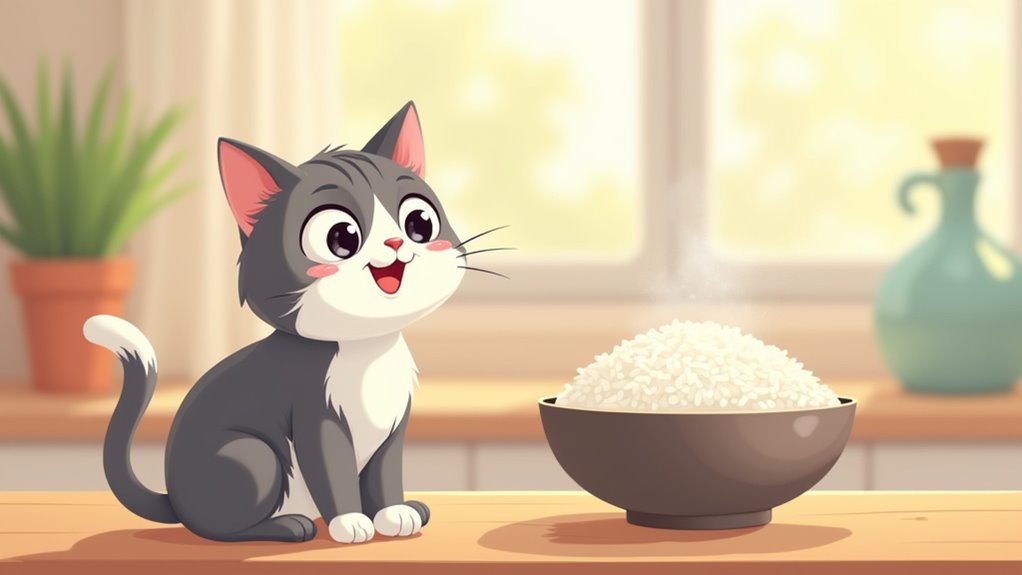
White rice can be an occasional treat for your cat. It’s important to know its nutritional value and how well cats can digest it.
White rice is mostly carbohydrates, containing about 41.16 grams per 100 grams. This offers quick energy. But cats don’t need this energy source because they’re obligate carnivores. The protein in white rice is low, only 4.6 grams. This isn’t enough for their dietary needs. Additionally, cats require proteins primarily from animal sources to maintain their health.
Rice has a low fiber content of about 1.42 grams. This makes it easier for cats to digest. It can help during recovery from illness. Yet, too many carbohydrates can lead to obesity and diabetes. While rice can be safely included in a cat’s diet, it should never replace meat as the primary source of nutrition.
Always cook rice well to help with digestion. Introduce it slowly to see how your cat reacts. Rice should only add to a diet rich in animal proteins, not replace them.
Risks of Feeding Rice to Cats
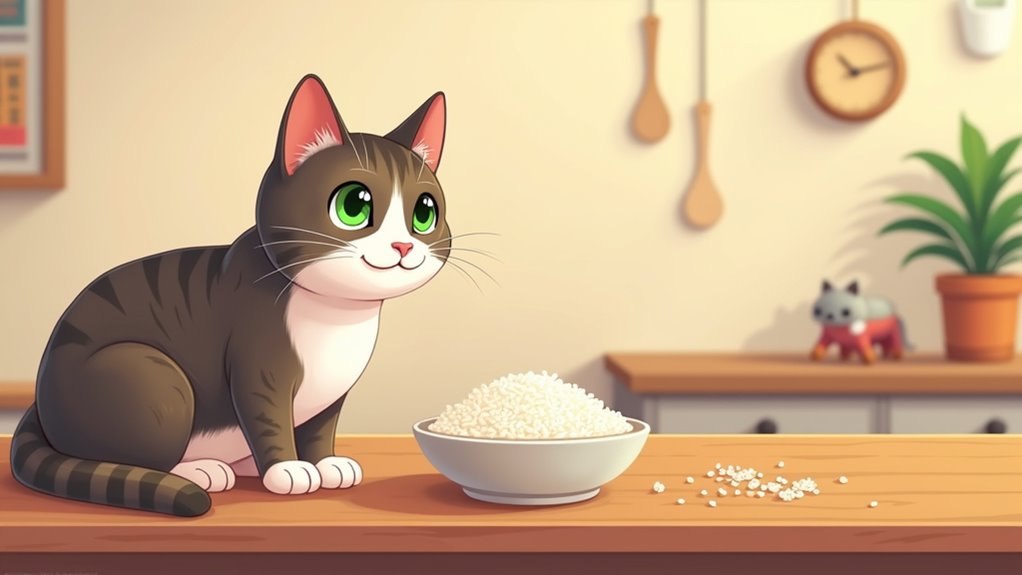
Feeding rice to cats can cause several health risks. Rice is high in calories and carbs, which can lead to obesity. Obesity brings serious problems like diabetes and arthritis. Cats need animal protein, and too much rice can upset their diet. It can make them feel full, so they might skip important meat. Cats don’t digest carbohydrates well. This can result in gas and diarrhea. Keep rice to less than a tablespoon each week. Additionally, plain rice offers minimal nutritional benefits, making it an inadequate substitute for their regular diet. Occasional rice can serve as a gentle addition to a cat’s diet, but should not dominate their food intake.
Always avoid adding toxic foods like onion or garlic. Watch for signs of trouble, such as vomiting or tiredness. If you see any of these symptoms, call a vet right away. Be aware of these risks to keep your cat healthy. Make smart decisions about their diet.
Appropriate Quantity and Frequency
Feeding your cat rice is fine, but keep it small. Less than a tablespoon per week is best. Offer about a teaspoon at a time.
Rice should be an occasional treat, not a daily food. Watch your cat closely after feeding. Look for any signs of stomach issues. If you see problems, stop giving rice and talk to your vet. Additionally, remember that cats are obligate carnivores, so their primary nutrition should come from meat.
Recommended Serving Size
Sharing food with your cat can be tempting. But it’s crucial to know the right serving size for white rice. Limit white rice to less than one tablespoon per week. A teaspoon is a better choice. It has about 5 calories. This amount should be less than 10% of your cat’s daily calories.
Always make sure the rice is fully cooked and plain. Avoid any toxic additives. You can serve it as a treat or mix a little with their regular food. This can make their meals more enjoyable.
Frequency of Feeding
Adding rice to your cat’s diet can be done safely. Feed rice only a little, like a teaspoon now and then. This way, your cat can enjoy the benefits without getting sick.
Too much rice can cause problems such as diarrhea or bloating. Keep rice treats under 10% of their daily calories. For an adult cat, that means about 5 calories per teaspoon.
Remember, rice shouldn’t replace their regular cat food. Always focus on balanced meals.
Watch for signs of intolerance, like gas or discomfort. If you see these, cut back or stop giving rice. You can also try other healthy options, like plain boiled potatoes or pumpkin. This keeps your cat’s diet interesting and nutritious.
Monitoring Reactions
To keep your cat safe and healthy, monitor their reactions closely when you add white rice to their diet. Start with a small amount, like one teaspoon of cooked rice. Watch for any signs of stomach upset or allergies. Introduce it slowly to avoid any issues.
Look for signs like itching, swelling, vomiting, or strange behavior. Stop giving rice right away if you notice any of these symptoms. Always talk to your vet if your cat has a bad reaction.
Keep notes on what you feed your cat and their reactions. This helps you spot any intolerance patterns.
Feeding Guidelines and Preparation
Feeding your cat white rice can be safe and beneficial.
Cook the rice plainly. Avoid adding butter, spices, or any toxic ingredients. Make sure the rice is fully cooked.
Start with less than a tablespoon each week. Watch your cat for any bad reactions. Serve the rice cool to prevent burns.
This simple food can help if your cat has an upset stomach. Just remember, it’s not a complete meal. Always provide regular cat food for balanced nutrition.
Proper Cooking Method
Cooking white rice for your cat takes care. Proper methods keep your cat safe and healthy.
Start by rinsing the rice in cold water. This helps improve the texture. Next, boil a pot of water. Use a 1:2 ratio of rice to water. Add the rinsed rice to the boiling water. Cook until soft, about 15-20 minutes.
After cooking, drain any excess water right away. This prevents sogginess. Avoid adding salt, garlic, or butter. These ingredients can be harmful to cats. Serve the rice at room temperature.
For better nutrition, mix the rice with boiled chicken. A 50:50 ratio works well. Always focus on your cat’s health with careful cooking and preparation. Additionally, remember that cats are obligate carnivores, so their primary diet should consist of animal proteins.
Serving Size Recommendations
Serving white rice to your cat needs careful thought. Follow these simple guidelines for safe portions:
- Keep white rice to less than one tablespoon per week. This helps avoid tummy troubles.
- Rice treats should be 10% or less of your cat’s daily calories. For a 200-calorie diet, that’s under 20 calories.
- Start with a teaspoon of cooked white rice. This helps check how your cat reacts.
Always serve rice plain, fully cooked, and cooled to room temperature. Rice should never replace your cat’s main meat diet.
Watch how your cat responds. Talk to your vet if your cat has health issues before adding rice.
Observing for Reactions
Observing your cat’s reactions to white rice is important for their health. Start with a small amount of fully cooked, plain white rice mixed into their regular food. Watch your cat closely for any unusual symptoms. It’s essential to remember that cats are obligate carnivores, requiring meat primarily for their diet.
| Symptoms to Watch For | Action to Take |
|---|---|
| Diarrhea | Stop feeding rice |
| Vomiting | Stop feeding rice |
| Allergic reactions | Consult a vet ASAP |
| Weight changes | Adjust rice intake |
Check your cat’s reactions often. Limit rice to less than a tablespoon each week. Rice can upset their stomach. If you see any bad reactions, stop feeding rice right away. Talk to your veterinarian for more help. Your cat’s health is the top priority!
Health Monitoring and Veterinary Advice
Introducing white rice to your cat’s diet requires careful attention. Monitor your cat’s health closely, as even small changes can cause problems. Always consult your veterinarian before making changes to their diet. Cats need meat to stay healthy, so keep that in mind.
Here are three important points to consider:
- Watch for Digestive Issues: Keep an eye out for vomiting or diarrhea.
- Feeding Tips: Serve plain, well-cooked rice in small amounts. Don’t add any seasoning.
- Regular Vet Visits: Schedule check-ups to ensure your cat is healthy and not gaining excess weight.
Too much rice can lead to serious health issues, like diabetes or taurine deficiency. If your cat shows any unusual behavior, take action right away. Adjust their diet based on their reactions. It’s important to remember that most adult cats are lactose intolerant, so introducing dairy alongside rice may cause digestive distress.
Always rely on your vet for advice when introducing new foods like rice. Your cat’s health and happiness depend on it.
Frequently Asked Questions
Can Cats Eat Rice Every Day?
Can I feed my cat rice every day?
No, you should not feed your cat rice every day.
Is rice safe for cats to eat?
Yes, rice is safe for cats in small amounts.
What nutritional needs do cats have?
Cats require a diet high in protein to meet their nutritional needs.
What can happen if I feed my cat rice regularly?
Regular consumption of rice can lead to obesity and nutritional imbalances in cats.
What should I prioritize in my cat’s diet?
You should prioritize high-protein foods for your cat’s diet.
Is Brown Rice Better Than White Rice for Cats?
Question: Is brown rice better for my cat than white rice?
Answer: Brown rice has more fiber but is harder for cats to digest compared to white rice.
Question: What are the benefits of brown rice for cats?
Answer: Brown rice contains added fiber, which can aid in digestion.
Question: What are the drawbacks of brown rice for cats?
Answer: Brown rice is tougher for cats to digest, which can cause digestive issues.
Question: Why might white rice be a better choice for cats?
Answer: White rice is easier on sensitive stomachs, making it a safer option for many cats.
Question: Does white rice have any nutritional value?
Answer: White rice has lower nutritional value compared to brown rice.
Question: Should I choose white rice for my cat with a sensitive stomach?
Answer: Yes, white rice is generally recommended for cats with sensitive stomachs due to its easier digestibility.
Can Cats Be Allergic to Rice?
Q: Can cats be allergic to rice?
A: Yes, cats can be allergic to rice.
Q: What are the symptoms of a rice allergy in cats?
A: Symptoms may include itching and gastrointestinal distress.
Q: What should I do if my cat shows symptoms of a rice allergy?
A: Consult your veterinarian for proper diagnosis and management.
What Should I Do if My Cat Vomits After Eating Rice?
Q: What should I do if my cat vomits after eating rice?
A: Monitor your cat’s behavior and digestion.
Q: How can I prepare rice properly for my cat?
A: Cook plain white rice without any seasoning or additives, and ensure it is soft and easy to digest.
Q: When should I consult a vet after my cat vomits?
A: If vomiting persists for more than 24 hours or if your cat shows other concerning symptoms, contact your vet.
Q: Are there any other signs I should watch for?
A: Yes, look for lethargy, diarrhea, or loss of appetite, as these can indicate a more serious issue.
Q: Can cats eat rice regularly?
A: Rice can be an occasional treat, but it should not replace a balanced diet specifically formulated for cats.
Can I Feed My Kitten Rice?
Q: Can I feed my kitten rice?
A: No, you should not feed your kitten rice.
Q: Why can’t I feed my kitten rice?
A: Rice lacks essential nutrients that kittens need for proper growth and development.
Q: What should I feed my kitten instead of rice?
A: Provide a balanced, protein-rich diet specifically formulated for kittens.
Q: What are the consequences of feeding my kitten rice?
A: Feeding rice can disrupt your kitten’s growth and overall health due to a lack of necessary nutrients.
Conclusion
White rice can be a small part of your cat’s diet, but it should not be a main food. It is usually safe for cats. Serve only a tablespoon or two. Limit this to once a week. Always watch your cat for any bad reactions. Even safe foods can cause problems if given too much. Talk to your vet before adding rice to your cat’s meals. Your cat’s health is important, so make sure to be careful and well-informed.
