
Can Cat Eat Bamboo
This post contains affiliate links. As an Amazon Associate, we earn from qualifying purchases.
Yes, cats can safely eat True Bamboo, such as Golden or Fishpole Bamboo, as these varieties are non-toxic. However, it is important to avoid Lucky Bamboo and Heavenly Bamboo, as they can lead to serious health complications like vomiting or seizures. If your cat nibbles on bamboo, keep an eye out for any signs of stomach upset and ensure the bamboo is free of harmful chemicals. If you decide to introduce bamboo into their diet, do so in small, cooked pieces. For those looking for more information on this topic, further explanations and details will follow.
Essential Facts in 30 Seconds
- True bamboo types like Golden and Fishpole Bamboo are safe for cats in moderation.
- Avoid Lucky Bamboo and Heavenly Bamboo, as they are toxic to cats.
- Large quantities of bamboo can upset a cat’s stomach, causing vomiting or diarrhea.
- Bamboo leaves provide minimal nutritional value and are not essential for a cat’s diet.
- Ensure bamboo is chemical-free and consult a vet before adding it to your cat’s diet.
True Bamboo Safety for Cats
Understanding bamboo safety for cats is essential. True bamboo, like Golden Bamboo and Fishpole Bamboo, is safe for cats. These types are non-toxic.
Be careful with look-alikes, though. Lucky Bamboo and Heavenly Bamboo can harm your cat.
Bamboo leaves do have protein, but they don’t add much to your cat’s diet. Cats need animal proteins to stay healthy. If your cat nibbles on true bamboo, it usually won’t hurt them. Just watch for any signs of stomach issues, like vomiting or diarrhea.
To keep your cat safe:
- Check that bamboo is free from harmful fertilizers.
- Watch how your cat interacts with bamboo.
- Learn about safe bamboo species.
Keeping your feline friend safe is important. Enjoy your time with your cat and bamboo!
Risks Associated With Eating Bamboo
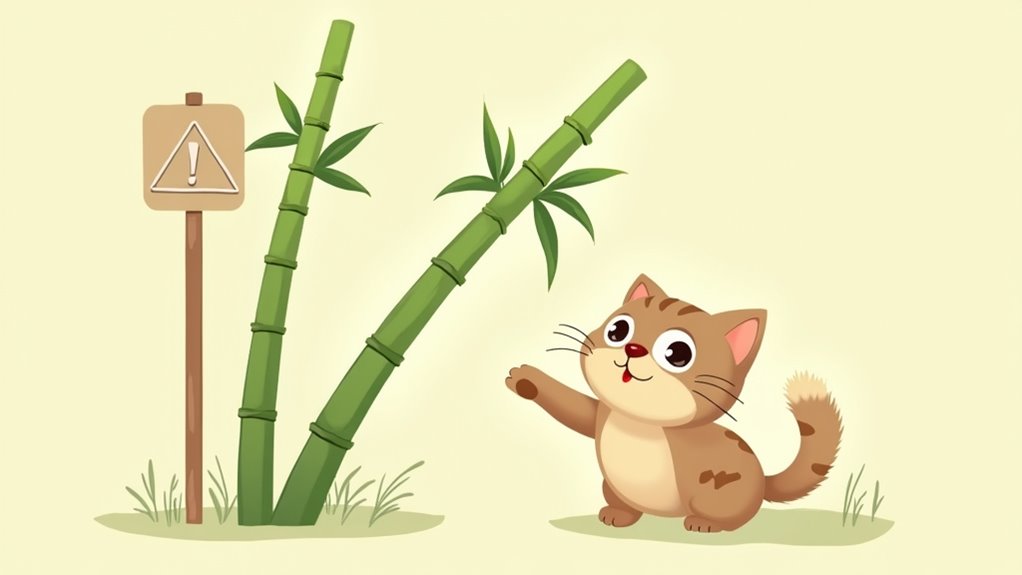
True bamboo is safe for cats, but it can still pose risks. Eating large amounts may upset your cat’s stomach. This can lead to vomiting or diarrhea. Cats aren’t made to digest a lot of plant matter.
Bamboo can also be a choking hazard. Big pieces might get stuck in your cat’s throat. This can cause serious problems. Sharp edges can hurt their mouth and gums, causing pain.
To keep your cat safe, do a few things:
- Watch how much bamboo your cat eats.
- Remove any sharp parts.
- Ensure the bamboo is free from harmful chemicals.
Keeping these tips in mind helps ensure your cat enjoys bamboo safely.
Toxicity Concerns of Ornamental Bamboo
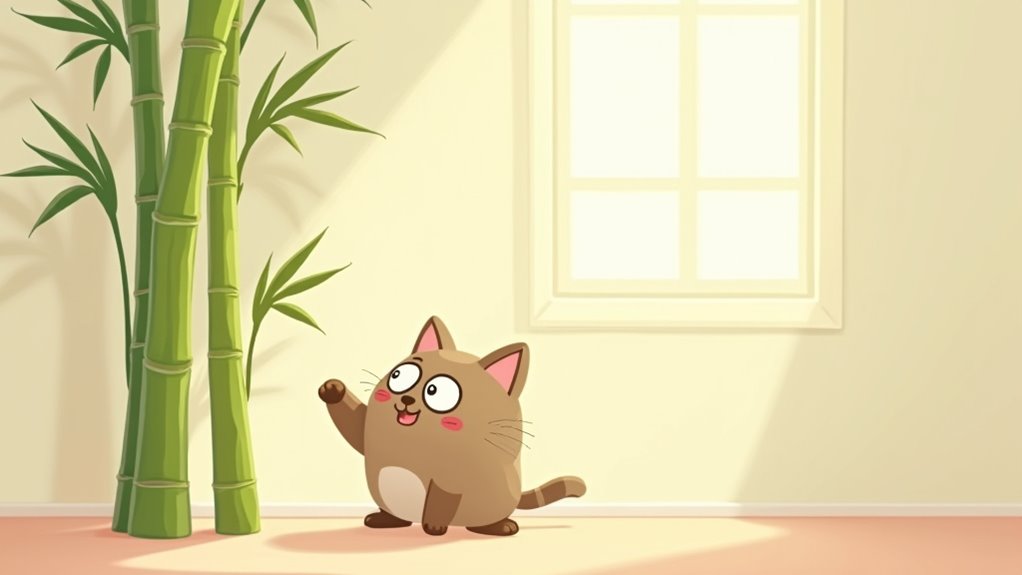
Ornamental bamboo plants can be dangerous for your cat. Some plants that look like bamboo, like lucky bamboo (Dracaena sanderiana) and heavenly bamboo (Nandina domestica), aren’t real bamboos. These plants can cause serious health problems if your cat eats them.
Watch for these symptoms:
- Lucky Bamboo: Look for drooling, vomiting, weakness, or dilated pupils. These signs come from harmful steroidal saponins in the plant.
- Heavenly Bamboo: Signs include trouble breathing, seizures, or shock. These issues are caused by cyanogenic glycosides.
Keep your pet safe with this plan:
- Identify: Know the difference between real bamboo and these harmful plants.
- Remove: Take away any of these plants from your home.
- Monitor: Keep an eye on your cat for any signs of trouble.
Act fast if you think your cat has eaten any toxic plants. A quick trip to the vet can make a big difference. Stay informed and keep your furry friend safe!
Nutritional Value of Bamboo for Cats
Bamboo has some nutritional value for cats, but it’s not significant. Understanding this can help keep your pet healthy.
First, bamboo has about 22% protein. This protein is plant-based, which means cats can’t use it well. Cats need animal protein for their health.
Second, bamboo is high in fiber. Cats struggle to digest this fiber, which can cause stomach problems.
Third, bamboo contains a few vitamins and minerals. For example, it has some potassium. However, the amounts are too low to meet a cat’s needs.
Finally, bamboo doesn’t provide many calories. It won’t help give your cat the energy it requires.
Care and Precautions When Feeding Bamboo
Feeding bamboo to your cat requires careful thought. Some types of bamboo can be harmful. Always prepare bamboo correctly and follow safe feeding tips.
| Bamboo Type | Safety Level | Preparation Tips |
|---|---|---|
| True Bamboo | Non-toxic | Cook it, then cut into small pieces. |
| Lucky Bamboo | Toxic | Do not feed; it can make your cat very sick. |
| Heavenly Bamboo | Toxic | Stay away; it can cause poisoning. |
| Cooked Bamboo Shoots | Safe in moderation | Add slowly, watch for any reactions. |
Check with your vet before adding new foods to your cat’s diet. Watch for signs like upset stomach or allergies. If you think your cat ate toxic bamboo, get help right away. Following these tips can help keep your cat safe when trying bamboo.
Frequently Asked Questions
Can Kittens Eat Bamboo Safely?
Kittens can eat true bamboo safely, but only in small amounts. It’s important to watch their digestion. Too much bamboo can upset their tummy. Always make sure the bamboo you offer is safe. Some plants look like bamboo but can be toxic. Stick to the right types to keep your kitten healthy. Bamboo can be a fun treat for your furry friend!
How Should Bamboo Be Prepared for Cats?
Prepare bamboo for your cat by using fresh, pesticide-free leaves. This keeps your pet safe. Always wash the leaves before giving them. Cut them into small pieces. This helps your cat eat them easily.
Bamboo is not a common food for cats, but some enjoy it. It can be a fun treat. Make sure your cat does not eat too much at once. Too much can upset their stomach. Always watch your cat after they eat bamboo for the first time.
Keep bamboo away from chemicals and pesticides. These are harmful to pets. Always provide fresh water with the bamboo. This helps keep your cat hydrated. With the right preparation, bamboo can be a safe and enjoyable snack for your furry friend.
What Are the Signs of Bamboo Allergy in Cats?
Bamboo allergy in cats can cause several signs. Watch for excessive grooming. Cats may show skin irritation or rashes. Sneezing is another common sign. Swelling around the face or paws can also occur.
Bamboo can cause toxicity too. This might lead to stomach issues, like vomiting or diarrhea. Keep an eye on your cat’s behavior and health.
Always consult your vet for a proper diagnosis. They can recommend the best treatment for your cat. Your pet’s health is important, so don’t hesitate to seek help.
Is Bamboo Beneficial for Older Cats?
Bamboo can be beneficial for older cats, but be careful about toxicity. Some types of bamboo can upset a cat’s stomach. Always check if the bamboo is safe before introducing it to your pet.
Instead of bamboo, consider cat grass or catnip. These plants are safe and can give your cat a fun experience. Cats love to chew on grass or play with catnip. They can help keep your cat happy and entertained without any risks.
Make sure to give your cat safe options. This way, your older cat can enjoy the benefits of plants while staying healthy.
Can Bamboo Help With Cat Dental Health?
Bamboo can help with your cat’s dental health. Chewing on bamboo may clean teeth and boost saliva production. Saliva helps wash away food particles and bacteria. This can reduce plaque buildup.
Still, bamboo isn’t a full replacement for regular dental care. Brushing your cat’s teeth is important. Use toothpaste made for cats. Dental treats can also help keep their teeth clean.
Always talk to your vet about your cat’s dental needs. They can give you great tips for keeping your cat’s mouth healthy. Regular check-ups are important too. Keeping your cat’s teeth healthy leads to a happier life.
Conclusion
Bamboo is not toxic to cats. This means it won’t harm them if they nibble on it. Still, caution is important. Even safe plants can upset a cat’s stomach if eaten in large amounts.
Before adding bamboo to your home, think about the type you choose. Some bamboo varieties are better for pets than others. Keep a close eye on your cat’s behavior. Watch for any signs of discomfort after they eat it.
Always ask your vet before giving your cat new plants or foods. They can guide you on what is safe. Taking these steps helps keep your feline friend healthy and happy.
