
Can Cat Eat Brown Rice
This post contains affiliate links. As an Amazon Associate, we earn from qualifying purchases.
Cats can eat brown rice in small amounts, but it should not substitute their meat-based diet. While brown rice provides fiber and some vitamins, it can be difficult for cats to digest. It’s best to serve only a few teaspoons of well-cooked, plain brown rice to prevent gastrointestinal issues such as gas or diarrhea. Always keep an eye on your cat for any signs of discomfort. For those interested in more details on safely incorporating brown rice into your cat’s diet, further tips will follow below.
Essential Facts in 30 Seconds
- Cats can have small amounts of well-cooked brown rice as an occasional treat.
- Brown rice should not substitute their meat-based diet.
- It offers fiber and some vitamins, but cats do not absorb these nutrients well.
- Overfeeding can cause digestive issues like gas, bloating, or diarrhea.
- Consult a vet before introducing brown rice, especially for cats with digestive issues.
- Serve brown rice plain, without salt or spices, and watch for adverse reactions.
Nutritional Value of Brown Rice for Cats
Understanding the nutritional value of brown rice is important for your cat’s diet. Brown rice has some fiber, which can help with digestion. It may ease constipation and other stomach issues. This grain also contains vitamins B1, B3, and B6. Unfortunately, cats don’t absorb these nutrients well. While brown rice adds some vitamins, it doesn’t meet your cat’s main dietary needs. Additionally, small amounts of brown rice can provide some fiber and nutrients to your cat’s diet.
It’s essential to remember that cats are obligate carnivores and require a protein-rich diet primarily from meat. Using brown rice in your cat’s meals should be done with caution. Too much can cause digestive problems and nutritional imbalances. It’s best to use it as a small supplement alongside other healthy foods.
Always ask your vet for advice tailored to your cat’s needs. Remember, brown rice shouldn’t be the main food. A balanced diet is key to keeping your cat healthy!
Digestibility and Feeding Guidelines
Brown rice can be a small addition to your cat’s diet. Its digestibility is a concern. This grain can be tough for cats to digest because it has more fiber and bran.
Here are key points to remember:
- Brown rice is harder for cats to digest than white rice.
- It has few nutrients besides fiber.
- Serve only small amounts, and cook it well to prevent digestive issues.
Treat brown rice as a rare snack, not a main food. Always cook it thoroughly. Don’t add fats or seasonings.
Watch your cat for any signs of tummy trouble. Kittens need protein more than carbs, so be careful with them. If your cat shows discomfort, see a vet right away.
In small amounts, brown rice can fit into a balanced diet, but it should never replace good protein sources.
Comparison of Brown Rice and White Rice
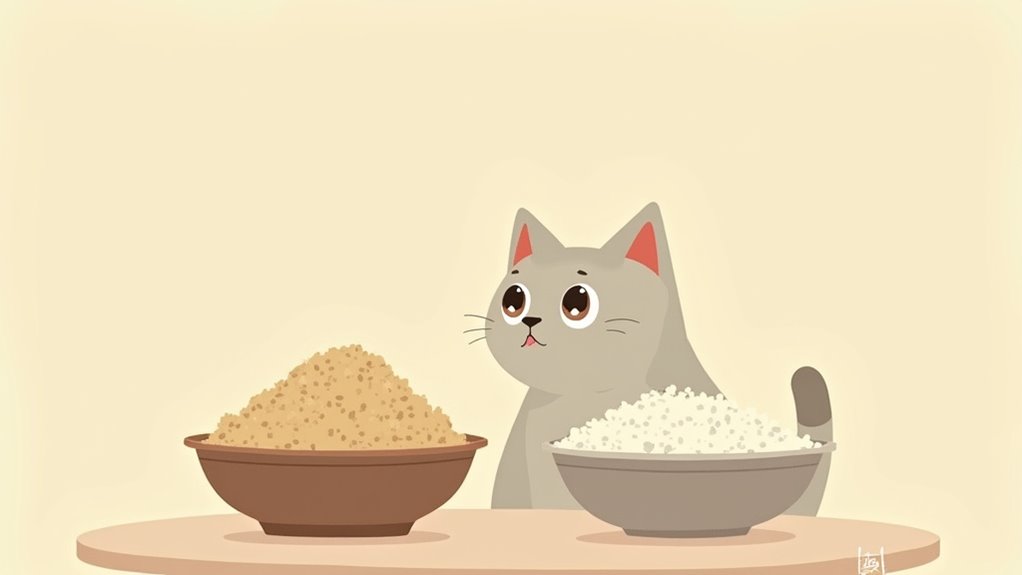
Brown rice has many good nutrients, but it can be hard to digest. It usually has more calories, fiber, and protein than white rice. For example, brown rice has about 248 calories per cooked cup, while white rice has 218 to 242 calories.
Brown rice also has around 3.2 grams of fiber. In contrast, white rice has 1 to 3 grams. The extra fiber in brown rice can help with digestion, but it might upset some cats’ stomachs.
Cooking brown rice takes longer because it has bran and germ. It has a chewier feel. White rice cooks faster and is fluffier.
Cats with sensitive stomachs may find white rice easier to digest because it has less fiber.
Consider your cat’s needs when choosing rice. Brown rice is healthy but may not suit every cat. White rice can be a good option for those with sensitive tummies.
Potential Risks of Feeding Brown Rice
Feeding your cat brown rice may not be the best idea. Cats are obligate carnivores. Their bodies aren’t built to digest grains like brown rice. This can cause several problems.
First, it can lead to digestive discomfort. Your cat might experience gas, bloating, or diarrhea.
Second, some cats may have food allergies. This can show up as itching, vomiting, or swelling.
Third, brown rice can upset their nutrition. It might take the place of important proteins in their diet.
Raw brown rice can be even worse. It can cause serious issues like vomiting or stomach blockages.
Giving too much brown rice can also lead to obesity. This raises the risk of diabetes and heart disease.
Always introduce new foods slowly. Talk to your veterinarian to make sure your cat gets the right nutrients.
Taking these steps helps keep your cat healthy and happy.
When and How to Include Brown Rice in Your Cat’s Diet
Adding brown rice to your cat’s diet can be beneficial, but do it carefully. Always talk to your vet first, especially if your cat has any digestive problems.
Start with just a few teaspoons mixed into their regular food. Watch for any signs of upset stomach, like diarrhea or vomiting. Skip brown rice during these times and stick to plain white rice instead.
To prepare brown rice, cook it well. Make sure it has no salt or spices. Let it cool before serving. You can mash or chop it into small bits to help your cat eat it.
Brown rice should be a special treat, not something they eat every day. Keep servings small to avoid too many carbs, which can be bad for your cat’s health.
If your cat has any bad reactions, stop giving brown rice. Talk to your vet about other options. Always put your cat’s health first when making food choices.
Frequently Asked Questions
Can Brown Rice Help With My Cat’s Hairballs?
Brown rice can help reduce hairballs in cats. It has fiber that supports digestion. This fiber makes it easier for hair to move through your cat’s system. Better digestion means fewer hairballs. A diet with brown rice can be beneficial for your cat’s health. It keeps their tummy happy and helps them feel good. Including brown rice in their meals is a simple way to help with this common issue. Always consult your vet before making changes to your cat’s diet.
Is Brown Rice Suitable for Kittens or Senior Cats?
Brown rice might sound healthy, but it’s not great for kittens or senior cats. It is hard for them to digest. This means they won’t get many benefits from it. Instead, focus on high-quality, protein-rich foods. These foods help keep your furry friends strong and healthy. Always choose what’s best for their needs.
Can I Mix Brown Rice With My Cat’s Wet Food?
You can mix brown rice with your cat’s wet food. Just use a small amount. Brown rice has few nutrients for cats. It should not take the place of their main food. Always follow feeding guidelines. This helps keep your cat healthy. Remember, wet food gives your cat essential nutrients. Brown rice can add some variety, but it’s not a main dish. Keep it simple and balanced for your furry friend.
How Often Can I Feed My Cat Brown Rice?
A warm bowl of brown rice looks inviting. Cats can eat brown rice sometimes. It can be a nice treat for them. Just remember, their main diet should be meat. Cats need protein to stay healthy. Brown rice should not take the place of their usual food.
Feeding brown rice can help with digestion. It has fiber, which is good for cats. Offer it in small amounts. Too much can upset their stomach. Always cook the rice well before giving it to your cat. Avoid adding salt or spices.
What Are Signs of Rice Intolerance in Cats?
Cats with rice intolerance show clear signs. Watch for digestive problems. Symptoms include vomiting, diarrhea, and gas. Skin issues may also appear. Look for irritation or rashes on their skin. Overgrooming might happen too. Cats may scratch more than usual. Chronic ear problems can signal food intolerance as well. Pay attention to these signs. Early detection helps keep your cat healthy.
Conclusion
Brown rice can be a safe food for your cat. It can provide some nutrients. But moderation is very important. Too much brown rice may upset your cat’s stomach. Always add it to their diet slowly. Talk to your vet before changing your cat’s meals. A balanced diet keeps your cat healthy and happy. Remember, many cats are sensitive to certain foods. Keep an eye on how your cat reacts to new foods.
