
Can Cat Eat Bread
This post contains affiliate links. As an Amazon Associate, we earn from qualifying purchases.
Feeding your cat bread is not advisable. Cats require a diet rich in protein and fat, while bread is primarily made up of carbohydrates, which can lead to digestive issues such as vomiting or diarrhea. A single slice of bread contains too many calories for a cat, which typically needs only 160-180 calories daily. Additionally, many types of bread contain harmful ingredients like garlic or sugar. If your cat does consume bread, be attentive to any signs of bloating or distress, and consult your veterinarian if necessary. For those interested, further details and safer alternatives for your cat’s diet will be discussed later in the article.
Essential Facts in 30 Seconds
- Cats can eat small amounts of plain bread, but it shouldn’t be a regular part of their diet.
- Bread is high in calories and carbohydrates, which can lead to obesity and health issues.
- Avoid breads that contain garlic or onion, as they are toxic to cats.
- Watch for signs of distress, like bloating or vomiting, after your cat eats bread.
- Use wet cat food, pill pockets, or oral syringes as safer alternatives for giving medication.
Understanding Bread and Its Impact on Cats
Sharing bread with your cat might seem okay, but it can harm their health. Bread is mostly carbohydrates, making up over 50% of its calories. Cats need animal protein and fat instead. They’re obligate carnivores, meaning their diet should be rich in meat.
Health Risks:
- Nutritional Gaps: Bread doesn’t provide the protein and fat cats need. This can cause nutritional problems.
- Tummy Troubles: Cats may have a hard time digesting carbs. This can lead to vomiting or diarrhea.
Calorie Count:
- A plain slice of bread has about 260 calories for every 100 grams. Cats only need 160–180 calories each day.
- Giving your cat too much bread can cause weight gain. This can lead to diabetes and joint problems.
Additionally, high-calorie foods like bread can contribute to obesity in cats, which may lead to various health issues.
Keep your cat’s diet focused on meat. It’s the best way to keep them healthy and happy.
Safe vs. Unsafe Types of Bread for Cats
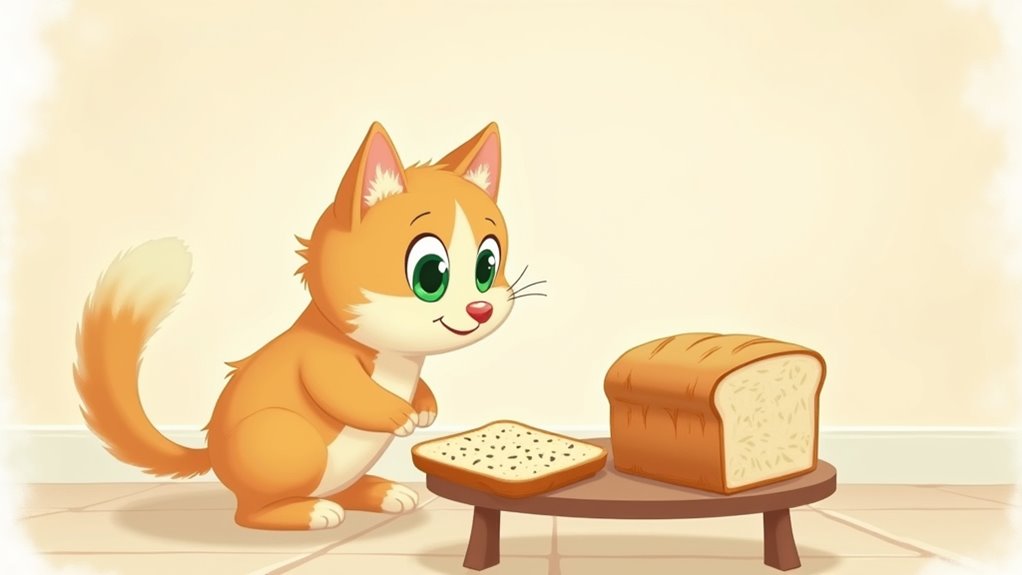
Sharing bread with your cat can be fun, but choose wisely. Some types of bread are safe, while others can be harmful.
Safe bread options include:
- White Bread: Offer small bites without any additives.
- Whole Wheat: Give sparingly for added nutrients.
- Cornbread: Treat your cat with tiny portions.
- Gluten-Free: Ensure it’s plain and simple.
- Pumpernickel: Keep it basic to avoid issues.
Unsafe bread types to avoid:
- Brioche: This bread is high in sugar and dairy.
- Flavored Breads: They may have toxic ingredients.
- Banana & Hawaiian Breads: These are often too sugary.
- Xylitol-Containing Bread: This is very dangerous for cats.
Always remember to treat your cat in moderation. Safe choices keep your furry friend happy and healthy!
Potential Health Risks of Feeding Bread to Cats
Feeding bread to your cat can cause many health problems. Every pet owner should know these risks.
First, bread is high in calories. A single slice can make up one-fifth of your cat’s daily needs. It doesn’t provide the nutrients they require.
Second, some cats may have upset stomachs after eating bread. This can lead to vomiting or diarrhea. Additives in bread can make this worse.
Third, raw bread dough is dangerous. If a cat eats it, the dough can expand in their stomach. This can cause bloating or even a rupture.
Fourth, some flavored breads contain toxic ingredients. Garlic or onion can harm your cat. These can lead to serious issues like hemolytic anemia.
To keep your cat safe, avoid bread completely. Focus on a balanced diet with plenty of protein. This meets their unique dietary needs.
Your cat’s health depends on you!
Using Bread for Medication Administration
Using bread to give medicine to your cat may seem easy. But it often doesn’t work well. Bread is dry and doesn’t stick to pills. Your cat might just spit it out. Better options exist for giving medicine.
Try using wet cat food. Strong-smelling flavors like tuna or chicken broth can hide the taste of the medicine. Pill pockets are another great choice. These special treats hold pills tightly and taste good to cats.
For liquid medicines, use an oral syringe. This lets you give the medicine directly into your cat’s mouth.
Bread may look tempting, but it lacks moisture and flavor. You want to ensure your cat swallows the medicine. Use better methods that help with swallowing and cover up bad tastes. Your cat will thank you!
When to Seek Veterinary Assistance Regarding Bread Ingestion
Your cat may need veterinary help after eating bread. Watch for serious emergency signs. These include:
- A swollen belly or bloating
- Retching or dry heaving without vomiting
- Confusion or trouble walking
- Signs of severe distress, like trouble breathing or being unresponsive
These symptoms could mean your cat needs urgent care. If your cat ate bread less than 30 minutes ago and shows any symptoms, act quickly.
Continuous vomiting or dry heaving is an emergency. Neurological issues and signs of severe distress need immediate attention.
Your cat’s health matters. Consult your veterinarian if you’re worried. Quick action can greatly improve treatment results.
Frequently Asked Questions
Can Kittens Eat Bread Safely?
Kittens can eat bread, but only in very small amounts. It’s best to avoid giving them bread. Kittens need balanced and nutritious food for their growth and digestion. Focus on high-quality kitten food. This type of food provides essential nutrients for healthy development. If you do give them bread, make sure it has safe ingredients. Avoid bread with harmful additives. Always prioritize your kitten’s health and well-being.
How Often Can I Give My Cat Bread?
You can give your cat bread now and then. Make sure it’s not more than 10% of their daily food. Keep the pieces small. This way, your cat can enjoy some bread without hurting their health. Bread should not replace their regular food. Always watch for any signs of allergies. If your cat shows any bad reaction, stop giving them bread. Enjoy giving treats, but do it safely!
What Should I Do if My Cat Likes Bread?
Cats can have strange cravings. If your cat likes bread, it’s okay. You can offer safe treats instead. Try freeze-dried chicken or catnip. These are tasty and healthy options. They keep your cat happy without any risks.
Bread isn’t harmful in small amounts, but it lacks nutrients for cats. Cats need meat for a balanced diet. Always choose cat-friendly snacks. Keep an eye on their eating habits. If your cat shows unusual behavior, consult a vet.
Embrace your cat’s unique tastes. It’s part of their charm!
Are Homemade Bread Recipes Safe for Cats?
Homemade bread is not safe for cats. The ingredients can upset their stomachs. This can lead to serious health problems. It’s best to avoid any bread for your furry friend. Stick to treats made specifically for cats. These are safe and healthy. Keeping your cat happy and healthy is important. Always choose food that supports their well-being.
Can Bread Cause Allergies in Cats?
Bread can trigger allergies in cats. Watch for signs like itching or stomach issues. These symptoms may mean your cat has a food allergy.
Some cats are sensitive to certain ingredients in bread. Common symptoms include rashes, vomiting, or diarrhea. Always consult a vet if you notice these problems.
Avoid giving your cat bread to prevent allergic reactions. Stick to cat food that meets their dietary needs. Keeping your cat safe is the most important thing.
Conclusion
A small piece of bread may not hurt your cat, but it’s best to be careful. Some bread types are safer than others. Cats don’t need bread in their diet. Too much can upset their stomachs. If your cat acts strange after eating bread, call your vet. Keeping your pet healthy is very important. Always think before sharing your food.
