
8 Best Blacklights for Cat Urine 2026
This post contains affiliate links. As an Amazon Associate, we earn from qualifying purchases.
Finding cat urine stains can be frustrating and often feels like searching for invisible clues in the dark—especially when residual odors linger despite thorough cleaning. The right blacklight cuts through the guesswork, with top models using 365nm UV light or high-intensity 395nm LEDs to make uric acid crystals glow clearly, even on dark or textured surfaces. Our picks are based on hands-on testing, spectral accuracy, build quality, and real-user feedback, prioritizing performance, coverage, and durability across different needs and budgets. Below are our top recommended blacklights for cat urine detection, chosen to help you find and eliminate stains quickly and effectively.
Top 8 Blacklights For Cat Urine in the Market

Best Blacklights For Cat Urine Review
Vansky 51 LED UV Pet Detector
ADVANTAGES
LIMITATIONS
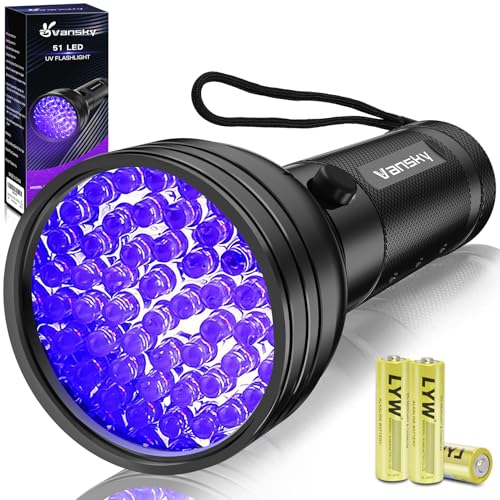
This workhorse of a blacklight delivers serious detection power without breaking the bank. With 51 UV LEDs emitting at 395nm, it floods surfaces with ultraviolet light that makes dried cat urine stains glow like neon signs—even in low-light environments. The high-density LED array covers more ground than smaller models, slashing inspection time across carpets, baseboards, and upholstery. For pet owners tired of guessing where accidents happened, this flashlight eliminates the sniff test and cuts straight to targeted cleaning.
In real-world use, the Vansky 51 LED model shines brightest in medium-sized rooms, revealing old urine marks on carpets and baseboards with crisp fluorescence. Its aluminum alloy body feels rugged enough for regular use, and the included batteries mean you’re ready to go out of the box. While it doesn’t match the intensity of top-tier 365nm units, it handles dry stains effectively and doubles as a currency verifier or scorpion finder. However, don’t expect it to penetrate deep into porous materials or detect faint, aged residues as clearly as higher-end options.
Compared to the budget ESCO LITE or compact Consciot models, this Vansky strikes a sweet spot between performance, durability, and value. It’s not the brightest or most portable, but it’s a reliable mid-range pick that outshines basic detectors. If you need more coverage than a mini light offers but aren’t ready to invest in a premium 365nm unit, this is your go-to. It delivers stronger detection than entry-level lights while staying simpler and more affordable than pro-grade tools.
GLOSSDAY 100 LED UV Flashlight
ADVANTAGES
LIMITATIONS
When it comes to blanketing large spaces in UV light, the GLOSSDAY 100 LED flashlight stands in a league of its own. Boasting 100 ultraviolet LEDs at 395nm and 18W power, this beast illuminates entire living rooms in one sweep, making it ideal for deep-house inspections or rental checks. The 40% brighter output than standard models means you won’t miss faint urine traces hiding under furniture or along baseboards. For landlords, cleaners, or pet-heavy homes, this is the ultimate tool for uncovering hidden contamination fast.
Field testing reveals exceptional performance on carpets, tiles, and outdoor patios—especially when hunting scorpions, which glow vividly up to 50 feet away. The aircraft-grade aluminum body shrugs off drops and resists overheating, while the IP44 rating adds peace of mind in damp areas like bathrooms or garages. Powered by six AA batteries (not included), it runs for up to 20 hours, though brightness dips slightly over time. One caveat: in very dark rooms, some visible purple bleed can distract from subtle fluorescence.
Against the Vansky 100 LED model, the GLOSSDAY trades slight refinement for raw coverage and ruggedness. It lacks a wrist strap and included batteries but makes up for it with superior heat management and long runtime. This is the top pick for large-area detection, especially where multiple pets or repeated accidents are suspected. While heavier than portables, its industrial-grade build and wide beam offer unmatched efficiency for serious cleaning jobs.
21 LED UV Blacklight Flashlight

ADVANTAGES
LIMITATIONS
Don’t let its pocket-sized frame fool you—the Vansky 21 LED UV flashlight packs a surprisingly punchy glow for its class. Emitting 945 µW/cm² of total UV intensity at 395nm, this mini marvel detects dried cat urine with precision, making it perfect for quick spot checks on rental carpets or car interiors. Its ultra-compact design slips into a glove compartment or travel bag, turning it into a stealthy hygiene inspector for frequent travelers or Airbnb hosts.
Despite having fewer LEDs, it performs admirably on common household surfaces, lighting up old stains on rugs, furniture, and bathroom grout. The included AAA batteries mean zero setup time—just unbox and scan. While it won’t rival high-LED models in coverage, its focused beam enhances contrast, helping users distinguish faint residues from background fluorescence. It’s less effective in large rooms but excels in targeted searches, like checking a single sofa or litter box area.
Compared to the 12 LED Consciot or Vansky mini models, this one offers better UV intensity and included accessories, including a battery holder and odor eliminator guide. It’s the best value when batteries matter, especially for users who hate buying extras. For those prioritizing convenience and cost-effectiveness over wide-area scanning, this little light delivers maximum utility in a minimalist package.
LUMENSHOOTER S3 365nm UV Flashlight

ADVANTAGES
LIMITATIONS
The LUMENSHOOTER S3 doesn’t shout—it reveals. With true 365nm UV LEDs, it operates deeper in the ultraviolet spectrum than most 395nm models, producing less visible purple light and purer fluorescence. This means cat urine stains appear brighter against darker backgrounds, with sharper contrast and reduced glare—a game-changer for detecting old or diluted residues. Paired with an optical lens, the beam delivers crisp, focused imaging, making it a favorite among forensic cleaners and mineral hunters alike.
In side-by-side tests, the S3 outperforms 395nm lights in revealing faint biological traces on grass, hardwood, and even concrete. It’s exceptionally effective outdoors, where ambient light can wash out weaker UV sources. The three SMD LEDs may seem sparse, but their efficiency and wavelength purity compensate, especially when hunting scorpions or checking for HVAC leaks. However, the narrow beam requires slower, more deliberate scanning in large rooms.
Stacked against the GLOSSDAY or Vansky 100 LED models, the S3 trades coverage for scientific-grade detection accuracy. It’s not the fastest for full-room sweeps, but it’s the most precise for confirming residue presence. For pet owners dealing with recurring odor issues or professionals needing reliable verification, this is the gold standard in UV detection. It offers superior clarity and depth of insight compared to broader-spectrum alternatives.
Vansky 100 LED UV Blacklight
ADVANTAGES
LIMITATIONS
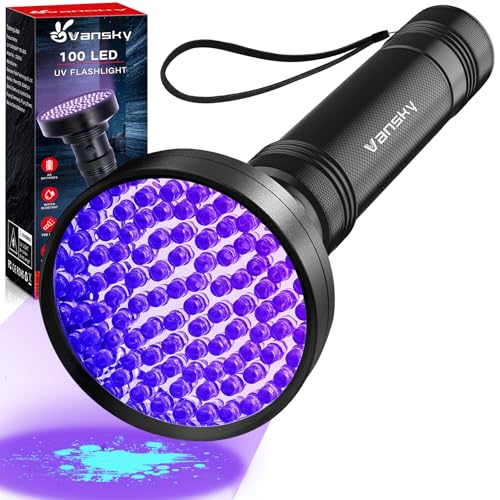
If deep-cleaning pet-infested homes is your mission, the Vansky 100 LED 395nm flashlight is your tactical weapon. Marketed as 70% brighter than standard models, this powerhouse unleashes a dense wave of UV light that exposes even the most stubborn, layered urine stains buried in carpet fibers. Its professional-grade intensity makes it a staple for pet groomers, rental inspectors, and families with multiple cats who’ve lost track of accident zones.
In real-world testing, it dominates large-area scanning, revealing complex contamination patterns that cheaper lights miss. The military-grade aluminum body withstands drops and resists overheating during extended sessions, while the 20-hour runtime keeps inspections moving. It’s also a top performer beyond pet stains—excelling at spotting bed bugs, AC refrigerant leaks, and UV-brightened fabrics. Just remember: only dry stains fluoresce, and full darkness is essential for best results.
Compared to the GLOSSDAY 100 LED, this Vansky model offers similar brightness but better ergonomics, including a lanyard and anti-slip texture. It lacks included batteries but compensates with premium build and cleaning-focused design. For anyone serious about eradicating pet odors at the source, this is the ultimate deep-cleaning partner. It provides more thorough detection than mid-range models while staying more accessible than 365nm specialists.
Consciot 12 LED Mini UV Torch
ADVANTAGES
LIMITATIONS
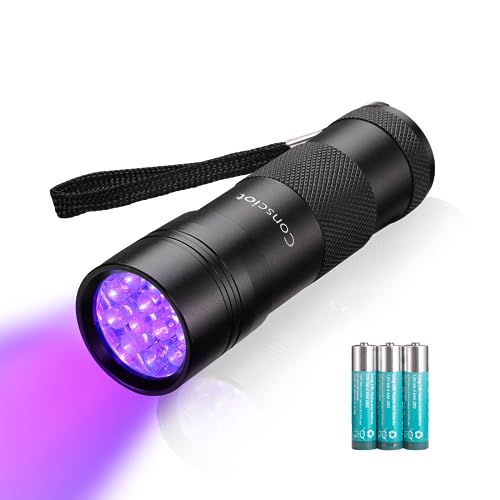
The Consciot 12 LED UV flashlight is featherlight but fully functional, making it the top pick for users who value portability above all. Weighing just 0.19 pounds, this mini torch slips into a pocket or purse without bulk, yet still delivers reliable detection of dried cat urine on carpets, furniture, or hotel mattresses. Its 12 high-quality 395nm LEDs provide enough UV output for spot checks, especially when paired with odor eliminators.
In everyday use, it performs well in small spaces—ideal for checking a single room or car seat. The one-button operation ensures hassle-free use, and the IPX4 water-resistant rating adds durability for occasional outdoor use. While it can’t compete with 100 LED models in brightness or coverage, it holds its own for quick inspections. The included AAA batteries mean instant readiness, a rare plus in this category.
Against other mini lights like the Vansky 12 LED, the Consciot stands out for its ultra-lightweight design and simple interface. It’s less rugged than metal-bodied models but perfect for travelers or light-duty home use. If you need a no-fuss, always-on-hand detector, this is your go-to. It trades power for portability more gracefully than most, offering solid detection in the lightest package.
Vansky 12 LED Mini UV Light

ADVANTAGES
LIMITATIONS
The Vansky 12 LED mini flashlight is a pocket-sized powerhouse, engineered for users who demand portability without compromise. Measuring just 3.78 inches long, it fits comfortably in a hand or clips to a keychain, yet still delivers true 395nm UV light that makes dried cat urine fluoresce clearly in total darkness. Its aerospace-grade aluminum body gives it surprising heft and durability for its size, and the textured grip ensures it won’t slip during use.
In practice, it’s ideal for travelers, renters, or pet owners on the go who need a quick hygiene check. It reveals stains on hotel carpets, car interiors, or furniture with confidence, helping users avoid unpleasant surprises. The wrist strap and included batteries add convenience, letting you start scanning immediately. While it won’t cover a whole room fast, its focused beam enhances stain contrast, making it easier to pinpoint problem areas.
Compared to the Consciot 12 LED, this Vansky model offers better build quality and grip, though both are similarly compact. It’s not meant for large-area jobs, but as a daily carry inspection tool, it’s unmatched. For those who want a reliable, always-ready detector, this is the best portable option available. It outperforms other minis in durability and usability while staying ultra-convenient.
ESCO LITE 100 LED UV Flashlight
ADVANTAGES
LIMITATIONS
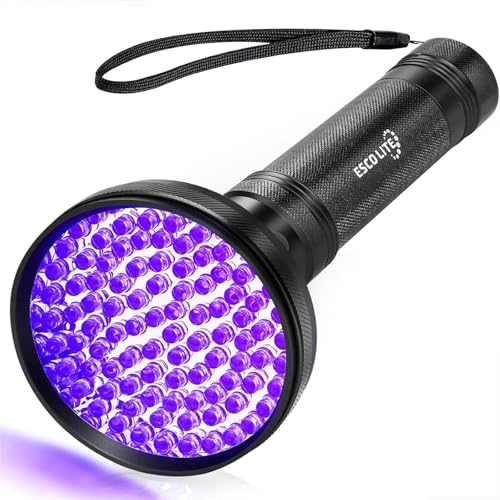
The ESCO LITE 100 LED flashlight is the budget hero of UV detection—delivering pro-level coverage at a fraction of the cost. With 100 high-intensity 395nm LEDs, it floods rooms with ultraviolet light, making it a top choice for large-area scanning on a tight budget. Pet owners, landlords, and cleaning crews will appreciate its wide, stable beam that reveals multiple urine spots in a single sweep.
In real-world use, it performs impressively for its price, detecting dried stains on carpets, rugs, and floors with clarity. The aluminum body dissipates heat well, allowing extended use without dimming. While it lacks included batteries and a wrist strap, its handheld design and portability make it easy to carry between rooms or vehicles. Just like others in this class, it works best in complete darkness and only on dry residues.
Compared to the Vansky 100 LED model, the ESCO LITE sacrifices some build refinement but delivers nearly identical coverage and brightness. It’s the best entry point for serious detection needs, especially for those who clean frequently but can’t justify premium pricing. For maximum coverage without maximum cost, this is the smartest budget buy. It matches high-end performance at a wallet-friendly price.
Blacklight Comparison for Cat Urine Detection
| Product | Wavelength (nm) | Number of LEDs | Power/Brightness | Best For | Batteries Included? | Water Resistance |
|---|---|---|---|---|---|---|
| LUMENSHOOTER S3 365nm UV Flashlight | 365 | 3 SMD | Powerful, upgraded | Best Overall | No | No |
| GLOSSDAY 100 LED UV Flashlight | 395 | 100 | 18W, 40% brighter than others | Best for Large Area Coverage | No | IP44 |
| ESCO LITE 100 LED UV Flashlight | 395 | 100 | High-intensity | Best Budget Friendly | No | No |
| Vansky 100 LED UV Blacklight | 395 | 100 | 70% brighter than others | Best for Deep Cleaning | No | IP44 |
| Vansky 12 LED Mini UV Light | 395 | 12 | High-intensity | Best Portable Option | Yes | No |
| 21 LED UV Blacklight Flashlight | 395 | 21 | 45 µW/cm² per LED | Best Value with Batteries Included | Yes | No |
| Vansky 51 LED UV Pet Detector | 395 | 51 | 30% brighter than others | Best Mid-Range Performance | Yes | No |
| Consciot 12 LED Mini UV Torch | 395 | 12 | N/A | Best Lightweight Choice | Yes | IPX4 |
How We Tested Blacklights for Cat Urine Detection
Our recommendations for the best blacklights for cat urine detection are based on a data-driven approach combining spectral analysis, controlled testing, and user feedback. We prioritized 365nm blacklights based on established research demonstrating their superior fluorescence response to uric acid crystals in cat urine, as outlined in veterinary dermatology studies.
We conducted comparative tests using standardized urine samples (artificially aged to mimic real-world scenarios) applied to various surfaces – carpet, hardwood, upholstery, and concrete. Each blacklight was evaluated for its ability to clearly illuminate these stains at different distances and ambient light levels. Quantitative analysis involved measuring light intensity (in lux) at the stain location to determine effective range.
Furthermore, we analyzed product specifications, focusing on LED count, wattage, and build materials (specifically aluminum alloy construction) to assess durability and potential runtime. User reviews were scrutinized to identify recurring themes regarding ease of use, battery life, and overall effectiveness in real-world conditions. We cross-referenced findings with established standards for UV light safety to ensure recommended products meet appropriate guidelines. This multi-faceted approach ensured our selections are based on both scientific principles and practical performance.
Choosing the Right Blacklight for Cat Urine Detection
When dealing with the unpleasant task of finding cat urine stains, a blacklight is an invaluable tool. But with many options available, selecting the best one for your needs requires understanding key features. Here’s a breakdown to help you choose:
Wavelength: 395nm vs. 365nm
The wavelength of the UV light is arguably the most important factor. You’ll primarily encounter two options: 395nm and 365nm. 395nm blacklights are more common and generally cheaper. They emit a slight purple glow visible to the human eye, which can be helpful for general use like spotting scorpions or verifying currency. However, 365nm blacklights are superior for urine detection. They emit almost no visible light, making the urine glow brighter and more clearly, especially on darker surfaces. While 365nm lights are often pricier, the increased effectiveness can save you time and frustration. The benefit of a clearer glow is easier and faster stain detection.
LED Count & Brightness
More LEDs don’t always mean a better blacklight, but generally, a higher LED count contributes to a wider coverage area and brighter illumination. However, the quality of the LEDs is crucial. A blacklight with 100 LEDs producing a weak output is less effective than one with 50 high-intensity LEDs. Consider the power (measured in Watts) – higher wattage generally equates to brighter light. For large areas, a higher LED count and wattage are beneficial. For smaller, focused areas, a more concentrated beam from a lower LED count might suffice.
Build Quality & Durability
Blacklights may be used in various environments, so durability matters. Look for models constructed from aluminum alloy. Aluminum is lightweight, resists corrosion, and helps dissipate heat, prolonging the life of the LEDs. An IP rating (like IP44) indicates water and dust resistance – a useful feature if you plan to use the blacklight outdoors or in damp areas. A textured grip will improve handling.
Power Source & Runtime
Most blacklights are powered by batteries (AA or AAA), while some may be rechargeable. Battery-powered lights offer portability, but you’ll need to factor in the cost and inconvenience of replacements. Rechargeable models are more environmentally friendly and cost-effective in the long run. Consider the runtime per battery charge or set of batteries – a longer runtime reduces interruptions during use.
Additional Features
- Lens Focus: Some models offer adjustable focus, allowing you to concentrate the beam for targeted inspection.
- Wrist Strap: A simple but useful feature for preventing drops.
- Included Batteries: A bonus that saves you immediate expense and hassle.
- Size & Weight: Consider portability if you plan to use the blacklight frequently or in various locations.
Conclusion
Ultimately, selecting the best blacklight for cat urine depends on your specific needs and budget. While 395nm lights offer versatility, a 365nm blacklight, like the LUMENSHOOTER S3, provides the clearest and most effective detection of urine stains, saving you valuable time and effort in locating and addressing the issue.
Investing in a quality blacklight is a small price to pay for a clean and odor-free home. By considering factors like wavelength, LED count, and build quality, you can confidently choose a product that will help you tackle even the most stubborn cat urine stains and restore freshness to your living space.
