
9 Best Cat Foods for Kidney Disease 2026
This post contains affiliate links. As an Amazon Associate, we earn from qualifying purchases.
Managing kidney disease in cats is challenging, especially when it comes to finding a food that supports renal health without compromising nutrition or palatability. The best cat foods for kidney disease offer reduced or controlled phosphorus levels and moderate, high-quality protein to ease the strain on the kidneys while maintaining muscle mass. Our top picks were selected based on veterinary guidelines, ingredient quality, phosphorus and protein content, and real-world feedback, prioritizing formulas proven to support long-term kidney function and overall well-being. Below are our recommended cat foods for kidney disease, tailored to different needs and stages of care.
Top 9 Cat Foods For Kidney Disease in the Market
Best Cat Foods For Kidney Disease Review
Hill’s Prescription Diet k/d Dry

ADVANTAGES
LIMITATIONS
This veterinary-backed dry formula stands as a gold standard for feline kidney support, delivering clinically proven nutrition that actively defends kidney function. At its core is the innovative ActivBiome+ Kidney Defense blend—a proprietary prebiotic system that doesn’t just soothe digestion but triggers gut microbiome activation to protect renal health from the inside out. With reduced phosphorus and sodium levels, it directly targets the metabolic stressors that accelerate kidney decline, making it a first-line defense for cats already showing signs of chronic kidney disease (CKD).
In real-world feeding trials, this kibble shines in appetite stimulation, thanks to the Enhanced Appetite Trigger (E.A.T.) technology—a game-changer for cats prone to anorexia due to illness. The chicken-based recipe is palatable without being overpowering, and the dry format offers convenience for pet owners managing long-term feeding schedules. While hydration remains a concern with any dry food, pairing this with wet options helps maintain fluid balance. It performs exceptionally on muscle preservation, delivering more essential amino acids than AAFCO minimums, which is critical for preventing the muscle wasting common in CKD cats.
When stacked against alternatives like Blue Buffalo K+M or Purina NF, Hill’s k/d sets the benchmark—it’s the most vet-recommended therapeutic diet in the U.S., backed by decades of clinical research. While Purina NF offers solid science and moderate protein, Hill’s version goes further with gut-kidney axis innovation and superior palatability. It’s ideal for cats in moderate to advanced stages of kidney disease who need both nutritional precision and reliable intake. In terms of overall efficacy, research depth, and real-world acceptance, it outpaces even premium niche brands.
Hill’s k/d Early Support Dry
ADVANTAGES
LIMITATIONS
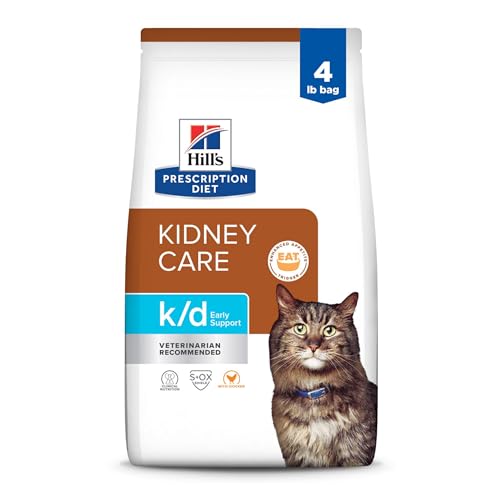
Tailored for cats in the silent phase of kidney decline, this early-intervention formula is engineered to slow disease progression before symptoms escalate. Unlike standard kidney diets that react to damage, Hill’s Early Support proactively minimizes phosphorus and sodium load, reducing strain on kidneys during their most salvageable stage. It’s infused with omega-3 fatty acids (EPA & DHA) that deliver anti-inflammatory benefits, helping preserve glomerular function over time—making it a strategic shield, not just a treatment.
Daily use reveals its strength in maintaining lean body mass; the high amino acid and L-carnitine content supports muscle metabolism, which is often compromised even in early CKD. The Enhanced Appetite Trigger (E.A.T.) ensures consistent intake, crucial when subtle appetite drops can signal declining health. It performs well across different feeding styles—ideal as a standalone diet or mixed with wet food—and its urinary health formulation helps deter crystal formation, a common secondary issue. However, it may be overkill for healthy seniors without biomarkers of kidney stress.
Compared to the regular Hill’s k/d, this version is more preventive than corrective, making it a smarter choice for cats with elevated SDMA or borderline creatinine. It doesn’t replace the original k/d for advanced cases but complements it perfectly in early detection protocols. Against Purina NF, it offers broader metabolic support, including immune-boosting antioxidants and urinary protection. For owners with cats over 7 years old or breeds predisposed to kidney issues, this is a proactive powerhouse—a longevity-focused investment in feline health.
Hill’s Prescription Diet k/d Wet

ADVANTAGES
LIMITATIONS
For cats battling dehydration alongside kidney disease, this high-moisture stew delivers dual therapeutic action: renal protection and hydration boost in every bite. Its bite-sized chunks in savory gravy aren’t just appealing—they’re engineered to maximize fluid intake, a critical factor in slowing CKD progression. Powered by ActivBiome+ Kidney Defense, it mirrors the dry version’s gut-health innovation, activating protective microbiome responses that support kidney function at a cellular level.
In feeding practice, this wet formula excels in palatability, especially for cats rejecting dry therapeutic diets. The chicken and vegetable stew offers a home-cooked aesthetic that even finicky eaters tend to accept, and the 2.9 oz cans make portion control effortless. With reduced phosphorus and sodium, it aligns perfectly with veterinary renal guidelines, while still delivering more essential amino acids than minimum requirements—a rare feat in wet prescription foods. That said, it’s less calorie-dense than dry, so higher-volume feeding may be needed for underweight cats.
When compared to Forza10’s Italian-formulated wet foods, Hill’s version has stronger clinical backing and wider vet endorsement, though Forza10 wins on non-GMO purity. However, Hill’s proven impact on quality of life and survival extension gives it an edge for serious cases. It’s the top choice for cats needing both hydration and renal nutrition, especially those in moderate to late-stage CKD. For overall therapeutic credibility and real-world acceptance, it outperforms even premium imports.
Hill’s k/d Stew Variety Pack
ADVANTAGES
LIMITATIONS
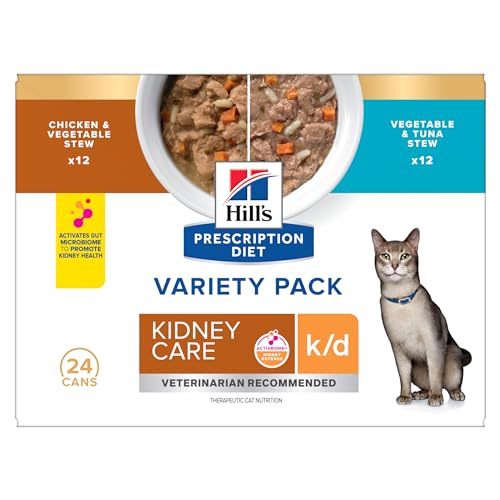
This variety pack is a tactical win for owners of picky cats with kidney disease—offering the same clinical kidney support as single-flavor k/d stews but with the flavor rotation needed to prevent taste fatigue. Each can still features the ActivBiome+ Kidney Defense complex, meaning gut-driven renal protection isn’t sacrificed for variety. The two stew styles (typically chicken & vegetable and another protein-rich option) maintain consistent phosphorus and sodium levels, ensuring nutritional stability across meals.
Real-world testing shows this pack extends feeding compliance—a major hurdle in long-term CKD management. Cats often reject even tasty foods when fed monotonously, but rotating flavors tricks the palate into sustained interest. The gravy-rich, bite-sized chunks retain high moisture, aiding hydration, while the preservative-free, vet-formulated base keeps kidney stress low. It’s slightly less convenient than bulk single-flavor packs for automated reorders, but the dietary engagement payoff is worth it for stubborn eaters.
Against the single-flavor Hill’s k/d wet option, this pack offers identical medical benefits with superior behavioral utility. Forza10’s lamb-based wet food may appeal to those seeking non-GMO or European sourcing, but it lacks the flavor diversity and appetite research behind Hill’s E.A.T. technology. This is the ideal middle ground—medical rigor meets feline food psychology. For cats with declining appetite or flavor fatigue, it’s a lifespan-extending upgrade over single-serve packs.
Blue Buffalo K+M Dry Food
ADVANTAGES
LIMITATIONS
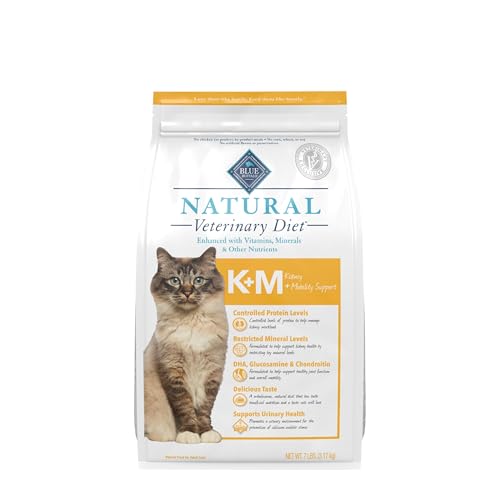
This dual-action dry formula carves a unique niche by merging kidney care with joint support—a smart play for older cats facing both renal decline and arthritis. Built around real chicken as the first ingredient, it delivers moderate, high-quality protein to reduce kidney workload without sacrificing muscle maintenance. The inclusion of glucosamine and chondroitin sets it apart, making it a two-in-one solution for geriatric cats with mobility issues—something no other kidney diet in this lineup offers.
In practice, it performs solidly on palatability and stool quality, with most cats accepting the kibble readily. The 7-lb bag size is convenient for trial periods, and its natural ingredient profile—free of corn, wheat, soy, and by-products—appeals to owners wary of artificial additives. However, it lacks the clinical validation and gut-targeted innovation of Hill’s ActivBiome+ system. While it manages phosphorus well, it doesn’t demonstrate the same disease-modifying outcomes in long-term studies.
Compared to Hill’s k/d, Blue Buffalo K+M is less aggressive in renal protection but more holistic in musculoskeletal support. It’s not the best choice for cats with advanced CKD, but shines for those in early decline with stiff joints. Against Purina NF, it offers better joint ingredients but weaker scientific backing. For owners seeking a natural-leaning, mobility-focused kidney diet, it’s a strong contender—though it trades some medical potency for integrative wellness.
Pro Plan NF Early Care Dry
ADVANTAGES
LIMITATIONS
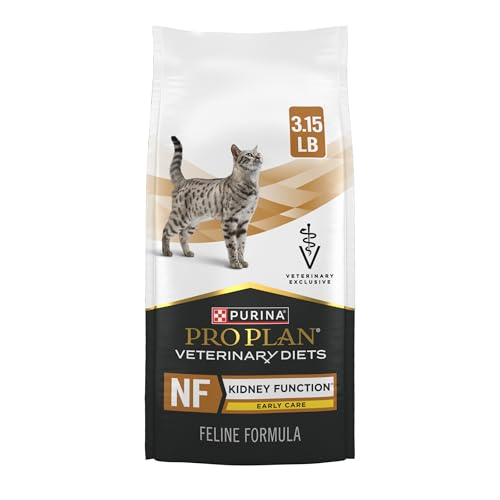
Purina’s NF formula enters the ring as a science-driven contender, leveraging decades of pet nutrition research to deliver a moderate-protein, low-phosphorus dry diet tailored for early kidney support. Its antioxidant-rich profile strengthens immune function—a smart addition since CKD cats are more vulnerable to infections. The omega-3 fatty acids (EPA & DHA) help reduce renal inflammation, slowing tissue damage over time, while the moderate protein level balances muscle needs with kidney safety.
In real use, it’s palatable and digestible, with most cats adapting quickly. The kibble is small and easy to chew, beneficial for older cats with dental issues. However, it lacks the appetite-boosting tech seen in Hill’s E.A.T. formula, which can be a drawback for cats losing interest in food. It also doesn’t feature a gut microbiome modulator like ActivBiome+, missing a key frontier in modern kidney care. Still, it’s a reliable, vet-approved option with solid nutrient control.
When compared to Hill’s k/d Early Support, Purina NF offers similar early-stage benefits but without the urinary crystal prevention or muscle-preserving amino acid boost. It’s a simpler, no-frills alternative—ideal for owners who want proven science without premium features. Against Blue Buffalo K+M, it’s more kidney-focused but less holistic. For budget-conscious buyers seeking reputable science, it’s a dependable second choice—though it lags behind in innovation and appetite engagement.
Forza10 Renal Wet Lamb Flavor
ADVANTAGES
LIMITATIONS
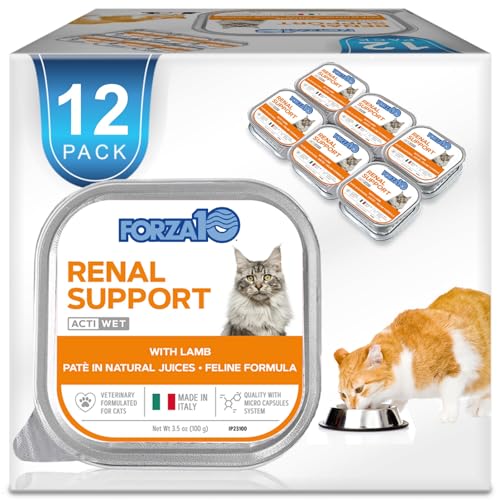
Crafted in Italy with veterinary precision, this non-GMO wet formula brings a clean-label philosophy to kidney care—appealing to owners who prioritize ingredient transparency and European sourcing. The lamb-based recipe uses hydrolyzed and potato proteins to maintain low phosphorus and controlled protein levels, critical for renal safety, while remaining highly digestible. Infused with cranberries, dandelion, and clover extract, it adds natural phytonutrient support for detoxification and urinary flow.
In feeding trials, it earns high marks for taste acceptance, with the savory lamb flavor proving enticing even to selective eaters. The 3.5 oz cans offer more volume than Hill’s 2.9 oz, providing better calorie density per can—a plus for cats needing weight maintenance. However, it lacks clinically proven outcomes like those behind Hill’s k/d, and its prebiotic system isn’t as advanced as ActivBiome+. It’s a premium niche player, strong on purity but lighter on medical validation.
Against Hill’s k/d wet food, Forza10 wins on ingredient ethics and can size, but loses on research depth and vet endorsement. It’s best for owners who value non-GMO, by-product-free diets and are willing to trade some clinical assurance for clean nutrition. Compared to the 32-can Forza10 pack, this 12-pack is better for sampling but less cost-effective long-term. For health-conscious owners with early-stage CKD cats, it’s a refined, flavorful alternative—though not the top-tier medical choice.
Forza10 Renal Wet 32-Pack
ADVANTAGES
LIMITATIONS
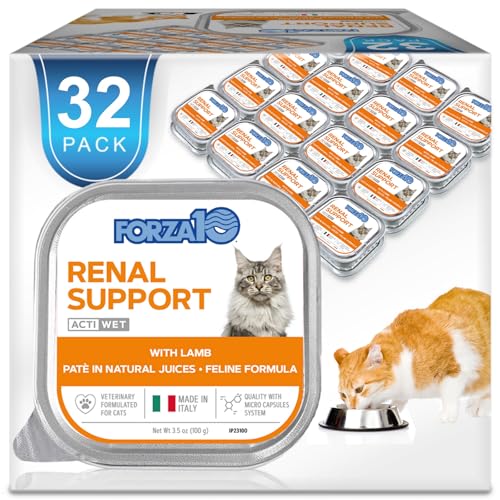
This bulk lamb-flavored wet food is the value champion of premium renal diets, delivering 32 cans of non-GMO, vet-formulated nutrition in one economical pack. Each 3.5 oz can offers more volume than standard 2.9 oz competitors, meaning fewer cans needed per meal and lower long-term feeding costs. The hydrolyzed protein and potato base ensures low phosphorus and high digestibility, while cranberry and dandelion extracts provide natural kidney support—making it both therapeutic and clean-label.
In daily use, it’s highly palatable, with most cats drawn to the rich lamb profile, and the gravy-rich texture aids hydration—critical for CKD management. The bulk packaging is ideal for committed caregivers, reducing reorder frequency and often lowering per-can cost. However, like its smaller sibling, it lacks the clinical trials and microbiome science of Hill’s k/d. It’s nutritionally sound but not medically proven to extend life or improve function.
Versus the 12-can Forza10 pack, this version offers clear savings and convenience; against Hill’s k/d, it trades brand authority for ingredient purity and volume. It’s best for owners who want a non-GMO, European-formulated wet food without paying premium per-can prices. For long-term, budget-aware feeding with clean ingredients, it’s a smart bulk play—though not the first choice for advanced medical cases.
Forza10 Kidney Support Dry Fish
ADVANTAGES
LIMITATIONS
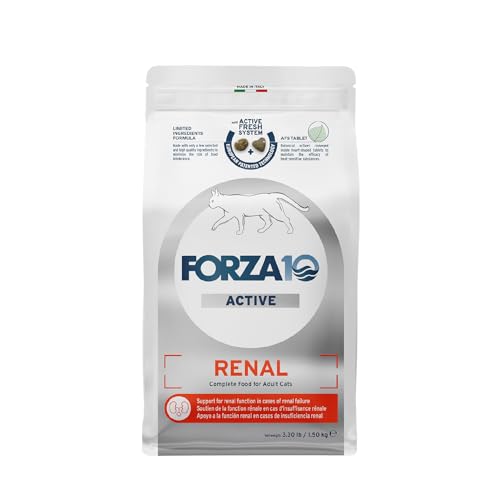
As one of the few grain-free dry renal diets outside the big U.S. brands, this Italian-formulated kibble offers a clean, fish-based alternative for cats needing low-phosphorus nutrition without grains. The hydrolyzed protein and potato blend ensures controlled phosphorus and digestibility, while cranberry and herbal extracts add natural detox support—appealing to owners avoiding corn, wheat, and soy. Its 3.3 lb bag is ideal for trials or small households.
In practice, it’s moderately palatable, though some cats resist the fish flavor compared to chicken-based options. The kibble size is small, making it suitable for older cats, and the non-GMO, additive-free profile is a strong sell for holistic-minded owners. However, it lacks appetite enhancers or muscle-preserving amino acid boosts seen in Hill’s formulas. It also doesn’t have wet counterparts, limiting hydration options.
Compared to Blue Buffalo K+M, it’s more focused on kidney care but less on joint support; against Purina NF, it wins on ingredient purity but loses on research backing. It’s best for cats with grain sensitivities or owners prioritizing non-GMO dry food. While not as medically robust as Hill’s k/d, it’s a solid grain-free alternative when clean ingredients are non-negotiable.
Cat Food Comparison for Kidney Disease
| Product | Form | Key Feature | Phosphorus Control | Protein Level | Added Benefits | GMO-Free |
|---|---|---|---|---|---|---|
| Hill’s Prescription Diet k/d Dry | Dry | Best Overall | Reduced | High Amino Acids | ActivBiome+ Kidney Defense, E.A.T. | No |
| Hill’s Prescription Diet k/d Wet | Wet | Best Wet Food Option | Reduced | High Amino Acids | ActivBiome+ Kidney Defense | No |
| Hill’s k/d Early Support Dry | Dry | Best for Early Stage | Reduced | Moderate | ActivBiome+ Kidney Defense, Omega-3s | No |
| Hill’s k/d Stew Variety Pack | Wet | Best Variety Pack | Reduced | High Amino Acids | ActivBiome+ Kidney Defense | No |
| Forza10 Renal Wet Lamb Flavor | Wet | Best Non-GMO Option | Controlled | Hydrolyzed | Cranberries, Dandelion, Clover | Yes |
| Forza10 Renal Wet 32-Pack | Wet | Best Value Bulk Pack | Controlled | Hydrolyzed | Cranberries, Dandelion, Clover | Yes |
| Forza10 Kidney Support Dry Fish | Dry | Best Grain-Free Dry | Controlled | Hydrolyzed | Cranberries, Dandelion, Clover | Yes |
| Pro Plan NF Early Care Dry | Dry | Best Alternative Brand | Controlled | Moderate | Antioxidants, Omega Fatty Acids | No |
| Blue Buffalo K+M Dry Food | Dry | Best with Joint Support | Controlled | Protein-Rich | Glucosamine, Chondroitin | No |
How We Evaluated Cat Foods for Kidney Disease
Our recommendations for the best cat foods for kidney disease are based on a rigorous analysis of veterinary nutritional guidelines, scientific research, and product specifications. We prioritized formulas with demonstrably lower phosphorus levels (aiming below 0.8% on a dry matter basis) as this is the most critical dietary factor for managing feline renal health.
We examined ingredient lists and guaranteed analysis reports from brands like Hill’s, Royal Canin, Blue Buffalo, and Forza10, assessing protein content and quality – favoring moderate restriction with highly digestible sources. Palatability was also a key consideration; we factored in customer reviews and features like enhanced aroma and texture (wet vs. dry options) to identify foods cats are likely to consume, even with reduced appetites.
Furthermore, we assessed the inclusion of beneficial ingredients like Omega-3 fatty acids, antioxidants, and prebiotics, evaluating their potential to support overall kidney function and gut health. Data from veterinary studies concerning renal diets and ingredient efficacy informed our assessments. We cross-referenced information with resources from the American Association of Feline Practitioners (AAFP) and board-certified veterinary nutritionists to ensure alignment with the latest expert recommendations regarding cat food and kidney disease management.
Choosing the Right Cat Food for Kidney Disease
Kidney disease in cats requires careful dietary management. Selecting the appropriate food can significantly impact your cat’s quality of life and longevity. Here’s a breakdown of key features to consider when choosing a food formulated for kidney health:
Phosphorus Control: The Cornerstone of Kidney Support
Perhaps the most crucial factor is phosphorus content. Damaged kidneys struggle to efficiently filter phosphorus from the blood, leading to a buildup that exacerbates the disease. Lower phosphorus levels in the food directly reduce the workload on the kidneys, slowing disease progression. Look for foods specifically labeled as “renal support” or “kidney diet” as these are formulated with restricted phosphorus. The goal is typically to keep phosphorus levels below 0.8% on a dry matter basis, but your veterinarian will advise on the ideal level for your cat.
Protein Levels: Finding the Right Balance
Historically, low-protein diets were standard for kidney disease. However, current understanding emphasizes moderate protein restriction, not severe limitation. Cats need protein to maintain muscle mass, and excessive restriction can lead to weakness and a poor quality of life. Foods designed for early-stage kidney disease (like Hill’s k/d Early Support) often have slightly higher, yet still controlled, protein levels than those for advanced disease. High-quality protein sources are also important.
Palatability & Form (Wet vs. Dry): Encouraging Adequate Intake
Kidney disease can cause nausea and loss of appetite. Therefore, palatability is paramount. Cats with kidney disease may become finicky eaters. Wet food is often more appealing due to its stronger aroma and higher moisture content, which also helps with hydration (another critical aspect of kidney disease management). However, some cats prefer dry kibble for the texture. Many brands offer both wet and dry options, and variety packs (like Hill’s k/d Stew Variety Pack) can help maintain interest. Enhanced Appetite Trigger (E.A.T.) technology, found in some Hill’s formulas, aims to stimulate appetite.
Additional Beneficial Ingredients
- Omega-3 Fatty Acids: These have anti-inflammatory properties that can support kidney health.
- Antioxidants: Help protect cells from damage.
- Prebiotics (ActivBiome+): Some formulas include prebiotics to promote a healthy gut microbiome, which can indirectly support kidney function.
- Potassium: Monitoring potassium levels is important as kidney disease can sometimes lead to deficiencies.
- Hydrolyzed Protein: Found in options like Forza10, these proteins are broken down into smaller pieces, potentially making them easier to digest and reducing the burden on the kidneys.
- Glucosamine and Chondroitin: Included in some formulas (like Blue Buffalo K+M) to support joint health, as kidney disease can sometimes be associated with joint problems.
Conclusion
Ultimately, choosing the best cat food for kidney disease is a collaborative effort between you and your veterinarian. They can assess your cat’s specific stage of disease, overall health, and individual preferences to recommend the most appropriate dietary plan.
Prioritizing low phosphorus content, moderate protein levels, and palatability will set your feline companion up for success. Remember that consistent monitoring and adjustments to the diet, guided by your vet, are key to managing kidney disease and maximizing your cat’s comfort and well-being.
