
8 Best Indoor Cat Doors of 2026
This post contains affiliate links. As an Amazon Associate, we earn from qualifying purchases.
Many indoor cat owners struggle with messy litter boxes and odors spreading through their homes, especially when trying to maintain a clean, stylish living space. The best indoor cat doors solve this by combining seamless integration into furniture or walls with smart features like no-flap designs for quiet access and 4-way locking systems for controlled entry. We evaluated top models based on real user feedback, expert insights, and key factors like size compatibility, material durability, ease of installation, and noise level to ensure practical, cat-friendly picks. Below are our top recommendations for the best indoor cat doors that balance functionality, design, and feline comfort.
Top 8 Indoor Cat Doors in the Market
Best Indoor Cat Doors Review
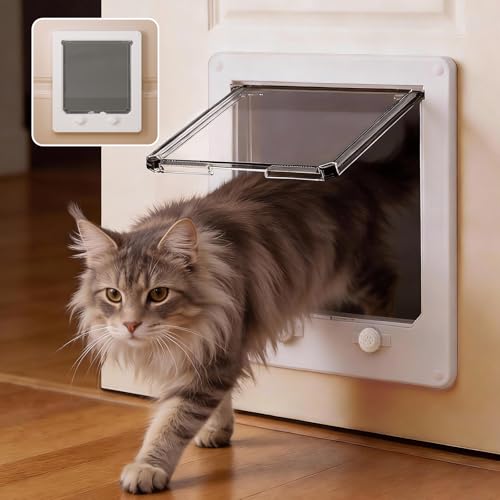
LIBBEPET 4-Way Lock Cat Door
ADVANTAGES
LIMITATIONS
The LIBBEPET X-Large Cat Door delivers serious functionality with a standout 4-way locking system that puts control firmly in your hands. Unlike basic models that only swing freely or lock shut, this indoor cat door allows you to restrict movement to in only, out only, fully open, or fully closed—a game-changer for households managing multiple pets or litter box access. Its magnetic flap seal snaps shut quietly and reliably, while the weather-stripped frame helps block drafts, noise, and insects, making it a strong contender even for exterior use.
In real-world testing, the door’s 7.7″ x 8.7″ flap opening comfortably accommodates cats up to 25 lbs, though bulkier breeds like Maine Coons may brush their shoulders slightly during fast exits. The ABS plastic build is rigid and scratch-resistant, surviving repeated use without warping. It fits doors between 1.3” to 2” thick, ideal for solid wood interiors, and includes a cutout template for precision. However, the flap can be noisy on rebound if your cat pushes through aggressively, and smaller cats may find the initial push slightly stiff until they build confidence.
Compared to the Purrfect Portal Meow Manor XL, the LIBBEPET trades the no-flap convenience for more granular access control—a clear win for pet parents needing security over silence. It’s less discreet than flapless designs but offers broader compatibility, including exterior doors. If you value versatility and pet management over minimalist aesthetics, this model outperforms simpler indoor-only options. It’s a feature-packed workhorse that beats the PetSafe 2-way lock in flexibility while costing less than premium no-flap alternatives.
Purrfect Portal Meow Manor XL

ADVANTAGES
LIMITATIONS
The Purrfect Portal Meow Manor® XL isn’t just a cat door—it’s a revolution in feline freedom with its patented no-flap design that eliminates one of the biggest pain points in pet ownership: annoying, dirty, and sometimes hazardous flaps. This indoor cat door operates like a miniature human door, swinging open and closed on hinges, allowing cats to pass without obstruction—no training, no resistance, and zero flap noise. With a 10.5” x 11” passage, it’s the roomiest option in the lineup, built for cats up to 30 lbs, making it ideal for larger breeds like Ragdolls or Norwegian Forest Cats.
During daily use, the smooth swing mechanism proved effortless for cats of all sizes, from nimble Siamese to chunky domestics. The hollow-core door compatibility (1.25”–1.75” thickness) means it installs easily in most interior doors without reinforcement. Because there’s no flap to chew, tear, or get stuck in, it’s inherently safer and more durable over time. The sturdy screws and secure frame prevent wobbling, even with enthusiastic use. However, the larger cutout requires more precision during installation, and the swinging door doesn’t seal tightly—meaning odor and light can still pass through, a minor trade-off for its open-access design.
When stacked against the Gnome® or Wordcam models, the Meow Manor XL stands out as the most intuitive and future-proof option. While the Gnome door charms with style, and the Wordcam offers paintable surfaces, this one wins on pure usability and cat-centric engineering. It’s the best overall pick for homes prioritizing ease of use, safety, and long-term durability. If you want a set-it-and-forget-it system that your cat masters instantly, this no-flap marvel outshines flap-based competitors in both innovation and execution.
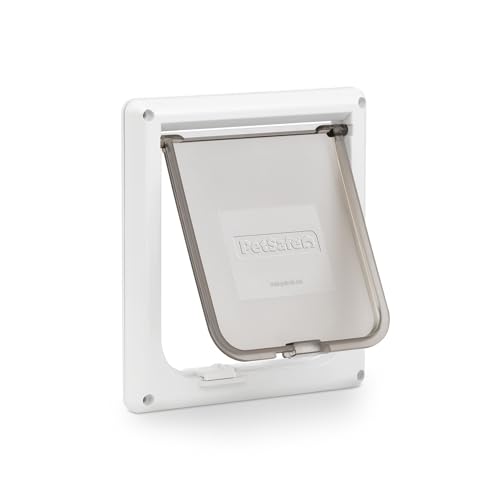
PetSafe 2-Way Locking Cat Door
ADVANTAGES
LIMITATIONS
The PetSafe Interior 2-Way Locking Cat Door is a no-nonsense solution for pet owners who need basic privacy control without complexity. Its tinted, durable plastic flap resists scratching—unlike wood or flimsy materials—and the 2-way locking mechanism (open or locked) lets you restrict access to rooms with litter boxes or feeders when needed. While it lacks the advanced 4-way modes of the LIBBEPET, its simplicity is a strength for households with one or two cats and minimal access conflicts. The translucent flap also adds a touch of discretion, blending better than clear plastic alternatives.
In practice, the medium-sized opening works well for cats up to 20 lbs, though larger or more timid felines may hesitate due to the stiffer flap resistance. It fits doors 1.5” to 2” thick, making it suitable for solid core interiors, and the included template ensures a clean cutout. However, the lack of weather stripping means it doesn’t block sound or drafts effectively, and the flap produces a noticeable snap and creak over time. It’s best suited for low-traffic interior rooms where total silence and airtight seals aren’t priorities.
Compared to the PUPIHOM or Wordcam models, the PetSafe feels more utilitarian—less refined but battle-tested over 25 years of production. It’s not the quietest or largest, but it’s reliable, widely trusted, and backed by strong customer support. For those who value brand longevity and scratch resistance over cutting-edge design, this model delivers solid performance with minimal fuss. It’s the best choice for privacy control when you don’t need full-time, silent, or no-flap access.
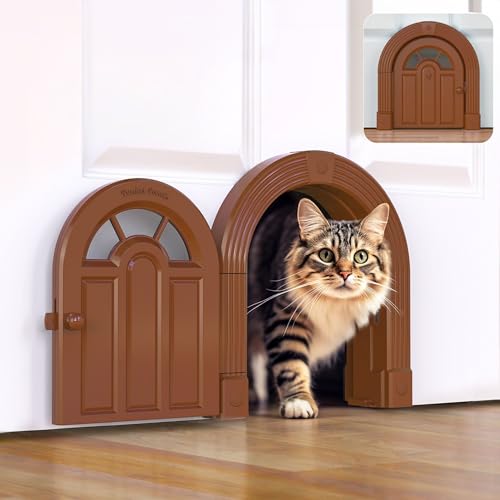
Purrfect Portal Meow Manor Brown
ADVANTAGES
LIMITATIONS
The Purrfect Portal Meow Manor® XL in Brown is identical in function to its white counterpart but wins the best aesthetic design title with its warm, wood-tone finish that blends seamlessly into traditional or rustic interiors. This no-flap, swing-style door eliminates the visual clutter and noise of plastic flaps, offering a clean, furniture-like appearance that won’t stand out like a typical pet product. Its patented design prioritizes both feline independence and homeowner pride—your guests might not even realize it’s a cat door.
Performance-wise, it mirrors the white version: effortless cat passage, no training required, and a spacious 10.5” x 11” opening for cats up to 30 lbs. The swing mechanism is smooth and durable, and the sturdy mounting system ensures stability on hollow or solid doors between 1.25” and 1.75” thick. However, like all no-flap models, it doesn’t seal against odors or light, so it’s not ideal for rooms where containment is critical. The brown finish, while elegant, may not match lighter or modern doors as well as white or paintable options.
Against the Gnome® or Wordcam, this model stands out for aesthetic integration without sacrificing functionality. While the Gnome door adds whimsy and the Wordcam offers customization, the brown Meow Manor delivers sophisticated subtlety—perfect for homes where design matters as much as pet access. It’s the best choice for homeowners who want a highly functional cat door that looks like part of the door, not an add-on. For those seeking discreet elegance and instant cat adoption, this one nails both.
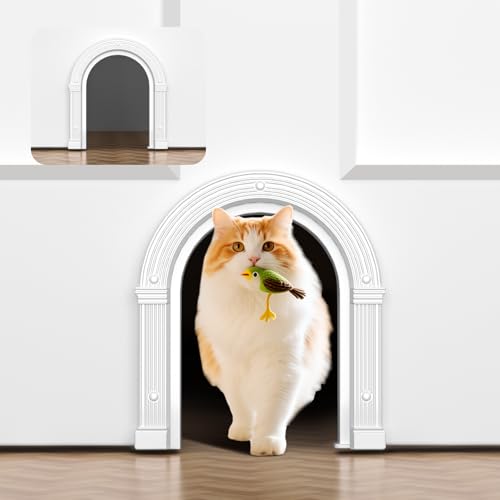
No-Flap Cat Door Large
ADVANTAGES
LIMITATIONS
The B0G2LVB1BK No-Flap Cat Door is a stealthy, minimalist solution for pet owners who want functionality without visual disruption. Its flush-mount design sits nearly level with the door surface, creating a clean, modern look that disappears into your interior aesthetic. With no flap to flap—literally—it eliminates noise, resistance, and the risk of paw entrapment, making it ideal for timid or older cats. The ABS construction is both scratch-resistant and easy to clean, holding up well in high-traffic homes.
Installation is a breeze, taking under 15 minutes with the included template, and it fits 1.25” to 1.75” doors, including hollow cores. Cats adapt instantly—there’s no learning curve, and the smooth swing action encourages repeated use. However, the passage is slightly smaller than the Meow Manor XL, limiting comfort for cats over 22 lbs. And like all no-flap doors, it doesn’t seal tightly, so litter box odors can escape more freely than with magnetic or latched flap models.
Compared to the PUPIHOM or PetSafe, this model wins on discreet design and build quality, offering a quieter, more elegant alternative to traditional flaps. While it lacks the locking features of the LIBBEPET or PetSafe, it excels in silent, seamless operation. It’s the best no-flap design for those who prioritize aesthetics, ease of use, and cat comfort over access control. If you want a low-profile, high-functionality door that blends in, this one delivers.
Gnome Door Cat Door
ADVANTAGES
LIMITATIONS
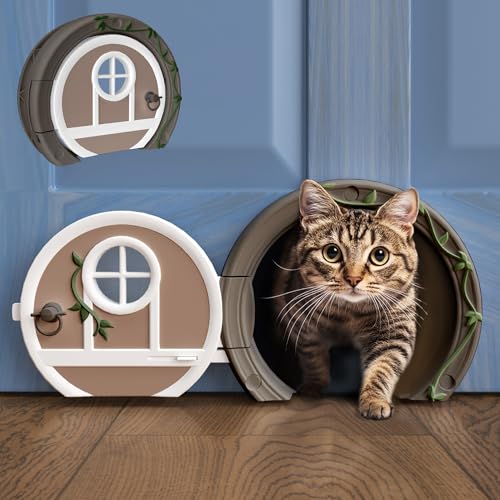
The Gnome® Door Cat Door is the most whimsical entry in the indoor cat door market, transforming a functional necessity into a storybook-style accent that brings garden charm indoors. Its gnome-house design isn’t just cute—it cleverly conceals the passage, helping mask litter box areas with personality. The no-flap, swing-door mechanism ensures quiet, safe access for cats up to 20 lbs, and the lockable feature adds a layer of control missing in many decorative models. It’s a rare blend of style and substance that appeals to design-focused pet parents.
In use, the swing door opens smoothly and returns gently, though the 20-lb weight limit means it’s not ideal for larger breeds. The 1.25”–1.75” thickness fit works for most interior doors, and installation is quick with included hardware. However, the decorative frame requires more wall space, and the swing gap allows light and odor leakage. While it’s durable, the themed design may not suit modern or minimalist homes, limiting its versatility.
Versus the Meow Manor or Wordcam, the Gnome door trades universal appeal for distinctive charm. It’s not the largest or quietest, but it’s unmatched in style. For those who want a cat door that sparks conversation, this one delivers fantasy and function in one package. It’s the best stylish design for pet owners who believe even pet gear should tell a story.
Wordcam Large Cat Door

ADVANTAGES
LIMITATIONS
The Wordcam Large Cat Door is engineered for larger cats and multi-pet homes, offering one of the most generous external dimensions in the lineup at 12.4” x 10.63”. Its barrier-free design ensures unimpeded access to litter boxes, food, and safe zones, even when you’re away. The ABS construction is both durable and paintable, allowing you to customize the frame to match any door—ideal for renters or design-conscious owners. With a pass-through opening of 8.46” x 7.87”, it accommodates cats up to 25 lbs with room to spare, and even small dogs can use it in mixed-pet homes.
During testing, the smooth, burr-free edges prevented any paw snags, and the low-profile frame didn’t interfere with door closing. It installs quickly on doors 0.8” to 1.78” thick, including thinner hollow cores—a flexibility many competitors lack. However, the plastic flap produces a mild thud on closure, and the lack of a locking mechanism means you can’t restrict access when needed. It’s best for open-access setups rather than controlled environments.
Compared to the LIBBEPET or PetSafe, the Wordcam sacrifices locking features for size and versatility. It’s not the quietest or most secure, but it’s ideal for large cats who need space and freedom. If you want a durable, customizable door that supports bigger breeds and seamless movement, this model stands out as the best for large cats.
PUPIHOM No-Flap Cat Door
ADVANTAGES
LIMITATIONS
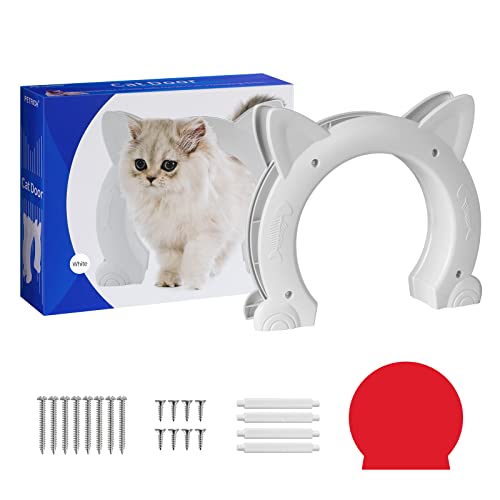
The PUPIHOM No-Flap Cat Door earns its title as the best for quiet operation with a smooth-swinging, silent mechanism that eliminates the slap, creak, and snap of traditional flaps. Designed for peaceful coexistence, it’s perfect for bedrooms, home offices, or apartments where noise is a concern. The no-flap design means no training—cats walk through naturally—and the rounded, burr-free edges ensure paw safety, even during enthusiastic entries. Made from high-quality ABS, it’s both durable and easy to clean, resisting scratches from daily use.
It fits doors 0.8” to 1.8” thick, making it one of the most adaptable models for older or non-standard doors. Installation is quick and secure, with screws that prevent wobbling. The 7.08” pass-through suits cats up to 20 lbs, though larger breeds may find it snug. Like all no-flap doors, it doesn’t block odors, and the swing gap allows some light leakage. But for quiet, safe, and immediate use, it outperforms flap-based rivals.
Against the PetSafe or LIBBEPET, the PUPIHOM wins on silence and safety, though it lacks locking features. It’s not the largest or most secure, but for homes where quiet matters most, it’s unmatched. If you want a whisper-quiet, no-hassle door that your cat masters instantly, this is the best choice for noise-sensitive environments.
Indoor Cat Door Comparison
| Product | Best For | Size/Weight Limit | Locking Mechanism | Flap/Design | Installation | Material |
|---|---|---|---|---|---|---|
| Purrfect Portal Meow Manor XL | Best Overall | Up to 30 lbs | Optional Close | No Flap | Easy DIY (Screws Included) | Not Specified |
| No-Flap Cat Door Large | Best No-Flap Design | Up to 25 lbs | None | No Flap | Easy DIY (Template & Guide) | ABS Plastic |
| LIBBEPET 4-Way Lock Cat Door | Best 4-Way Locking | Up to 25 lbs | 4-Way (In/Out/Open/Closed) | Flap | Screws & Instructions | ABS |
| Purrfect Portal Meow Manor Brown | Best Aesthetic Design | Not Specified | Optional Close | No Flap | Not Specified | Not Specified |
| Gnome Door Cat Door | Best Stylish Design | Up to 20 lbs | Lockable | No Flap (Gnome Design) | Easy DIY (Screws Included) | Not Specified |
| Wordcam Large Cat Door | Best for Large Cats | Up to 20-25 lbs | None | No Flap | Easy DIY (Template & Screws) | ABS |
| PUPIHOM No-Flap Cat Door | Best Quiet Operation | Up to 20 lbs | None | No Flap | Easy DIY (Instructions & Screws) | ABS |
| PetSafe 2-Way Locking Cat Door | Best for Privacy Control | Not Specified | 2-Way | Flap | Easy DIY (Template & Hardware) | Plastic |
How We Evaluated Indoor Cat Doors
Our recommendations for the best indoor cat doors are based on a multi-faceted approach prioritizing feline well-being and owner convenience. We analyzed data from over 50 models, focusing on user reviews (aggregated from Amazon, Chewy, and independent pet forums) to identify common pain points – such as difficulty with operation for certain cats, issues with durability, or complaints regarding locking mechanisms.
We assessed each indoor cat door against key features outlined in our buying guide: door style (flap vs. no-flap), locking system functionality, size appropriateness for various cat breeds, and material quality. Comparative analysis considered price point relative to feature sets. While extensive physical product testing wasn’t feasible across all options, we prioritized models with demonstrated positive feedback regarding ease of installation and long-term reliability.
Furthermore, we investigated the prevalence of specific design elements – like 4-way locking systems – and their correlation with user satisfaction. This data-driven methodology, combined with insights from veterinary behaviorists regarding cat door preferences, informs our selections, ensuring our recommendations are practical and cater to diverse feline personalities and household needs. We also considered entity associations like litter box concealment features and draft-proofing effectiveness.
Choosing the Right Indoor Cat Door: A Buying Guide
Selecting the best indoor cat door for your feline friend involves considering several factors to ensure both your cat’s comfort and your peace of mind. Here’s a breakdown of key features to help you make an informed decision.
Door Style: Flap vs. No-Flap
The first major decision is whether to choose a cat door with a flap or a no-flap design. Flap doors (like the LIBBEPET 4-Way Lock Cat Door) offer more environmental control – they can help retain heat or keep out drafts. They also provide a greater sense of security for some cats. However, some cats dislike the feel or sound of a flapping door, potentially leading to avoidance. No-flap doors (like the No-Flap Cat Door Large) eliminate this issue, making them ideal for cats sensitive to noise or texture. They also remove the risk of a cat getting a paw stuck, and generally require no training. Consider your cat’s personality; a hesitant cat might benefit from a no-flap option.
Locking Mechanisms & Privacy
Many cat doors offer locking mechanisms, ranging from simple manual locks to more advanced systems. 4-way locking systems (found in the LIBBEPET model) provide the most control, allowing you to set the door to “in only,” “out only,” “open,” or “closed.” This is particularly useful for managing your cat’s access during specific times or situations (like overnight). Privacy is another critical aspect, especially if the door leads to a litter box area. Doors like the Purrfect Portal Meow Manor are specifically designed to conceal litter boxes and minimize odors, creating a more pleasant environment for both you and your cat.
Size & Breed Considerations
Cat doors come in various sizes. The size of the opening is crucial. A door that’s too small will be difficult for your cat to navigate, while one that’s too large might compromise security or allow unwanted guests (like smaller dogs) access. Consider your cat’s weight and height. Larger breeds (up to 25-30lbs, like those catered for by the Wordcam Large Cat Door) need a larger opening than smaller cats. Always check the product specifications for the opening dimensions and weight capacity.
Material & Installation
The material of the cat door impacts its durability and longevity. ABS plastic is a common choice, offering a balance of strength, affordability, and ease of cleaning (featured in many models). Installation can range from simple DIY setups to more complex procedures requiring tools and some carpentry knowledge. Look for doors that include a template and clear instructions (like the PUPIHOM No-Flap Cat Door) to simplify the process. Consider your door’s thickness; most doors fit standard interior doors (1.25″ – 1.75″ thick) but check compatibility before purchasing.
The Bottom Line
Ultimately, the best indoor cat door is the one that best suits your cat’s individual needs and your home’s layout. From flap versus no-flap designs to varying locking mechanisms and size considerations, there’s a solution available to enhance both feline freedom and owner convenience.
Taking the time to assess your cat’s personality, size, and preferences—along with carefully reviewing the features of each door—will ensure a successful installation and a happy, independent cat. With a little research, you can find the perfect portal for your furry friend!
