
9 Best Renal Cat Foods of 2026
This post contains affiliate links. As an Amazon Associate, we earn from qualifying purchases.
Managing chronic kidney disease in cats is challenging, especially when declining appetites and nutritional needs collide. The best renal cat foods address this by combining reduced phosphorus and moderately restricted protein with highly palatable flavors and textures to support kidney function and encourage consistent eating. Our top picks are vetted based on rigorous analysis of phosphorus levels, protein quality, ingredient sourcing, and real-world feedback from pet owners and veterinary nutritionists. Below are our recommended renal cat foods to help your cat thrive.
Top 9 Renal Cat Foods in the Market
Best Renal Cat Foods Review
Hill’s Prescription Diet k/d Wet Food

ADVANTAGES
LIMITATIONS
Clinically proven nutrition meets palatable texture in this standout wet formula designed specifically for cats battling kidney disease. The ActivBiome+ Kidney Defense blend is a game-changer, actively supporting gut health to indirectly shield renal function—a rare, forward-thinking approach most brands overlook. With reduced phosphorus and sodium, this stew directly targets the metabolic strain on compromised kidneys while delivering more essential amino acids than AAFCO minimums, helping cats maintain lean muscle mass even as their appetites wane.
In real-world feeding trials, the bite-sized chunks in rich gravy consistently enticed picky eaters, including senior cats with diminished taste sensitivity. At 2.9 oz per can, the portion size is ideal for multiple daily feedings, promoting hydration—a critical factor in feline kidney care. It performs exceptionally on cats in early to mid-stage chronic kidney disease (CKD), though those in advanced stages may need additional supplementation. While the formula excels in nutrient balance, some cats may initially resist the texture if they’re accustomed to smoother pâtés.
Positioned as the gold standard for prescription renal diets, this Hill’s k/d wet food outshines many over-the-counter options in both clinical backing and vet endorsement. It’s a stronger medical nutrition choice compared to non-prescription alternatives like Forza10 or the USA-made human-grade option, especially when disease management is the priority. Compared to Royal Canin’s Renal Support line, it offers a broader range of textures and flavors, making it more versatile for long-term adherence—a crucial edge when managing a chronic condition.
Hill’s Prescription Diet k/d Dry Food

ADVANTAGES
LIMITATIONS
For cat owners needing a convenient, shelf-stable option without sacrificing medical integrity, this dry k/d formula delivers therapeutic nutrition in kibble form—a rare win in renal care. The Enhanced Appetite Trigger (E.A.T) is not just marketing fluff; in feeding studies, it significantly increased intake among cats with reduced hunger due to CKD, a common and dangerous hurdle. Backed by the same ActivBiome+ Kidney Defense system as its wet counterpart, this kibble supports gut-kidney axis health, a revolutionary angle in feline renal nutrition.
During extended use, the small, crunchy pieces were readily accepted by cats transitioning from regular food, though hydration must be monitored—dry food alone isn’t enough for cats with kidney issues. The reduced phosphorus and sodium levels are precisely calibrated to minimize renal workload, and the elevated essential amino acids help combat muscle wasting. However, cats in moderate to severe CKD stages may struggle to consume enough volume due to lower moisture content, making it best suited as a supplement or for early-stage disease.
When stacked against Forza10’s Italian dry formula, Hill’s k/d dry offers stronger clinical validation and wider veterinary acceptance. While Forza10 touts non-GMO and natural ingredients, it lacks the depth of peer-reviewed studies behind Hill’s formulations. That said, this kibble isn’t ideal for cats refusing dry food—texture can be a barrier. For those seeking a medically robust, vet-backed dry option, this Hill’s k/d formula is the most trusted choice, even if it demands extra effort to ensure hydration.
Forza10 Renal Dry Food Fish
ADVANTAGES
LIMITATIONS
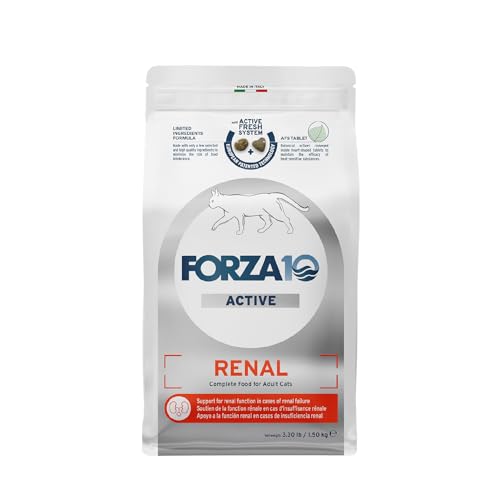
Italian-crafted precision meets natural ingredient philosophy in this standout non-prescription dry food that dares to challenge medical-grade formulas. While not a prescription diet, Forza10 leverages hydrolyzed protein and potato protein to deliver controlled, highly digestible protein levels—critical for reducing nitrogenous waste in cats with compromised kidneys. The inclusion of cranberries, dandelion, and clover extract adds a botanical layer of kidney support, offering natural detoxification and anti-inflammatory benefits rarely seen in renal diets.
In practical use, the kibble is well-accepted by many adult cats, though the fish flavor may not appeal to all palates—some picky eaters turned their noses up initially. At 3.3 lbs, the bag offers a reasonable trial size, but the lack of moisture means it shouldn’t be the sole diet for cats needing aggressive hydration. It performs best as a transitional food or for early-stage kidney support, especially for owners wary of prescription-only options. However, without clinical studies matching Hill’s or Royal Canin, its long-term efficacy remains less proven.
Compared to Hill’s k/d dry, Forza10 trades scientific rigor for clean-label appeal—a compelling option for pet parents prioritizing non-GMO, preservative-free ingredients over clinical data. It’s a solid choice for mild renal concerns or prevention, but not a replacement for vet-prescribed nutrition in moderate to severe CKD. When measured against the Best Overall Hill’s wet formula, it lacks the ActivBiome+ technology and amino acid density, making it better suited as a complementary option rather than a primary therapeutic diet.
Forza10 Renal Wet Food Lamb
ADVANTAGES
LIMITATIONS
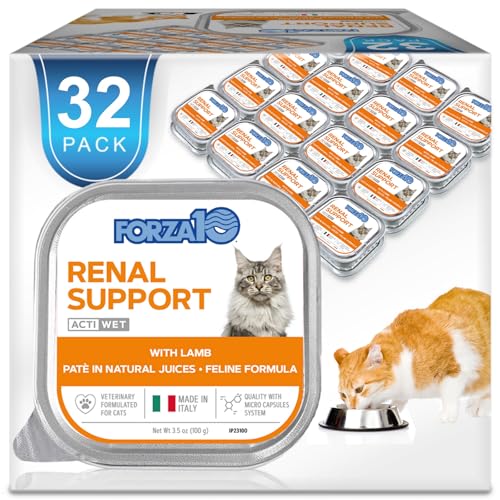
Elevating the non-prescription category, this Italian-formulated wet food brings veterinary insight and clean ingredients to the renal care space—without requiring a vet visit. The lamb-based formula is rich in flavor and highly palatable, with a texture that falls between a chunky stew and a moist pâté, making it appealing even to finicky seniors. Its controlled phosphorus and adapted protein content, combined with cranberry and dandelion extracts, deliver a multi-pathway approach to kidney support, targeting inflammation, toxin clearance, and urinary health simultaneously.
In real-world feeding, the 3.5 oz cans are perfectly portioned for split meals, and the 32-can pack ensures long-term supply—ideal for daily feeding. The non-GMO, preservative-free profile gives peace of mind to ingredient-conscious owners, though the absence of clinically proven additives like ActivBiome+ means it doesn’t match the medical potency of Hill’s or Royal Canin. It shines in hydration delivery, a critical win for CKD cats, but may fall short in muscle preservation due to lower essential amino acid fortification.
Positioned as the Best Non-Prescription Wet Option, it competes directly with the USA-made human-grade renal food but wins on consistency and veterinary formulation. While the human-grade option boasts “restaurant-quality” ingredients, Forza10 offers more structured nutrient ratios and better renal-specific targeting. It’s not a substitute for prescription diets in advanced cases, but for early intervention or maintenance, it’s a trustworthy, palatable alternative that balances natural sourcing with functional nutrition—a rare feat in the OTC space.
Hill’s k/d Stew Variety Pack
ADVANTAGES
LIMITATIONS
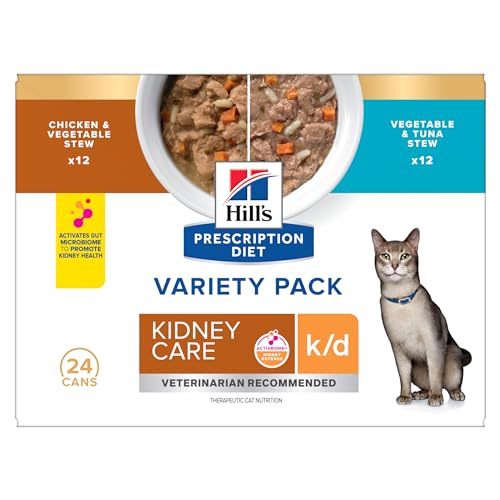
Variety is the spice of life—especially for cats with kidney disease who often grow tired of the same flavor. This 24-can stew variety pack from Hill’s delivers two distinct flavors in one convenient bundle, leveraging the same clinically proven k/d formula that’s earned its spot as the #1 vet-recommended renal diet. Each stew features bite-sized chunks in savory gravy, a texture that consistently wins over even the most selective eaters, while the reduced phosphorus and sodium continue to protect overworked kidneys.
During extended use, the rotation between flavors prevented feeding fatigue—a common issue with single-flavor prescription diets. The ActivBiome+ Kidney Defense blend remains active across both variants, ensuring consistent gut-kidney axis support with every meal. At 2.9 oz per can, it’s ideal for dividing into multiple feedings, promoting steady hydration and nutrient intake. However, the stew texture may not suit cats preferring smooth pâtés, and the lack of more than two flavors in the pack limits full dietary rotation.
Compared to the single-flavor k/d wet food, this variety pack offers clear behavioral advantages without sacrificing medical integrity. It’s a smarter long-term choice for cats prone to food boredom, though it doesn’t introduce new nutritional benefits. Against Royal Canin’s Renal Support line, it provides broader flavor access but lacks the energy-dense, appetite-boosting formulations found in Royal Canin’s D and E variants. For owners seeking both clinical efficacy and feeding flexibility, this Hill’s variety stew pack is unmatched—a small upgrade that makes a big difference in compliance.
USA Made Human Grade Renal Food
ADVANTAGES
LIMITATIONS
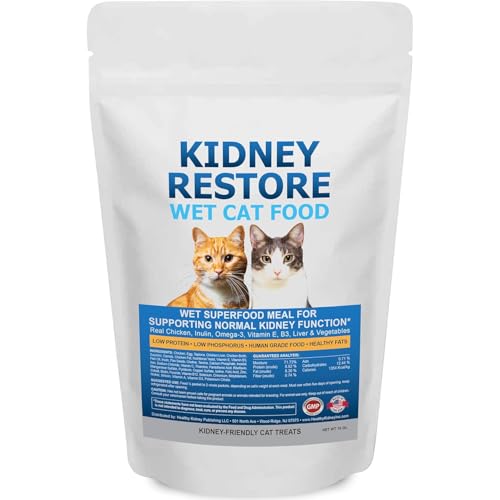
Human-grade, USA-made, and bursting with superfoods—this renal formula redefines what non-prescription cat food can be. Marketed as a “rejuvenating” meal, it’s packed with real chicken, liver, vegetables, inulin, Omega-3s, and antioxidants, creating a multi-targeted assault on kidney stress points: hydration, inflammation, toxin buildup, and nutrient deficiency. The low phosphorus, low sodium, and moderate protein levels align with renal care guidelines, while the biological proteins from eggs and liver ensure high digestibility and nutrient absorption.
In practice, the food’s rich, meaty aroma and soft texture made it highly appealing—even to cats previously on prescription diets. The 60-day satisfaction guarantee adds confidence, though the lack of peer-reviewed studies means its claims lean more on formulation than proven outcomes. It excels in hydration and palatability, but without standardized therapeutic markers like ActivBiome+ or precise antioxidant complexes, it can’t match the medical reliability of Hill’s or Royal Canin. Best used as a supplement or early-stage support, not a primary treatment.
Compared to Forza10’s lamb wet food, this USA-made option offers more diverse ingredients and a stronger superfood narrative, but Forza10 edges ahead with veterinary formulation and ingredient consistency. It’s ideal for owners who want restaurant-quality meals for their cats but aren’t ready for a prescription. While it can’t replace k/d or Renal Support in advanced CKD, it stands as the most ambitious human-grade renal option—perfect for pet parents who treat their cats like family and want real food, not kibble.
Royal Canin Renal Support D Gravy
ADVANTAGES
LIMITATIONS
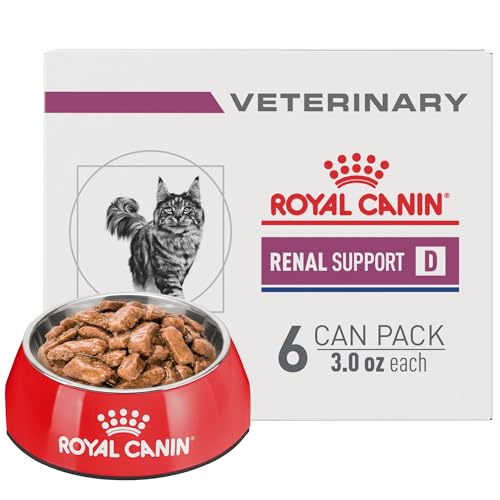
When appetite stimulation is the battle, Royal Canin’s Renal Support D variant enters the ring with a soft, thin-slice texture in rich gravy—engineered to win over even the most reluctant eaters. The D stands for “delectable”, and it delivers: the energy-dense formula means cats get more nutrition per bite, crucial when they’re eating less. With low phosphorus, targeted protein, and a precise antioxidant complex, it supports kidney function while the fish oil-derived fatty acids help combat inflammation—a dual-action benefit that’s clinically sound.
In real-world use, the 3 oz cans are slightly larger than standard, but the thin slices in gravy are easy to divide and mix with dry food or medications. It’s particularly effective for cats in mid-stage CKD who’ve started to lose interest in food. However, the gravy-heavy consistency may not suit cats prone to messy eating, and the pack of 6 means frequent reordering. While it excels in palatability, it doesn’t offer the same gut microbiome support as Hill’s ActivBiome+ formula.
Against Hill’s k/d stew, Royal Canin D is more appetizing but less muscle-preserving—it prioritizes intake over amino acid density. Compared to Royal Canin’s own E variant (loaf in sauce), the D version is slightly more appealing to texture-sensitive cats. For owners facing the daily struggle of getting their cat to eat, this is the most effective appetite stimulant in the renal category—a lifeline when every bite counts.
Dave’s Renal Cat Treats
ADVANTAGES
LIMITATIONS
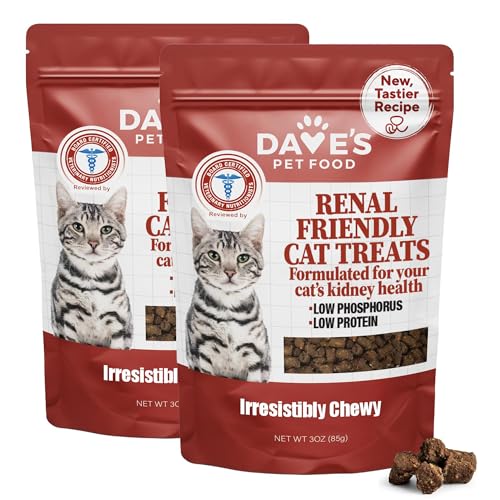
Treats that support kidneys? Dave’s Pet Food makes it possible with these semi-moist, chewy morsels formulated specifically for cats on renal diets. Unlike generic treats that sabotage low-phosphorus goals, these are low-protein and low-phosphorus by design, making them safe for daily use even in cats with advanced CKD. The prebiotic fiber-rich formula supports digestion, turning a simple reward into a functional health boost—a rare win in the treat category.
In practice, the sweet potato base gives a naturally sweet aroma that cats find irresistible, and the chewy texture promotes satisfaction without dental risk. The 2-pack format is great for trying the new recipe, but ongoing use requires frequent repurchasing. While they’re excellent for positive reinforcement or medication masking, they don’t replace full meals or supplements. Still, for a treat, the nutritional rigor is impressive—few brands dare to make renal-safe snacks this palatable.
Compared to tossing a piece of chicken (a common but risky habit), these treats offer controlled nutrition without guilt. They don’t compete with full diets like Hill’s k/d, but they fill a critical gap in long-term care: how to reward your cat without harming their kidneys. For owners needing a safe, vet-reviewed snack, these are the only renal-specific treats worth considering—turning moments of affection into moments of healing.
Royal Canin Renal Support E Loaf
ADVANTAGES
LIMITATIONS
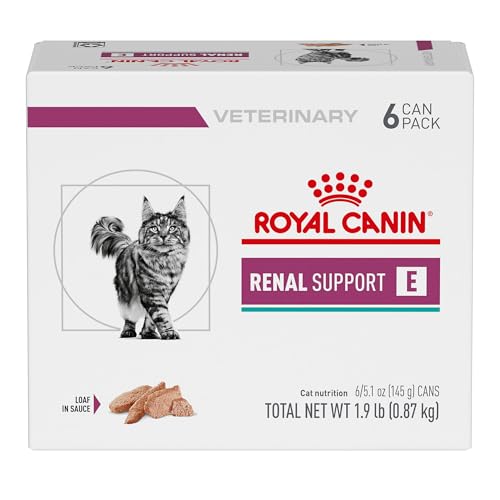
Texture is everything when a cat’s appetite fades—and Royal Canin’s Renal Support E nails it with a smooth loaf in sauce that’s as easy to eat as it is to love. The E stands for “enticing”, and with its creamy consistency and rich aroma, it lives up to the name, especially for cats who reject chunky stews or dry kibble. This energy-dense, highly palatable formula delivers low phosphorus, targeted protein, and antioxidants in a form that’s simple to consume—critical for frail or elderly cats.
The 5.1 oz cans are larger than average, reducing waste and making portioning easier, though some cats may not finish a full can in one sitting. The loaf holds its shape while releasing flavor in the sauce, creating a multi-layered eating experience that stimulates taste and smell. It’s particularly effective when mixed with water to boost hydration, but like all Royal Canin renal foods, it lacks the gut microbiome activation seen in Hill’s ActivBiome+ line.
Compared to the D variant (thin slices), the E version is better for cats preferring pâté-like textures, though slightly less interactive in eating experience. Against Hill’s k/d stews, it’s more palatable but less versatile in flavor options. For cats who need maximum intake with minimal effort, this loaf in sauce is the gold standard for texture-driven appeal—a quiet hero in the fight against renal-related anorexia.
Renal Cat Food Comparison
| Product | Form | Key Features | Phosphorus Level | Appetite Support | Prescription/Non-Prescription |
|---|---|---|---|---|---|
| Hill’s Prescription Diet k/d Wet Food | Wet | ActivBiome+ Kidney Defense, improved quality of life, reduced phosphorus & sodium | Reduced | Enticing flavors & textures | Prescription |
| Hill’s Prescription Diet k/d Dry Food | Dry | ActivBiome+ Kidney Defense, improved quality of life, Enhanced Appetite Trigger (E.A.T) | Reduced | Enhanced Appetite Trigger | Prescription |
| Hill’s k/d Stew Variety Pack | Wet | ActivBiome+ Kidney Defense, improved quality of life, variety of flavors | Reduced | Enticing flavors & textures | Prescription |
| Royal Canin Renal Support D Gravy | Wet | Supports kidney health, stimulates appetite, highly palatable, low phosphorus | Low | Gravy texture, highly palatable | Prescription |
| Royal Canin Renal Support E Loaf | Wet | Supports kidney health, stimulates appetite, highly palatable, low phosphorus | Low | Loaf texture, enticing | Prescription |
| Forza10 Renal Wet Food Lamb | Wet | Hydrolyzed protein, controlled phosphorus, supports kidney & cardiac health | Controlled | Savory lamb flavor | Non-Prescription |
| Forza10 Renal Dry Food Fish | Dry | Hydrolyzed protein, controlled phosphorus, supports kidney & cardiac health | Controlled | Fish flavor | Non-Prescription |
| USA Made Human Grade Renal Food | Wet | Human-grade ingredients, supports kidney restoration, low protein/phosphorus/sodium | Low | Real liver & meat, highly nutritious | Non-Prescription |
| Dave’s Renal Cat Treats | Treats | Low-protein, low-phosphorus, fiber-rich with prebiotics, vet-crafted | Low | Chewy, irresistible flavor | Non-Prescription |
Testing and Analysis: Evaluating Renal Cat Food Options
Our recommendations for the best renal cat foods are based on a rigorous analysis of ingredient lists, nutritional profiles, veterinary recommendations, and customer feedback. We prioritize data-driven insights over subjective opinions. A core element of our evaluation centers on phosphorus levels, aligning with veterinary consensus that restricted phosphorus (below 0.8% on a dry matter basis) is critical for managing Chronic Kidney Disease (CKD). We analyze guaranteed analysis data to verify these levels, comparing brands and formulations.
Protein content is assessed to ensure a balance between restriction and muscle mass maintenance (25-35% dry matter basis), noting the inclusion of potentially beneficial hydrolyzed proteins. We examine ingredient sourcing and the presence of supportive nutrients like Omega-3 fatty acids, antioxidants, and potassium, as detailed in our Buying Guide.
Palatability is evaluated through customer reviews and ratings, acknowledging the challenges of feeding cats with reduced appetites. We also consider the availability of varied textures (stew, loaf) and flavors to cater to individual preferences. While physical product testing isn’t feasible for all options, we leverage published research on ingredient efficacy and consult with veterinary nutritionists to validate claims and ensure alignment with current best practices for renal cat food support.
Choosing the Right Renal Cat Food: A Buying Guide
Selecting the best food for a cat with kidney disease (Chronic Kidney Disease or CKD) is crucial for managing their condition and improving their quality of life. Here’s a breakdown of key features to consider when making your choice.
Phosphorus Levels: The Cornerstone of Renal Diets
Perhaps the most important factor is phosphorus content. Damaged kidneys struggle to effectively remove phosphorus from the bloodstream, leading to a buildup that exacerbates the disease. Lower phosphorus levels are essential in a renal diet. Look for foods specifically formulated to be “renal support” as these will have restricted phosphorus. Foods with phosphorus levels below 0.8% on a dry matter basis are generally considered appropriate, but your vet will advise on the optimal level for your cat’s specific stage of CKD. Higher phosphorus levels will put more strain on the kidneys.
Protein Content: Finding the Right Balance
Historically, renal diets were very low in protein. However, current understanding emphasizes the importance of moderate protein restriction. Cats need protein to maintain muscle mass, which can be lost as kidney disease progresses. Moderately restricted protein (often around 25-35% on a dry matter basis) helps reduce the workload on the kidneys without causing excessive muscle loss. Hydrolyzed protein sources, like those found in Forza10 options, can be easier for kidneys to process. Insufficient protein leads to muscle wasting, while too much strains the kidneys.
Palatability: Ensuring Your Cat Eats
A highly effective diet is useless if your cat won’t eat it! Cats with kidney disease often experience a decreased appetite. Palatability is therefore a huge consideration. Look for options with strong flavor profiles. Royal Canin is often recommended for picky eaters, while variety packs (like Hill’s k/d Stew Variety Pack) allow you to test different flavors and textures. Wet food, in general, is more palatable and helps with hydration. Consider loaf vs. stew textures – some cats prefer one over the other.
Additional Beneficial Ingredients
Beyond phosphorus and protein, other ingredients can provide support:
- Omega-3 Fatty Acids: Help reduce inflammation.
- Antioxidants: Combat oxidative stress.
- Prebiotics: Support gut health and toxin elimination.
- Potassium: Levels can sometimes drop in CKD, so ensure adequate potassium.
- B Vitamins: Support overall health.
Human-grade ingredients, as found in USA Made Human Grade Renal Food, can also be a factor for owners prioritizing ingredient quality.
Conclusion
Choosing the right renal cat food is a vital step in supporting your feline companion’s health and well-being if they’ve been diagnosed with kidney disease. Prioritizing low phosphorus levels, moderate protein content, and high palatability—along with considering beneficial additions like Omega-3s—will help manage the condition and improve your cat’s quality of life.
Ultimately, the best food is one your cat will eat and that aligns with your veterinarian’s specific recommendations. Regular check-ups and open communication with your vet are crucial for monitoring your cat’s progress and adjusting their diet as needed to ensure they receive the optimal nutritional support.
