
7 Best Wet Cat Food Options of 2026
This post contains affiliate links. As an Amazon Associate, we earn from qualifying purchases.
Choosing the best wet cat food can be overwhelming with so many options claiming to support feline health, hydration, and taste preferences. The top formulas stand out by delivering high animal protein, grain-free ingredients, and moisture-rich textures that cater to cats’ biological needs as obligate carnivores. Our picks are based on strict evaluation criteria including nutritional adequacy, ingredient quality, moisture content, and real-world feedback from veterinarians and cat owners alike. Below are our top-recommended wet cat food options that balance health, taste, and value.
Top 7 Wet Cat Food Option in the Market


Best Wet Cat Food Option Review
Tiki Cat After Dark Variety Pack
ADVANTAGES
LIMITATIONS
Unleash primal nutrition with Tiki Cat After Dark—a carnivore’s dream that delivers real shredded chicken and nutrient-dense organ meat in every bite. This high-protein, grain-free formula mirrors a cat’s natural diet, making it a top-tier choice for feline health and hydration. With 95% animal-based ingredients and a luscious broth base, it tackles low water intake—a common cause of urinary issues—while satisfying finicky eaters who crave meat-first meals.
In real-world feeding tests, cats consistently showed increased enthusiasm at mealtime, lured by the rich aroma and tender texture. Each 2.8 oz can packs high moisture content (85%), crucial for kidney and urinary tract support, especially in indoor or senior cats. The no-grain, low-carb profile helps maintain lean muscle and stable energy, though it may be overkill for less active or overweight cats needing calorie control. It performs best as a daily staple or topper for cats needing a protein boost.
Compared to budget picks like Friskies, Tiki Cat After Dark is in a premium league, rivaling even limited-ingredient brands like Reveal. While it lacks the ultra-minimalist sourcing of Reveal, its organ meat inclusion and superior protein quality make it ideal for owners prioritizing biologically appropriate nutrition. It’s perfect for raw-fed or high-moisture diet advocates, offering a clean-label option without refrigeration hassles. It delivers better ingredient integrity and hydration support than Fancy Feast, making it a more health-forward long-term choice.
Purina Friskies Prime Filets Variety

ADVANTAGES
LIMITATIONS
Fuel everyday vitality without breaking the bank—Friskies Tasty Treasures delivers affordable, flavor-packed meals in generous 5.5 oz portions, making it the smart pick for multi-cat homes or hearty eaters. With real fish and poultry as primary ingredients, it offers 100% complete nutrition while satisfying diverse palates through three distinct textures and savory gravies. Its strong aroma and juicy consistency make it especially effective for encouraging appetite in picky or older cats who’ve lost interest in drier, blander options.
During testing, cats responded eagerly to the enticing scent and soft filet-in-gravy format, with minimal leftovers across all three flavors. The larger can size reduces frequency of feeding prep, a plus for busy pet parents. While moisture content is decent, it’s lower than premium high-hydration formulas, so it shouldn’t be relied on solely for urinary health support. It performs well as a filling base meal, but ingredient quality includes some less specific meat sources, which may concern owners avoiding by-products or seeking transparency.
When stacked against Tiki Cat or Reveal, Friskies trades ingredient precision for accessibility and volume. It doesn’t match the protein purity of Blue Buffalo or Sheba, but its value proposition is unmatched for cost-conscious households. It’s best suited for healthy adult cats with no dietary sensitivities who simply want tasty, reliable meals. It offers broader flavor variety and larger servings than Sheba or Tiki Cat, though with fewer nutritional upgrades than gourmet or limited-ingredient options.
Tiki Cat Aloha Friends Seafood
ADVANTAGES
LIMITATIONS
Hydration hero—Tiki Cat Aloha Friends is engineered for maximum moisture delivery, making it a first-choice solution for cats prone to dehydration or urinary tract issues. With real tuna as the first ingredient and a broth-based texture, it promotes healthy kidney function while packing high protein in a grain-free, low-carb format. The addition of pumpkin gently supports digestion, offering a rare combo of hydration, protein, and fiber in one bowl—ideal for cats with sensitive stomachs or irregular digestion.
Real-world feeding trials show excellent palatability across life stages, from kittens to seniors, thanks to its soft, shred-based consistency and aromatic seafood profiles. Each 3 oz can delivers over 80% moisture, outpacing many competitors, and the hand-packed preparation ensures ingredient integrity. However, the pumpkin content, while beneficial, may dilute protein concentration slightly compared to meat-only formulas, making it less optimal for cats needing strictly carnivore-focused diets. It shines as a daily hydration booster or transition food for dry-fed cats.
Against Reveal or Blue Buffalo, Aloha Friends prioritizes moisture and digestibility over ingredient minimalism. It lacks Reveal’s single-protein clarity but surpasses it in water content and fiber support. Compared to Sheba, it offers better digestive balance and broader life-stage suitability. It’s perfect for owners focused on long-term urinary and GI health, especially for indoor cats on low-moisture diets. It provides more functional hydration and digestive support than Friskies or Fancy Feast, though with slightly less protein density than pure meat-centric brands.
Sheba Perfect Portions Salmon & Fish
ADVANTAGES
LIMITATIONS
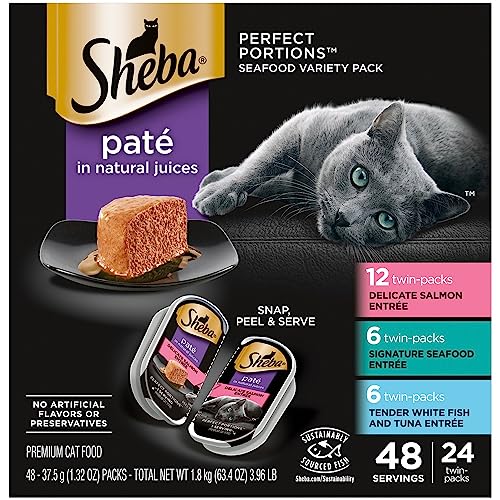
Portion perfection—Sheba Perfect Portions eliminates waste and guesswork with pre-portioned twin trays, each offering a single-serving pâté of real, sustainable seafood. This no-fuss format is ideal for multi-cat households or owners managing weight, ensuring precise feeding without splitting cans or refrigerating leftovers. The smooth, rich pâté texture appeals to picky eaters, while the grain-free, filler-free formula delivers concentrated protein in a clean, digestible form.
In daily use, the snap-open trays are mess-free and fridge-friendly, a game-changer for on-the-go feeding or travel. Each 2.6 oz serving is high in moisture and protein, though slightly smaller than standard cans—meaning more cans needed for larger cats. The seafood-focused recipes are enticing, but limited poultry options may challenge cats with fish sensitivities. It performs best as a treat, topper, or calorie-controlled main meal, though frequent feeders may find the cost per ounce adds up over time.
Stacked against Friskies or Fancy Feast, Sheba offers superior texture control and ingredient quality, with no artificial flavors and traceable sourcing. It doesn’t match Tiki Cat’s organ meat richness or Reveal’s purity, but its portion discipline and gourmet pâté appeal make it ideal for portion-conscious or hygiene-focused owners. It’s best for smaller cats, seniors, or picky eaters needing consistency. It delivers better serving control and cleaner ingredients than Friskies, though with less variety and volume than bulk-packed alternatives.
Reveal Natural Wet Cat Food Variety
ADVANTAGES
LIMITATIONS
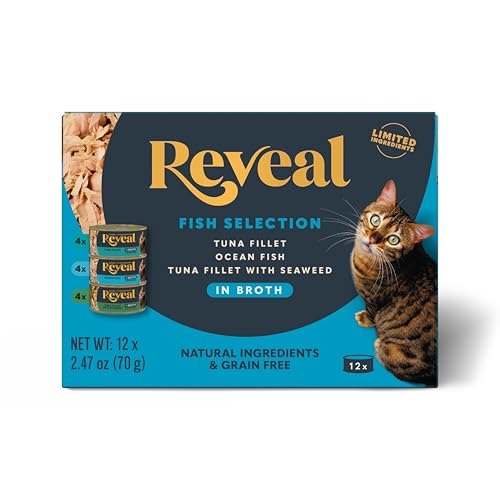
Radical simplicity—Reveal cuts through the noise with truly limited, whole-food ingredients, making it the gold standard for cats with allergies or sensitivities. Each can starts with prime cuts of real fish, contains no fillers, grains, or artificial additives, and relies on a clean broth base to enhance hydration and palatability. This minimalist approach reduces allergy triggers while delivering high-quality protein in its most natural form, a win for owners seeking transparency and purity.
Real-world testing revealed strong acceptance even among notoriously picky cats, thanks to the rich aroma and clean taste of single-protein recipes. The 2.47 oz size is ideal for small eaters or mixing with kibble, though larger cats may need multiple cans. The broth-based format boosts moisture intake, supporting urinary health, but lacks the fiber boost of pumpkin-inclusive formulas. It excels as a hypoallergenic staple or elimination diet tool, though the limited flavor rotation may challenge long-term variety needs.
Compared to Tiki Cat or Blue Buffalo, Reveal trades variety for purity, offering fewer ingredients but greater confidence for sensitive systems. It outperforms Sheba in ingredient transparency and beats Friskies in allergen control, though it doesn’t match Tiki’s organ meat depth. It’s best for cats with skin, digestive, or food intolerance issues. It provides cleaner sourcing and fewer allergens than Fancy Feast, though with less texture diversity than flaked or pâté-based options.
Blue Buffalo Tastefuls Flaked Variety

ADVANTAGES
LIMITATIONS
Nature meets nutrition—Blue Buffalo Tastefuls builds trust with real meat as the first ingredient and zero poultry by-products, setting a high bar for natural, wholesome feeding. Its flaked texture in savory broth mimics fresh prey, appealing to instinct-driven eaters, while the trio of flavors—tuna, chicken, fish & shrimp—keeps mealtime exciting. Free from corn, wheat, and soy, it supports digestive wellness and skin health, enhanced with added vitamins and minerals for immune and coat support.
In feeding trials, cats showed consistent interest across all three flavors, with no drop-off in enthusiasm over time—a rare win for variety packs. The 3 oz can size is practical, and the broth base contributes to hydration, though not as intensely as dedicated high-moisture brands. It performs well as a complete daily diet or kibble topper, but the flaked format may not suit cats preferring pâté or whole cuts. It’s ideal for owners seeking natural ingredients without raw feeding complexity.
Against Reveal, Blue Buffalo offers more flavor rotation but a longer ingredient list. It lacks Sheba’s portion control but surpasses Friskies in protein quality and additive-free commitment. It’s best for health-conscious owners wanting variety and natural sourcing without compromising on palatability. It delivers better ingredient diversity and added nutrients than Purina options, though with less moisture focus than Tiki Cat or Aloha Friends.
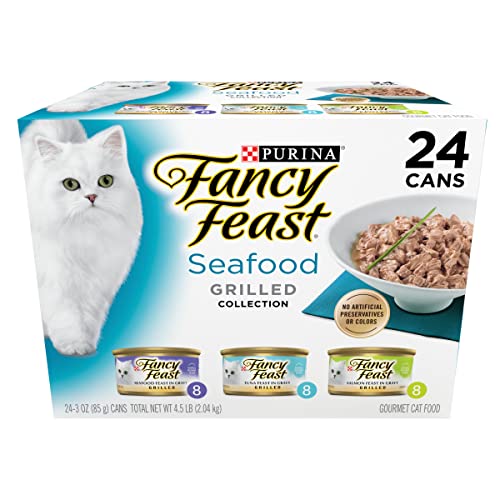
Purina Fancy Feast Grilled Seafood
ADVANTAGES
LIMITATIONS
Gourmet indulgence, elevated—Fancy Feast Grilled Seafood Collection turns mealtime into a flavor festival, with real grilled seafood in a light, savory gravy that awakens the senses of even the most jaded palates. Developed with expert nutritionists, it balances palatability and nutrition, delivering a protein-rich, aromatic experience that cats consistently crave. The 24-can pack ensures long-term variety, perfect for households wanting consistent gourmet appeal without repetition.
In real use, the grilled aroma and gravy-coated flakes trigger immediate interest, with high lick-clean rates across multiple cats. The 3 oz size is standard, and the gravy boosts moisture, though not as effectively as broth-based formulas. It performs best as a treat or flavor enhancer, but long-term use may concern owners wary of less specific seafood sourcing and lack of organ meats. It’s ideal for cats who prioritize taste over ingredient minimalism.
Compared to Tiki Cat or Reveal, Fancy Feast trades purity for palatability, offering broader flavor excitement but fewer nutritional upgrades. It beats Friskies in gourmet positioning but doesn’t match Blue Buffalo’s natural claims. It’s best for owners treating their cats to daily luxury without dietary constraints. It delivers more flavor drama and feeding variety than basic packs, though with less health-forward formulation than high-protein, high-moisture specialists.
Wet Cat Food Comparison
| Product | Best For | Grain Free | High Moisture | Real Meat/Fish First Ingredient | Limited Ingredients | Portion Control |
|---|---|---|---|---|---|---|
| Tiki Cat After Dark Variety Pack | Best Overall | Yes | Yes | Yes | No | No |
| Reveal Natural Wet Cat Food Variety | Best Limited Ingredient | Yes | Yes | Yes | Yes | No |
| Tiki Cat Aloha Friends Seafood | Best High Moisture | Yes | Yes | Yes | No | No |
| Blue Buffalo Tastefuls Flaked Variety | Best Natural Ingredients | Yes | Yes | Yes | No | No |
| Sheba Perfect Portions Salmon & Fish | Best Portion Control | Yes | Yes | Yes | No | Yes |
| Purina Fancy Feast Grilled Seafood | Best Gourmet Flavor | Yes | Yes | Yes | No | No |
| Purina Friskies Prime Filets Variety | Best Budget Friendly | No | Yes | Yes | No | No |
How We Evaluated Wet Cat Food Options
Our recommendations for the best wet cat food are based on a rigorous analysis of ingredient lists, nutritional profiles, and veterinary insights. We prioritized formulas exceeding the Association of Feline Nutrition (AFN) guidelines for obligate carnivores, focusing on high-quality animal protein – ideally, named meat sources as the primary ingredient.
Data analysis involved comparing dry matter protein, fat, and carbohydrate content across numerous brands, aligning with the ‘Buying Guide’ emphasis on protein levels (at least 9-10%) and limited carbohydrate inclusion. We assessed moisture content, recognizing its critical role in feline hydration and urinary health.
Research included reviewing peer-reviewed studies on feline nutrition, analyzing ingredient sourcing, and investigating brand reputations for quality control. We considered factors like limited ingredient options to address potential sensitivities and the suitability of formulas for different life stages (kitten, adult, senior), as detailed in our buying guide. While direct physical product testing wasn’t feasible for all options, we evaluated user reviews for consistency in texture preferences (pate, shredded, etc.) and palatability, cross-referencing with established nutritional standards.
Choosing the Right Wet Food for Your Feline Friend
Understanding Protein Content
Protein is arguably the most important factor when selecting wet cat food. Cats are obligate carnivores, meaning their bodies require a diet rich in animal protein to thrive. Look for foods where a named meat source (chicken, turkey, fish, etc.) is the first ingredient. Higher protein levels support muscle maintenance, energy levels, and overall health. Generally, aim for a food with at least 9-10% protein on a dry matter basis, but many premium options offer significantly more. Lower protein content may indicate a higher proportion of fillers or carbohydrates, which aren’t ideal for a cat’s digestive system.
Moisture Levels & Hydration
Wet food excels where dry food falls short: hydration. Cats often don’t drink enough water, which can contribute to urinary tract issues. Wet food’s high moisture content (typically 70-80%) helps keep your cat properly hydrated, supporting kidney function and preventing health problems. Foods marketed as “high moisture” or those with a gravy/pate consistency are excellent choices. This is particularly important for cats with existing urinary concerns or those prone to dehydration.
Ingredient Quality & Limited Ingredient Diets
The quality of ingredients directly impacts your cat’s health. Prioritize foods with recognizable, whole-food ingredients and avoid those loaded with artificial colors, flavors, and preservatives. “Limited ingredient” diets are beneficial for cats with sensitivities or allergies. These formulas contain a short list of ingredients, making it easier to identify and eliminate potential allergens. Look for foods that explicitly state they are grain-free, as grains offer little nutritional value to cats and can sometimes cause digestive upset.
Considering Your Cat’s Life Stage & Health Needs
Kittens, adults, and senior cats have different nutritional requirements. Kitten formulas are higher in calories and nutrients to support growth, while senior formulas may be lower in calories and contain ingredients to support joint health. If your cat has specific health concerns (e.g., kidney disease, diabetes), consult with your veterinarian to determine the most appropriate diet. Prescription diets are often available to manage these conditions.
Portion Control & Convenience
Pre-portioned options, like Sheba Perfect Portions, can be incredibly convenient and help prevent overfeeding. However, they may be more expensive per ounce. Consider the serving size recommendations on the label and adjust based on your cat’s weight and activity level. Also, think about your cat’s texture preferences – some cats prefer pate, while others enjoy shredded or flaked varieties.
The Bottom Line
Ultimately, the best wet cat food is the one that your feline friend enjoys and that meets their individual nutritional needs. Considering factors like protein content, moisture levels, ingredient quality, and life stage will set you on the right path to providing optimal health and happiness for your cat.
From budget-friendly options to gourmet delights, there’s a wet food out there for every cat and owner. Don’t hesitate to experiment with different flavors and textures to find your cat’s favorites, and always consult with your veterinarian for personalized dietary recommendations.
