
Can Cat Eat Apples
This post contains affiliate links. As an Amazon Associate, we earn from qualifying purchases.
Cats can eat apples in moderation, but it’s crucial to remove all seeds, stems, and leaves, as they contain toxic cyanide. Offer only a small slice or two once or twice a week to prevent digestive issues and watch for any adverse reactions like vomiting or diarrhea. Apples should be a tiny part of your cat’s diet. For those interested in a deeper understanding of feline dietary needs and safe treats, further details will follow.
Essential Facts in 30 Seconds
- Cats can eat apples if seeds, stems, and leaves are removed due to toxicity.
- Offer apples in moderation: one or two small cubes once or twice a week.
- Apples provide some fiber and antioxidants but are not nutritionally significant for cats.
- Too many apples can cause digestive issues like vomiting or diarrhea.
- Consult a veterinarian before adding new foods to your cat’s diet.
Safety of Apples for Cats
Feeding your cat apples can be safe, but you must be careful. Some apple parts are toxic. The seeds, stems, and leaves contain cyanide. This substance is dangerous for cats. Even a few seeds can cause serious health issues like trouble breathing or vomiting. Always remove seeds and discard apple cores since they’ve many seeds.
Too much apple can upset your cat’s stomach. This can lead to vomiting or diarrhea. Cats don’t digest high-fiber fruits well. Keep apple treats small. Limit to one or two small cubes once or twice a week. Wash apples well and cut them into easy-to-eat pieces. Treats should not exceed 10% of a cat’s daily caloric intake, so be mindful of how much apple you are giving. Additionally, apples should not replace a cat’s meat-based diet, as they are obligate carnivores.
Watch your cat after giving them apple. Look for any strange behavior. If anything seems off, contact your veterinarian. Always put your cat’s health first. Consider their safety before their taste for fruit.
Nutritional Benefits of Apples

Apples are a great source of nutrition for your cat. They’ve important antioxidants and fiber that help keep your cat healthy. A medium apple has about 4 grams of fiber. This fiber supports digestion and helps manage weight. Antioxidants in apples fight oxidative stress, which can cause health problems. Additionally, apples are rich in vitamin C, which can help boost your cat’s immune system. Apples also provide vitamins and minerals, like vitamin C and potassium. Adding apples to your cat’s diet can be good, but do it safely and in small amounts. Always remove the seeds and core first. Enjoy apples as a healthy treat!
Antioxidants and Fiber Benefits
Many pet owners don’t know that apples can boost their cat’s health. Apples are full of antioxidants and fiber. These antioxidants help reduce stress in cells. They support your cat’s immune system and fight chronic issues.
The fiber in apples, like pectin, helps with digestion. It keeps bowel movements regular and makes stools normal. Fiber also slows down how fast the stomach empties. This helps your cat absorb nutrients better. Additionally, the soluble fiber in apples can aid in improving overall digestive health.
Including apples in their diet can help manage weight too. It improves overall digestive health. Adding this tasty fruit to your cat’s meals can make a difference in their health.
Vitamins and Mineral Content
Apples can be a healthy addition to your cat’s diet. They provide important vitamins and minerals for overall health. Apples have vitamin C. This vitamin helps the immune system and acts as an antioxidant. It also helps the body absorb iron.
Apples contain B vitamins like thiamin and riboflavin. These vitamins help with energy and red blood cell production. The minerals in apples, especially potassium and magnesium, support muscle function and bone health.
Vitamins A, E, and K are also present in apples. They help keep cells healthy. Carotenoids in apples can improve vision. Organic acids in apples aid digestion.
Always remember to remove the seeds and core before giving apples to your cat. These parts can be toxic. Apples can be a tasty and nutritious treat for your furry friend.
Feeding Guidelines and Precautions
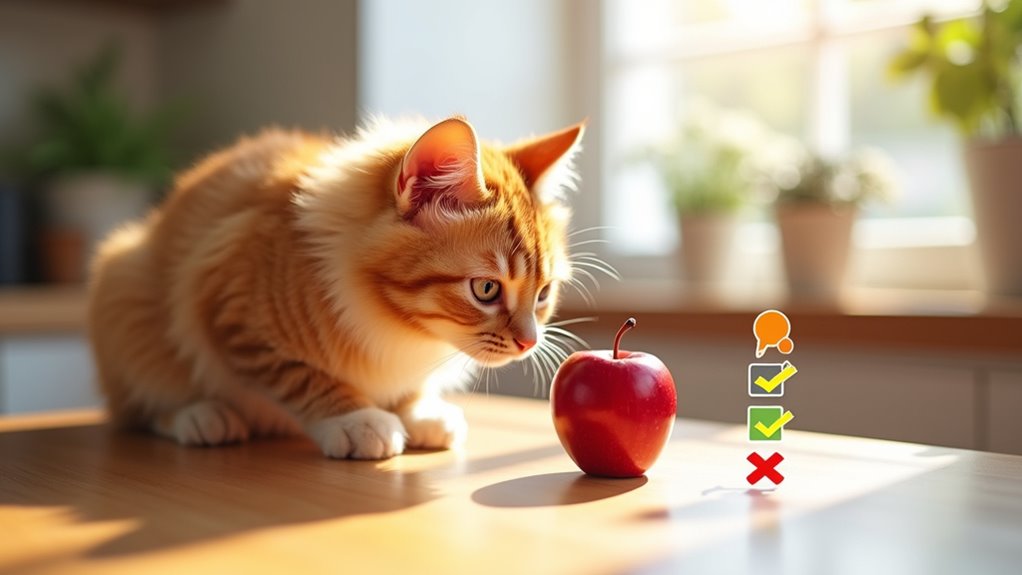
Sharing apples with your cat can be fun, but it’s important to do it safely. Apples should only make up about 3% of your cat’s diet. This means a small slice is enough as a special treat. Apples have high sugar content, so limit how often you give them to avoid stomach problems.
Always remove seeds, stems, and leaves before offering apples. These parts are toxic to cats. After giving your cat apples, watch for any bad reactions.
Cats need protein and fat from animal sources, not from fruits like apples. If your cat shows any signs of upset stomach, stop giving apples right away. Always check with your veterinarian before changing your cat’s diet.
Keep apples as an occasional snack, not a regular food. Your cat’s health is the top priority.
Risks and Contraindications
Apples can be dangerous for your cat. The seeds, stems, and leaves contain cyanide, which is toxic. Even a little bit can harm your pet. Always remove these parts before giving apples to your cat.
Some cats may also have an upset stomach after eating apples. This can cause vomiting or diarrhea. It’s important to remember that cats are obligate carnivores, primarily needing a meat-based diet, so fruits should only be given in moderation.
Watch your cat closely after any apple treat. If you notice any signs of discomfort, contact your vet right away. It’s important to keep your furry friend safe and healthy.
Cyanide Toxicity Risk
Apples may seem safe for your cat, but they can be harmful. The seeds, stems, and leaves contain cyanide, a dangerous chemical. Even small amounts can make your cat very sick.
Symptoms of cyanide poisoning include vomiting, fast breathing, seizures, and trouble walking.
Act quickly if you think your cat ate any part of an apple. Go to the vet right away. Symptoms can show up fast, sometimes in minutes. Cyanide stops oxygen from getting to the body, so getting help is critical.
Keep your cat away from apple seeds, stems, and leaves. Your pet’s safety is the most important thing. Always be cautious with what your cat eats.
Digestive Upset Potential
Many cat owners believe apples are safe treats. Unfortunately, they can upset your cat’s stomach. Apples have high soluble fiber levels, which can irritate sensitive tummies.
Cats can struggle with fiber. Even small bites may cause vomiting or diarrhea. Cats are meant to eat meat, not high-fiber foods. Too many apples can lead to serious issues like stomach pain or dehydration. Additionally, fiber and vitamins from other sources can be beneficial, but should be given in moderation.
Keep apple treats small and occasional. Remove the peel and seeds before giving them. Always talk to your vet before adding new foods, especially if your cat has digestive problems.
Keep your furry friend safe by being careful with treats!
Comparing Apples to Other Fruits
Apples aren’t the best fruit for your cat’s health. They can be enjoyed in small bites, but there are better choices. Here’s a look at how apples compare to other fruits:
- Stomach Issues: Apples have a lot of fiber. This can upset your cat’s stomach. Other fibrous fruits can cause similar problems.
- Toxic Parts: The seeds of apples contain cyanide, which is harmful to cats. Fruits like grapes or raisins are even more dangerous.
- Nutritional Content: Apples don’t give your cat many important nutrients. In contrast, blueberries are richer in antioxidants, which are better for health.
Cats have different tastes. Some may like bananas or watermelon more. Additionally, it’s important to remember that grapes are toxic to cats and should always be avoided.
Always peel fruits and prepare them well. Talk to your vet before adding new treats. This keeps your cat safe and happy.
Understanding Cats’ Dietary Needs
Understanding your cat’s dietary needs is very important for their health. Cats are obligate carnivores. They need a diet high in animal protein. This diet helps them thrive.
Cats require 41 essential nutrients. Taurine and arachidonic acid are two of these. These nutrients mainly come from animal tissues. Cats have short intestines. This makes it hard for them to absorb nutrients from plants. For example, apples offer little benefit.
Limit their carbohydrate intake to under 10% of calories. Too many carbs can cause obesity and digestive problems. Apples don’t have vital nutrients like preformed vitamin A. This vitamin is crucial for their health.
Small amounts of apple flesh aren’t toxic. But they don’t offer any nutrition. They can also cause choking or stomach upset. Occasional treats like fruits should not exceed 10% of daily caloric intake.
Focus on a high-protein, balanced diet for your cat. This diet should meet their unique needs. Always talk to your vet before adding new foods. This keeps your cat healthy and happy.
Frequently Asked Questions
Can Cats Be Allergic to Apples?
Can cats be allergic to apples?
Yes, cats can be allergic to apples.
What symptoms indicate a cat might be allergic to apples?
Symptoms of an apple allergy in cats may include itching or gastrointestinal upset.
How can I tell if my cat is allergic to apples?
Monitor your cat for any adverse reactions, such as itching or vomiting, after introducing apples to their diet.
What should I do if my cat shows signs of an allergy?
If your cat shows signs of an allergy, discontinue feeding apples and consult your veterinarian for advice.
What Types of Apples Are Safest for Cats?
Question: Which type of apples is safest for cats?
Answer: Green apples are the safest for cats due to their lower sugar content.
Question: Why are green apples preferable for cats?
Answer: Green apples have a lower sugar content, which minimizes potential toxicity.
Question: Can cats eat apples regularly?
Answer: Apples should only be given as occasional treats.
Question: What should I do after giving my cat an apple?
Answer: Always monitor your cat’s reaction after introducing any new food, including apples.
How Should I Introduce Apples to My Cat?
Q: How should I start introducing apples to my cat?
A: Begin with small, peeled pieces of apple.
Q: What should I do while my cat is trying apples?
A: Observe your cat’s preferences and reactions closely.
Q: What if my cat doesn’t seem interested in apples?
A: Do not force them to try it; simply let them decide if they want to eat it.
Q: How can I encourage my cat to try apples?
A: Use positive reinforcement, such as praise or treats, when they show interest.
Q: Are there any precautions I should take?
A: Always ensure the apple is peeled and cut into small pieces to avoid choking hazards.
Can Apple Juice Be Given to Cats?
Q: Can I give my cat apple juice?
A: It is not recommended to give your cat apple juice.
Q: What are the risks of giving apple juice to cats?
A: Apple juice contains high amounts of sugar, which can lead to obesity and diabetes in cats.
Q: What should I give my cat for hydration?
A: Fresh water is the best option for keeping your cat hydrated.
Q: Are there any nutritional benefits of apple juice for cats?
A: No, apple juice does not provide any nutritional benefits for cats.
Is Apple Sauce Safe for Cats to Eat?
Is applesauce safe for cats to eat?
Yes, applesauce can be safe for cats in small amounts as an occasional treat.
What are the benefits of feeding applesauce to cats?
Applesauce offers minimal benefits, but homemade, unsweetened varieties can provide some fiber.
Should I monitor my cat after feeding applesauce?
Yes, it is important to monitor your cat for any adverse reactions after feeding applesauce.
Conclusion
Cats can eat apples, but be careful. Apples aren’t toxic, but they can cause problems if not prepared right. Always remove the seeds and core first. These parts can be harmful to your cat.
Cut the apple into small pieces. A quarter of a slice is a good size. This size helps prevent choking. Watch your cat after giving them apple. Look for any strange reactions.
Remember, cats need meat for their main diet. Treat apples as a special treat, not regular food. Keeping your cat healthy and happy is the goal!
