
Can Cat Eat Banana
This post contains affiliate links. As an Amazon Associate, we earn from qualifying purchases.
Yes, your cat can eat bananas, but it’s important to do so with caution. While bananas aren’t toxic to cats, they should only be given in small pieces, no larger than a pinky nail, to prevent choking. Start with a very small piece, about the size of a pea, and consider mashing it if necessary. Keep an eye on your cat for any adverse reactions over the next 24 to 48 hours. It’s also crucial to remember that bananas should not replace regular cat food due to their high sugar content, which could lead to obesity. For those interested in learning how to properly introduce new treats to your cat, further details will follow.
Essential Facts in 30 Seconds
- Bananas are safe for cats and not toxic.
- Serve bananas in small pieces to prevent choking.
- Excessive feeding can lead to obesity and diabetes due to high sugar and carbohydrates.
- Always peel and serve ripe bananas in tiny, bite-sized pieces.
- Monitor for allergic reactions or digestive issues after introducing bananas.
- Consult a veterinarian before giving bananas as a treat, especially for kittens or young cats.
Safety and Toxicity of Bananas for Cats
Bananas are usually safe for cats to eat. They aren’t toxic, but there are some important rules to follow. Only give your cat small pieces of banana. The peel is hard to digest and can cause choking. Additionally, while bananas are non-toxic, they may cause allergic reactions in some cats, so it’s essential to monitor your pet after they consume any. Cats are generally attracted to bananas due to their curiosity and playful instincts.
Remember, cats are meat eaters. Their bodies aren’t made to handle a lot of plant-based foods. This can upset their stomachs. Kittens have very sensitive tummies. It’s best to wait before giving them bananas. Watch for any signs of upset stomach, like vomiting or diarrhea. Allergies to bananas are rare, but they can happen. Stop giving bananas if your cat has a bad reaction. Always talk to your vet if symptoms don’t go away.
Treat bananas as a rare snack. Safer fruits for your cat include peeled apples or berries. These options are usually better for your feline friend.
Nutritional Value of Bananas for Cats
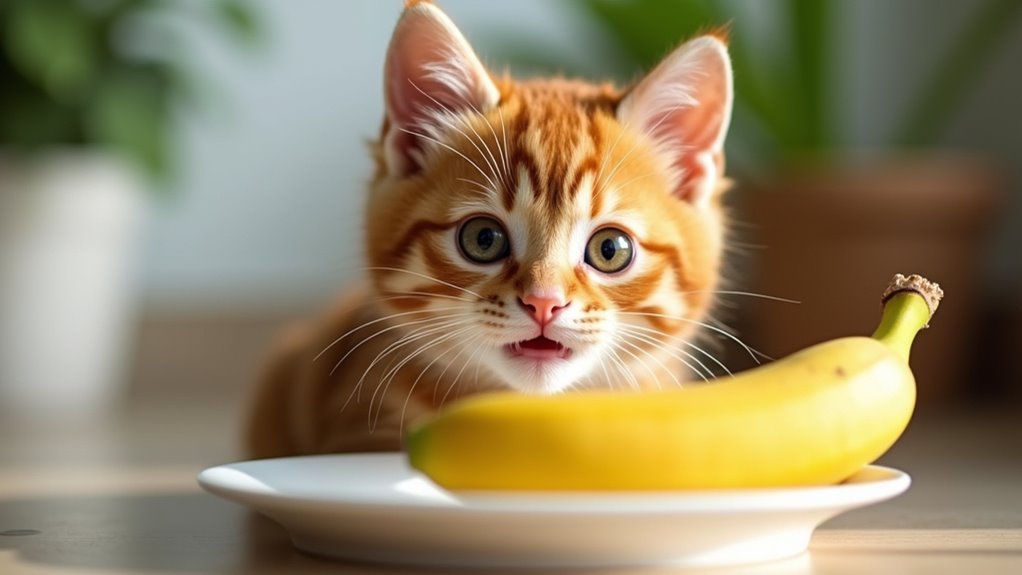
Bananas can be a fun treat for cats, but it’s important to know their nutritional value.
They’re high in vitamin B6, which helps with energy and immune health. Bananas also have vitamin C, but cats can make this vitamin by themselves. Cats need certain vitamins like taurine and vitamin A from meat. Bananas don’t provide these. They contain potassium and magnesium, which are good for muscles and nerves. Additionally, bananas provide some dietary fiber, which can help digestion, but cats don’t need much fiber. However, moderation is key when introducing any fruit into a cat’s diet, including bananas.
Bananas are high in sugar and carbohydrates. Too much can lead to obesity and diabetes. Giving your cat a tiny piece of banana once in a while is okay, but don’t make it a regular snack.
Keep your cat’s diet balanced and healthy.
Potential Health Risks of Feeding Bananas to Cats
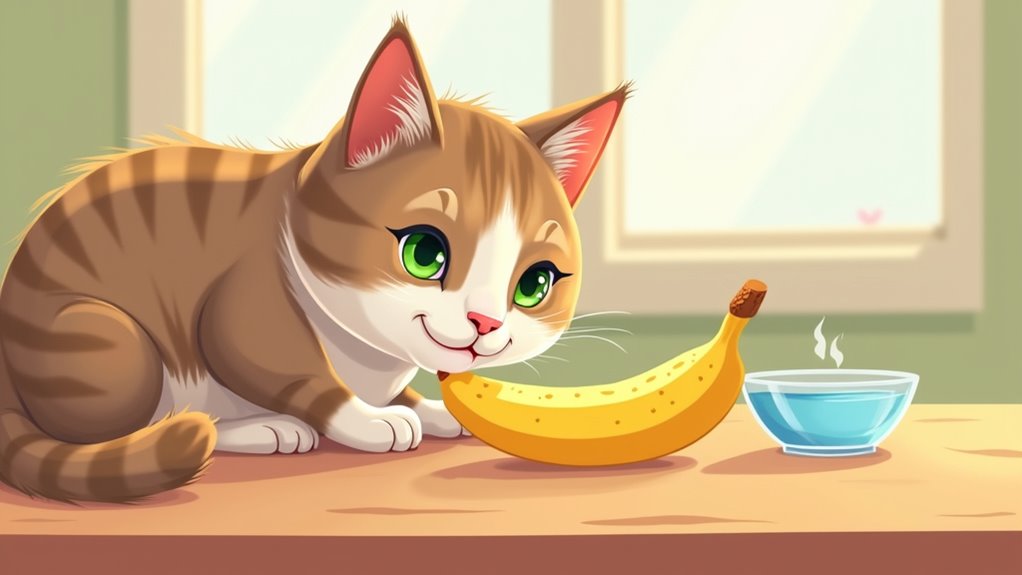
Feeding bananas to cats can pose serious health risks.
Bananas have high sugar and carbohydrate levels. This can lead to obesity and upset stomachs. Your cat might experience diarrhea or vomiting after eating bananas. Additionally, small portions of bananas can be safely consumed, but it’s important to monitor your cat’s reaction.
Watch for signs like tiredness or loss of appetite. If these happen, consult a veterinarian right away.
Always prioritize your cat’s health and safety when considering new foods.
Sugar and Carbohydrate Risks
Feeding your cat bananas might seem harmless, but it can be risky. Bananas have a lot of sugar and carbohydrates. These can cause dangerous sugar spikes. Sugar spikes increase the risk of diabetes and obesity in cats. Cats are obligate carnivores, meaning they need meat to thrive. They do not digest carbohydrates well. Regularly giving them bananas can overload their system. This can stress their metabolism.
| Risk Factor | Impact on Cats | Recommended Action |
|---|---|---|
| Sugar Spikes | Increases diabetes risk | Limit banana treats |
| Carbohydrate Overload | Causes obesity and stress | Avoid high-carb snacks |
| Caloric Density | Contributes to weight gain | Keep treats under 10% of daily calories |
A balanced diet with protein and fat is crucial. If your cat shows unusual symptoms, talk to your vet right away. Their health matters the most.
Digestive Upset Potential
Bananas may seem like a fun snack for your cat, but they can cause big problems. Many cats can’t digest bananas well. This can lead to diarrhea, vomiting, and tummy aches. Even a little banana can upset a sensitive cat’s stomach.
Too much fiber can cause constipation or loose stools. Avoid giving bananas suddenly or in large amounts. This can lead to digestive issues. Watch for signs of discomfort, like gagging or lip curling. If your cat shows these signs, stop giving them bananas right away.
Ongoing digestive problems can lead to serious issues like dehydration or weight loss. Always keep an eye on how your cat reacts to new foods. If your cat has problems after eating banana, talk to your vet.
Guidelines for Feeding Bananas to Cats
Introducing bananas to your cat’s diet needs care. Start with very small pieces. A slice no bigger than your pinky nail is enough. Bananas make a nice treat but should be rare. Their high carbs can cause weight gain and health issues.
Kittens and young cats shouldn’t eat bananas. Their tummies are still growing. Always peel the banana and serve it ripe. Cut it into tiny, bite-sized pieces to prevent choking.
Watch how your cat reacts after the first taste. Some cats may not handle bananas well. Look for signs like vomiting or tiredness. If you see these, contact your vet right away.
Bananas aren’t a substitute for regular cat food. Cat food meets their specific needs. Following these tips will help keep your cat safe and happy while trying new flavors.
Cats’ Interest and Acceptance of Bananas
Cats often seem curious about bananas, but they don’t really enjoy them like we do. Cats don’t have sweet taste receptors. This means they typically don’t like sugary fruits, including bananas.
Still, some cats may sniff or lick a banana out of curiosity. They might be drawn to the soft texture, which feels like prey, or the strange smell.
Reactions to bananas vary among cats. Some will show mild interest, while others will turn away. Most cats won’t eat bananas regularly because they’re carnivores.
If you decide to let your cat try a small piece, watch how they respond. Remember to give only a little. Too much banana can upset their stomach or cause other health issues. Always prioritize your cat’s health and preferences.
Special Considerations and Veterinary Advice
Feeding your cat bananas can be fun, but safety is key. Always talk to your vet first. This is especially important for kittens or cats with health problems.
Start by giving tiny pieces of banana. Watch for any bad reactions. Some cats may have upset stomachs or other issues. Your cat’s health comes first. Keep their well-being a top priority.
Health Conditions Risks
Before giving your cat banana, think about the health risks. Bananas may seem safe, but they can cause problems. Here are some important points to consider:
- Cats have a hard time digesting plant foods. This can lead to upset stomachs.
- Bananas are high in sugar. This can raise blood sugar levels and lead to obesity or diabetes.
- Some cats may be allergic to bananas. Symptoms include itching, swelling, or vomiting.
- Banana peels can choke your cat. Never feed them to your pet.
Always follow feeding guidelines. Give only small amounts and do it occasionally.
Watch your cat for any bad reactions. If you see any signs of distress, call your vet right away. Your cat’s health and safety are the most important! Additionally, remember that not all fruits are suitable for cats, and it’s essential to know which ones are safe before sharing.
Vet Consultation Importance
Consulting a veterinarian is very important before adding bananas to your cat’s diet.
Cats have special nutrition needs. Bananas may not fit well with their diet. Kittens and older cats need extra care. Cats are carnivores, meaning they mainly eat meat. Plant foods can upset their stomachs.
For cats with health issues like diabetes, bananas can make things worse. Watch for allergic reactions, such as itching or swelling. If your cat seems sick after eating bananas, contact your vet right away. Additionally, it’s essential to remember that high-quality commercial cat food should be the primary source of nutrition for your cat.
Regular vet check-ups help keep track of your cat’s health. They ensure that banana treats remain safe and support your cat’s well-being.
Gradual Food Introduction
Introducing bananas to your cat’s diet needs careful steps. Start slow to see how your cat reacts.
Begin with a small piece, about the size of a pea. This helps avoid stomach issues. Use mashed or pureed banana to prevent choking.
Watch your cat for 24 to 48 hours. Look for signs like vomiting or tiredness. If you notice any problems, stop giving banana right away.
Keep banana as an occasional treat. Too much sugar isn’t good for cats. Always remember, some cats have sensitive stomachs. Portion control is key to ensuring your cat’s health and well-being.
Taking it slow will help your furry friend enjoy this new food safely.
Frequently Asked Questions
Can Kittens Eat Bananas Safely?
Can kittens eat bananas?
No, kittens should not eat bananas.
Why can’t kittens eat bananas?
Kittens have developing digestive systems that are not suited for sugary foods like bananas.
What should I feed my kitten?
Focus on high-quality kitten food that meets their nutritional needs.
Are there any fruits that are safe for kittens?
Some fruits can be safe in small amounts, but it’s best to stick to kitten-specific food for their health and growth.
What should I avoid feeding my kitten?
Avoid sugary foods, chocolate, onions, garlic, and any food that is not specifically formulated for kittens.
How Should Bananas Be Prepared for Cats?
Q: How should I prepare bananas for my cat?
A: You can either mash the banana or slice it into small pieces.
Q: How much banana can I give my cat?
A: Offer only a tiny amount occasionally to avoid digestive issues.
Q: Are there any risks when feeding bananas to cats?
A: Yes, feeding too much banana can cause digestive problems. It’s important to monitor your cat’s reaction.
Q: Can all cats eat bananas?
A: Most cats can eat bananas in small amounts, but some may not like the taste or texture.
Q: How often can I give my cat bananas?
A: Bananas should be given as an occasional treat, not a regular part of their diet.
What Other Fruits Are Safe for Cats?
Question: What fruits are safe for cats to eat?
Answer: Cats can safely eat apples, blueberries, pears, and strawberries.
Question: How should I serve fruit to my cat?
Answer: Fruits should be offered in moderation and cut into small pieces.
Question: What is the recommended amount of fruit for cats?
Answer: Treats, including fruit, should not exceed 10% of your cat’s diet.
Question: Are there any precautions to take when giving fruit to cats?
Answer: Always ensure the fruit is fresh and free from seeds or pits, which can be harmful.
Can I Mix Bananas With My Cat’s Food?
Can I mix bananas with my cat’s food?
Yes, you can mix bananas with your cat’s food.
How much banana can I give my cat?
Limit it to small amounts.
Is banana good for my cat?
Cats struggle with banana digestion, so it should not be a significant part of their diet.
What should I prioritize in my cat’s diet?
Focus on a balanced diet that meets your cat’s nutritional needs.
Do Bananas Have Any Health Benefits for Cats?
Q: Are bananas healthy for cats?
A: Bananas offer minimal nutritional value for cats.
Q: Can bananas benefit a cat’s digestion?
A: Yes, the dietary fiber in bananas may provide some digestive benefits.
Q: Are there any risks associated with feeding bananas to cats?
A: Yes, the sugar and calories in bananas can pose risks, so moderation is important.
Q: How should I offer bananas to my cat?
A: If you choose to give bananas, do so in small amounts to avoid health issues.
Q: Should I make bananas a regular part of my cat’s diet?
A: No, bananas should not be a regular part of a cat’s diet due to their low nutritional value and potential risks.
Conclusion
Bananas are not toxic to cats. This fruit can be offered to them in small amounts. A good portion is one-quarter of a banana each week. Always watch for any bad reactions after feeding. Some cats may like bananas, while others might not touch them. It’s important to speak to your vet before adding new foods to your cat’s meals. Keep their main diet balanced. Good nutrition is key for a happy and healthy cat.
