
Can Cat Eat Broccoli
This post contains affiliate links. As an Amazon Associate, we earn from qualifying purchases.
Cats can eat broccoli in moderation, but it’s important to introduce it carefully. Start with a small piece, about the size of your fingernail, and watch for any adverse reactions, such as gas or diarrhea. Steamed or blanched broccoli is more digestible. Limit this to one teaspoon of cooked broccoli once or twice a week to prevent tummy issues. Always consult your vet before adding new foods, especially if your cat has health concerns. Further details will be provided for those interested in a deeper understanding.
Essential Facts in 30 Seconds
- Cats can eat broccoli in small amounts, introduced gradually.
- Steamed or blanched broccoli is easier for cats to digest than raw.
- Broccoli offers vitamins and antioxidants but should not replace a meat-based diet.
- Limit broccoli intake to one teaspoon per day, making up less than 10% of daily calories.
- Consult a veterinarian before adding broccoli to your cat’s diet for tailored advice.
Safety of Broccoli for Cats
Adding broccoli to your cat’s diet can be tricky. Broccoli may upset their stomach, causing gas or diarrhea. Start with tiny pieces. Watch for any bad reactions, such as vomiting.
Steamed or blanched broccoli is easier for cats to digest than raw. Broccoli should be served plain broccoli without seasoning, oils, or sauces to ensure safety. Some cats may be allergic, leading to skin problems or tummy issues. Stop giving broccoli if this happens. Cats with urinary problems or kittens should avoid broccoli. It contains oxalic acid, which can lead to urinary stones. A diet that is rich in protein is crucial for their overall health and wellbeing, so plenty of other veggies can be better for your cat.
Always watch your cat when introducing new food. Talk to your vet to make sure broccoli is safe for your pet. Your cat’s health and safety come first.
Nutritional Benefits of Broccoli for Cats
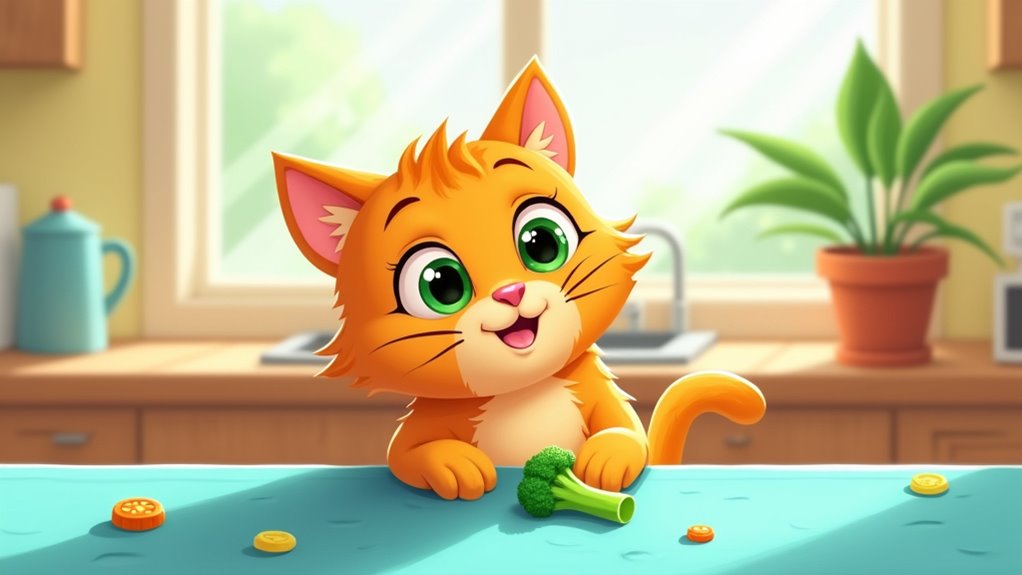
Broccoli is safe for cats and can improve their health. This green veggie is full of vitamins A, C, and K. It also has antioxidants that may help prevent cancer. The fiber in broccoli supports digestive health. It helps with regular bowel movements and lowers the risk of constipation. Additionally, broccoli provides potassium, which supports normal muscle and bodily functions. Adding broccoli to your cat’s meals can be a great choice!
Essential Vitamins for Cats
Here are three important vitamins for cats:
- Vitamin A: This vitamin is key for eyesight, immune health, and skin. Cats must get it from animal sources. They can’t use plant-based carotenoids well, which is why a meat-based diet is essential for their health.
- Vitamin D: This vitamin helps with bone health and muscle function. Cats must get it from their food.
- B-Complex Vitamins: These vitamins support metabolism and help form red blood cells. Cats mainly need them from animal proteins. Animal protein is essential for providing all essential amino acids needed for bodily functions.
A balanced diet is crucial to avoid vitamin deficiencies. While broccoli can be a healthy treat, it won’t provide all the nutrients your cat needs.
Always talk to your vet for the best diet advice.
Antioxidants and Cancer Prevention
Many pet owners don’t know that adding antioxidants to their cat’s diet can boost health and lower cancer risks. Broccoli is a great source of antioxidants. It has vitamins C and E, which protect cells from damage. Studies show these vitamins reduce free radicals. Free radicals are linked to tumors.
Here are some antioxidants and their benefits:
| Antioxidant | Benefit |
|---|---|
| Vitamin C | Protects against cell damage |
| Vitamin E | Supports the immune system |
| Quercetin | Helps reduce inflammation |
| Lutein | Good for eye health |
| Zeaxanthin | Protects cell health |
Feed your cat small amounts of broccoli. One teaspoon a week is enough. This helps provide benefits without upsetting your cat’s stomach. Start adding broccoli now for better long-term health!
Fiber for Digestive Health
Prioritizing your cat’s digestive health is essential. Adding fiber to their diet can make a big difference. Broccoli is a fantastic choice. It has many fiber types that help with digestion.
Here are three important benefits of broccoli:
- Prevents constipation: Broccoli has 2.9 grams of fiber in every 100 grams. This fiber helps your cat have regular bowel movements.
- Improves stool quality: Soluble fiber helps firm up loose stools. This is helpful for cats with diarrhea.
- Encourages satiety: A moderate amount of fiber helps your cat feel full. This can help with weight management.
Introduce broccoli to your cat’s diet slowly. Start with a small amount, about one teaspoon, once or twice a week. This helps avoid any upset stomach.
Always keep your cat’s digestive system in mind.
Digestive Considerations and Risks
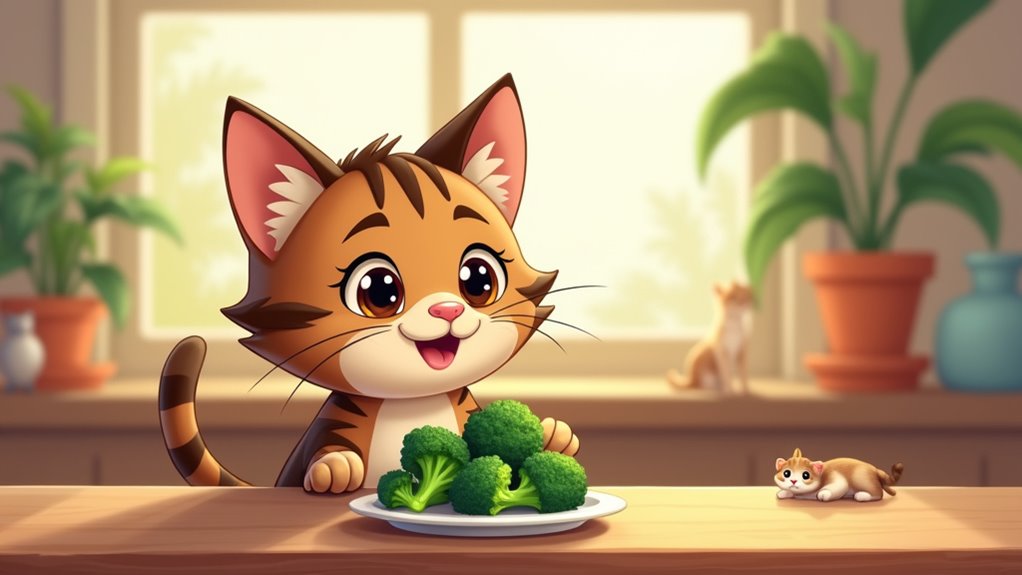
Feeding your cat broccoli can pose digestive challenges. Cats have sensitive stomachs. A small amount, like one teaspoon chopped, may cause gas, bloating, or diarrhea. This is especially true if your cat isn’t used to it.
Always watch your cat after giving broccoli. Some cats might react quickly. Look for signs of discomfort or allergies. If you notice anything unusual, contact your vet. Broccoli isn’t a common cat food. Many cats prefer meat. If you want to try vegetables, start with very small amounts.
Keep in mind that excess fiber from plant foods can lead to digestive issues in cats. Always prioritize what’s best for them.
Digestive Challenges in Cats
Digestive challenges can happen quickly when cats eat broccoli or other fibrous veggies. Cats’ stomachs aren’t made for plant material. Here are three important points to know:
- Limited Digestive Enzymes: Cats don’t make enough enzymes to break down plant fibers. This can lead to indigestion.
- Gastrointestinal Irritation: Broccoli contains compounds that may upset a cat’s stomach. This can cause vomiting or diarrhea, especially if eaten in large amounts.
- Motility Issues: Too much fiber can slow down digestion. This may cause constipation or discomfort.
To keep your cat’s stomach healthy, introduce new foods slowly. Safe vegetables for cats can provide beneficial nutrients without the risks associated with fibrous plants. Small changes can upset their system and lead to serious problems. Always put your cat’s health first.
Monitor for Adverse Reactions
Broccoli might seem like a tasty treat for your cat. Yet, it’s important to watch for any bad reactions.
Check for skin problems like itchy or red spots. Notice any sudden changes in behavior, such as being more tired than usual or grooming a lot after eating broccoli. Pay attention to their bathroom habits. Diarrhea or vomiting can show they’ve a tummy issue.
Also, watch for any trouble breathing, like coughing or wheezing. These signs could mean your cat has an allergy. If your cat struggles to breathe or vomits a lot, call your vet right away.
Catching these issues early helps keep your cat healthy.
Feeding Recommendations and Quantities
To make sure your cat enjoys broccoli safely, start with a very small piece. A fingernail-sized piece works well. This helps their tummy get used to it. Keep portions small to avoid any stomach problems.
Here are some easy guidelines:
- A good serving size is about one teaspoon of chopped broccoli.
- You can give two or three small pieces, about the size of your thumb tip, as treats.
- Always check that broccoli is less than 10% of your cat’s daily calories.
Feed broccoli as a treat, about once or twice a week. This helps keep their diet balanced.
Watch for any signs of upset stomach and change portions if needed. Remember, raw broccoli can be harmful. Always cook it without any seasoning.
Follow these tips to keep your furry friend healthy and happy!
Broccoli’s Role in a Cat’s Diet
Cats are obligate carnivores, meaning they mainly need meat. Still, adding small amounts of broccoli can be good for them. Steaming or boiling broccoli helps make it easier to digest. A teaspoon or two of broccoli offers antioxidants. These can help reduce inflammation and support heart health. Cats may have different tastes. Introduce broccoli slowly to see if they like it. The fiber in broccoli aids digestion and helps with weight management, especially for overweight cats. Additionally, small amounts of vegetables can sometimes be beneficial for cats, but they should never replace their primary meat-based diet. It’s important to remember that broccoli shouldn’t replace their meat diet. It acts as a supplement.
Watch your cat closely after giving them broccoli. If you notice any bad reactions, contact your vet. Safety is crucial, as some cats might react poorly to new foods.
Monitoring and Veterinary Guidance
Introducing broccoli to your cat’s diet can be safe, but always ask your veterinarian first. This helps ensure it fits your cat’s needs. Your vet will guide you on how much to serve.
Keep these points in mind:
- Watch for Reactions: Look for signs like vomiting or diarrhea after giving broccoli.
- Serving Size: Offer only one teaspoon of cooked, chopped broccoli each day to prevent tummy troubles.
- Vet Check-ups: Regular visits to the vet are key, especially for cats with health issues.
Never add seasoning, as some can be harmful.
Frequently Asked Questions
Can Kittens Eat Broccoli Safely?
Can kittens eat broccoli?
Yes, kittens can eat broccoli safely in small amounts.
Is broccoli toxic to kittens?
No, broccoli is non-toxic to kittens.
What are the benefits of broccoli for kittens?
Broccoli provides fiber and antioxidants.
Should broccoli replace protein in a kitten’s diet?
No, broccoli should not replace vital animal-based proteins in their diet.
What Are Signs of Broccoli Intolerance in Cats?
What are common signs of broccoli intolerance in cats?
Common signs include vomiting, diarrhea, gas, persistent scratching, and skin irritation.
What should I do if my cat shows signs of broccoli intolerance?
If your cat shows these signs, stop giving them broccoli and consult your veterinarian for further advice.
Can all cats eat broccoli?
Not all cats can eat broccoli. Some may have intolerances or allergies to it.
How can I tell if my cat is allergic to broccoli?
Look for symptoms such as vomiting, diarrhea, or skin issues after consuming broccoli. If these occur, discontinue feeding it and consult your vet.
Is broccoli safe for all cats?
Broccoli is generally safe for some cats, but individual tolerance can vary. Always monitor your cat for adverse reactions.
Can Broccoli Interact With Cat Medications?
Q: Can broccoli affect my cat’s medication?
A: Yes, broccoli can interact with cat medications and may affect how the medications are absorbed.
Q: Should I give my cat broccoli if they are on medication?
A: It is best to introduce broccoli cautiously and consult your veterinarian before giving it to your cat.
Q: What are the benefits of broccoli for cats?
A: Broccoli contains antioxidants, which can be beneficial for your cat’s health.
Q: How can I ensure my cat’s health and medication efficacy?
A: Always consult your veterinarian before introducing new foods like broccoli into your cat’s diet while they are on medication.
Is Frozen Broccoli Safe for Cats?
Is frozen broccoli safe for cats?
Yes, frozen broccoli can be safe for cats in moderation.
What nutritional benefits does frozen broccoli provide for cats?
Frozen broccoli offers fiber and vitamins that can be beneficial for cat nutrition.
How should frozen broccoli be prepared for cats?
It should be cooked properly and served without harmful additives or seasonings.
Can I give my cat frozen broccoli every day?
No, it should only be given in moderation as part of a balanced diet.
Are there any risks associated with feeding frozen broccoli to cats?
Yes, some cats may have difficulty digesting vegetables, so monitor for any adverse reactions.
Can I Feed My Cat Broccoli Daily?
Can I feed my cat broccoli daily?
No, you should not feed your cat broccoli daily.
What is the best way to introduce broccoli to my cat’s diet?
Introduce broccoli gradually and in small amounts to see how your cat reacts.
Are there any benefits to feeding my cat broccoli?
Yes, broccoli can provide some vitamins and fiber, but it should not replace animal protein in their diet.
How much broccoli can I safely give my cat?
Offer only small pieces of broccoli as an occasional treat, not more than a few times a week.
What should I do if my cat shows signs of digestive upset after eating broccoli?
If your cat shows signs of digestive upset, such as vomiting or diarrhea, discontinue feeding broccoli and consult your veterinarian.
Conclusion
Broccoli is safe for cats to eat in small amounts. Start with about a teaspoon of cooked, chopped broccoli. Always watch your cat after feeding it. Look for signs of stomach upset, like vomiting or diarrhea. If you see anything unusual, call your vet right away. Keeping your cat healthy is very important. A little caution goes a long way. Remember, your furry friend relies on you for care.
