
Can Cat Eat Chicken
This post contains affiliate links. As an Amazon Associate, we earn from qualifying purchases.
Cats can safely eat chicken, as it provides high-quality protein and essential nutrients. It is important to cook the chicken thoroughly to eliminate harmful bacteria, avoid using spices, and remove the skin. Serve it in small pieces to prevent choking, and be cautious with chicken bones, as cooked bones can splinter and cause serious injuries. Keep an eye on your cat’s intake to ensure a balanced diet. For those interested in more details and precautions, further information will follow.
Essential Facts in 30 Seconds
- Cats can safely eat cooked chicken for high-quality protein.
- Raw chicken may carry risks of bacterial infections.
- Avoid seasoning, skin, and bones to prevent stomach issues or choking.
- Introduce chicken slowly to kittens to maintain a balanced diet.
- Consult a veterinarian for tailored dietary advice and safety guidelines.
Nutritional Benefits of Chicken for Cats
Chicken is a great food choice for your cat. It provides high-quality protein, which is important for building muscles and giving your cat energy. Chicken contains many amino acids, especially taurine. Taurine helps keep your cat’s heart healthy and supports good vision.
Here are some benefits of chicken for cats:
- Amino Acids: Chicken has many amino acids. These help with digestion and metabolism. Additionally, chicken is an essential source of protein that supports your cat’s overall health.
- Low Carbohydrate: Chicken has very few carbs. This helps your cat stay at a healthy weight and keeps blood sugar steady.
- Easy to Digest: Chicken is gentle on the stomach. It’s perfect for cats with sensitive tummies.
Adding chicken to your cat’s meals can improve their health and give them a shiny coat. Additionally, chicken breast is a nutritious treat for cats when prepared correctly.
Always make sure to cook the chicken well. A balanced diet is key to your cat’s wellness, and chicken is a valuable part of that.
Risks Associated With Feeding Raw Chicken
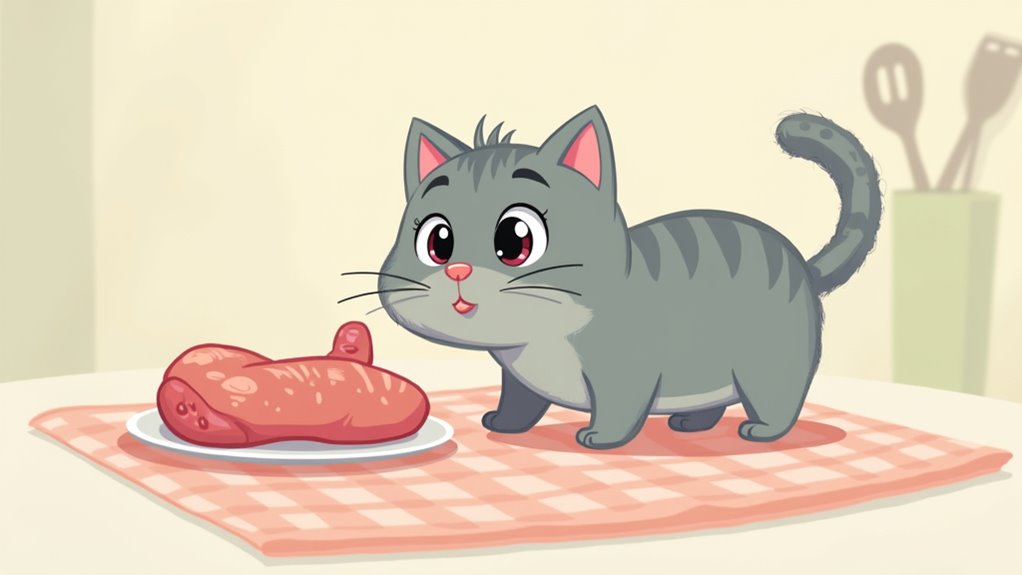
Feeding your cat raw chicken can be risky. It may seem natural, but there are serious health concerns. Raw chicken can carry harmful bacteria like *Salmonella* and *E. coli*. These bacteria can make your cat sick.
Cats can have stomach problems from eating raw chicken. Handling raw chicken spreads bacteria. This can affect you and other pets in your home. Even commercial raw pet foods can contain dangerous bacteria. Studies show that about 25% of these foods test positive for harmful germs. Additionally, strict hygiene practices are essential to minimize the risks associated with raw feeding.
A diet of only raw chicken can lead to nutrition problems. Cats need a balanced diet for good health. Consultation with a veterinarian is essential for ensuring safe dietary choices.
To keep your cat safe, practice good hygiene when handling raw chicken. Always wash your hands and clean surfaces.
Talk to your vet about safer feeding options. Choose foods that provide all the nutrients your cat needs without the risks of raw feeding.
Safety Guidelines for Feeding Cooked Chicken

Keeping your cat safe while feeding cooked chicken is important. Start by cooking the chicken properly. Bake or boil it well to kill harmful bacteria. Additionally, ensure that the chicken is fully cooked to prevent any potential health risks associated with undercooked meat.
Don’t use spices, oils, or any harmful ingredients like garlic or onion. Always remove the skin because it can upset your cat’s stomach.
Cut the chicken into small, bite-sized pieces. This helps prevent choking. Let the cooked chicken cool down before giving it to your cat. This way, it won’t burn their mouth. It’s also a good idea to monitor for any adverse reactions when introducing new foods.
Store any leftover chicken in the fridge right away. Don’t leave chicken out for more than two hours. Use clean utensils to avoid germs.
Serve the chicken at room temperature for comfort. Make fresh batches often to keep your cat healthy. Following these steps keeps your feline friend happy and safe!
Dangers of Chicken Bones for Cats
Cooked chicken can be a delicious treat for cats. But chicken bones are dangerous. Every cat owner should know the risks.
Cooked bones can splinter easily. These sharp fragments can hurt your cat. They can cause choking. Small pieces may get stuck in your cat’s throat. This can block their airways.
Splinters can also damage the stomach or intestines. They can puncture important organs. This leads to serious health problems. Bone injuries can invite harmful bacteria into the body. This raises the chance of infection.
Sometimes, blockages happen. These often need urgent surgery. Quick action is essential to help your cat. Always be cautious with chicken bones because cooked bones become brittle, which increases the likelihood of splintering.
Your cat’s health depends on it.
Considerations for Kittens Eating Chicken
Chicken can be a great food for your kitten. It’s high in protein, which helps them grow strong and healthy. Be careful with how much you feed them. Giving too much chicken can lead to obesity and other health problems. Raw chicken is often preferred over cooked options due to safety concerns.
Key Points:
- Nutritional Balance: Chicken has important amino acids but lacks some nutrients, like calcium. Mix in other protein sources for a complete diet.
- Kitten Preferences: Kittens usually enjoy chicken. Introduce it slowly to their meals. This helps avoid upset stomachs.
- Feeding Guidelines: Figure out how much to feed based on your kitten’s age, size, and activity level. A good rule is about 1-2 ounces per meal. Chicken liver can be a safe treat when given in moderation.
Chicken is tasty and healthy for kittens, but balance is key!
Frequently Asked Questions
Can Cats Eat Chicken Skin?
Cats can eat chicken skin, but only sometimes. Prepare the chicken properly first. Watch your cat’s health and food choices. Too much fat can cause stomach problems. It can also lead to obesity. Always serve chicken skin in small amounts. This way, your cat enjoys a tasty treat without risks. Remember, moderation is key for your cat’s diet. Make sure to provide a balanced meal overall.
Is Chicken Liver Safe for Cats?
Chicken liver is safe for cats, but moderation is key. It provides important nutrients like protein and vitamins. These nutrients can help keep your cat healthy and strong. Limit chicken liver to 5-7% of their diet. Too much can lead to toxicity. Always cook the liver before feeding it to your cat. This makes it easier to digest and safer to eat. Offer it as a treat or mix it with their regular food. Your cat will likely enjoy the taste! Just remember, balance is important for their overall health.
How Often Can I Feed My Cat Chicken?
You can feed your cat chicken two to three times a week. Chicken is a great treat for cats. It gives them protein and helps keep them healthy. Make sure it does not replace their main food. Cats need a balanced diet to stay strong. Always cook the chicken without any spices or sauces. Remove bones to prevent choking. Your cat will love this tasty addition to their meals. Just remember, balance is key!
Can Cats Be Allergic to Chicken?
Cats can be allergic to chicken. This allergy can lead to itching and stomach problems. Common signs include skin irritation and upset stomach. It’s important to watch for these symptoms. A vet can help diagnose the allergy. They can suggest the best food for your cat. Alternative protein sources are available. Many cats do well with fish or turkey. Always consult your vet before making changes to your cat’s diet. Keeping your cat healthy is the goal.
What Are Signs of Chicken Intolerance in Cats?
Signs of chicken intolerance in cats can show up in different ways. Common symptoms include skin itching and inflammation. You might also see vomiting or diarrhea. Digestive issues are another sign to watch for.
Excessive grooming can indicate discomfort. Look for sores on their skin as well. Changes in appetite may also be a red flag. Keep a close eye on your cat’s behavior. Early detection can help you find the right solution.
Conclusion
Chicken can be a tasty and healthy treat for your cat. Many cats love chicken, and it can provide important nutrients. Yet, some cats may have food sensitivities, including to chicken. About 30% of cats can be sensitive to certain foods.
Always cook chicken well before giving it to your cat. Raw chicken can be harmful. Remember to remove any bones, as they can cause choking. Start with small amounts of chicken to see how your cat reacts. Watch for any signs of allergies, like upset stomach or itching.
By following these simple steps, you can safely add chicken to your cat’s diet. Your furry friend can enjoy a delicious treat without any worries. Enjoy feeding time!
