
Can Cat Eat Chocolate
This post contains affiliate links. As an Amazon Associate, we earn from qualifying purchases.
Cats cannot eat chocolate, as it is highly toxic to them. Chocolate contains theobromine, which cats are unable to metabolize. Just 200 mg of theobromine per kilogram of their body weight can lead to serious health issues. Symptoms of chocolate poisoning in cats may include vomiting, diarrhea, increased heart rate, and muscle tremors, typically appearing within 6 to 12 hours after consumption. If your cat does ingest chocolate, it’s crucial to contact a veterinarian immediately, as prompt treatment can be life-saving. To keep your feline friend safe, ensure that chocolate is stored out of their reach. For those interested, further details and explanations will follow in the article.
Essential Facts in 30 Seconds
- Cats should never eat chocolate due to theobromine and caffeine toxicity.
- Even small amounts can be fatal, with severe symptoms appearing within hours.
- Symptoms of chocolate poisoning include vomiting, diarrhea, and increased heart rate.
- Immediate veterinary care is essential if a cat ingests chocolate.
- Store chocolate in cat-proof containers to prevent accidental consumption.
Understanding Chocolate Toxicity in Cats
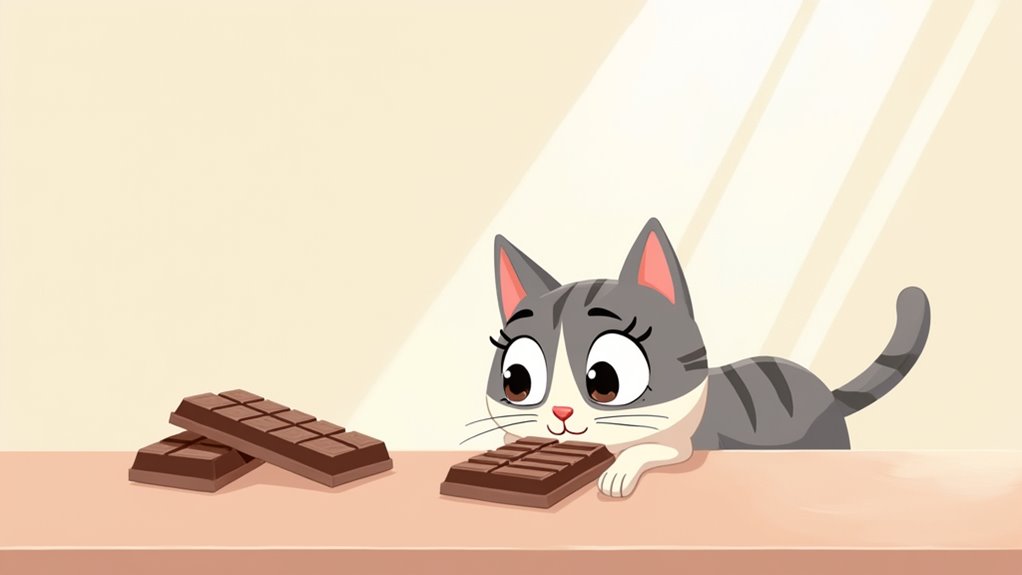
Chocolate is a favorite treat for many people. But it’s very dangerous for cats. Chocolate contains theobromine and caffeine. These ingredients are harmful to cats. Cats can’t break down theobromine well. Even a small amount can be dangerous. The toxic dose is about 200 mg per kilogram of a cat’s weight.
Different types of chocolate have different risks:
- Dark and baking chocolate have the highest theobromine levels. They’re extremely toxic.
- Semisweet and milk chocolate have moderate levels. They’re still hazardous.
- White chocolate has lower theobromine but still contains harmful ingredients.
Theobromine can cause serious health problems. It can lead to heart issues, seizures, and stomach problems.
Keep your cat safe by not letting them have any chocolate. Teach others about these risks too.
Symptoms of Chocolate Poisoning
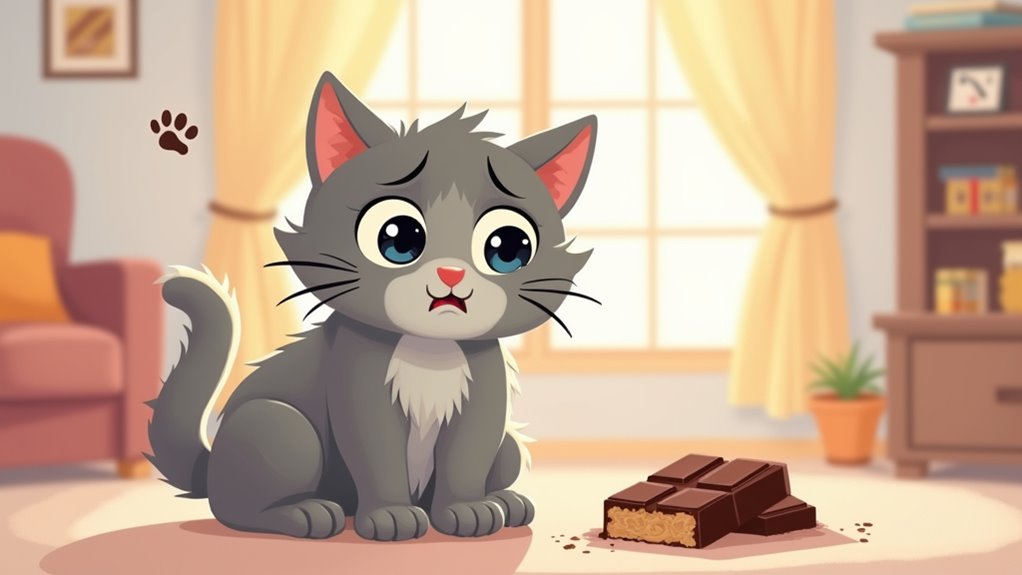
Cats can suffer serious health problems from eating chocolate. Spotting symptoms early is very important. Within one hour, you might see vomiting or diarrhea. Cats often drool too much, lose their appetite, and drink more water.
As the condition worsens, cats may show signs of nervous system issues. Look for muscle tremors, restlessness, or seizures. Increased heart rate can occur due to toxicity as well.
Watch for heart problems as well. A fast heart rate or an irregular heartbeat can mean serious danger.
If you notice any of these symptoms, get to a vet right away. Quick action can make a big difference in your cat’s recovery.
Severity and Risks of Chocolate Ingestion

Cats face serious risks from chocolate. Every cat owner must know these dangers. Chocolate can harm your cat’s health in several ways:
- Central nervous system issues: Cats may become hyperactive or have tremors and seizures.
- Gastrointestinal distress: Vomiting and diarrhea often show up first.
- Cardiovascular problems: An increased heart rate can lead to dangerous rhythms and collapse.
- Potential fatality: Even small amounts of chocolate can be deadly for cats.
Chocolate poisoning can cause mild symptoms or be life-threatening. The toxic ingredients, theobromine and caffeine, build up in a cat’s body. Symptoms may develop within 6 to 12 hours.
Quick action is crucial. Watch your cat closely if you think it ate chocolate. Early signs can get worse fast.
Keep chocolate away from your cat. This simple step helps ensure a safer and happier pet.
Emergency Response and Treatment Options
Chocolate can be deadly for cats. Quick action is vital. Call a vet immediately. Share details like the type of chocolate, how much your cat ate, when it happened, and your cat’s weight.
Don’t try home remedies unless a vet says it’s okay.
Emergency Steps:
- Induce Vomiting: A vet may make your cat vomit if it happened within 1-2 hours.
- Activated Charcoal: This helps stop more toxins from being absorbed.
- IV Fluids: Fluids keep your cat hydrated and help the kidneys.
- Medications: Your cat might need medicine for nausea or diarrhea.
Transportation Tips:
- Keep your cat calm and still during the trip.
- Keep them away from other pets to reduce stress.
Act fast to keep your cat safe.
Preventing Accidental Chocolate Consumption
Preventing accidental chocolate consumption is crucial for your cat’s safety. Use these simple tips to keep chocolate away from your feline friend:
- Store chocolate in cat-proof containers on high shelves.
- Choose sealed containers that cats can’t open.
- Install childproof locks on cabinets with chocolate.
- Never leave chocolate on countertops or tables.
Talk to everyone in your home about the dangers of chocolate. Make sure guests and kids know not to give chocolate to your cat.
During holidays, be extra careful. Keep chocolate gifts out of reach and secure trash cans with tight lids.
Offer safe treats made for cats instead. Following these steps will help protect your cat from chocolate’s harmful effects.
Frequently Asked Questions
What Types of Chocolate Are Most Toxic to Cats?
Dark chocolate, baking chocolate, and semisweet chocolate are very harmful to cats. These types contain high levels of theobromine, which is toxic to them. Even white chocolate is risky. It has less theobromine but still has sugar and fat that can hurt your cat. Always keep all chocolate away from your feline friend. It’s better to be safe. Cats should never eat chocolate. Make sure to check all ingredients in food and treats. Your cat’s safety is important!
Can Cats Have Chocolate-Flavored Treats Safely?
Chocolate-flavored treats are not safe for cats. Even if they look tasty, chocolate can be toxic to them. It can cause serious health problems. Always choose treats made specifically for cats. These treats are safe and healthy. Keep your furry friend happy by giving them food made just for them.
Are There Any Safe Alternatives to Chocolate for Cats?
Safe alternatives to chocolate exist for cats. Carob is a great option. It has a sweet taste but is safe for your pet. Lean meats make tasty treats too. Freeze-dried snacks are also a hit. Always give these treats in moderation. Your cat will enjoy these yummy choices without any risks. Keep your furry friend happy and safe!
How Can I Tell if My Cat Is Curious About Chocolate?
You may see your cat act differently around chocolate. Look for signs like sniffing, pawing at chocolate packages, or staring at you while you eat. These behaviors show that your cat is curious about chocolate. Chocolate can be harmful to cats, so it’s important to keep it out of their reach. Always prioritize their safety and avoid giving them any chocolate treats.
What Should I Do if My Cat Licks Chocolate?
Your cat licked chocolate. This can be dangerous. Contact a veterinarian right away. Watch for signs of chocolate poisoning. Look for drooling or restlessness. Quick action is key. Chocolate can cause serious health problems for cats. Don’t wait to get help. Your pet’s safety is the most important thing.
Conclusion
Chocolate is not safe for cats. Even a small piece can be harmful. Chocolate contains theobromine, which is toxic to cats. It can cause serious health problems. Signs of trouble may not show right away. If your cat eats chocolate, act quickly. Take your cat to the vet without delay.
Prevention is important. Keep chocolate out of your cat’s reach. Store it in a safe place. Remember, a healthy cat is a happy cat!
