
Can Cat Eat Cooked Eggs
This post contains affiliate links. As an Amazon Associate, we earn from qualifying purchases.
Cats can safely eat cooked eggs, which provide essential protein, vitamins, and amino acids. It’s important to cook the eggs thoroughly to at least 160°F to eliminate harmful bacteria. For a 10-pound cat, limit their egg intake to 1-2 teaspoons once or twice a week, serving in small pieces. Always monitor your cat for any signs of allergies or digestive issues. For those interested in more details and guidelines, further explanation will follow in the article.
Essential Facts in 30 Seconds
- Cats can eat cooked eggs in moderation for protein and nutrients.
- Cook eggs thoroughly to 160°F to kill harmful bacteria like salmonella.
- Serve small portions (1-2 teaspoons) for a 10-pound cat, once or twice a week.
- Avoid raw eggs and excess yolks due to high cholesterol; egg whites are safer in small amounts.
- Watch for allergic reactions or digestive issues and consult a vet for dietary advice.
Nutritional Benefits of Cooked Eggs for Cats
Cooked eggs make a great food choice for your cat. They’re rich in protein, providing about 12.6 grams per 100 grams. This protein is essential for your cat’s health. Cats need it because they’re obligate carnivores.
You can prepare eggs by boiling or scrambling. Both methods keep the nutrients intact. Cooked eggs should always be served to your cat without salt or spices to ensure their health. Moderation is key when feeding eggs to your cat to prevent any potential weight gain.
Each large cooked egg has around 155 calories. This makes eggs a good energy source for your pet. Eggs also contain vital vitamins like A, D, and E. These vitamins help your cat’s skin, bones, and immune system.
Eggs have important amino acids too. One key amino acid is taurine. Taurine supports heart health and vision in cats.
Cooked eggs are easy for cats to digest. Prepare them without salt or spices.
Use eggs as a special treat. Too many can lead to weight gain. Balance is important for your cat’s diet. Always ensure your cat eats safe and healthy foods.
Safety and Risks of Feeding Cooked Eggs to Cats
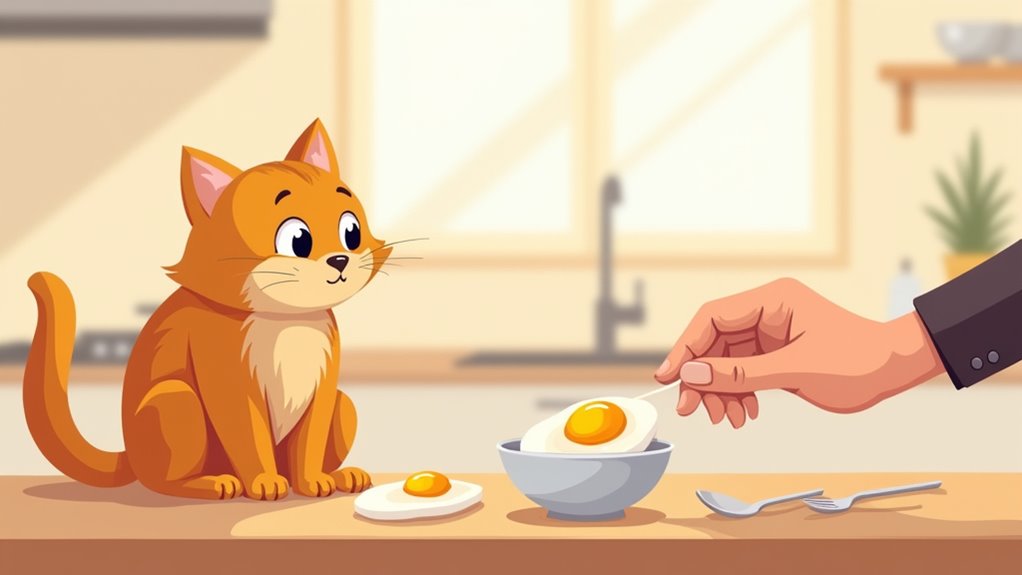
Feeding cooked eggs to your cat has important safety concerns. Always cook eggs well. The internal temperature should be 160°F. This kills harmful bacteria like Salmonella and E. coli. These bacteria can make both cats and humans sick.
Limit how many eggs you give your cat. Too many can cause vomiting and diarrhea. Keep eggs to no more than 10% of your cat’s daily calories. Egg whites provide protein without fat, making them a better option for supplementation. Additionally, eggs are an excellent source of protein and essential amino acids vital for muscle development.
Watch for signs of food allergies. Look for scratching or upset stomach, especially when you first feed them eggs.
Remember, eggs can’t replace a balanced diet. They aren’t nutritionally complete. If your cat has severe symptoms after eating eggs, see a vet right away. This helps avoid toxic reactions or nutritional problems.
Always prioritize your cat’s health and safety.
Appropriate Serving Practices for Cooked Eggs

To keep your cat safe while enjoying cooked eggs, follow these serving practices. Serve only small amounts. For a 10-pound cat, 1 to 2 teaspoons of cooked egg is best. Treat eggs as a snack, not a meal. Limit feeding to once or twice a week. Eggs are an excellent source of high-quality protein, which is crucial for your cat’s muscle maintenance and energy. Additionally, scrambled eggs can be a tasty and nutritious treat for your cat when prepared properly.
| Serving Component | Recommendation |
|---|---|
| Egg Whites | Serve in small portions |
| Egg Yolks | Use very sparingly |
| Feeding Frequency | 1-2 times per week |
| Portion Size | 1-2 teaspoons |
Always cook eggs well. Boil, scramble, or poach them without any oil. Cut them into small pieces to prevent choking. Watch for any bad reactions after your cat tries eggs. Store cooked eggs in the fridge and serve them fresh. This way, your cat stays healthy while enjoying a tasty treat!
Health Benefits Supporting Specific Feline Functions
Feeding your cat cooked eggs offers many health benefits.
Eggs support important functions like vision and heart health. They contain taurine, which is vital for good eyesight and a strong heart.
Eggs also provide nutrients that boost your cat’s immune system. This helps them fight infections better.
Adding eggs to their diet keeps your feline friend active and playful. It’s a tasty treat that adds great value to their nutrition! Additionally, cooked eggs can enhance your cat’s overall well-being by providing essential proteins.
Vision and Heart Health
The health of your cat’s heart and vision relies heavily on their diet. Nutrient-rich foods, like cooked eggs, play a big role. Eggs are full of taurine, an important amino acid for heart health. A lack of taurine can cause dilated cardiomyopathy, a serious heart issue.
Eggs also contain vitamin A. This vitamin helps improve vision and prevents eye diseases. Healthy retinas depend on it.
Plus, eggs have omega-3 and omega-6 fatty acids. These fats support cell membranes and reduce inflammation. Inflammation can harm both the heart and eyes.
Adding cooked eggs to your cat’s meals can boost their heart function. It can also help keep their vision sharp. Additionally, cooked eggs provide essential nutrients that contribute to a balanced diet. A healthy diet means a lively and happy life for your cat.
Immune System Support
A strong immune system is essential for your cat’s health. This is especially true as they age or face stress. Cooked eggs can help support their immune system.
Eggs are full of protein. They provide important amino acids that help make antibodies. Antibodies fight infections.
Eggs also contain vitamins and minerals. For example, zinc and selenium boost immune function. This keeps your cat healthier overall.
Serving eggs in moderation is crucial, as raw egg yolk offers nutritional benefits but comes with risks if not handled properly. Too many eggs can cause problems like obesity or pancreatitis. Always watch your cat’s health closely.
Talk to your veterinarian before adding eggs to their diet. This ensures your cat gets benefits without risks.
Potential Risks of Improper Egg Feeding Habits
Improper egg feeding habits can harm your cat’s health. Overfeeding cooked eggs can make your cat gain weight. One egg has about 90 calories. That’s too much for a single serving. Extra calories can upset your cat’s balanced diet. It may cause pancreatitis, especially in sensitive cats.
Giving eggs too quickly can upset your cat’s stomach. This may lead to vomiting or diarrhea. Watch for allergy signs like itching or ear infections. These can happen if your cat is sensitive to eggs.
To keep your cat safe, limit egg portions. They should only be 10% of their daily calories. Consulting with a veterinarian is advisable before adding new foods to ensure a balanced diet. Always ask a vet before changing your cat’s diet.
Comparisons and Recommendations Based on Egg Parts
Eggs can be a great addition to your cat’s diet. Each part of the egg has different nutrients. Egg whites are packed with protein and low in fat. This makes them a perfect choice for cats that need lean protein. Whole eggs provide a good balance of protein and fat. You can feed them whole eggs, but do so in moderation.
Egg yolks are rich in healthy fats and vitamins. Still, they should only be given as a treat, not every day. Eggshells contain calcium but aren’t tasty for cats. It’s best to avoid giving them eggshells.
Always cook eggs before feeding them to your cat. Cooking helps kill harmful bacteria and makes the nutrients easier to digest. Fully cooked eggs are necessary to avoid salmonella or E. coli risks.
Follow these guidelines: focus on egg whites, use whole eggs sparingly, and talk to your vet before adding eggs to your cat’s meals. This is especially important for cats with special diets. Proper feeding helps keep your furry friend safe and healthy.
Frequently Asked Questions
Can Kittens Eat Cooked Eggs Safely?
Can kittens eat cooked eggs?
Yes, kittens can safely eat cooked eggs.
What nutrients do cooked eggs provide for kittens?
Cooked eggs provide essential protein and nutrients that support kitten growth and health.
How should I prepare eggs for my kitten?
Eggs should be thoroughly cooked before feeding them to your kitten.
Should I introduce eggs to my kitten’s diet gradually?
Yes, it is recommended to introduce eggs gradually to monitor for any potential allergies.
Are there any risks associated with feeding eggs to kittens?
The main risk is if the eggs are not cooked properly, which can lead to bacterial infections. Always ensure eggs are well-cooked.
How Often Can I Give My Cat Eggs?
Question: How often can I give my cat eggs?
Answer: You can give your cat eggs 1-2 times a week.
Question: Are eggs good for my cat?
Answer: Yes, eggs are a good source of protein and can provide essential nutrients.
Question: Should I cook the eggs before giving them to my cat?
Answer: Yes, it is best to cook the eggs to eliminate the risk of salmonella.
Question: Can all cats eat eggs?
Answer: Most cats can eat eggs, but some may have allergies or sensitivities. Consult your veterinarian if unsure.
Question: How should I serve eggs to my cat?
Answer: Serve eggs plain, without any seasonings, and make sure they are fully cooked.
Question: Are there any risks to feeding my cat eggs?
Answer: If given in moderation, eggs are safe, but excessive feeding can lead to nutritional imbalances.
What Cooking Methods Are Best for Cat Eggs?
Question: Can I feed my cat boiled eggs?
Answer: Yes, boiled eggs are safe for cats as long as they are fully cooked and served without added fats or seasonings.
Question: Are scrambled eggs a good option for my cat?
Answer: Yes, scrambled eggs can be a good option, but make sure they are cooked thoroughly and do not contain any added ingredients like butter or salt.
Question: How should I prepare eggs for my cat?
Answer: Cook eggs by boiling or scrambling them without any fats or seasonings, and ensure they are fully cooked.
Question: How often can I give my cat eggs?
Answer: Eggs should be served in moderation as a treat, not as a regular part of your cat’s diet.
Question: Are there any risks associated with feeding my cat eggs?
Answer: The primary risk is if the eggs are undercooked or contain additives. Always ensure eggs are cooked thoroughly and plain.
Are Organic Eggs Better for Cats?
Q: Are organic eggs healthier for cats compared to conventional eggs?
A: Yes, organic eggs typically have higher omega-3 levels and fewer contaminants, which can benefit your cat’s health.
Q: What nutritional benefits do organic eggs provide for cats?
A: Organic eggs are rich in essential nutrients, including proteins and healthy fats, which support your cat’s overall well-being.
Q: Can cats eat raw organic eggs?
A: It is generally not recommended to feed raw eggs to cats due to the risk of bacterial contamination. Cooking them can reduce this risk.
Q: How often can I feed my cat organic eggs?
A: Eggs should be treated as an occasional treat rather than a regular part of your cat’s diet. Consult with your veterinarian for specific recommendations.
Q: Are there any risks associated with feeding cats organic eggs?
A: While organic eggs are safer than conventional ones, overfeeding can lead to an imbalance in your cat’s diet and potential digestive issues.
Can Cats With Allergies Eat Cooked Eggs?
Q: Can cats with allergies eat cooked eggs?
A: No, if your cat shows symptoms of an egg allergy, you should avoid giving them cooked eggs.
Q: What should I feed my cat if they are allergic to eggs?
A: Consider alternative protein sources such as chicken or fish.
Q: Should I consult a veterinarian before changing my cat’s diet for allergies?
A: Yes, always consult your veterinarian before making any dietary changes for your cat’s allergies.
Conclusion
Cooked eggs can be a nutritious treat for your cat. They offer protein and vitamins. Always serve them in small amounts. A spoonful once or twice a week is enough. Make sure the eggs are fully cooked. Raw eggs can be dangerous for cats. Watch your cat after feeding them eggs. Look for any bad reactions. A happy cat means a healthy cat. Treat your furry friend well. Don’t mix up their diet too much!
