
Can Cat Eat Cooked Onions
This post contains affiliate links. As an Amazon Associate, we earn from qualifying purchases.
Cats should never eat cooked onions, as they are toxic and can lead to serious health issues. Even a small amount, such as less than a teaspoon, can cause damage to red blood cells and result in severe anemia. Symptoms of onion toxicity may not appear immediately and can manifest anywhere from 12 hours to five days after ingestion, including vomiting, diarrhea, and weakness. If you suspect your cat has eaten onions, it’s crucial to seek veterinary assistance right away. For those interested in understanding the risks and learning more about what to do next, further details will follow.
Essential Facts in 30 Seconds
- Cats should not eat cooked onions; they are toxic.
- Cooked onions can cause hemolytic anemia in cats.
- Even small amounts of cooked onions are dangerous for cats.
- All forms of onions contain harmful compounds like n-propyl disulfide.
- Symptoms of onion poisoning in cats include vomiting, diarrhea, and lethargy.
- Immediate veterinary attention is necessary if a cat consumes onions.
Understanding Onion Toxicity in Cats
Onions can harm your cat. They contain compounds that damage red blood cells. This damage leads to hemolytic anemia. Cats are more at risk than dogs. Just 5 grams per kilogram of raw onion can cause toxicity. Even less than a teaspoon of cooked onion can be dangerous. Onion toxicity is particularly concerning because of the small amounts that can trigger severe reactions.
Symptoms appear within 12 hours to five days. Early signs include vomiting and lethargy. If left untreated, your cat may show signs of anemia. Look for pale gums and a fast heartbeat.
To keep your cat safe, avoid all onion forms, including cooked and powdered. If you think your cat ate onion, seek veterinary help right away. Quick treatment can reduce damage and help your cat recover. Monitoring is essential after suspected ingestion to ensure your cat’s well-being.
The best way to protect your pet is to keep onions out of your home.
Types of Onions Dangerous to Cats
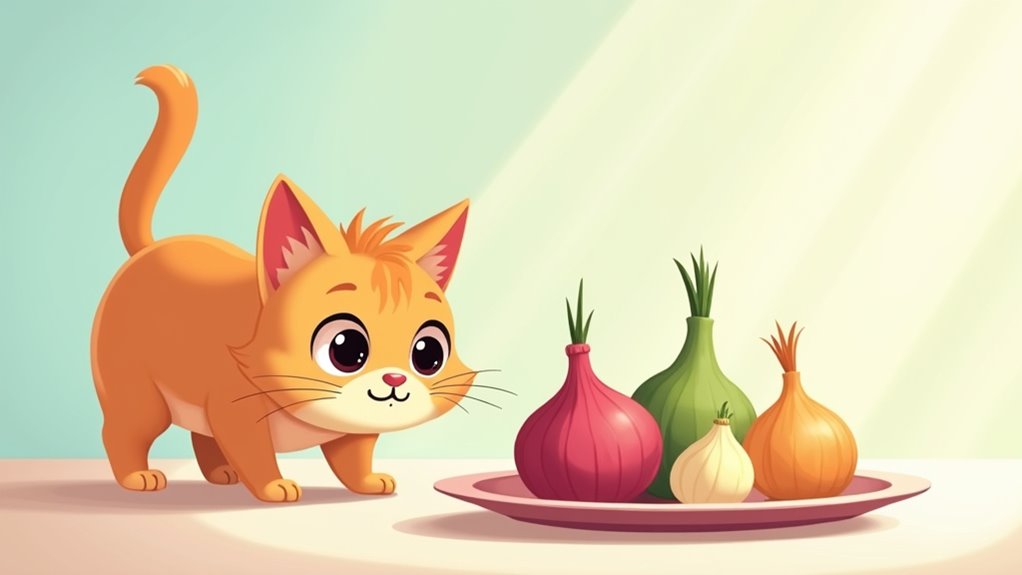
Many types of onions can be very dangerous for cats. Common onions like white, yellow, and red are toxic. Green onions, also known as scallions, are harmful too. Shallots and pearl onions carry similar risks.
Forms of Onions to Avoid:
- Raw onions: All types are harmful.
- Cooked onions: Cooking doesn’t make them safe.
- Onion powders: These forms are very concentrated and dangerous.
- Prepared foods: Sauces, soups, and gravies might contain onion.
Even a small amount can hurt your cat. The toxic compound, n-propyl disulfide, damages red blood cells. This can lead to serious health problems. Onion toxicity in cats can cause symptoms like weakness and lethargy.
Always check ingredient labels. Avoid foods with any onion. Keep all onions away from your cat to ensure their safety.
Symptoms of Onion Poisoning
Cats can get sick from eating onions. Early signs include nausea, vomiting, and diarrhea.
As time goes on, your cat may develop anemia. Look for pale gums and weakness. If you notice these symptoms, act quickly. Without treatment, your cat could face serious problems. Jaundice may appear, and your cat may even collapse.
Keep a close eye on your pet and contact a vet right away. It’s important to keep onions away from your cat. Always check food labels. Safety first!
Gastrointestinal Distress Signs
Gastrointestinal distress signs show that your cat may have onion poisoning. Watch for vomiting within hours after eating onions. Diarrhea often follows this, showing irritation in the stomach.
Other signs include nausea, drooling, and a tender belly. These signals mean your cat feels uncomfortable.
Cats may refuse to move or eat. This could mean they’ve a stomach issue. Pay attention to their behavior. Lethargy may also appear with these symptoms. Ingestion of toxic ingredients like onion powder can lead to serious health problems, including anemia.
If you think your cat has eaten onions, contact a veterinarian right away. They can help with fluids to prevent dehydration. Quick action can lead to better recovery chances. Don’t wait too long!
Anemia Symptoms Overview
Onion poisoning is dangerous for cats. It can cause serious health problems, with anemia being a major concern. Symptoms appear 2 to 5 days after eating onions, but they can start in just 12 hours.
Watch for these signs:
- Weakness and tiredness from low oxygen levels.
- Pale or yellowish gums that may indicate jaundice.
- Dark urine from the breakdown of hemoglobin.
These symptoms happen because onions damage red blood cells. Understanding the causes of anemia is crucial for treatment.
If you think your cat ate onions, get veterinary help right away. Treatment usually includes supportive care. Vets focus on restoring red blood cells and improving overall health.
Early detection is key for a positive outcome!
Severe Complications Risks
Severe complications can occur if your cat eats onions. It’s important to act quickly. Onion poisoning damages red blood cells. This leads to severe anemia and poor oxygen transport. Symptoms start with vomiting and diarrhea within hours. Your cat may then become lethargic and lose its appetite.
Without treatment, serious issues can develop. Your cat might struggle to breathe. Rapid breathing and a fast heart rate are signs to watch for. Neurologic problems, like seizures, may also happen. These indicate that the body is affected.
As organ failure progresses, jaundice may appear. You might notice dark urine in your cat. Quick veterinary help is essential to manage these risks.
Protect your cat by keeping onions out of reach. This simple step can prevent life-threatening complications.
Amount of Onion That Is Toxic
Onions can be very dangerous for cats. Even a little bit can cause harm. Here are key points every cat owner should know:
- Toxicity Threshold: Cats may get sick after eating more than 5 grams of onion for every kilogram they weigh. That’s about 0.5% of their weight!
- Small Quantities Matter: Some cats have shown signs of onion poisoning after just one teaspoon of cooked onions.
- Onion Powder Caution: Onion powder is stronger than fresh or cooked onions. For a 10-pound cat, a harmful dose is around a heaping 1/4 teaspoon.
Keep your cat safe by avoiding onions in their diet. Always be cautious with food.
Prevention Tips for Cat Owners
Keep your cat safe from onion toxicity. Store onions and similar foods in closed containers. Place them out of reach.
Educate everyone in your home about the dangers of onions for cats. Share clear guidelines. Put up reminders in visible spots.
These actions can help prevent accidental ingestion. Your feline friend will stay healthy and safe. Protecting your cat is important. Stay informed and cautious.
Safe Food Storage
Proper food storage keeps your cat safe and healthy. Many pet foods spoil quickly. Follow these tips for safe storage:
- Temperature Control: Store dry cat food below 80°F. Refrigerate wet food right away at or below 40°F.
- Packaging: Keep dry food in its original bag inside a clean, airtight container. Always seal opened bags tightly to reduce air exposure.
- Cleanliness: Wash food bowls every day. Sanitize preparation areas to stop bacteria from growing.
Good storage helps your cat stay healthy and happy.
Educate Household Members
Educating everyone in your house about the dangers of onions is very important for your cat’s safety.
Start family talks to explain that onions, whether cooked or raw, are harmful. Even a little bit, like less than one teaspoon, can hurt your cat.
Share information about onion toxicity and its symptoms. Symptoms include vomiting, tiredness, and pale gums. Garlic is also toxic and can be even worse.
Encourage family members to be careful while cooking and storing food. Remind them that the smell of onions doesn’t make it safe.
Create a list of signs of onion poisoning. This helps everyone know what to look for. Quick recognition can lead to quick action if your cat eats onions.
This proactive approach can save your cat’s life.
Treatment Options for Onion Poisoning
Onion poisoning in cats requires quick action. This condition can be serious. Follow these steps with your vet’s help:
- Call Your Veterinarian: Tell them how much onion your cat ate. This detail is very important.
- Gastrointestinal Decontamination: If it’s been 1-2 hours since your cat ate the onion, your vet may make them vomit or do a gastric lavage. Never try this at home without your vet’s advice.
- Supportive Care: Your vet might give your cat IV fluids. This helps keep them hydrated. They’ll also check for signs like weakness or pale gums.
Fast treatment is key to reducing health risks. No specific antidote exists for onion poisoning. Supportive care and removing the toxin are crucial.
Keep onions away from your cat to avoid future problems.
Frequently Asked Questions
Can Cats Eat Onion-Flavored Treats?
Feeding your cat onion-flavored treats is not safe. Onion can be very toxic for cats. It can cause serious health issues. Always read the ingredient list on cat treats. Look for anything that mentions onion or similar ingredients. Keeping your cat healthy is important. Stick to safe treats made for cats. Your furry friend will thank you!
How Long Does Onion Poisoning Last in Cats?
Onion poisoning in cats can cause symptoms that last for several days. Usually, these symptoms persist for 3 to 5 days. The timeline for recovery depends on how quickly you get treatment and how much onion your cat ate. Every moment matters for your furry friend. Quick action can make a big difference in their recovery. Always keep onions away from your pets to prevent these risks. If you suspect your cat has eaten onions, contact a vet right away.
Are Onions Safe in Small Amounts for Kittens?
Onions are not safe for kittens, even in small amounts. They can harm a kitten’s health. Eating onions can cause serious problems. This can lead to toxicity and dangerous conditions. Always keep onions away from your kittens. It’s best to avoid them completely. Your kitten’s safety is the top priority. Stick to foods that are safe and healthy for them.
What Should I Do if My Cat Ate Onions?
Your cat ate onions? Act fast! Watch for signs like vomiting or tiredness. These can show onion poisoning. Onion can harm your cat’s red blood cells. Take your cat to the vet right away. Quick action helps keep your furry friend safe and healthy. Don’t wait too long. Your cat’s well-being is important.
Can Onion Toxicity Affect Other Pets Besides Cats?
Onion toxicity can harm more than just cats. Dogs also suffer serious reactions to onions. Their symptoms can be similar to those seen in cats. Rabbits can face different issues, like stomach problems. Always talk to a vet if you think your pet ate onions. Quick action is important for their health. Protect your furry friends from this dangerous food.
Conclusion
Keep onions away from your cat. Onions are toxic to cats. They can harm your pet’s health. Symptoms of onion poisoning include vomiting, diarrhea, and weakness. Even a small amount can be dangerous.
If you think your cat ate onions, act quickly. Contact your vet right away. Quick action can save your cat’s life.
Prevention is key. Don’t leave onion dishes where your cat can reach them. Your furry friend deserves a safe home. Their health is important. Stay alert and keep them safe from onion dangers.
