
Can Cat Eat Ferns
This post contains affiliate links. As an Amazon Associate, we earn from qualifying purchases.
True ferns, such as Boston and rabbit’s foot ferns, are generally safe for cats if ingested, although they may cause mild stomach issues like vomiting or diarrhea. However, some fern-like plants, like asparagus and hemlock ferns, can be harmful and lead to serious gastrointestinal problems. It’s important to monitor your cat for symptoms such as excessive drooling or loss of appetite. For those interested in a deeper understanding, more tips on keeping your furry friend safe around indoor plants will be provided later in the article.
Essential Facts in 30 Seconds
- True ferns, like Boston and rabbit’s foot ferns, are safe and non-toxic for cats.
- Eating true ferns may lead to mild stomach issues, such as vomiting or diarrhea.
- Observe your cat for drooling or signs of stomach discomfort after fern ingestion.
- Fern-like plants, like asparagus fern and foxtail fern, can cause stomach upset in cats.
- Sago palms are highly toxic to cats; all parts of this plant are harmful.
Understanding True Ferns and Their Effects on Cats
Bringing true ferns into your home can be a great choice, especially if you have cats. True ferns, like Boston ferns and rabbit’s foot ferns, are safe for cats. They’re non-toxic, but eating them can cause mild stomach issues. Your cat might vomit or have diarrhea.
Key Points to Keep in Mind:
- Identifying True Ferns: Make sure you know which plants are true ferns. Some plants, like asparagus fern, can be harmful.
- Watch for Signs: If your cat nibbles on a fern, keep an eye on them. Look for drooling or signs of stomach pain.
- Vet Help: If your cat shows any symptoms, contact your vet right away.
True ferns usually don’t harm cats, but it’s best to stop them from eating the plants. This keeps your cat safe and comfortable.
The Risks of Fern-like Plants for Feline Friends
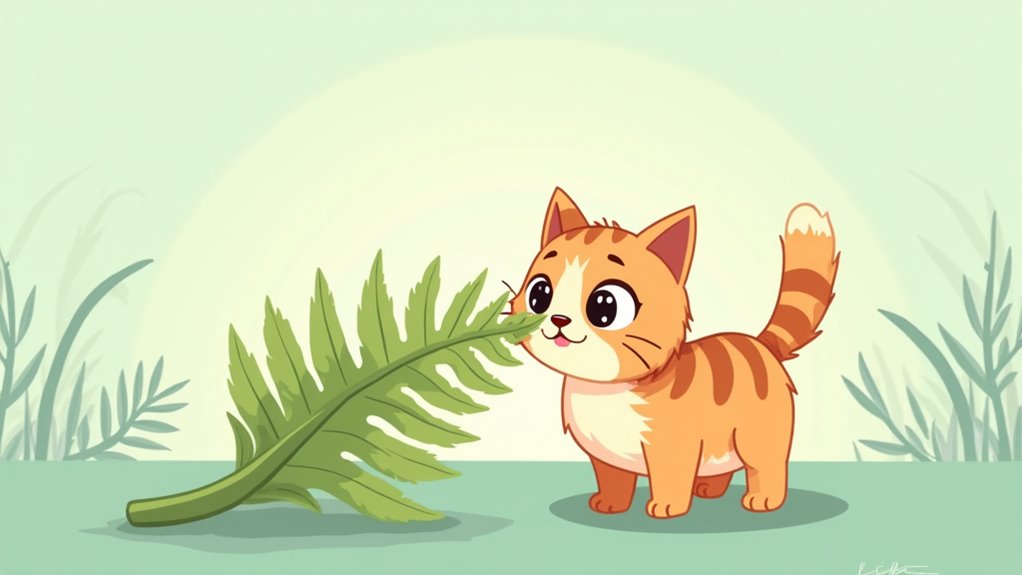
True ferns can be safe for your home. Yet, some fern-like plants can harm your cats. Be careful with these toxic plants: asparagus fern, foxtail fern, and hemlock fern. They can make your cat very sick, causing vomiting and diarrhea.
Risks of Fern-like Plants:
- Asparagus Fern: Can cause vomiting, diarrhea, and skin irritation.
- Foxtail Fern: Can upset your cat’s stomach.
- Hemlock Fern: Can lead to digestive problems and skin reactions.
Keep these plants away from your cats. Teach your family how to spot harmful plants. Offer safe options for your cats to chew on.
Check your plants often for damage or signs that your cat has eaten them. If you think your cat ate a toxic fern, call your vet right away. Following these steps can keep your furry friend healthy and happy.
Symptoms of Fern Poisoning in Cats
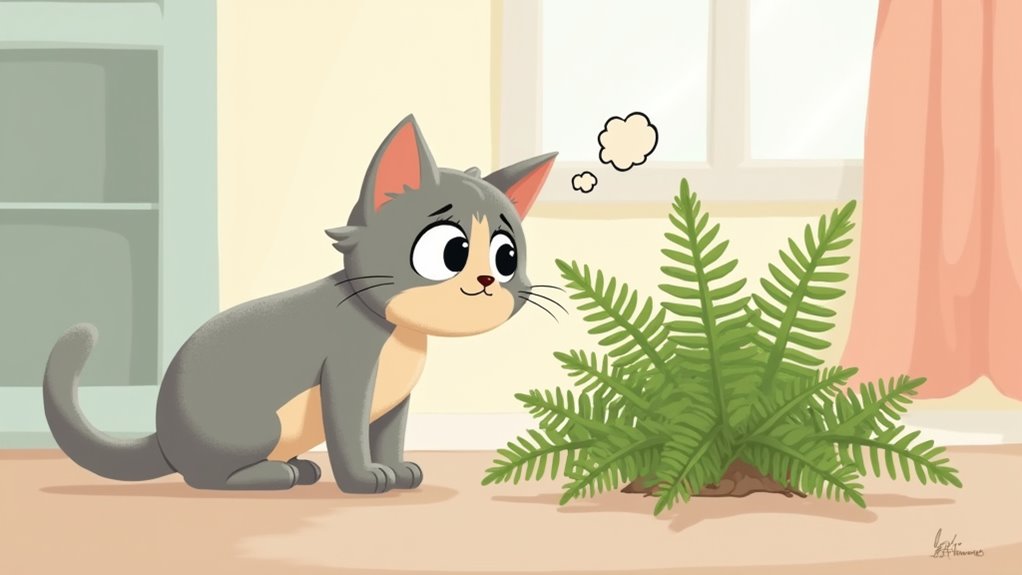
Understanding fern poisoning symptoms in cats is crucial. Early detection improves recovery chances. Watch for gastrointestinal issues like vomiting and diarrhea. These often happen together. Your cat might paw at their mouth. This shows oral irritation from toxins.
Look for these signs:
- Loss of appetite due to nausea.
- Excessive drooling from mouth irritation.
- Swelling in the mouth or throat. This makes swallowing hard.
Act quickly if you see these symptoms. Contact your veterinarian right away. They may suggest inducing vomiting or giving activated charcoal. This helps reduce toxin absorption.
Quick action is key for your cat’s health. Always keep harmful plants away to protect your furry friend.
The Dangers of Bracken Fern for Animals
Bracken fern can be very dangerous for animals, especially livestock. It contains toxic compounds like ptaquiloside and thiaminase. These toxins cause serious health problems.
Cattle and sheep may have blood in their urine due to ptaquiloside. Horses and pigs can experience neurological issues from thiaminase. Thiaminase harms vitamin B1, crucial for animal health.
Animal types react differently. Ruminants, like cows and sheep, are affected more than monogastric animals, like pigs. If livestock eat a lot of bracken fern, the risk of poisoning increases greatly.
Key Points:
- Symptoms include: Blood in urine, weight loss, and neurological problems.
- Environmental factors: Drought or limited food can push animals to eat bracken fern.
- Timeframe: Toxicity can build up over 1-3 months of eating it.
Knowing these dangers helps protect your animals. Always watch what they eat and keep them away from bracken fern.
Sago Palm: A Highly Toxic Plant to Avoid
Sago palms pose a serious threat to cats. Every part of the plant is toxic, especially the seeds. Just a small bite can make a cat very sick.
Signs of poisoning include drooling, vomiting, and tiredness. These symptoms can appear within minutes or hours. Quick action is important. Take your cat to the vet right away.
Without treatment, eating sago palms can cause liver damage or even death. Keep your home safe by avoiding this dangerous plant.
Toxic Compounds Present
The sago palm is a very dangerous plant for cats. It has toxic compounds called cycasin and macrozamin. These can harm your cat if they eat any part of the plant. All parts of the sago palm are poisonous.
Eating it can cause serious liver damage. It can also lead to symptoms that look like Parkinson’s disease. Even a small piece, like a full leaf, can be deadly for pets. Quick action is crucial. Take your cat to the vet right away if they eat any part of this plant.
Keep sago palms out of your home. Always check your plants for any dangers. Your cat’s health is important. Make sure your home is safe for your furry friend!
Symptoms of Poisoning
Cats can show serious signs of trouble if they eat parts of the very poisonous sago palm. Early signs include vomiting, drooling, diarrhea, and loss of appetite. These symptoms can start just 15 minutes after eating. As time goes on, your cat may show weakness or tremors. This can lead to life-threatening situations.
Here’s a quick look at the timeline of symptoms:
| Symptoms | Timeline |
|---|---|
| Gastrointestinal | 15 minutes to a few hours |
| Neurological | Within 4 hours |
| Liver failure | 2 to 3 days after exposure |
Watch for jaundice, feeling tired, or fresh blood in the stool. These signs can mean serious liver damage. Knowing this timeline is very important. Quick action can help save your cat’s life.
Immediate Veterinary Care
If a cat eats any part of a sago palm, get emergency veterinary care quickly. Time is critical. Fast action can save your cat’s life.
Here’s what may happen at the vet:
- The vet may induce vomiting if it’s been a short time since ingestion.
- Activated charcoal can help bind toxins and lessen their effects.
- Blood tests check how much the liver is harmed.
- Your cat might need to stay at the hospital for special care.
- The vet will monitor your cat closely to catch any changes.
These steps help your cat recover. Acting fast improves their chances.
Safe Practices for Cat Owners With Indoor Plants
Keeping your cat safe around indoor plants is very important. Some plants can be harmful. Here are some safe plant options and their toxicity levels:
| Plant Type | Toxicity Level |
|---|---|
| Boston Fern | Non-toxic |
| Asparagus Fern | Toxic |
| Catnip | Non-toxic |
| Foxtail Fern | Toxic |
To keep your cat healthy, follow these tips:
- Don’t keep toxic plants like asparagus and foxtail ferns in your home.
- Use safe plants like Boston fern and catnip instead.
- Place all plants out of your cat’s reach. This helps prevent them from eating the plants.
- Watch your cat around plants. Use sprays or other deterrents if necessary. Cats are curious and often explore their environment with their mouths, which can lead to accidental ingestion of harmful plants. Additionally, it’s essential to understand plant safety to create a healthy living space for your feline friend.
Make sure everyone in your home knows which plants are safe and which are not. This helps keep your furry friend safe and happy.
Frequently Asked Questions
Are All Ferns Safe for Cats to Eat?
Not all ferns are safe for cats to eat. Some ferns are okay, but others can be harmful. For example, asparagus ferns can cause big health problems. Always check which type of fern you have. Keep your cat safe by knowing what plants are around. Some ferns are mild, but it’s best to be careful. Always supervise your cat to avoid any accidents. Protect your pet by learning about plants. Stay informed to keep your furry friend happy and healthy.
What Should I Do if My Cat Eats a Fern?
A cat eating a fern can cause concern. First, remove any pieces of the fern from your cat’s reach. Keep your cat in a safe area away from plants. Watch for signs of illness, such as vomiting or lethargy. Always contact your vet right away. They can help assess the situation.
Understanding which plants are safe for cats is important. Some ferns are not toxic, but others can be harmful. Familiarize yourself with safe houseplants. This can help prevent future accidents. Taking these steps keeps your cat safe and healthy.
Can Cats Develop Allergies to Ferns?
Cats can develop allergies to different types of ferns, though it’s not very common. Watch for signs like scratching, redness, or sneezing. These could mean your cat is allergic. If you notice these symptoms, take your cat to the vet. They can help find out what’s causing the reaction. Keeping your cat healthy and comfortable is very important. Always pay attention to any changes in your cat’s behavior. Early detection can make a big difference.
How Can I Tell if a Fern Is Toxic?
Identifying toxic ferns is important for safety. Some ferns can be harmful to humans and animals. Study fern species to know which ones are safe.
Bracken fern is one to watch out for. It has large, coarse fronds and hairy stalks. This fern contains a toxin called ptaquiloside. This toxin can cause health problems.
Always be cautious. Avoid touching or eating unknown ferns. Learning about ferns helps keep you safe. Enjoy nature, but stay informed.
Are There Any Non-Toxic Ferns for Cats?
Non-toxic ferns for cats exist! Boston ferns, Maidenhair ferns, and Silver Lace ferns are safe choices. These plants make your home look beautiful. They also let your cat explore without fear. Enjoy the greenery while keeping your furry friend safe!
Conclusion
Some ferns can be harmful to cats. Not all plants are safe for your furry friend. Always check the plants in your home. Toxic plants like bracken fern and sago palm should stay out of reach. Keep an eye on your cat for any strange behavior. If you think your cat ate something bad, call your vet. Your cat’s health is very important. Taking these steps can help keep your pet safe.
