
Can Cat Eat Grape
This post contains affiliate links. As an Amazon Associate, we earn from qualifying purchases.
Cats cannot eat grapes as they are toxic and can lead to serious health issues, including kidney injury, even in small amounts. Symptoms such as vomiting, diarrhea, decreased appetite, and abdominal discomfort may appear within 6 to 24 hours after ingestion. If you believe your cat has consumed grapes, it’s essential to contact a veterinarian immediately. Avoid attempting to induce vomiting on your own, as this may worsen the situation. For those seeking more information, additional details about the risks and prevention of exposure will follow.
Essential Facts in 30 Seconds
- Grapes are toxic to cats and can cause kidney injury.
- Even small amounts can result in vomiting and diarrhea.
- Seek immediate veterinary help if a cat ingests grapes or grape products.
- Dried grapes (raisins) are more dangerous due to higher toxin levels.
- Store grapes securely and inform others to prevent accidental ingestion by cats.
Understanding Grape Toxicity in Cats
Grapes are very dangerous for cats. Even a small amount can be toxic. The main toxin in grapes is tartaric acid. This toxin can change based on the type of grape, how they grow, and how ripe they are.
Key points to know:
- The amount of toxin can be different. Some grapes are riskier than others.
- Eating grapes can lead to serious health problems, like kidney injury.
If you think your cat ate grapes, get to a vet right away. Signs of trouble mightn’t show for hours. But kidney damage can start quickly. Even treats with grapes can hurt your cat.
To keep your cat safe:
- Don’t leave grapes or products with grapes where cats can reach.
- Tell your family and friends about the dangers of grapes for cats.
Taking these steps can help protect your furry friend. Additionally, grapes are toxic to cats and can lead to symptoms like vomiting and diarrhea.
Symptoms of Grape Ingestion

Many pet owners might not know that grapes can harm cats. Eating grapes can lead to serious health problems, starting with stomach issues. Watch for these early signs of grape toxicity:
| Symptoms | Timeframe |
|---|---|
| Vomiting | 6 to 24 hours after eating grapes |
| Diarrhea | Usually happens with vomiting |
| Decreased appetite | Common within the first day |
| Abdominal discomfort | May show as tiredness or odd behavior |
Your cat may feel restless or weak. If you don’t act quickly, these problems can turn into serious issues, like kidney failure, within 24 to 48 hours. Pay attention to less urination and signs of dehydration, like dry gums. Notice any changes in your cat’s behavior or appearance. These changes can mean grape toxicity is getting worse. Quick action is important for your cat’s health and safety.
Immediate Actions to Take
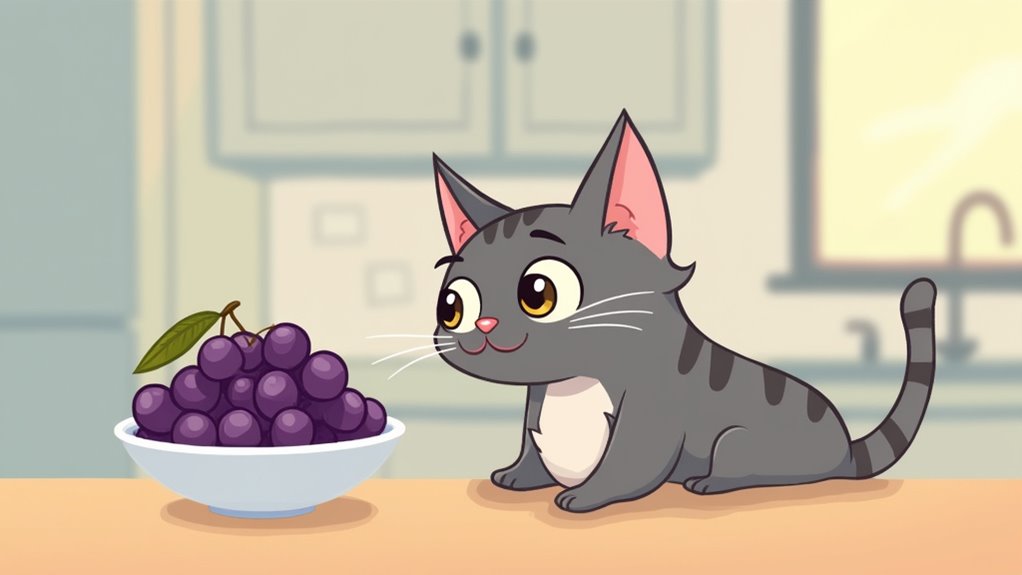
After noticing your cat has eaten grapes, take immediate action. Contact your veterinarian or an emergency clinic right away. Even a small amount of grapes can be harmful. Early consultation helps decide if your cat needs urgent care or if home treatment is safe.
Do not induce vomiting at home. This can make your cat’s condition worse. Only a veterinarian should induce vomiting. This is safest within 12 hours after ingestion.
Key steps to follow:
- Call emergency contacts for veterinary advice.
- Be ready for your vet to check kidney function and vital signs.
- Your cat may need hospitalization for IV fluids and monitoring.
Acting quickly can help your cat’s health and reduce the risk of kidney damage. Every moment is important! Additionally, be aware that symptoms such as vomiting and diarrhea may appear hours or days after ingestion, so vigilance is crucial.
Risk Factors and Exposure Scenarios
Understanding the risk factors and exposure scenarios related to grape ingestion in cats is crucial for pet owners. Even tiny amounts of grapes can be toxic and lead to serious health issues. Cats often accidentally eat grapes by swiping them from countertops. Here are some important exposure scenarios to keep in mind:
| Risk Factor | Details |
|---|---|
| Accidental Ingestion | Cats may grab grapes from tables or counters. |
| Choking Hazard | Grapes can cause choking, especially if eaten quickly. |
| Dried Grapes (Raisins) | Raisins are even more dangerous due to higher toxin levels. |
| Household Accessibility | Easy access to fruit bowls raises the risk. |
To keep your cat safe, choose safe treats instead of grapes. Always watch your cat’s surroundings. Make sure harmful foods are out of reach. Being careful with your cat’s diet can prevent accidents and health problems from grape consumption.
Dietary Needs and Cat Physiology
Cats need a special diet because they’re obligate carnivores. This means they must eat meat to stay healthy.
Adult cats require about 40-50 grams of protein for every 1000 kcal they consume. This protein must come from animal sources. Meat, fish, and eggs provide vital amino acids. One important amino acid is taurine. Taurine is crucial for heart and eye health.
Cats digest animal proteins well. They struggle with plant-based proteins. Grains and vegetables don’t meet their protein needs.
Not enough protein or missing taurine can cause serious health problems. Additionally, certain human foods can be safe treats for cats, but it’s essential to avoid toxic options like grapes.
Keep these points in mind:
- Feed high-protein diets with meat, fish, and eggs.
- Limit carbohydrates to under 10% of total calories.
- Watch fat intake to maintain energy and health.
Preventive Measures to Protect Your Cat
Keep your cat safe from grapes. Store all grape products in locked containers or high shelves.
Teach everyone in your home about the dangers of grapes for cats. Stress the importance of keeping these foods away.
Always watch your cat for signs of trouble. Look for any unusual behavior or symptoms.
Act quickly if you think your cat ate something harmful. Your cat’s safety is your priority.
Secure Food Storage
Keeping your cat’s food safe and fresh is important. Store dry food in a cool, dry place. The temperature should be below 80ºF (27ºC). Transfer opened bags into airtight containers. This reduces air exposure and moisture.
Refrigerate wet food right away after opening. Use it within 4 hours for best quality. Avoid mixing old and new food in the same container. This helps maintain freshness and safety.
Clean and dry food bowls every day. This prevents bacteria from growing. Check food packaging for damage before buying.
Always keep food out of reach of pests and children. Following these steps helps keep your cat’s food safe and tasty.
Educate Household Members
Keep your cat safe from grapes. Everyone in the house must know that grapes and raisins are very dangerous for cats. No amount is safe. Even a tiny bit can cause serious problems like rapid kidney failure.
About 15% of pets show signs of toxicity after eating grapes. Symptoms include vomiting, being very tired, or not urinating much.
Teach your family about these dangers. Spotting the signs early can save your pet’s life.
Join awareness campaigns like Pet Poison Prevention Week.
Set clear rules. Store grapes out of reach. Always check ingredient lists. Don’t share human food with your cat.
Together, you can create a safe home for your furry friend.
Monitor for Symptoms
Monitoring your cat for signs of grape toxicity is very important. Educate everyone in your home about the dangers.
Look for symptoms like vomiting or diarrhea within 6 to 24 hours. Decreased appetite, lethargy, or abdominal pain can show distress. Changes in thirst may signal dehydration. Rapid breathing and weakness indicate worsening toxicity.
Consult your vet right away if you suspect your cat ate grapes. Keep track of any changes in behavior, like restlessness or tiredness, and share this information with your vet.
Regularly checking for symptoms helps catch problems early. Quick action can protect your cat’s health. Awareness and vigilance are key to prevention.
Frequently Asked Questions
Can Cats Eat Grape-Flavored Treats Safely?
Grape-flavored treats are safer than real grapes, but caution is still important. Always read the ingredient list. Some grape-flavored treats may still contain real grapes, which can harm your cat. It’s best to choose alternative cat treats that are safe and healthy. Look for treats made specifically for cats. These options keep your furry friend happy and healthy!
What Should I Do if My Cat Eats Grapes?
Your cat eating grapes can be very serious. Contact your vet right away. Watch for signs of grape poisoning. These signs include vomiting and lethargy. Keep grapes out of reach. Educate others about safe treats for cats. Your cat’s health is important. Always choose safe snacks.
Are All Types of Grapes Toxic to Cats?
All grapes are toxic to cats. They can cause serious health issues. Even small amounts can be harmful. It’s best to keep grapes away from your feline friend. Instead, choose safer fruits like blueberries or melon. These options are healthy and safe for your cat. Always prioritize your pet’s well-being.
How Quickly Do Symptoms Appear After Ingestion?
Grape toxicity in cats shows symptoms within 6 to 24 hours after they eat grapes. Watch for early signs like vomiting, diarrhea, and tiredness. These symptoms can worsen quickly without treatment. Immediate action is crucial to help your cat. Always consult a vet if you suspect grape ingestion. Early care can save your pet’s life.
Can Grape Juice or Wine Harm Cats?
Grape juice and wine can be harmful to cats. Grape toxicity is serious. It can cause vomiting and kidney failure. Even small amounts can be dangerous. Keep these drinks away from your feline friends. Always prioritize their health and safety. If your cat consumes grapes or wine, seek help immediately. It’s better to be safe than sorry. Take care of your cat by keeping harmful foods out of reach.
Conclusion
Grapes are dangerous for cats. Even a small amount can make them very sick. Eating grapes can lead to serious health problems, like kidney failure. Many people think grapes are safe, but that is not true.
If a cat eats grapes, it’s important to act fast. Call your vet right away. Keep grapes and raisins stored safely, out of reach of your pet. Always prioritize your cat’s safety. Better to be careful than to risk their health.
