
Can Cat Eat Olive Oil
This post contains affiliate links. As an Amazon Associate, we earn from qualifying purchases.
Yes, cats can safely consume olive oil in moderation, as it can aid digestion and improve skin health. A recommended amount is about 1 teaspoon for every 5-10 pounds of your cat’s weight, given two to three times a week. It’s best to use high-quality extra virgin olive oil and mix it into their food. However, be mindful of potential side effects such as diarrhea or allergies, and remember that olive oil should not replace their regular diet. For those interested in a deeper understanding, further details and explanations will follow in the article.
Essential Facts in 30 Seconds
- Cats can eat olive oil in moderation to aid digestion and relieve constipation.
- Olive oil contains vitamin E and omega-3 fatty acids for healthy skin and a shiny coat.
- Recommended serving is 1 teaspoon per 5-10 pounds of body weight, 2-3 times a week.
- Watch for any gastrointestinal issues or allergic reactions, though they are rare.
- Olive oil should not replace a balanced diet, as cats require animal fats for essential nutrients.
Understanding Olive Oil and Its Composition
Olive oil isn’t just a cooking ingredient. It has a fascinating composition that tells us a lot. The main part of olive oil is triacylglycerols. These come from glycerol and three fatty acids. Oleic acid is the star here, making up to 83% of the oil. Other fatty acids like linoleic, palmitic, and stearic acids also play a role. They help determine the health benefits of the oil.
Squalene is another important compound found in olive oil. It offers antioxidant effects, which are good for health.
The quality of olive oil can change based on different olive types and how the oil is extracted. Some olive types produce oil rich in healthy fats. Others may have different fatty acid profiles.
Knowing about olive oil’s composition is key for anyone wanting to include it in their diet. It can greatly impact health and wellness.
Potential Benefits of Olive Oil for Cats
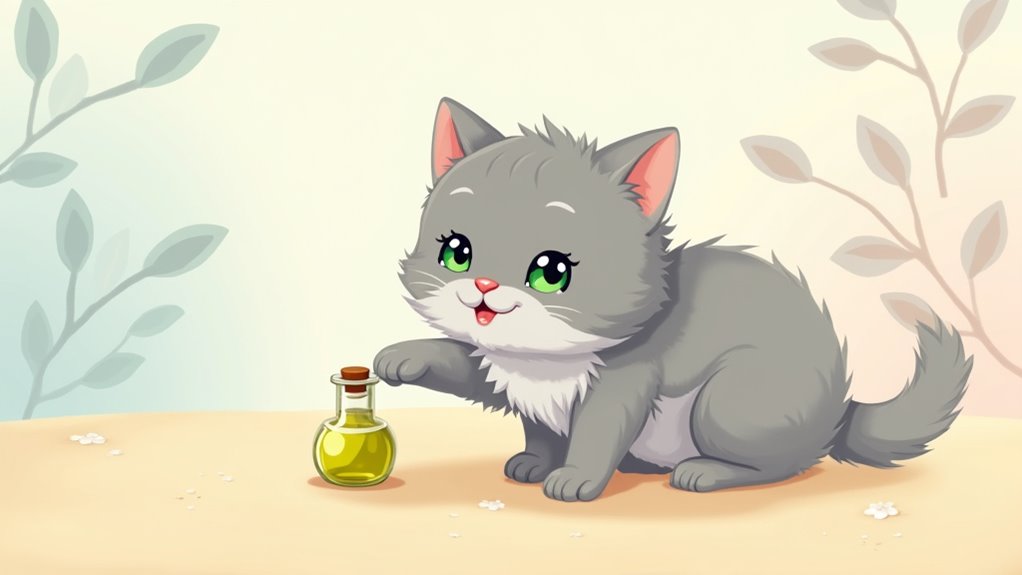
Adding olive oil to your cat’s diet can bring several benefits.
Digestive Benefits
Olive oil acts as a gentle laxative. It helps with constipation by softening stools. A small amount can make bowel movements easier.
Regular use may improve digestion and prevent future constipation.
Skin Health
Olive oil is rich in vitamin E and omega-3 fatty acids. These nutrients support healthy skin. Olive oil hydrates from the inside, reducing dry and flaky skin.
It also soothes irritation. By nourishing hair follicles, it helps your cat have a soft and shiny coat.
Start with small amounts of olive oil in your cat’s food. Always talk to your vet before making big changes to their diet. They can help you decide if olive oil is good for your cat.
Risks and Side Effects of Olive Oil in Cats
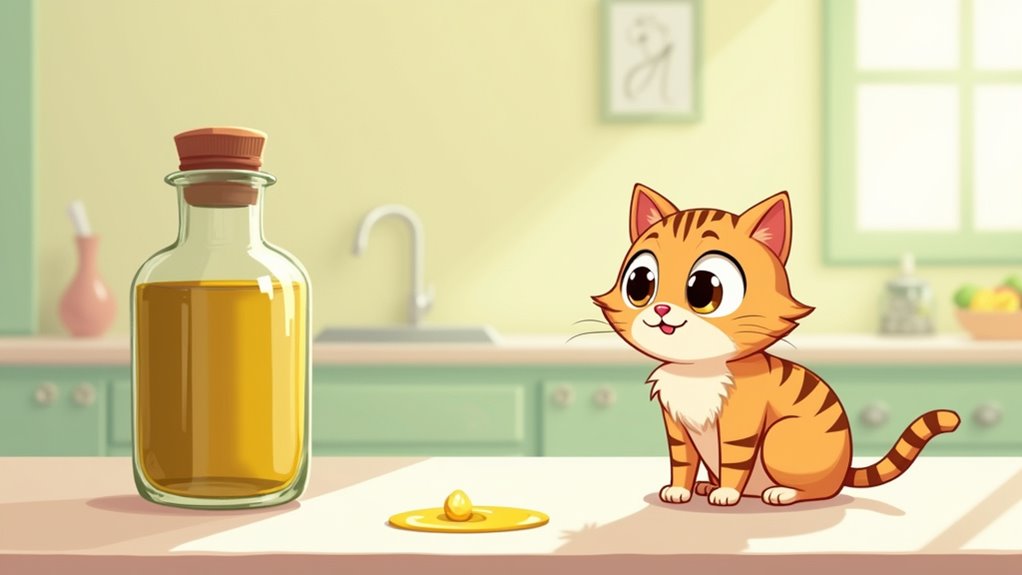
Olive oil may seem safe for your cat, but it has risks. Here are some problems to consider:
| Risk | Symptoms | Notes |
|---|---|---|
| Gastrointestinal Distress | Diarrhea, vomiting, stomach cramps | Just one tablespoon can cause this. |
| Allergic Reactions | Itchy eyes, hair loss, vomiting | Rare but serious. Stop use if this happens. |
| Sodium Toxicity | Excessive thirst, nausea, low appetite | Mostly from olives, not the oil itself. |
| Weight Gain | Increased fat storage, obesity | Keep an eye on portions. |
| Individual Health Factors | Pre-existing conditions may worsen symptoms | Always check with your vet first. |
Be careful with olive oil. Watch your cat for any bad reactions. Always talk to your vet before adding it to their diet.
Usage Guidelines for Incorporating Olive Oil
Adding olive oil to your cat’s diet can be a good idea. Start with a small amount to see how your cat reacts. A good rule is about 1 teaspoon for every 5-10 pounds of your cat’s weight. Offer this 2-3 times a week. For adult cats, keep daily servings between half a teaspoon and one teaspoon.
Choose high-quality organic extra virgin olive oil. This type has lower acidity and fewer additives. Avoid rancid or chemically refined oils, as they can upset your cat’s stomach.
To serve olive oil, drizzle a few drops on wet food or kibble. You can also warm it slightly to make it more appealing.
Watch your cat’s response and change how often you serve it. Remember, olive oil is a treat, not a daily meal replacement!
Comparing Olive Oil to Other Fats for Cats
Comparing olive oil to other fats helps you understand what’s best for your cat. Olive oil has healthy monounsaturated fats but lacks important fatty acids. Cats need arachidonic acid to stay healthy. This acid is found in animal fats, which are better for your cat’s diet.
Here’s a quick look at the differences:
- Animal Fats: High in essential fatty acids, like linoleic and arachidonic.
- Olive Oil: Doesn’t have the long-chain fatty acids cats need.
Cats usually need about 5.5 grams of fat each day. They need more fat when they’re nursing or growing. Additionally, small amounts of olive oil may help with hairballs and improve the condition of a cat’s skin and coat.
If you feed your cat only olive oil, it may not get enough nutrients. This can harm your cat’s coat, immune system, and overall health. Additionally, healthy fats should come from animal sources to ensure your cat receives the necessary nutrition for optimal well-being.
For the best health, select high-quality cat foods that contain animal-based fats. These fats help with energy and nutrient absorption.
Keep your furry friend healthy and happy!
Frequently Asked Questions
Can Olive Oil Improve My Cat’s Overall Health?
Olive oil can boost your cat’s health. It provides important fatty acids and antioxidants. Adding olive oil to your cat’s diet can help their coat shine. It also aids digestion and strengthens their immune system.
Many pet owners notice a difference after using olive oil. Cats often have healthier skin and a softer coat. It can also help with hairballs by making it easier for them to pass.
Just a small amount is enough. A teaspoon mixed with their food is a good start. Always check with your vet before making changes to your cat’s diet. Olive oil can be a wonderful addition to keep your furry friend happy and healthy.
Is Olive Oil Safe for Kittens?
Olive oil can be a small part of a kitten’s diet. It is not toxic, but kittens have sensitive stomachs. Their bodies may struggle with fats, including olive oil. If you want to use olive oil, do it in tiny amounts. Some believe it can help with fur and digestion. Always check with your vet before adding anything new to your kitten’s food. Your vet knows what’s best for your little friend. Keep your kitten healthy and happy!
How Often Can I Give My Cat Olive Oil?
You can give your cat olive oil to help with their health. The right dose is half a teaspoon each day. You can also give up to one teaspoon three times a week. This helps support their digestive system and coat. Always watch for any bad reactions. It’s a good idea to talk to your vet before giving your cat olive oil. Your vet can give you the best advice for your pet’s needs.
Can Olive Oil Help With My Cat’s Hairballs?
Imagine your cat living without hairball problems. Olive oil can help. It has a slippery texture that aids digestion. This helps hairballs move through your cat’s system easily. Less struggle means fewer coughs from those pesky hairballs.
Adding a little olive oil to your cat’s food can make a difference. It keeps their fur healthy and shiny too. Cats often groom themselves, which means they swallow hair. Olive oil helps those hairs pass through smoothly.
Always check with your vet before trying new remedies. They can tell you the right amount to use. Your cat deserves to feel good and enjoy life without hairballs!
What Should I Do if My Cat Eats Too Much Olive Oil?
Too much olive oil can upset your cat’s stomach. Watch for signs like vomiting or being very tired. These can show that the olive oil is causing problems. Act quickly. Contact your vet for advice. They can help you with any digestive issues your cat may have. Keep your cat safe and healthy.
Conclusion
Cats can enjoy olive oil, but it’s important to be careful. A small amount can help with digestion. Too much can upset their stomach. Think of it like seasoning a meal. A little adds flavor, but too much can ruin it. Keep the olive oil as a special treat. Your cat doesn’t need it every day. Just a few drops now and then can be nice. It might even make their fur shiny! Always watch how your cat reacts. Moderation is key for a happy, healthy kitty.
