
Can Cat Eat Olives
This post contains affiliate links. As an Amazon Associate, we earn from qualifying purchases.
Feeding olives to your cat can be risky due to their high sodium content and the potential for choking on pits. While plain, unsalted olives may be offered in moderation, it’s crucial to avoid pickled varieties or those stuffed with toxic ingredients like garlic. For a deeper understanding of how olives can affect your cat’s health and behavior, further details will be provided later in the article.
Essential Facts in 30 Seconds
- Olives can be risky for cats due to high sodium levels, especially pickled varieties.
- Always remove pits to prevent choking or intestinal blockages.
- Avoid olives soaked in brine or stuffed with garlic and onions, as they are toxic.
- Some cats may enjoy olives, but reactions can vary widely.
- It is best to avoid feeding olives to cats and keep them out of reach.
Safety of Olives for Cats
Olives can be risky for cats. Always be careful when giving them to your pet. Pickled or preserved olives often have high sodium levels. This can lead to sodium poisoning. Symptoms include vomiting, diarrhea, and thirst.
Always remove the pits from olives. They can choke your cat or block its intestines. Avoid olives soaked in brine or stuffed with garlic and onions. These ingredients are toxic to cats.
Serve only plain, unsalted olives and do it sparingly. Watch your cat closely. Look for signs of distress after it eats olives. If you see vomiting or strange behavior, call your vet right away. Cats are naturally curious and may taste their environment, so be cautious with any new foods.
Olives may seem tasty, but their risks can be too high for your furry friend.
Nutritional Value of Olives
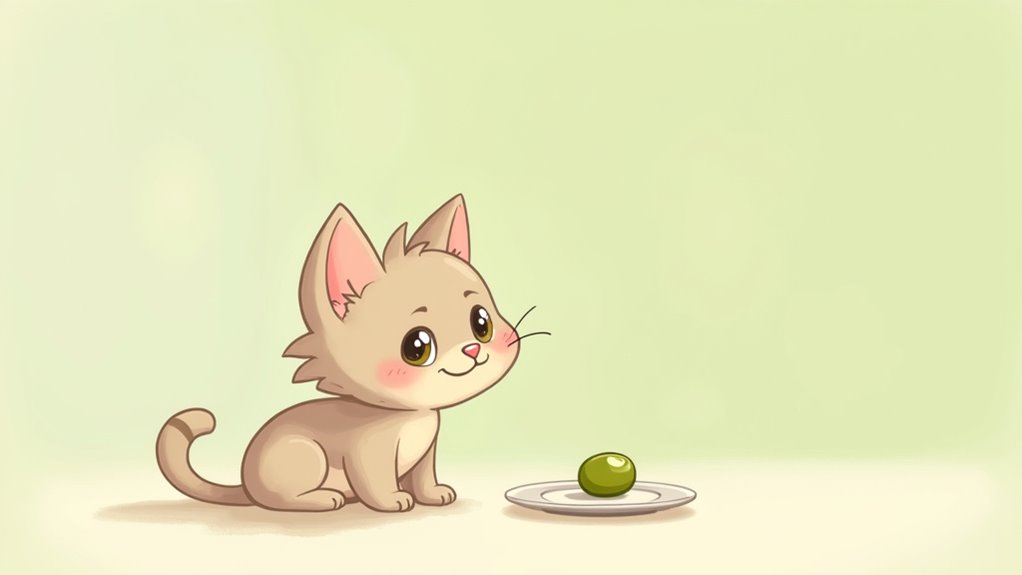
Olives are surprisingly nutritious, but they can be a concern for cats. While olives have healthy fats and nutrients, their high sodium content is risky. One tablespoon of olives has about 7 calories.
They’re rich in monounsaturated fats, especially oleic acid, which is good for heart health. Olives also contain vitamin E, an important antioxidant that helps the immune system and keeps skin healthy.
Sodium levels in olives can make up 10–19% of a cat’s daily intake. Cats don’t need much sodium, so it’s important to give olives in small amounts.
Olives also have antioxidants like oleuropein and hydroxytyrosol. These compounds help reduce inflammation and protect against chronic diseases. However, too many olives can lead to digestive upset or health issues.
Share olives with your cat only as an occasional treat. Always make sure it’s safe and healthy for them!
Green vs. Black Olives: What You Need to Know
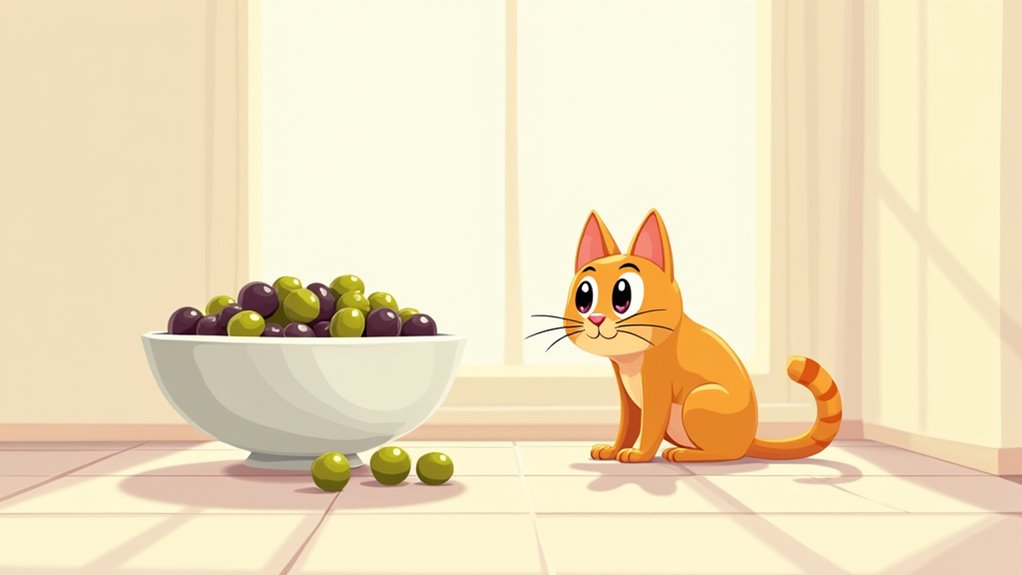
Understanding the differences between green and black olives helps you make better choices for your cat. Both types are safe in moderation but have different traits.
| Feature | Green Olives | Black Olives |
|---|---|---|
| Harvest Time | Picked before ripening | Picked when fully ripe |
| Chemical Composition | Higher in isoprenoids | More natural oils, less salt |
| Taste and Texture | Firm and more bitter | Soft with a richer flavor |
| Cat Attraction | Some cats find them more appealing | Milder reactions from most cats |
Green olives might attract your cat with compounds similar to catnip. Black olives are softer and usually less exciting for cats. Always remove pits before giving either to your pet. This prevents choking. Choose plain, unsalted olives to keep your cat safe and healthy. Moderation is key for both types!
Behavioral Effects of Olives on Cats
Cats show interesting behaviors when they encounter olives. The compounds in olives can affect them similarly to catnip. You might see your cat playfully batting at olives or rolling around with them.
Some cats become hyperactive. They might bounce around and act silly. Others may feel calm and want to cuddle after smelling olives.
Not all cats react to olives. Genetic factors play a big role. Cats that don’t respond to catnip might also ignore olives.
Watch your cat closely. Some might show obsessive behaviors, like excessive licking. It’s essential to ensure their experiences with olives are safe and enjoyable.
Health Risks and Precautions When Feeding Olives
Watching your cat play with olives can be fun.
But it’s important to know the health risks of feeding them these treats.
Olives have high sodium. This can make your cat sick.
Pickled olives are the worst because they’ve even more salt.
Olive pits are another danger. They can cause choking or blockages in your cat’s intestines.
Some olives have toxic ingredients. Garlic and onion are harmful to cats.
To keep your cat safe, follow these tips:
- Don’t feed olives to your cat.
- Keep olives out of reach.
- Look for signs of trouble like vomiting or tiredness.
- Call your vet if your cat eats olives.
Taking these steps helps ensure your cat stays healthy.
Frequently Asked Questions
Can Kittens Eat Olives Safely?
Kittens can eat olives, but only in very small amounts. They should not have olives often. Focus on giving them protein-rich food for their main diet. Treat olives as an occasional snack. Always choose plain olives without any harmful ingredients. This keeps your kitten healthy and happy.
How Should Olives Be Prepared for Cats?
To prepare olives for your cat, start with plain, pitted olives. Rinse them well to remove extra salt. Serve them at room temperature. Cut the olives into small pieces. Make sure the pieces are safe and easy for your cat to eat. Always keep an eye on your cat’s reaction. Some cats may love olives, while others may not show interest. Offering olives can be a fun treat, but they should not replace regular cat food. Always consult your vet if unsure about adding new foods to your cat’s diet.
Are Stuffed Olives Safe for Cats?
Stuffed olives are not safe for cats. They contain harmful ingredients that can hurt your pet. The stuffing may have high sodium levels. This can lead to sodium toxicity in cats. It can also cause digestive problems. Cats should not eat stuffed olives at all. Keep your feline friend healthy by avoiding these treats. Always check what you give to your cat. Your cat’s safety is important. Choose safer snacks for them instead.
Can Cats Have Olive Oil as a Treat?
Olive oil can be good for cats in small amounts. It may help with fur and skin health. Some cat owners say it can improve digestion too. But be careful! Too much olive oil can upset your cat’s stomach. It can also lead to weight gain. Always ask your vet before giving your cat any new treat. Your cat’s health is very important!
What Are the Signs of Olive Toxicity in Cats?
Olive toxicity in cats can be serious. Watch for these signs: vomiting, diarrhea, and excessive thirst. Lethargy is another warning. Seizures may occur too. These symptoms can mean your cat is in danger. Seek veterinary help right away if you notice any of these issues. Early action is important for your cat’s health. Always keep olives away from your pets to prevent problems. Stay alert and take care of your furry friend.
Conclusion
Olives can be safe for cats in small amounts. It’s important to know their risks. Cats need special diets. Not all human foods are good for them. Always remove the pits from olives before sharing. Offer only a small piece to your cat. Watch for any strange reactions. Your cat’s health is the top priority. Stay informed and careful about what you feed them.
