
Can Cat Eat Onions
This post contains affiliate links. As an Amazon Associate, we earn from qualifying purchases.
Cats cannot eat onions as it poses a serious threat to their health. Even a small amount, such as 5 grams per kilogram of their weight, can be harmful. Onions can damage red blood cells, leading to hemolytic anemia. Symptoms like vomiting, diarrhea, or weakness may develop within hours or days. If your cat consumes onions, seek veterinary assistance immediately, as prompt treatment can prevent severe complications. For those interested in further details, this article will explain how to avoid onion exposure and recognize signs of poisoning.
Essential Facts in 30 Seconds
- Cats cannot eat onions; they are toxic to them.
- All onion forms (raw, cooked, powdered) are harmful.
- Just 5 grams of onion per kilogram of cat weight can damage red blood cells.
- Symptoms of onion poisoning include vomiting, diarrhea, weakness, and pale gums.
- Symptoms may appear days after ingestion.
- Immediate veterinary care is necessary if a cat eats onions to avoid severe health issues.
Understanding Onion Toxicity in Cats
Onions are dangerous for cats. They can cause serious health problems. All types of onions—raw, cooked, or powdered—contain harmful substances. These substances can damage your cat’s red blood cells. This can lead to a condition called hemolytic anemia. Onions are toxic to cats and can cause oxidative damage to red blood cells.
Even a tiny amount can be toxic. Just 5 grams of onion per kilogram of your cat’s weight is enough to cause harm. Cats are especially sensitive because of their unique blood structure. They can’t handle oxidative stress like other animals can. Onion toxicity can lead to severe health issues if not addressed promptly.
To keep your cat safe, provide a diet that doesn’t include onions or garlic. Always check ingredient labels carefully. Avoid any foods that contain onions.
If your cat eats onions, contact your veterinarian right away. Taking these steps will help protect your furry friend from serious health risks.
Symptoms of Onion Poisoning
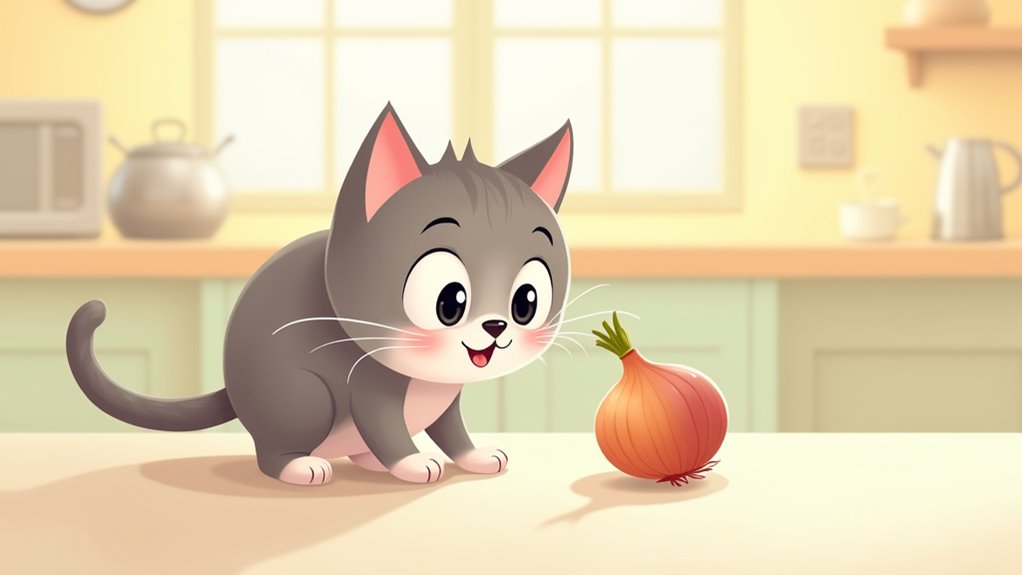
Recognizing onion poisoning in cats is very important. Early signs show up within hours or a few days after eating onions. Watch for these symptoms:
- Vomiting and diarrhea
- Nausea and drooling
- Abdominal pain and loss of appetite
As time goes on, symptoms can get worse. After 2 to 5 days, anemia may occur. Look for pale gums and weakness. Rapid breathing and a fast heart rate can also happen. These signs mean your cat is in trouble.
In severe cases, jaundice, seizures, or even collapse can occur. Diagnosing onion poisoning can be tricky. Early symptoms are mild and hard to notice. A vet visit is essential. Blood tests help confirm onion toxicity.
Act quickly if you think your cat ate onions. Time is crucial. No antidote exists for onion poisoning. Supportive care like fluid therapy and blood transfusions may be needed for recovery.
Mechanism of Action: How Onions Affect Cats
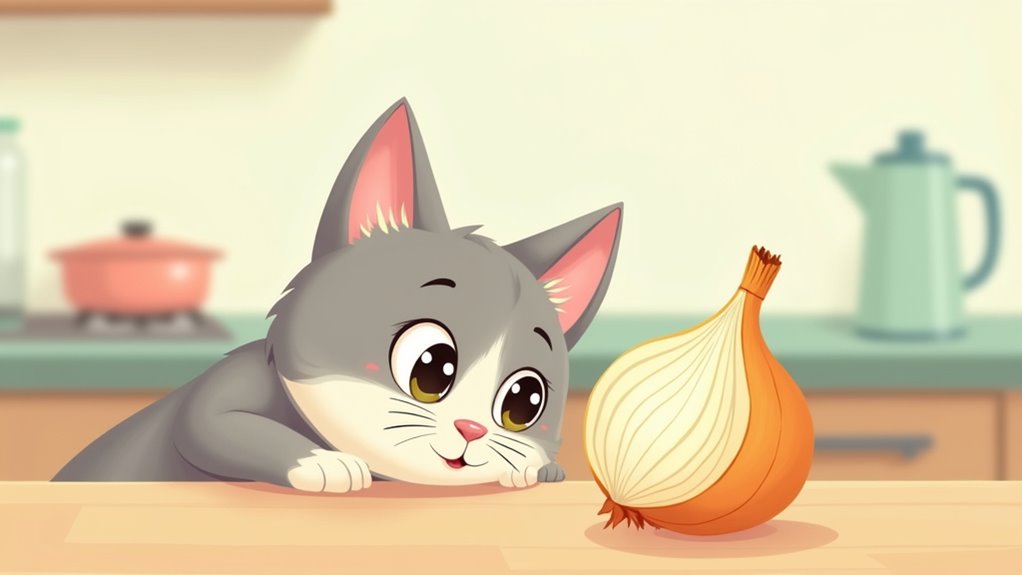
Onions are very dangerous for cats. Eating onions can cause serious damage to their red blood cells. The toxins in onions create oxidative stress. This stress destroys hemoglobin, leading to anemia. You might see signs like weakness and lethargy in your cat.
Cats may also have tummy troubles after eating onions. Symptoms include vomiting and diarrhea. These signs show that onions are harmful.
Keep onions away from your feline friend to protect their health. Always check food before giving it to your cat. Healthy cats are happy cats!
Red Blood Cell Damage
Some cats may find onions interesting, but these vegetables can harm them. Onions contain a toxic substance called N-propyl disulfide. This can hurt red blood cells (RBCs) and make them live shorter lives.
Eating onions causes oxidative stress. This stress damages hemoglobin in RBCs, creating Heinz bodies. The cells become weak and break apart, a process called hemolysis. Even a small amount, like 5 grams per kilogram of onion, can cause severe hemolytic anemia in cats. All forms of onions (raw, cooked, powdered, dehydrated) are harmful.
Symptoms might show up days later as weakness, tiredness, or fast breathing. If a cat eats onions, call your vet right away. Acting quickly helps protect your cat’s health.
Gastrointestinal Irritation Effects
Onions are harmful to cats. They can cause serious stomach problems. This happens because onions contain organosulfur compounds. These compounds create irritation in the digestive system.
Watch for these early signs:
- Vomiting within hours of eating onions
- Diarrhea that happens with vomiting
- Nausea and stomach pain
- Excessive drooling
- Loss of appetite and low energy
Compounds like N-propyl disulfide can inflame the stomach. This leads to protective reactions such as vomiting and diarrhea. Symptoms usually show up within 12 hours after eating onions.
Act quickly. If you think your cat has eaten onions, take them to the vet right away. Early action can prevent serious health issues. Your cat’s health may rely on your swift response!
Toxicity Levels and Safe Limits
Onions are dangerous for cats. All kinds of onions—raw, cooked, dried, or powdered—can harm them. Even a small amount can cause serious problems. Cats can show symptoms after eating just 5 grams of onion per kilogram of their body weight. For a small cat weighing about 2.7 kg, a few tablespoons of onion can be too much.
- Toxicity Levels:
- Symptoms may take days to show.
- Eating small amounts repeatedly can still cause harm.
Keep your cat safe by avoiding any food with onions. Garlic and other Allium plants are even worse. Stay alert. If you think your cat ate onion, get help from a vet right away. Your cat’s safety is very important for a healthy life.
Treatment Options for Onion Poisoning
Onions can be very dangerous for cats. If you think your cat has eaten onions, act fast.
Take your cat to the vet right away. Quick action can stop serious health problems. Call your vet or a pet poison hotline for help.
Don’t try to make your cat vomit unless your vet says it’s okay. This can hurt your cat. Always prioritize your cat’s safety.
Immediate Veterinary Care
Your cat needs immediate veterinary care if it eats onions. Time is crucial in this situation. Follow these steps:
- Call your vet right away and explain what happened.
- Remove all onions from your cat’s reach to avoid more problems.
- Your cat may need to stay at the vet if symptoms are serious.
- Don’t make your cat vomit without asking your vet first. It can be dangerous.
- Be ready for care that may include IV fluids and close monitoring.
Veterinarians can help by making your cat vomit or giving activated charcoal. Acting quickly can greatly increase your cat’s chances of getting better from onion poisoning.
Inducing Vomiting Process
Your cat’s health is very important. If your cat eats onions, act fast. Inducing vomiting can help if it’s been less than two hours since they ate the onions.
Never try to make your cat vomit at home without a vet’s help. It can be dangerous.
Veterinarians often use dexmedetomidine to induce vomiting in cats. The dose is 40 µg/kg given as an injection.
Keep atipamezole nearby. This medicine can reverse dexmedetomidine’s effects if needed.
Even if your cat seems fine, they might still need emergency care. Emesis and gastric lavage are procedures vets can use.
Remember, making your cat vomit can make things worse if they’re already sick. Always talk to your vet.
Follow their advice closely to keep your cat safe and healthy.
Supportive Treatment Options
Onion ingestion can be very dangerous for cats. Immediate supportive treatment is essential for their recovery.
Here are important care options your vet may use:
- Contact a vet right away. Quick action can save your cat’s life.
- Fluid therapy is crucial. IV fluids help remove toxins and keep your cat hydrated.
- Gastrointestinal decontamination helps. Your vet may give activated charcoal to bind the toxins.
- Oxygen may be needed. This is especially important for cats with hemolytic anemia.
- Medications can stabilize your cat. Anti-nausea meds help ease discomfort.
Act fast. Your cat’s health depends on it.
Preventing Onion Ingestion in Cats
Keeping your cat safe from onions is very important. Make sure to store onions in sealed containers or locked cabinets.
Always keep cooked or raw dishes with onions out of your cat’s reach. Quickly throw away onion scraps. Cats can dig through trash or compost bins.
Teach everyone in your home about the risks of onions for cats. This includes visitors too. Use trash cans that cats can’t open.
Always read ingredient labels before giving your cat treats. Never share food that has onions or onion spices with your cat.
Wash your hands after touching onions. Clean your kitchen surfaces and tools right away. This helps keep your cat safe and healthy.
Frequently Asked Questions
Can Cooked Onions Be Safe for Cats to Eat?
Cooked onions are not safe for cats. They can cause serious health problems like anemia and organ damage. Onions contain compounds that are toxic to cats. Signs of onion poisoning include weakness, vomiting, and lethargy.
Keep your cat safe. Avoid any food that contains onions. Always prioritize your cat’s health over human leftovers. Cats need a diet that is good for them. Stick to cat food and treats made for their needs. This way, your furry friend stays healthy and happy.
Are Other Allium Vegetables Toxic to Cats?
Other Allium vegetables, like garlic, can harm cats. Garlic is especially dangerous. Even small amounts can cause serious health problems. Symptoms may include vomiting, diarrhea, and weakness. Keep these foods away from your cat. It’s better to be safe. Your cat’s health is important. Always check what foods are safe for pets. Staying cautious helps keep your furry friend happy and healthy.
How Long Does Onion Toxicity Last in Cats?
Onion toxicity in cats can last from 10 to 14 days. Symptoms like vomiting and weakness show up within hours. If treatment is delayed, severe anemia may develop later. This can make recovery take longer. It’s important to act quickly if your cat eats onions. Always keep onions away from your pets to prevent this issue.
What Should I Do if My Cat Eats Onion?
Your cat eating onion is serious. Act fast. Call an emergency vet right away.
Watch for symptoms like vomiting or tiredness. These signs can show onion poisoning.
Tell the vet how much onion your cat ate. This helps them give the right treatment.
Time is very important for recovery. Don’t wait too long. Get help quickly.
Can Cats Recover From Onion Poisoning?
Cats can recover from onion poisoning if they get help quickly. Watch for symptoms like vomiting, weakness, or diarrhea. Take your cat to the vet right away. The vet may use treatments like fluid therapy or blood transfusions. These can help your cat feel better and recover faster. Always keep onions away from your pets to prevent this problem.
Conclusion
Keep onions away from your cat. These bulbs can harm their health like poison. Onions contain substances that are toxic to cats. Eating even small amounts can cause serious problems. Symptoms may include vomiting, diarrhea, or weakness. If your cat eats onions, act fast. Check for signs of illness and call your vet right away. Protect your furry friend by staying alert. Cats deserve to enjoy life, free from onion dangers. Let them chase sunlight and snuggle with you without worry.
