
Can Cat Eat Peas
This post contains affiliate links. As an Amazon Associate, we earn from qualifying purchases.
Cats can eat peas when prepared correctly and given in moderation. Start by introducing small amounts, around 10% of their daily food. Use fresh or frozen peas, avoiding canned options. Steaming or boiling without seasonings is ideal. Monitor for any digestive issues like gas or upset stomach, and consult your vet if you’re unsure. A balanced diet is essential for your cat’s health. For those interested in more details on safely incorporating peas into your cat’s diet, further information will follow.
Essential Facts in 30 Seconds
- Cats can eat peas in moderation, providing vitamins and fiber.
- Introduce peas gradually to prevent digestive issues; start with small amounts.
- Cook peas by steaming or boiling, without seasonings or oils.
- Watch for allergic reactions, such as skin irritation or gastrointestinal upset.
- Peas should complement a balanced diet, not replace it.
Nutritional Benefits of Peas for Cats
Peas contain important vitamins like A, C, and K. Vitamin A helps with vision. Vitamin C acts as an antioxidant and helps with tissue repair. Peas also have fiber, which promotes good digestion and regular bowel movements. Additionally, sugar snap peas are non-toxic to cats, making them a safe snack option when prepared properly.
These little green gems are low in calories and provide some protein. This complements your cat’s meat-based diet. Peas also have a high water content, about 79%. This can help keep your cat hydrated, especially if they don’t drink enough water. Adding small amounts of peas can give your cat more nutrients without changing their natural diet too much. Remember, moderation is key! Additionally, it’s important to ensure proper preparation of peas to enhance digestibility and safety for your cat.
Safety Guidelines for Feeding Peas
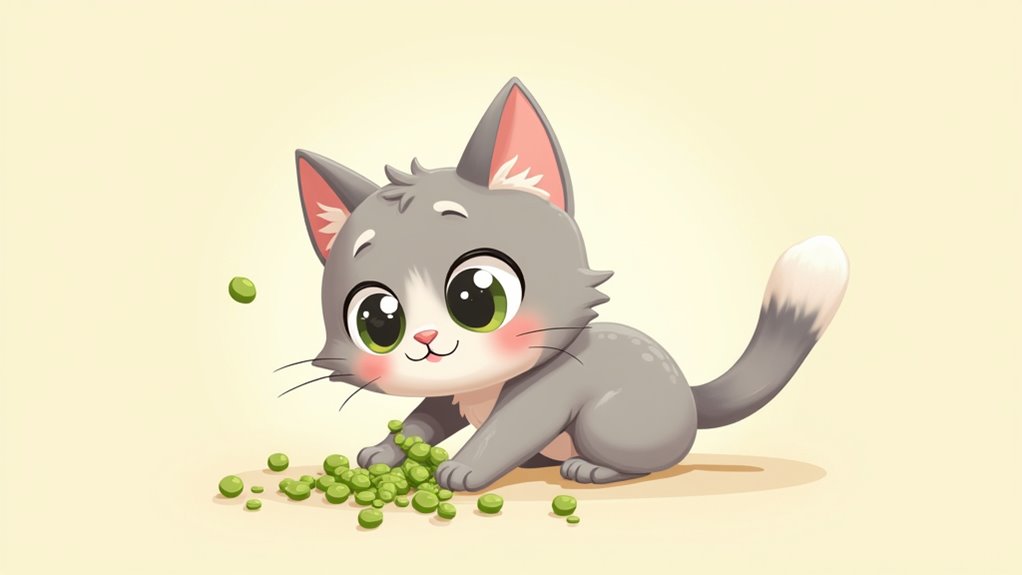
Feeding peas to your cat is safe when done correctly.
Use small amounts, about 10% of their daily food. This helps prevent stomach problems.
Always steam the peas without any spices or oil. Make sure they’re fresh and clean.
Check for pesticide residues before serving. Your cat will enjoy this tasty treat! Additionally, offering peas as an occasional treat can complement a protein-rich diet.
Safe Serving Sizes
Cats can enjoy peas as a special treat. Serving sizes matter. Too many peas can lead to health problems. Here’s a simple guide to help you give your cat the right amount:
| Cat Type | Safe Serving Size | Frequency |
|---|---|---|
| Adult Cat | 3-5 peas | 1-2 times a week |
| Kittens | Very small amount | Not recommended |
| Senior Cat | Smaller amounts | 1 time a week |
| Active Cats | Up to 5 peas | 2 times a week |
Always talk to your vet before adding peas to your cat’s meals. Peas should not make up more than 10% of their daily calories. Watch your cat’s weight and digestion. This helps ensure they enjoy their treat without problems.
Preparation Methods for Cats
Preparing peas for your cat is simple and safe. Follow these easy steps:
- Select the Right Peas: Use garden, snap, or snow peas. Snap peas can be given whole. Remove the pods from garden and snow peas.
- Cooking Methods: Steam or lightly cook the peas. Don’t add seasonings or oils. Steer clear of canned peas. They’ve preservatives that can harm your cat.
- Serve Safely: Cut the peas into small pieces. Start with a little to watch for any bad reactions.
These steps help ensure that your cat enjoys peas safely.
Health Advantages of Peas in Cat Diet
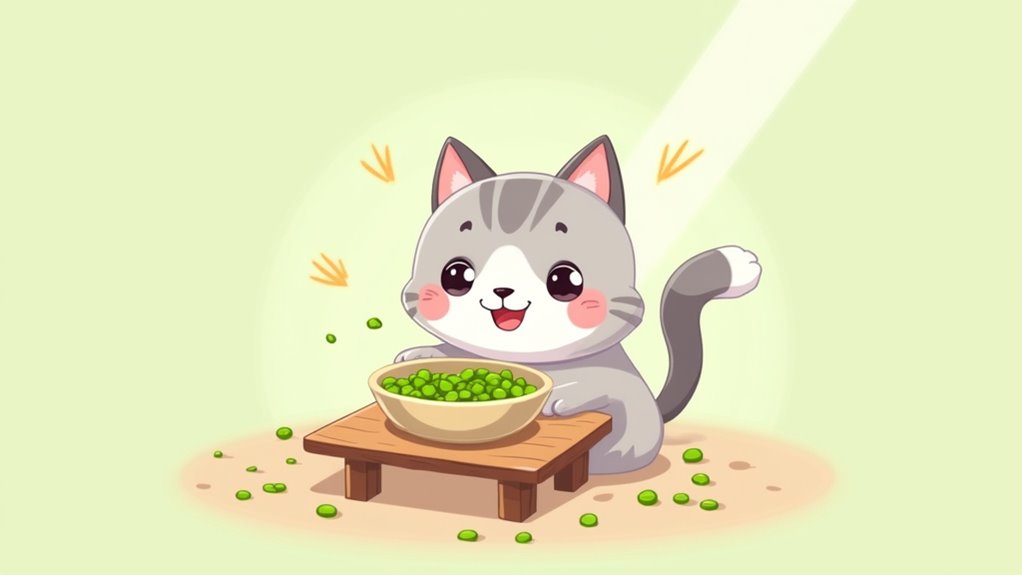
Peas provide many health benefits for your cat.
They’re rich in fiber, which helps with digestion. This fiber can prevent constipation and keep the gut balanced.
Peas also contain a lot of water. This helps keep your cat hydrated, which is vital for their health.
Including peas in your cat’s diet can support overall well-being. They’re a great addition to meals.
Cats can enjoy the taste, too. Peas make a nutritious snack or a meal boost.
Digestive Health Support
Peas can be a great addition to your cat’s diet. They provide important benefits for digestive health. Here are three reasons why peas are good for your cat:
- Stool Regulation: Peas contain soluble fiber. This fiber absorbs water. It helps firm up stools during diarrhea and keeps things regular to prevent constipation.
- Bowel Movement Promotion: The insoluble fiber in peas adds bulk. This bulk stimulates the intestines, encouraging regular bowel movements.
- Digestive Enzyme Support: Peas offer digestible carbohydrates. These carbs support intestinal cells, helping the gut function well.
Additionally, peas are commonly found in commercial cat food, indicating their nutritional value for feline health. Use peas in moderation. Too many can cause gas and bloating.
Nutrient-Rich Supplement
Peas are a great addition to your cat’s diet. These small legumes are full of important vitamins and minerals. They provide vitamins A, C, and K, which help keep your cat’s immune system strong and support bone health.
Peas also contain antioxidants. Vitamins C and E in peas can help reduce inflammation and improve overall health.
While peas have some protein, they shouldn’t replace animal protein. They work best as a complement, adding variety to your cat’s meals.
Watch the portion size to avoid too many carbohydrates. Feeding peas regularly can help with weight management and metabolic health. They make a nutrient-rich supplement for your cat’s meals.
Hydration and Gut Balance
Proper hydration and gut balance are crucial for your cat’s health. This helps prevent problems like constipation and dehydration.
Peas can be a great addition to your cat’s meals for several reasons.
Peas contain about 79% water. This high water content helps keep your cat hydrated.
The fiber in peas supports healthy digestion. It helps form solid stools and keeps things moving smoothly.
Peas are also good for gut health. They act as prebiotics. This means they feed the good bacteria in your cat’s gut. A healthy gut leads to better digestion.
Adding peas to your cat’s diet can improve their overall health. Plus, they enjoy the taste!
Considerations for Cat Nutrition
Understanding your cat’s food needs is important. Cats need a diet full of meat-based proteins. Peas can have some good vitamins and minerals, but always keep your cat’s preferences in mind. Here’s a simple guide about peas and their benefits:
| Nutrient | Benefit |
|---|---|
| Vitamins A, B1, B6, C, K | Good for eyes, skin, and immune system |
| Manganese, Copper, Iron | Important for health |
| Linoleic Acid | Helps keep skin and fur healthy |
| Dietary Fiber | Aids digestion and stops constipation |
| Low-Calorie | Helps control weight in overweight cats |
Add peas to your cat’s diet slowly. One tablespoon a few times a week is a good amount. Always use plain, cooked, or frozen peas without extra flavors. Treat peas as a snack, not the main meal. Remember, meat should be the main part of your cat’s diet for good health. Additionally, while cats thrive on proteins, incorporating small amounts of safe plant-based foods like peas can provide some nutritional benefits. Cooked peas are a safe option for cats, making them easier to digest and enjoy.
Potential Risks and Warnings
Adding peas to your cat’s diet might seem harmless, but it comes with risks. Cats have sensitive stomachs. Introducing new foods can cause issues. Here are some important points to consider:
- Pea Allergies: Some cats can be allergic to peas. Look for signs like skin irritation or stomach problems after they eat them.
- Digestive Upset: Peas have a lot of fiber. This can lead to gas, vomiting, or diarrhea if your cat isn’t used to it. Start with a tiny amount to see how they react. Additionally, cats’ digestive systems process plant-based foods differently, which can exacerbate these issues.
- Weight Management: Peas contain carbohydrates. Cats don’t digest carbs well. Eating too many can lead to weight gain and increase the risk of diabetes and heart disease.
- Safe Vegetables: While peas can be offered in moderation, certain vegetables may provide additional nutrients without the same risks.
Keep an eye on your cat’s health. Consult your vet if you notice any signs of allergies or digestive issues.
Taking care of your cat’s health is the priority when trying new foods.
Suitable Forms of Peas for Cats
Several types of peas are safe for cats. It’s important to choose the right kinds. Here are some good options:
- Garden peas: Always serve them without pods.
- Snap peas: These can be given whole or shelled.
- Snow peas: Feed them cooked or raw. Remove the pods unless they’re soft and cooked.
For preparing peas:
- Cook peas: Boil or steam them. Don’t add seasoning, butter, or oil.
- Start with cooked peas: They’re easier for cats to digest.
- Mash peas: This is great for kittens or cats with dental problems.
Avoid canned peas. They contain high sodium and preservatives. Fresh or frozen peas are better. If using frozen peas, thaw them slightly first.
Frequently Asked Questions
Can Kittens Eat Peas Safely?
Kittens can eat peas safely. This vegetable can be a fun treat. It’s important to remember that kittens need proper nutrition. Their main food should be animal protein. Peas can be a small addition to their diet. Offer just a few peas at a time. This way, they get some extra vitamins without losing essential nutrients. Always watch how your kitten reacts. Keep their meals balanced for healthy growth.
How Should Peas Be Prepared for Cats?
Prepare peas for your cat by steaming or boiling them until soft. Keep them plain. No spices or additives. This makes peas gentle on their tummy. It also keeps them tasty for your cat.
Peas are a good source of vitamins. They provide fiber, which helps digestion. Some cats enjoy the crunchy texture too. Always serve peas in small pieces. This helps prevent choking.
Introduce peas slowly into your cat’s diet. Watch for any reactions. If your cat likes them, they can be a fun treat. Remember to offer them in moderation. Too many can upset their stomach.
Keep your cat’s health in mind. Always consult your vet before adding new foods. Peas can be a healthy snack when prepared right. Enjoy feeding your furry friend!
Are There Any Alternatives to Peas for Cats?
Cats can enjoy safe vegetables like asparagus, broccoli, and carrots. These veggies provide good nutrition. Cook them well before serving. Always offer in small amounts. This keeps your cat healthy and happy. Avoid raw vegetables, as they can be hard to digest. Remember to check for any allergies. Each cat is different. Make mealtime fun and healthy!
Can Cats Be Allergic to Peas?
Cats can be allergic to peas. Some cats may have reactions to them. Symptoms can include skin problems or upset stomach. Peas do have good nutrients, like fiber, which helps with digestion. But not all cats can handle them. If a cat shows signs of allergies, it’s best to stop giving peas. Always pay attention to your cat’s health and diet.
How Do I Know if My Cat Likes Peas?
Check your cat’s reactions to peas. Does your cat sniff them? Does it taste them? Signs of enjoyment include purring or a happy tail. Look for playful nudges or pawing at the peas. These actions show your cat is interested. Each cat is different, so pay attention. Some cats love peas, while others may not. Always watch for signs of satisfaction. This will help you know if your cat likes them.
Conclusion
Peas can be a healthy treat for your cat. They provide vitamins and fiber. Think of peas as a small snack, not a main meal. Introduce them little by little. Watch for any bad reactions. Always ask your vet before changing your cat’s diet. Each cat is different. What works for one may not work for another. Keep your cat’s health a priority. A balanced diet is key for their well-being. Enjoy exploring new foods with your furry friend!
