
Can Cat Eat Pecans
This post contains affiliate links. As an Amazon Associate, we earn from qualifying purchases.
Pecans are not highly toxic to cats, but they can lead to serious health issues, so it’s best to avoid giving them to your pet. Moldy pecans can cause seizures, and salted ones may result in kidney failure. Whole nuts can pose choking hazards and may lead to intestinal blockage, with symptoms like vomiting, diarrhea, and bloating potentially occurring. If you do decide to offer pecans, do so very rarely and steer clear of flavored varieties. Healthier treat options include cooked chicken or carrots. For those seeking more information on keeping your cat safe, further details will follow.
Essential Facts in 30 Seconds
- Cats can technically eat pecans, but it’s not advisable.
- Moldy or salted pecans can lead to serious health issues like seizures and kidney failure.
- The high fat content in pecans may result in pancreatitis and obesity in cats.
- Whole pecans can pose choking hazards and may cause intestinal blockages.
- Safer treat alternatives for cats include cooked carrots and plain cooked chicken.
Understanding Pecan Toxicity in Cats
Pecans may look like a tasty treat, but they can be risky for your cat. While not highly toxic, they still pose some dangers. Moldy pecans are the biggest threat. They can cause seizures or upset stomachs due to harmful mycotoxins.
Key Risks:
- Large Amounts: Too much fat can lead to obesity.
- Salted Varieties: These can cause kidney failure and excessive thirst.
- Symptoms to Watch For:
- Vomiting or diarrhea
- Bloating and constipation
- Tremors or other neurological signs
Additionally, the high fat content of pecans can lead to pancreatitis in cats. Watch your cat closely after they eat pecans. Even small amounts can upset their stomach. If you see any symptoms, call your vet right away for help. Keeping pets safe is important.
Nutritional Value of Pecans and Their Suitability for Cats
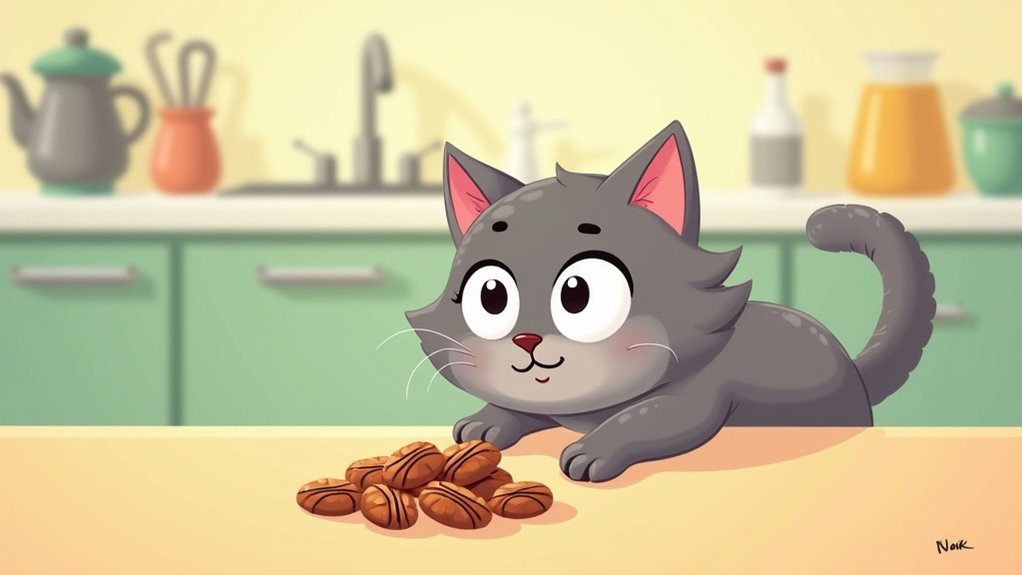
Pecans aren’t a good choice for your cat. These nuts do have some nutrients, but they don’t meet a cat’s dietary needs.
Here are important facts about pecans:
- One ounce of pecans has about 196 calories.
- They contain 20.4 grams of fat. This can lead to obesity in cats.
- Pecans don’t provide the protein and amino acids that cats need.
- Cats find it hard to digest the fiber in nuts. This can cause tummy problems.
Pecans may be healthy for people, but they don’t help cats.
A balanced, meat-based diet is best for your cat. This ensures they get the right nutrients for good health.
Health Risks Associated With Cats Eating Pecans
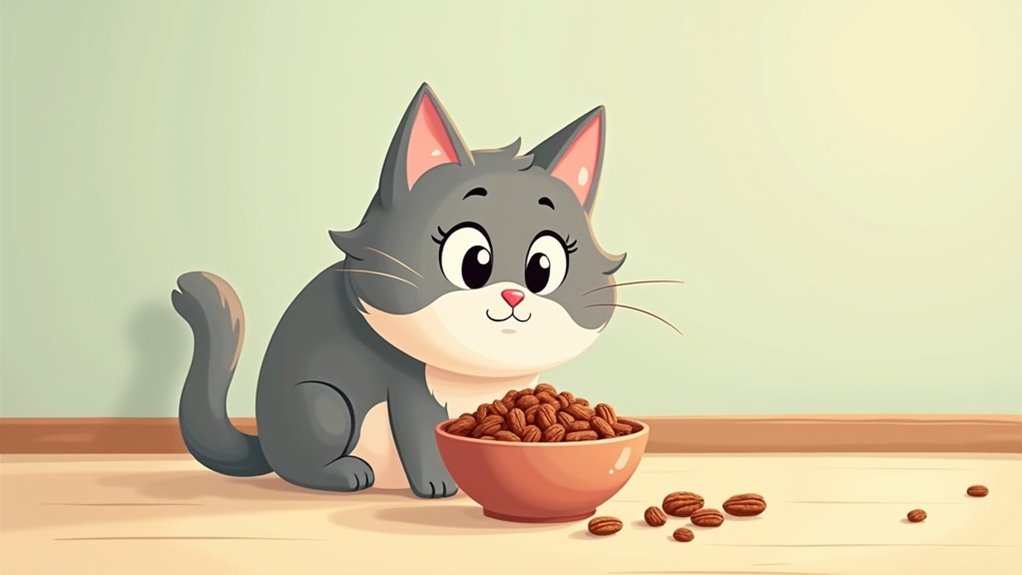
Cats and pecans don’t mix. These nuts can cause serious health problems. Eating pecans can upset your cat’s stomach. This may lead to vomiting or diarrhea. Whole pecans can be a choking hazard. They can also block your cat’s intestines.
Moldy pecans are even worse. They can carry harmful toxins. It’s safer to keep these nuts away from your furry friend.
Choose cat-friendly treats instead. Keeping your cat safe is the best choice. Always think about what your pet eats.
Potential Gastrointestinal Distress
Cats can suffer from serious stomach issues if they eat pecans. These nuts have harmful molds and a lot of fat. Here are the risks:
- Mold can make cats sick. This can cause stomachaches, vomiting, and diarrhea.
- The high fat content, about 20.4 grams per ounce, may lead to nausea and pancreatitis.
- Some cats may have allergic reactions. This can cause constipation, fever, and bloating.
- Pecans contain cyanogenic glycosides that can irritate the stomach.
For your cat’s health, choose safer options like cooked carrots or plain cooked chicken.
If your cat eats pecans and shows any signs of distress, call a vet right away. Always keep your furry friend safe by avoiding risky foods.
Choking and Intestinal Blockage
Pecans can be very dangerous for cats. They have hard shells and odd shapes. This makes it easy for cats to choke. Cats often swallow food whole. They can’t chew well. Large pieces can cause serious problems. Intestinal blockage can happen, leading to vomiting and pain.
Here are some risks and what to watch for:
| Risk Type | Symptoms | Action Required |
|---|---|---|
| Choking Risks | Trouble breathing, coughing | Get to the vet right away |
| Intestinal Obstruction | Vomiting, hard time pooping | Surgery may be needed |
| Shell Ingestion | Tummy pain, swelling | Watch closely, talk to a vet |
| Large Piece Ingestion | Not eating | Vet check is a must |
| General Discomfort | Tiredness, too much grooming | Get veterinary advice |
To keep your cat safe, avoid giving them pecans.
Mold Contamination Risks
Mold on pecans can harm your cat. This mold is often hard to see. It can grow on pecans before or after they’re picked. Your cat might get sick from mycotoxins in the mold.
Here are some important points to keep in mind:
- Even normal-looking pecans can have mold.
- Storing pecans in humid places makes mold worse.
- Mycotoxins can cause stomach issues, nervous system problems, and other health issues.
- Cats are more at risk from these toxins than people.
To keep your cat safe, don’t give them pecans. Always store nuts in dry, sealed containers. This helps stop mold from growing.
Watch for signs of mycotoxin poisoning, like vomiting or tiredness. If you see these signs, take your cat to the vet right away.
Recommendations for Offering Pecans to Cats
Offering pecans to your cat requires care. Here are some important tips:
Pecan Preparation
- Chop or crush pecans into small pieces. This helps prevent choking.
- Ensure the pecans are fresh, mold-free, and unsalted. Avoid any flavored or mixed nuts.
Portion Control
- Give only one or two small pieces at a time.
- Use pecans as a rare treat. Cats need animal protein for health.
Monitoring
- After serving pecans, watch for any digestive issues. Signs include vomiting or diarrhea. If they occur, contact your vet.
- Remove any leftover nuts quickly. This stops overconsumption.
These steps keep your cat safe while enjoying a unique treat. Always prioritize their health and well-being.
Recognizing Signs of Health Issues Related to Pecans
Recognizing health problems after your cat eats pecans is very important. Monitor your cat closely for any signs. Look for these symptoms:
- Vomiting or diarrhea
- Stomach bloating or pain
- Loss of appetite or unusual tiredness
- Itching or skin problems (possible allergy signs)
Act quickly if you see these symptoms. Vomiting or diarrhea can mean digestive issues. Bloating can cause discomfort.
Rarely, you might notice shaking or seizures, especially if the pecans were moldy.
Severe symptoms, like blood in stool or seizures, need immediate help. Contact your veterinarian right away. Quick action can help keep your cat safe and healthy after eating pecans.
Best Practices for Cat Owners Regarding Pecans
To keep your cat safe, it’s important to know about pecans. Pecans aren’t toxic to cats, but they’ve a lot of fat. This can cause health problems like pancreatitis.
Feeding Guidelines:
- Offer pecans only as a rare treat. They shouldn’t be a regular food.
- Always remove the shells. Shells can cause choking.
- Don’t give flavored or salted pecans. These are unhealthy for cats.
Pecan Alternatives:
- Choose cat treats made for them instead of pecans.
- Small bits of cooked lean meat are great options.
- Pumpkin seeds can be a healthier treat, but only give a little.
Monitoring:
Watch your cat after they eat pecans. Look for signs like vomiting or tiredness. If you notice these, call your vet.
Teach everyone in your home about these risks. This helps keep your cat safe.
Frequently Asked Questions
Can Cats Eat Pecan Pie or Similar Desserts?
Cats shouldn’t eat pecan pie or similar desserts. These treats can harm your cat’s health. Pecan pie contains high sugar levels. This can lead to digestive problems for cats. Some ingredients may include nuts, which are not safe for them. Alcohol is sometimes used in desserts. Even small amounts can be very dangerous for cats.
Cats have different dietary needs than humans. Their bodies can’t handle sugary or rich foods. Feeding them these desserts can cause upset stomachs or more serious issues. Always stick to cat-safe foods. Treats made for cats are a better choice. They provide the right nutrients without the risks. Keep your furry friend safe and healthy by avoiding these desserts.
What Should I Do if My Cat Eats Pecans?
Your cat may eat pecans, but that’s not safe. Watch your cat closely. Look for signs like vomiting or tiredness. Keep them hydrated. If you see any bad symptoms, call a vet. Quick action can help keep your cat safe. Always better to be cautious with their health.
Are There Any Safe Nuts for Cats to Eat?
Cats can eat some nuts, like plain peanuts and hazelnuts, but caution is key. Many nuts can harm cats. It’s safer to give treats made for cats instead. Always check labels. Some nuts can cause stomach issues or allergies. Stick to what is safe and designed for your furry friend. This way, you keep your cat happy and healthy.
How Can I Tell if My Cat Is Allergic to Pecans?
Cats can show signs of allergies like scratching, sneezing, or itching. Look for other symptoms too. Vomiting or hives can also mean allergies. Pecans can be a problem for some cats.
Keep an eye on your cat’s behavior. If they seem uncomfortable, it might be time to act. Allergy tests can help identify the issue. These tests can reveal what’s bothering your pet.
Taking your cat to the vet is smart. They can provide advice and treatment options. A healthy cat is a happy cat. Make sure your furry friend stays well.
Can Pecans Cause Long-Term Health Issues in Cats?
Pecans can cause serious health problems for cats. Their high fat content can lead to obesity. Obesity can bring other issues like diabetes. Pancreatitis is another risk. This painful condition affects the pancreas and can be life-threatening.
Pecans can also be toxic to cats. Symptoms of toxicity include vomiting and diarrhea. Long-term effects can harm your cat’s health. The best choice is to keep pecans away from your cat. Stick to safe, cat-friendly treats instead. Always check with a vet if you’re unsure. Your cat’s health is worth it!
Conclusion
Pecans can be dangerous for cats. They are hard for cats to digest. Eating pecans might cause stomach upset or even toxicity. Watch your cat carefully if they eat a pecan. Look for signs of distress like vomiting or lethargy. It’s best to stick to treats made just for cats. These treats keep your furry friend safe and happy. Always talk to your vet for advice about your pet’s diet. Keeping your cat healthy is the top priority.
